Château de Sassy: An Eighteenth-Century Residence in Normandy


Site at a Glance
- Rating
- 4.4
- Popularity
- Low
- Country
- France
- Primary era
- Early Modern
- External website
- Open
- Eras represented
- Early Modern, Modern
- Civilizations
- French
- Site type
- Domestic
- Remains
- Castle
On this page15 sections
History
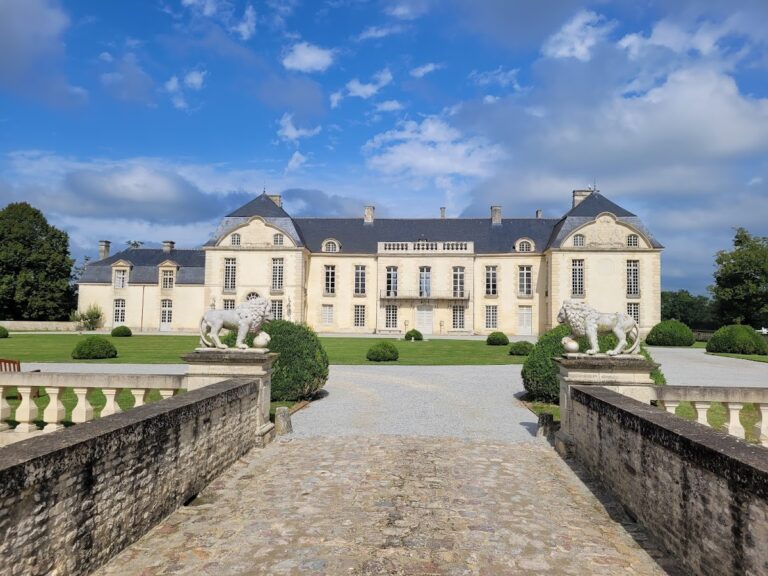
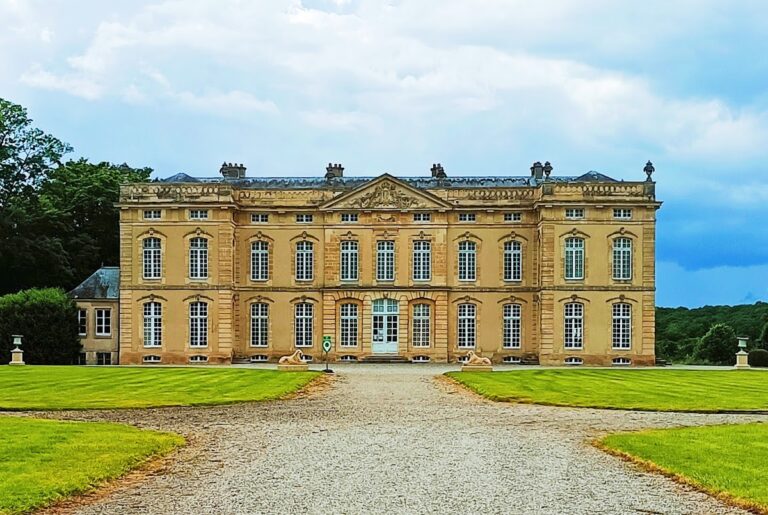
Château de Sassy is an eighteenth-century château in France, near Saint-Christophe-le-Jajolet in the commune of Boischampré, Normandy. The present stone-and-brick residence belongs to the second half of the eighteenth century and stands on the foundations of an earlier fortress.
From fortress to eighteenth-century residence
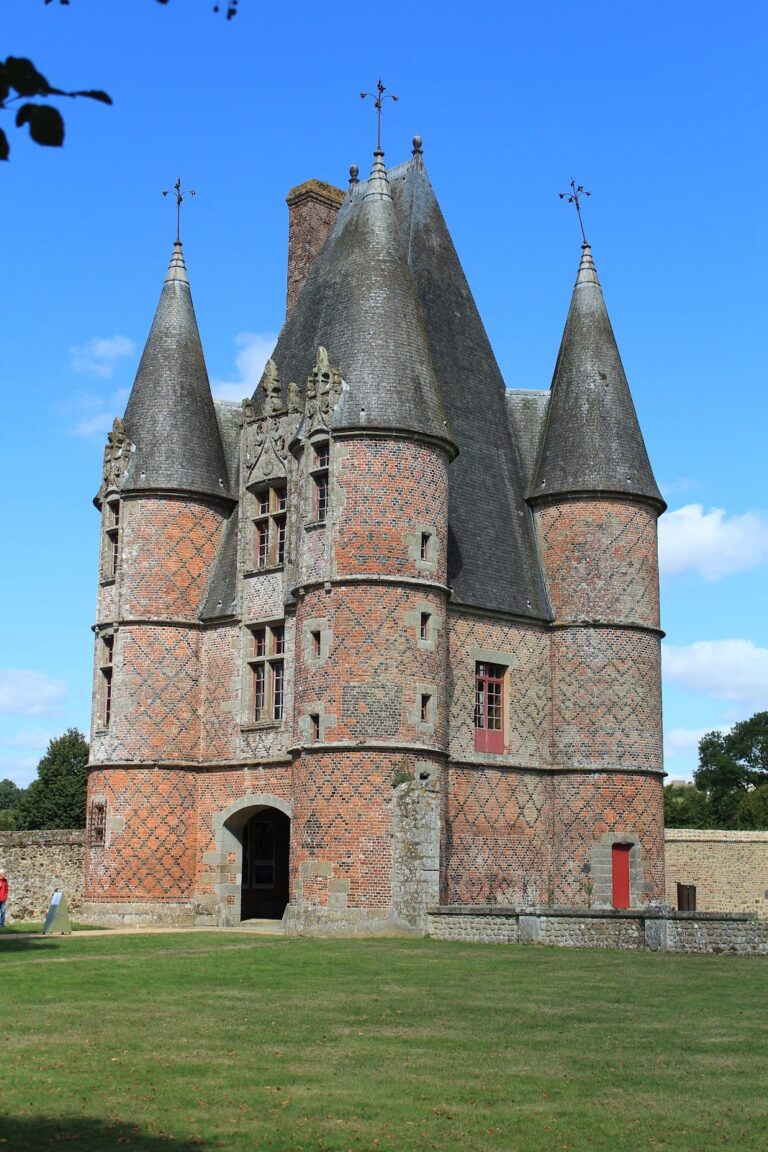
Only the entrance pavilions remain from the seventeenth-century Château de Sassy. Around 1760, Antoine François Le Bègue, Count of Germiny and a captain in a cavalry regiment, began the present building. He died in 1761, after which construction continued slowly before being interrupted by the French Revolution of 1789.
Building resumed during the Restoration, the period from 1814–1815 to 1830 when the French monarchy was restored after Napoleon’s fall. The work followed the original plans and was completed by the Count of Ormoy, who had acquired the estate in 1817.
The Pasquier and Audiffret-Pasquier families
Étienne Denis, Duke Pasquier, purchased Sassy in 1850. A senior officer of the French state who served as Chancellor of France from 1837, he enlarged the residence and remodeled its interiors. Because he had no children, he transferred his title and the estate at his death in 1862 to his grandnephew and adopted son, Gaston, Duke of Audiffret-Pasquier.
The Audiffret-Pasquier family continued to live at the château, and Xavier d’Audiffret-Pasquier is identified as a resident. The third duke, who lived from 1913 to 1999, and his wife, Aldée de Lastic Saint-Jal, preserved the nineteenth-century decorative state. Aldée de Lastic Saint-Jal lived in the west wing.
Gardens, protection, and later history
From 1925, the formal French-style garden was laid out by Achille Duchêne for the second Duke of Audiffret-Pasquier, Étienne d’Audiffret-Pasquier, who served as a deputy for Orne from 1919 to 1942. In 1967, Queen Elizabeth II stayed at Sassy for three days during a private visit and left two handwritten letters.
The French state listed the château as a protected historic monument in 1932. Protection was extended in stages to the French-style garden, orangery, terraces, and stairways in 1986; the entrance pavilions, library pavilion, service buildings, chapel, and stable façades and roofs in 1993; and the library and its interior decoration in 1994. The pigeon loft at the Hatrie, or Mesnil, farm was listed in 2006. The estate covers approximately 800 hectares and is a private property identified as a Remarkable Garden as well as a partially protected historic monument.
Remains
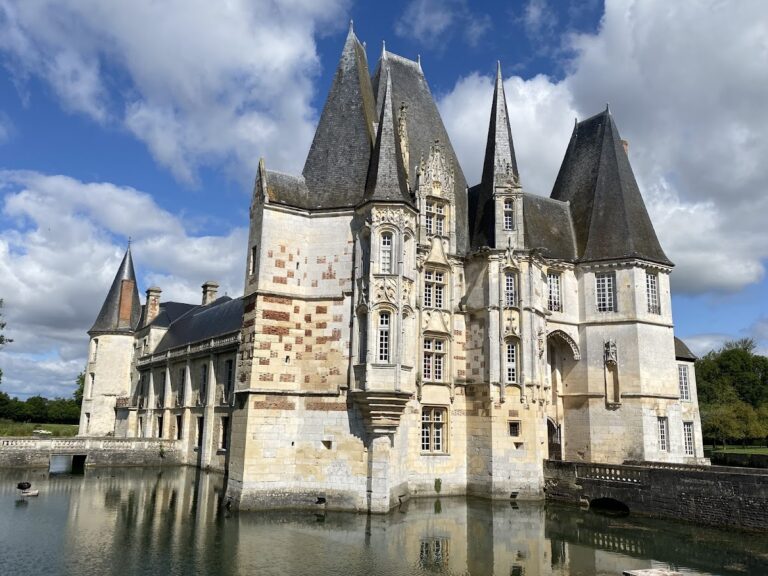
Château de Sassy stands at the edge of a forest, with water from the Saint-Evroult spring channeled through a moat. The main residence is an imposing stone-and-brick building. Three levels of terraces connect it with the garden parterres, while on the opposite side the château buildings enclose a courtyard backed by the forest. The west end of the west wing is crossed by the Greenwich meridian.
Residence and garden ensemble
Main residence
The surviving residence preserves the scale of the eighteenth-century building and the later interior arrangement created under Duke Pasquier. Its rooms contain tapestries from Aubusson, the Gobelins, and Beauvais, major French centers of tapestry production. The decorative interiors retain the character preserved by the third duke and Aldée de Lastic Saint-Jal.
Formal gardens and waterworks
The garden is formed by formal beds arranged in embroidered patterns, a design in which clipped plants or low planting create ornamental shapes. The protected garden ensemble includes the parterres, orangery, terraces, and their stairways. The moat carries water from the Saint-Evroult spring around the château.
Library and cultural collections
Library pavilions
The lateral pavilions were built to house Chancellor Pasquier’s extensive library. More than 20,000 volumes remain associated with the collection, including works by Étienne Pasquier, the sixteenth- and seventeenth-century French jurist and writer, and a copy of Catéchisme des Jésuites associated with Henri IV. The library also contains Monophile, ou seul aimant and other works concerning love that probably once belonged to Sully, Henri IV’s prominent minister and adviser.
Library decoration
A full-length portrait of Étienne Pasquier, painted by Horace Vernet in 1842, is held in the library. The room’s interior decoration forms part of the protected historic fabric of the château.
Chapel and estate buildings
Chapel
The chapel may have been built at the end of the eighteenth century. It contains a fifteenth-century altarpiece from Saint Bavo’s Abbey in Ghent, providing an earlier religious work within the later building.
Farm and pigeon loft
The Hatrie farm, also called the Mesnil farm, contains a pigeon loft, a purpose-built structure for keeping pigeons. This building forms part of the protected estate.
Furniture and movable works
The former Wagner clock was sold to an antiques dealer in 2015. A Paris auction on 29 March 2024 removed several pieces of furniture from the château, including a rare cabinet once attributed to Bon Durand but stamped by Bernard van Risen Burgh around 1750, a writing desk with a matching document cabinet by Gaspard Schneider du Chancelier, and a commode known as a “tomb” commode by Mathieu Criaerd. The sale also included Alexandre-Évariste Fragonard’s 1802 drawing A Dance Lesson and a Hunting Scene attributed to Paul de Vos.