Javon Castle: A Renaissance Summer Residence in Lioux, France
Site at a Glance
- Popularity
- Medium
- Country
- France
- Primary era
- Medieval
- Eras represented
- Medieval
- Civilizations
- Papal States
- Site type
- Domestic
- Remains
- Elite Residence
On this page7 sections
History
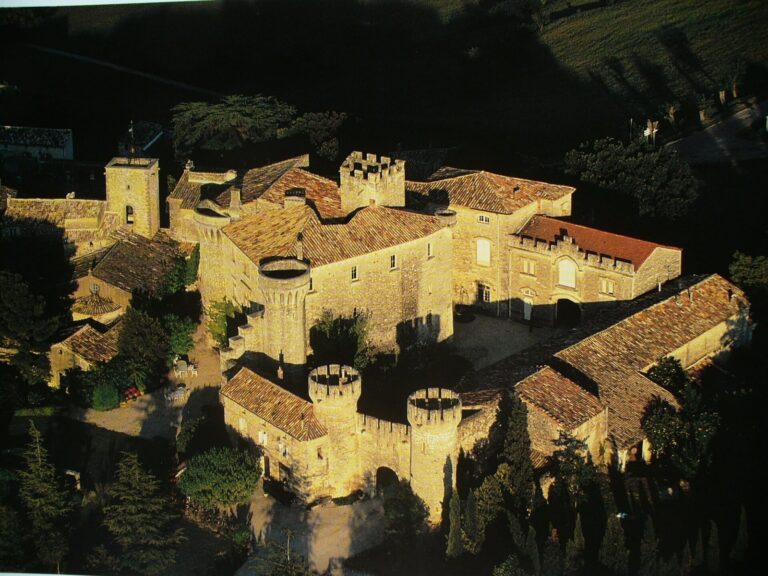
Javon Castle is a residence in Lioux, France, probably built around 1475 in the Renaissance, a European artistic and architectural movement that drew on classical forms, to serve as a summer home for the Bishopric of Carpentras, the diocese governed by the bishop of Carpentras.
The Baroncelli and the 1570 attack
A grant of Javon to François Baroncelli is dated to 1475 and attributed to Pope Leo X. That attribution conflicts with the date, since Leo became pope in 1513. In 1551, the whole lordship passed to the Baroncelli, who thereafter used the family name Baroncelli-Javon. Javon then formed part of the Comtat Venaissin, a historic territory in Provence associated with papal rule. The Baroncelli originated in Tuscany, where members of the family served the republics of Florence and Pisa. Their name came from a castle near Florence.
During the French Wars of Religion, a period of religious conflict in France, opposing cavalry surprised the château on 19 April 1570. On 1 May, people from Mérindol set it on fire.
Later ownership and protection
M. Vayson, the father of painter Paul Vayson, bought the château in 1841. He also owned Château de Murs, and it was said that his land allowed him to travel between the two properties without crossing another owner’s territory.
In 1978, the entrance door and the Renaissance window facing the courtyard were listed as historic monuments.
Remains
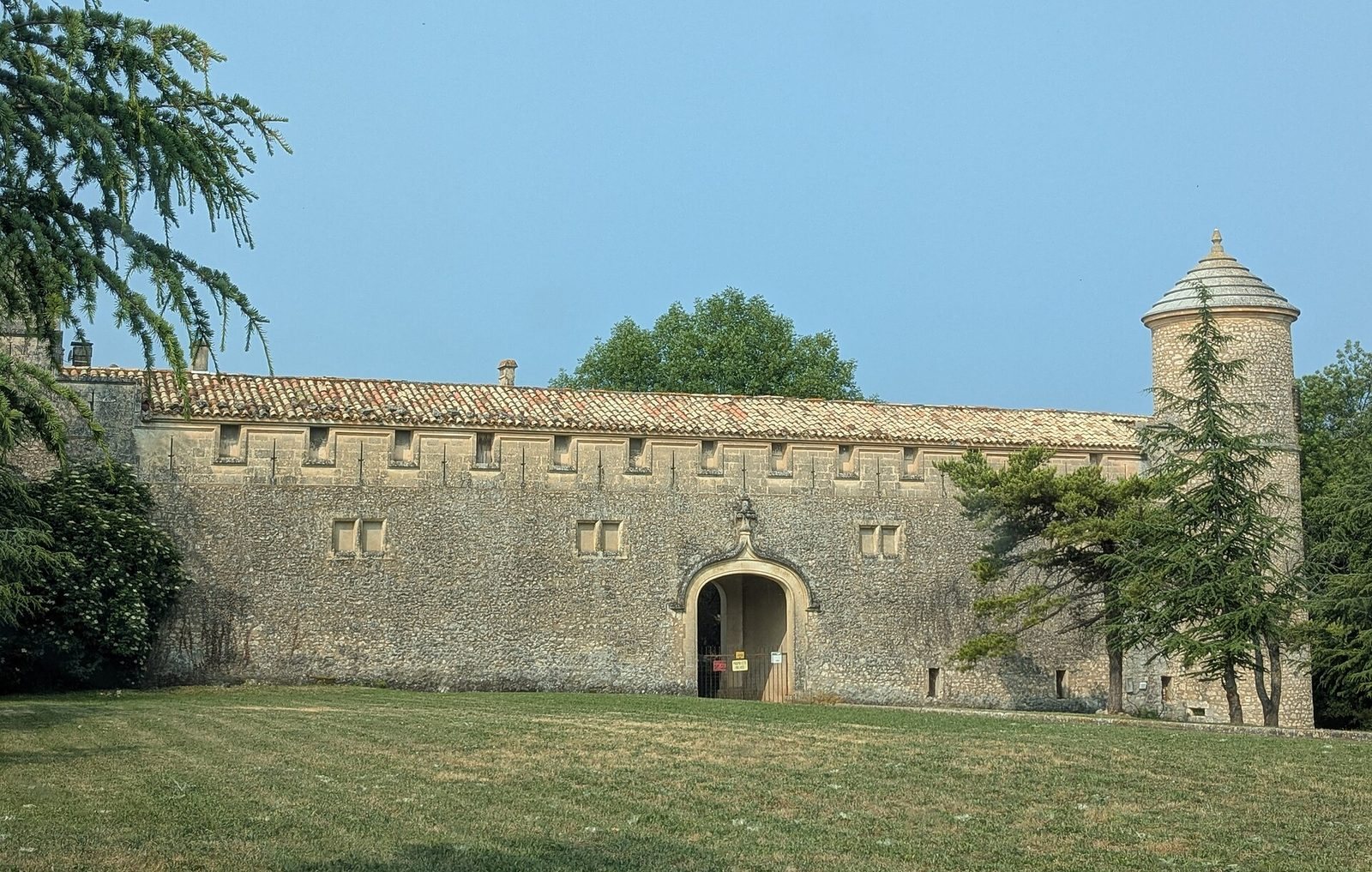
The Renaissance château stands on elevated ground north of Lioux, toward Sault. Its described features include an entrance in the north face and a window opening onto the courtyard.
Architectural features
North entrance
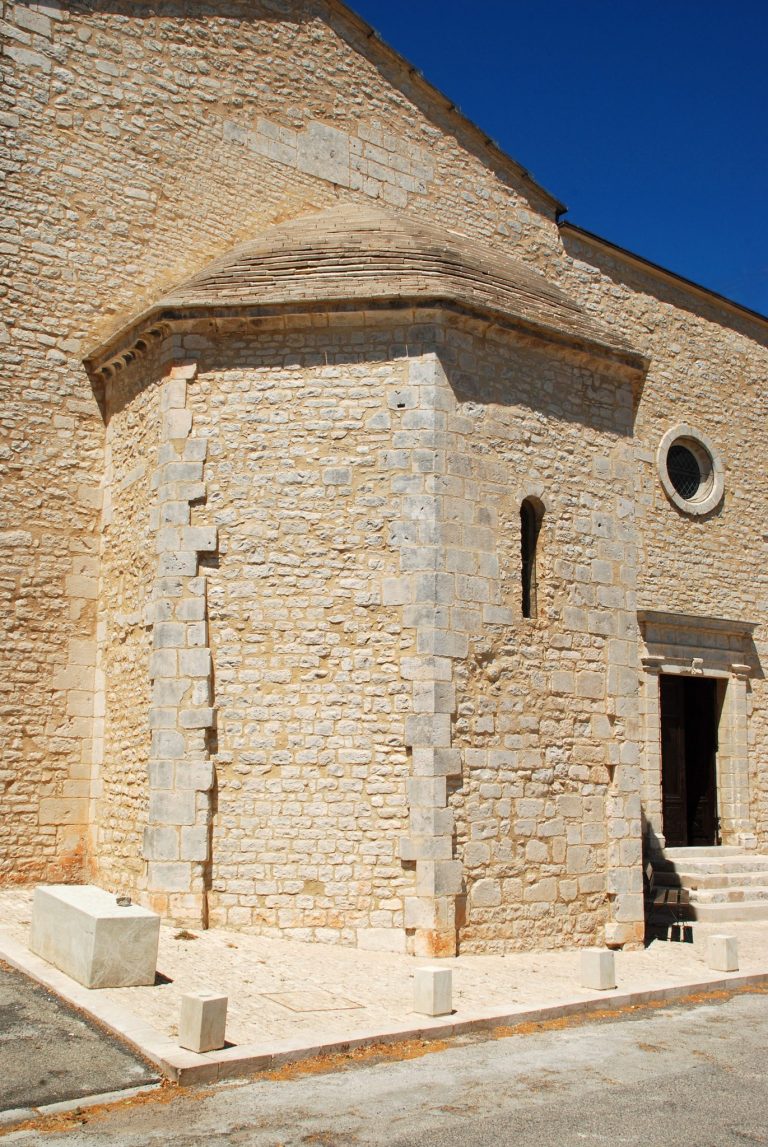
The doorway in the north face has a basket-handle arch, a shallow arch with a flattened curve. Above it is a gable with opposing curves, a feature associated with the Provençal Renaissance.
Courtyard window
A Renaissance window opens onto the courtyard. It is one of the château’s two features listed as a historic monument in 1978.