Château de Frapesle: an Historic Residence and Literary Setting in France
Site at a Glance
- Rating
- 4.4
- Popularity
- Very Low
- Country
- France
- Primary era
- Modern
- Eras represented
- Early Modern, Modern
- Civilizations
- French
- Site type
- Domestic
- Remains
- Elite Residence
On this page7 sections
History
From mill site to château
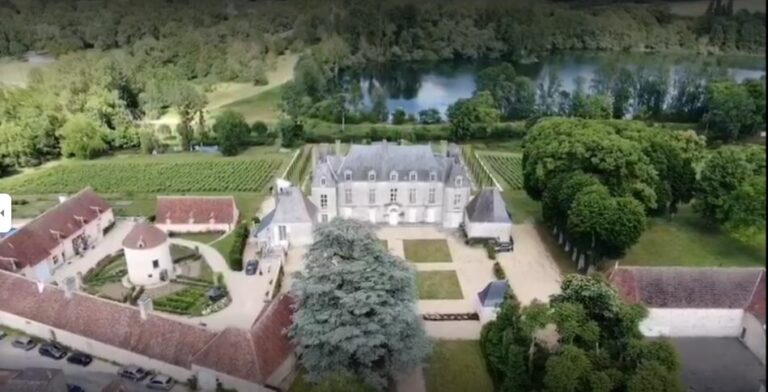
Château de Frapesle is an historic residence in Issoudun, France, whose present main building dates from 1804. It developed on the site of a former mill on the Tournemine, where a rented holding was transformed into a château during the eighteenth century. Among its owners were Tabouet de Frapesle, a counselor of Issoudun, and later François Carraud, who served as president of the salt granary at Bourges. A salt granary administered and taxed salt under France’s former salt-tax system.
Balzac and Frapesle
The château became closely linked with the novelist Honoré de Balzac, who stayed there in 1834, 1835, and 1838 as the guest of his friend Zulma Carraud, a French writer. Balzac drew on Issoudun, the château park, and the surrounding area while creating the setting of La Rabouilleuse.
In the novel, the heroine Flore Brazier receives her nickname from an activity associated with the Frapesle garden. She disturbed the water of a small bordering stream to catch crayfish, a local practice known as “rabouiller.” Balzac also used the name Frapesle for his description of the fictional Château de Valesne in Le Lys dans la vallée, although that fictional château is placed at Saché.
Ownership and protection
Château de Frapesle remains privately owned by the Luneau family. The residence, its park and nineteenth-century features, and the rows of trees along the Avenue de Frapesle were registered as historic monuments by an order dated 9 August 1993.
Remains
Residence
The main residential building was built in 1804. Between 1869 and 1871, during the Second Empire, it was improved with a colonial-style balcony raised on supports and paired with a projecting roof. The Second Empire was the period of Napoleon III’s rule in France from 1852 to 1870, and the name also describes architectural and decorative styles associated with that era.
Park and avenue landscape
A five-hectare park was created around 1830 and redesigned during the 1860s and 1870s. Its surviving nineteenth-century landscaping features form part of the château’s physical setting, together with the alignments of trees bordering the Avenue de Frapesle. The property stands at the edge of the commune of Issoudun, in the Indre department of the Centre-Val de Loire region.
Nearby sites