Château de Dobert: A Classical Château in France
Site at a Glance
- Rating
- 4.5
- Popularity
- Very Low
- Country
- France
- Primary era
- Early Modern
- External website
- Open
- Eras represented
- Medieval, Early Modern, Modern
- Civilizations
- French
- Site type
- Domestic
- Remains
- Castle
On this page7 sections
History
Manor and classical enlargement
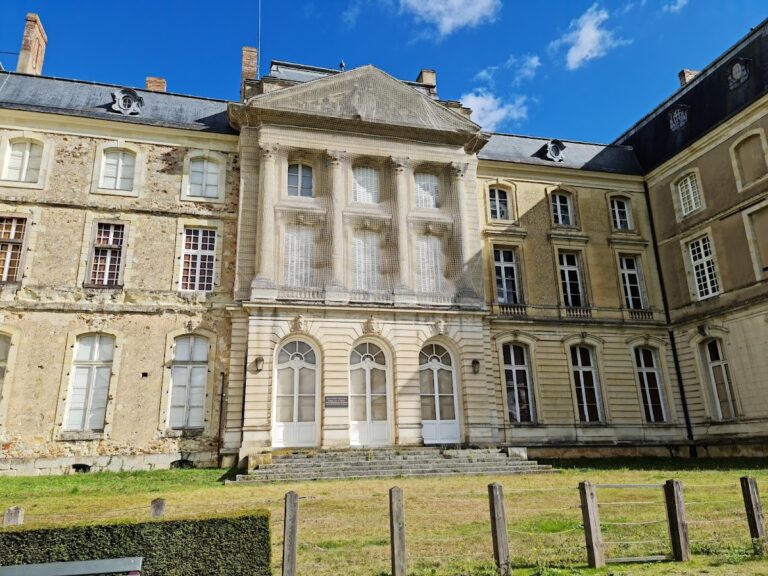
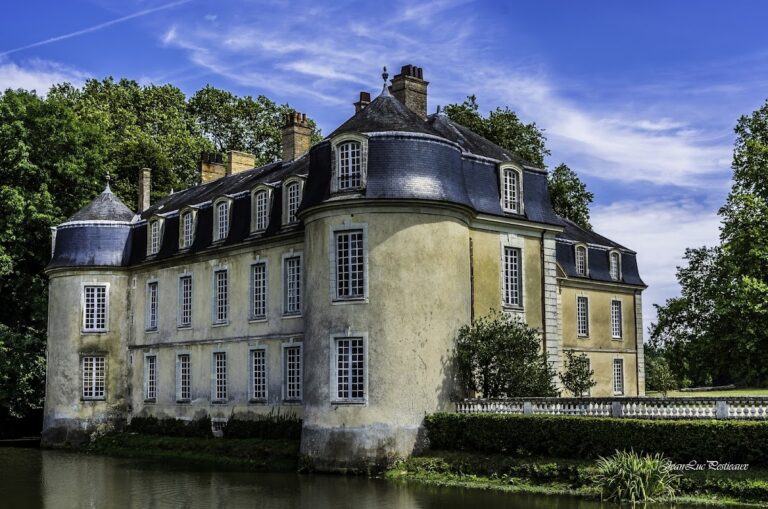
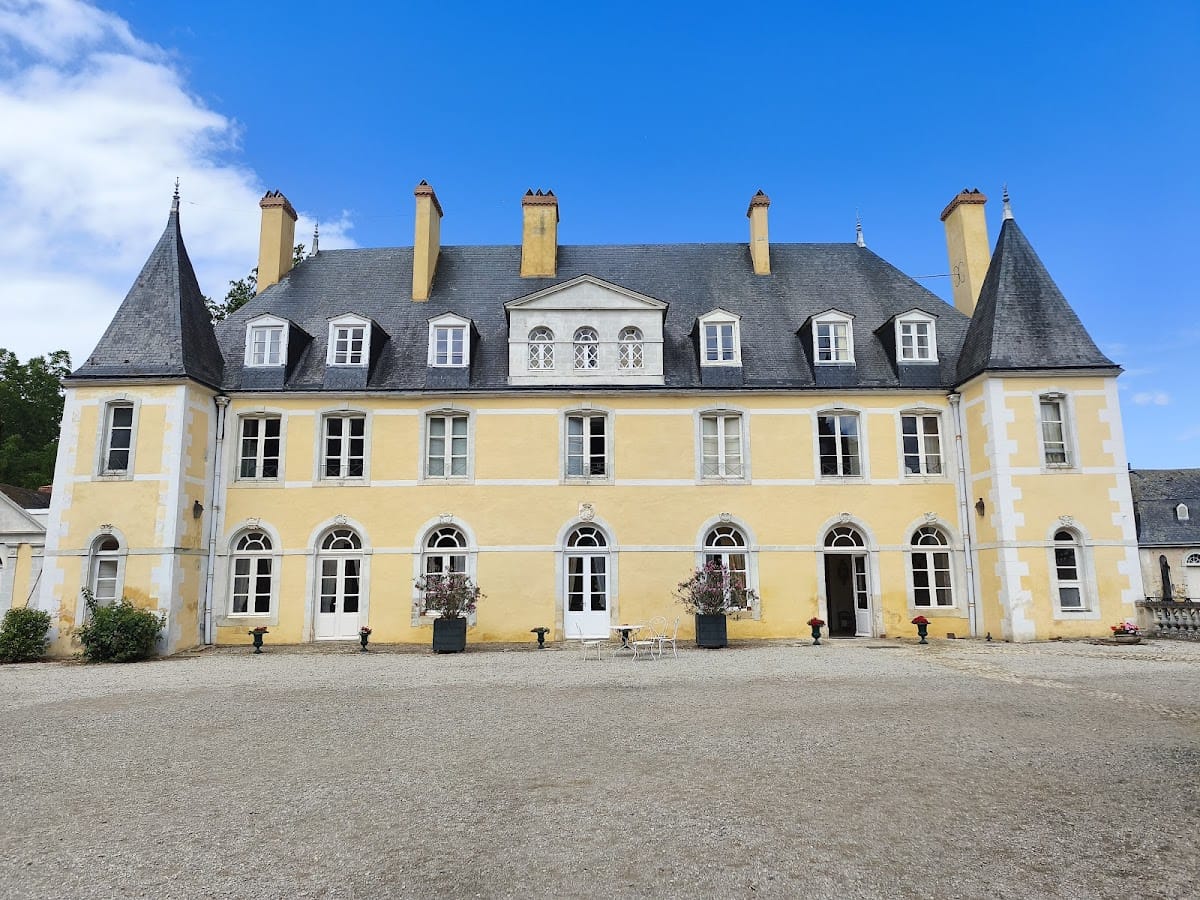
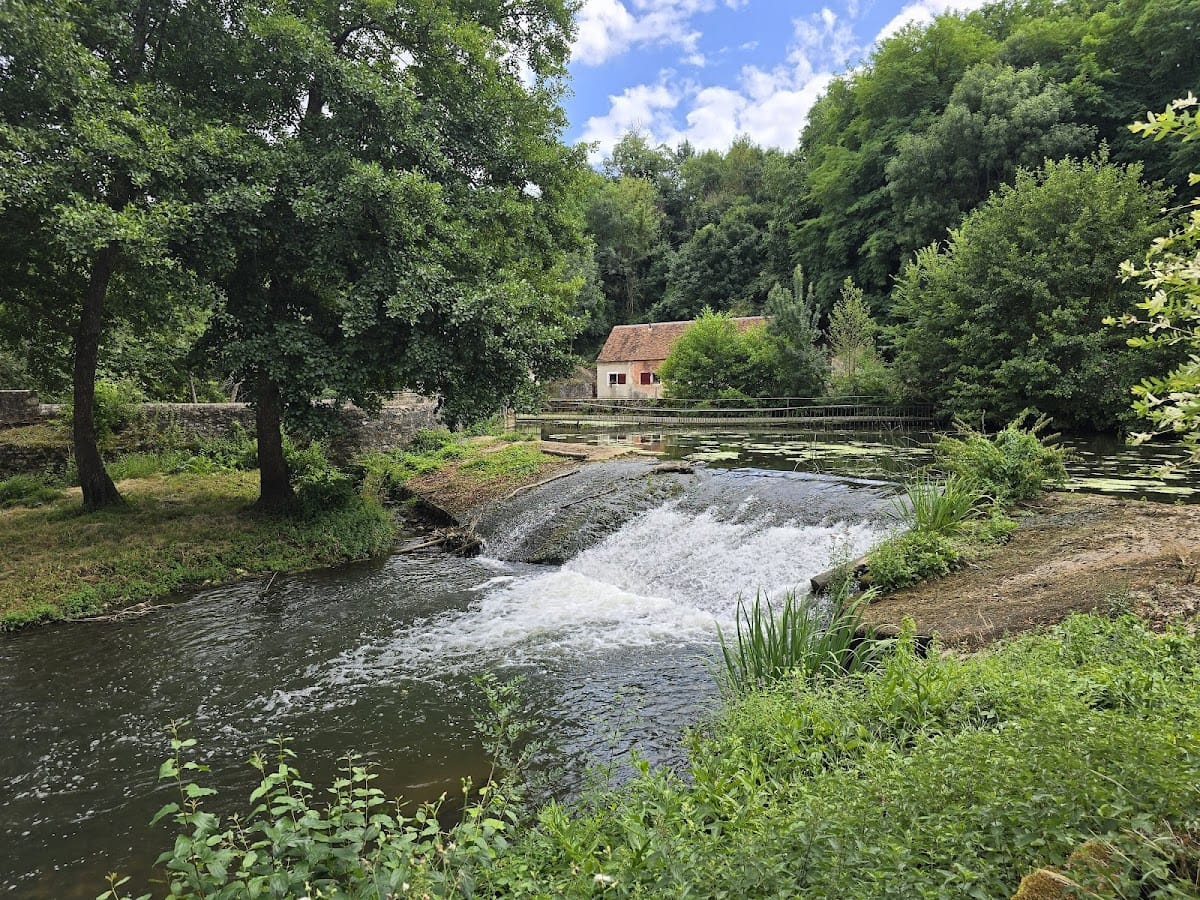
Château de Dobert is a classical-style château in Avoise, France, originating as a fifteenth-century manor built in a meander of the Vègre. The Vègre is a river in the Sarthe department. The property was enlarged in the mid-eighteenth century, giving the château the classical appearance it retains today.
Restoration and later history
After the French Revolution, the château was restored and two long outbuildings were added. The property remains privately owned by the du Peyroux family. On 28 December 2019, a fire broke out in one of the outbuildings and completely destroyed its roof, although no one was injured.
The château and associated features have been partially listed as historic monuments in France since 24 July 1989. This listing is a form of legal heritage protection for buildings and features recognized for their historical or architectural interest. The protected elements include the château and the outbuildings’ façades and roofs, the moats, the aqueduct and its irrigation system, the planted avenue beside the aqueduct, and the planted eastern access avenue.
Remains
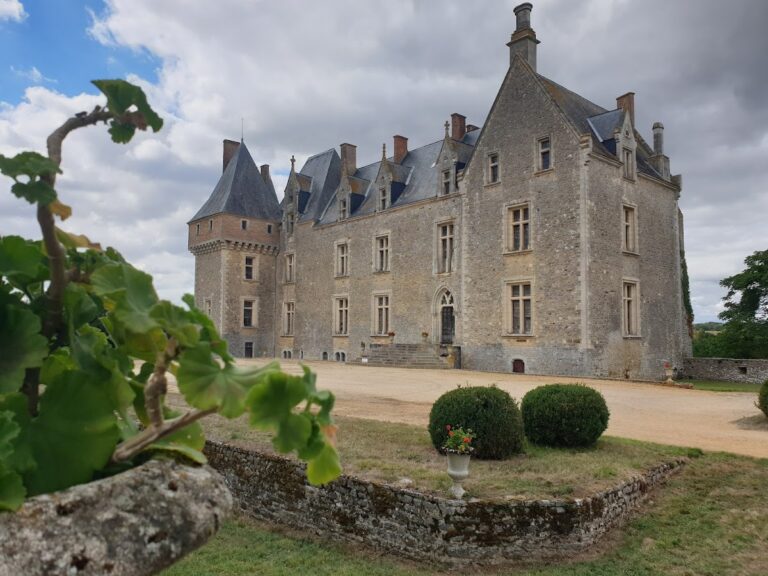
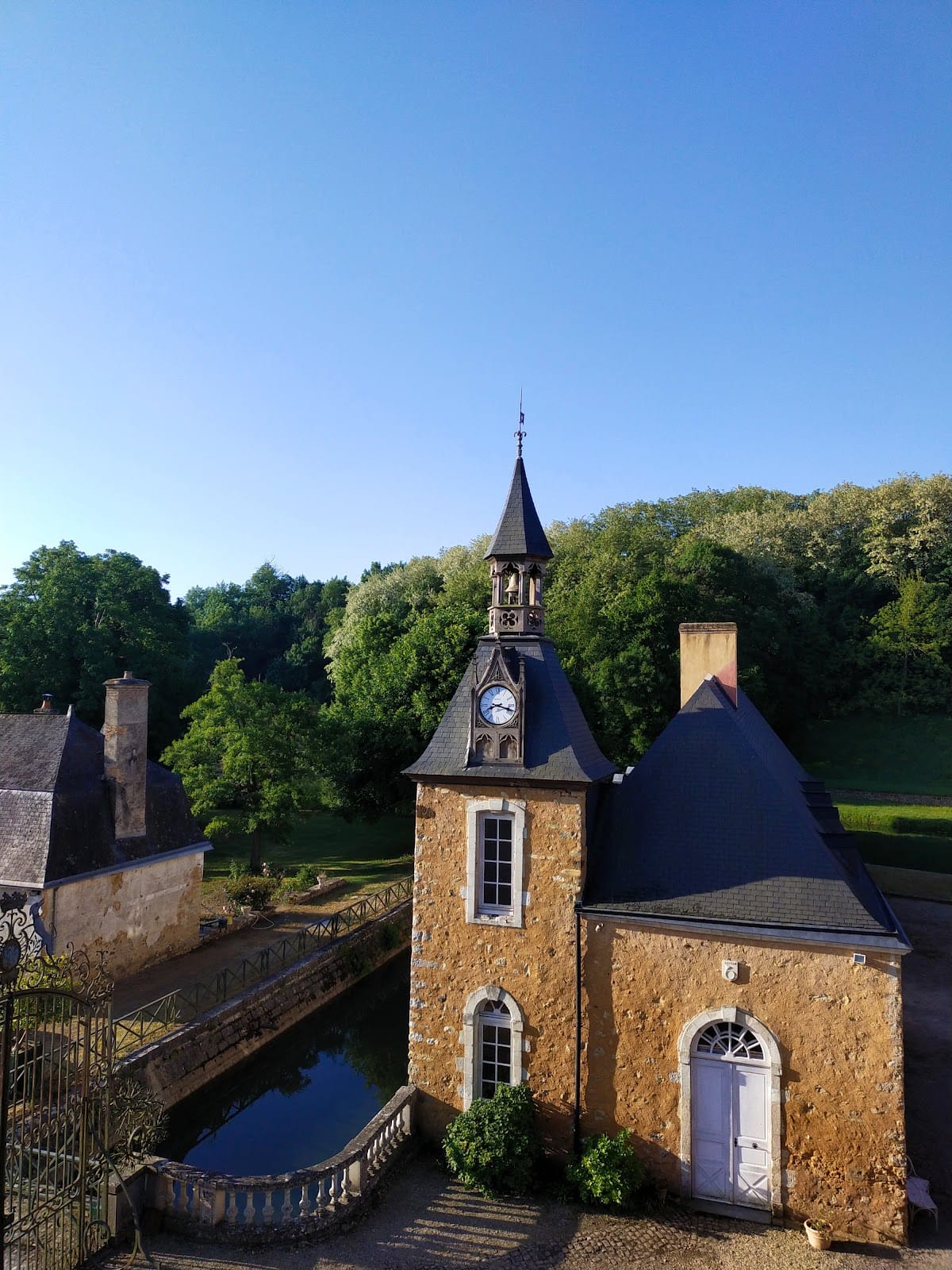
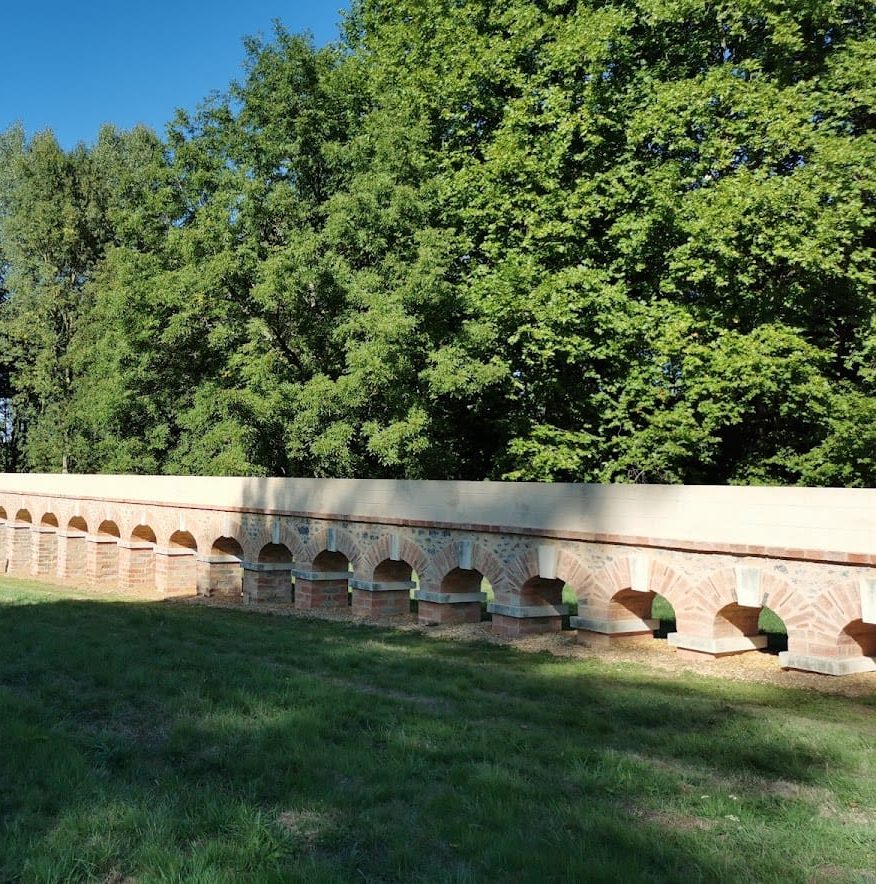
Château de Dobert is arranged around a main building, a portal, a courtyard, and long outbuildings in a landscape shaped by the Vègre. The courtyard is bordered by the river, while moats and planted avenues form part of the wider setting. An aqueduct and its irrigation system are also integrated into the property.
Château and courtyard
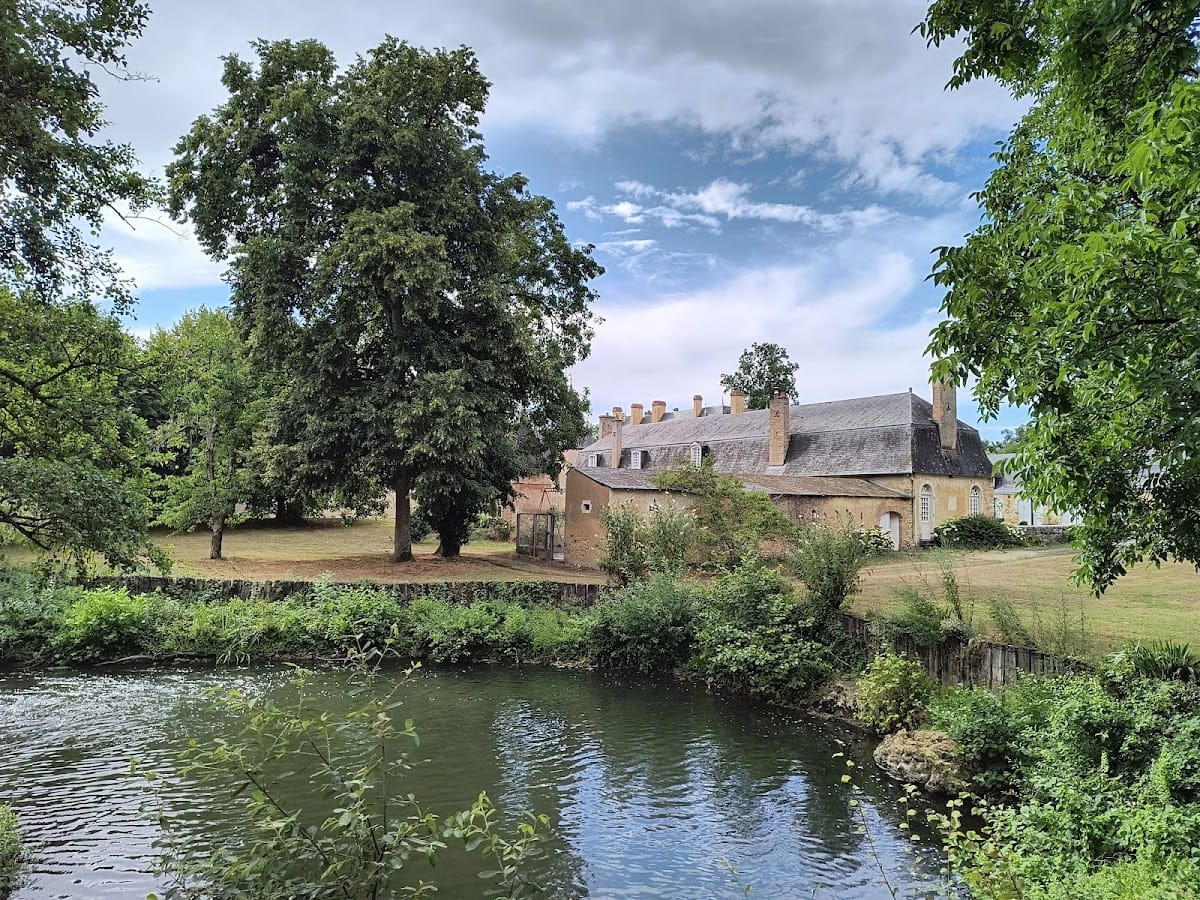
The principal château is a classical-style building accompanied by a portal and courtyard. Its present appearance reflects the enlargement carried out in the mid-eighteenth century. The courtyard lies beside the Vègre, whose meander forms part of the site’s physical setting.
Waterworks and avenues
The grounds include moats and an aqueduct connected to an irrigation system. A planted avenue accompanies the aqueduct, and another planted avenue provides the eastern approach to the château. These waterworks and avenues are among the features included in the property’s partial historic-monument protection.
Outbuildings
Two long outbuildings were added during the restoration that followed the French Revolution. One of them was severely affected by the fire of 28 December 2019, which destroyed its roof. The façades and roofs of the outbuildings form part of the protected ensemble.