Burg Schwärzenberg: A Medieval Hilltop Castle in Germany


Site at a Glance
- Rating
- 4.3
- Popularity
- Very Low
- Country
- Germany
- Primary era
- Medieval
- Eras represented
- Medieval
- Civilizations
- Holy Roman Empire
- Site type
- Military
- Remains
- Castle
On this page9 sections
History
Burg Schwärzenberg, also known as Schwarzenberg, is a ruined medieval hilltop castle in Germany near Roding. Probably built during the thirteenth century, it was established by the Lords of Fronau on land belonging to the Bishop of Bamberg, a senior church official who also ruled a territorial lordship. The castle was a residence of the lower nobility, and a motte castle at Haselberg may have preceded it.
The Fronau Lordship
The Lords of Fronau were an aristocratic family known since the early twelfth century. Burg Schwärzenberg first enters written history in 1306, when Andreas von Fronau was identified as its lord. The castle’s position and organization reflected its role as a seat of local noble authority on a hilltop site.
From 1390, Peter Fronauer attacked merchants travelling from Regensburg. In 1400, he was compelled to sell half of Burg Schwärzenberg to his close relative Hans Zenger von Zangenfels. The whole castle later passed to the Zenger family, a noble house with extensive holdings in the Upper Palatinate.
Later Owners and Destruction
Georg von Murach inherited the castle in 1520. Ownership then changed repeatedly, passing among the Barons von Weichs, the Barons von Muggenthal, and Dietrich Heinrich von Plettenberg. A sales document from 1606 described the castle as ruined and in poor structural condition.
Burg Schwärzenberg was destroyed during the Thirty Years’ War, the major European conflict fought from 1618 to 1648. A tradition also connects the small core castle with counterfeiters, although this alleged use remains uncertain.
Conservation and Protection
Safeguarding work, conservation, and archaeological excavations took place between 1999 and 2002. The ruins are protected as an architectural monument of Strahlfeld and as an archaeological monument covering medieval and early-modern remains within the former castle area.
Remains
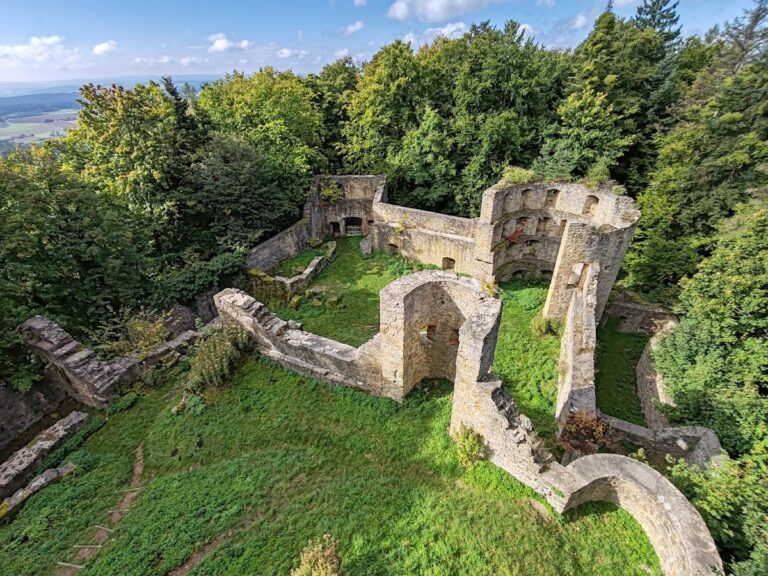
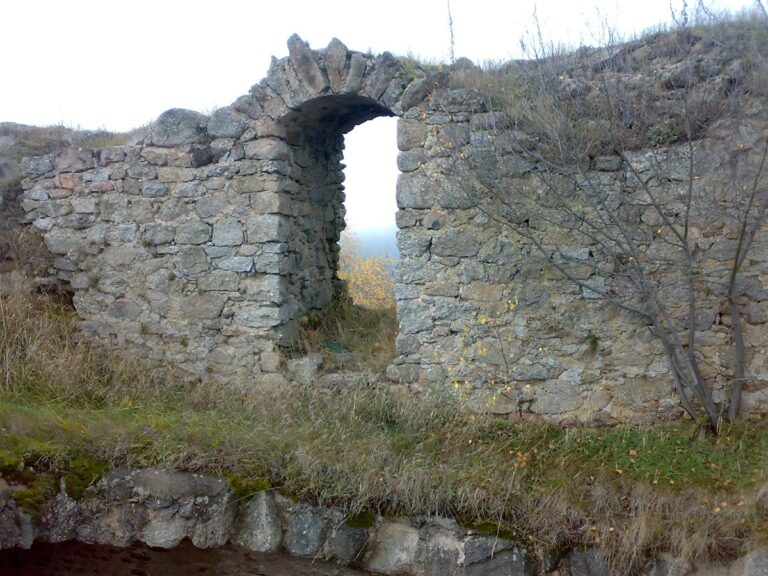
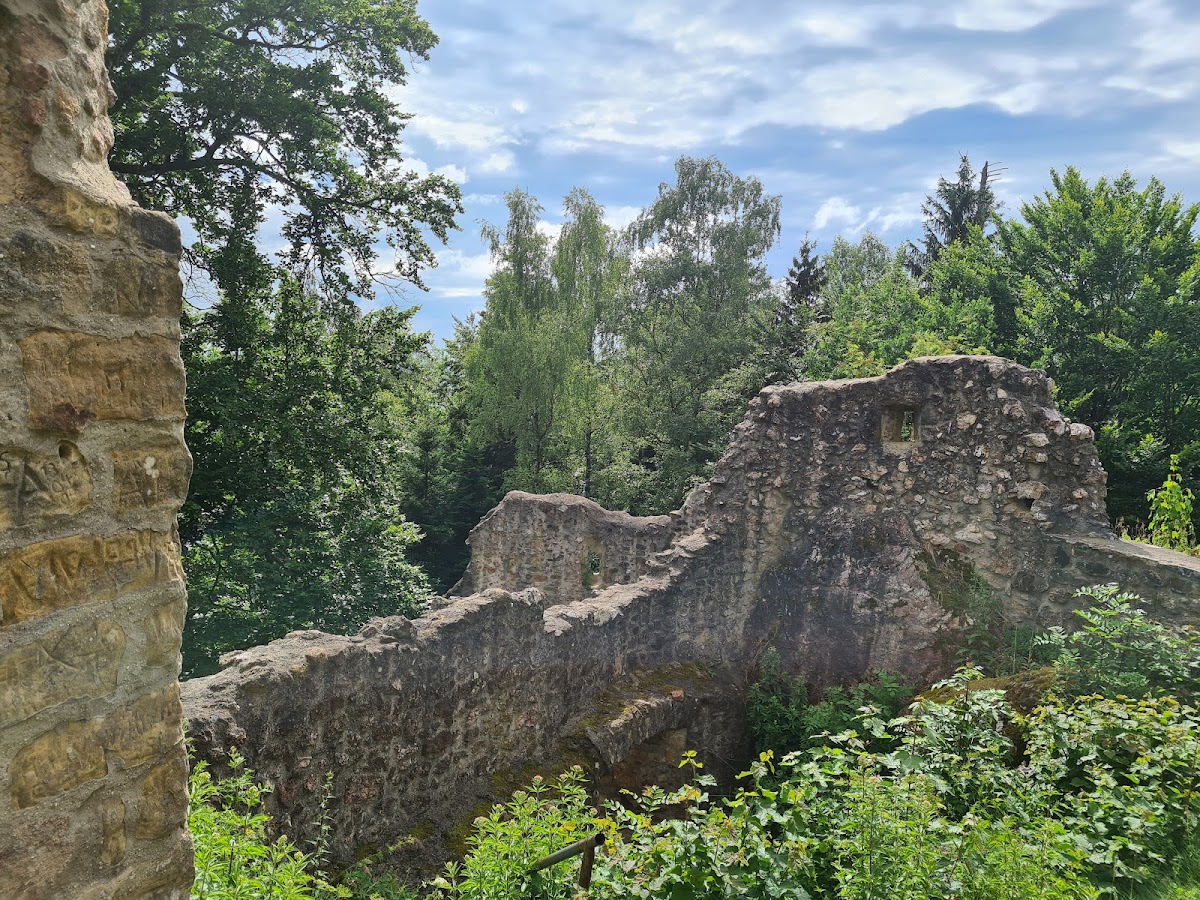
Burg Schwärzenberg is a two-part hilltop castle at about 556 metres above sea level. It occupies a quartz-rock formation of the Pfahl west of Strahlfeld, in the territory of Roding in Bavaria’s Upper Palatinate district. The former complex consisted of a small inner castle and an outer bailey, built mainly with rubble-stone masonry. A surviving rampart and ditch help define the site, with the ditch separating the castle from the surrounding ground on the east.
Castle Buildings and Defences
Inner Castle and Residential Tower
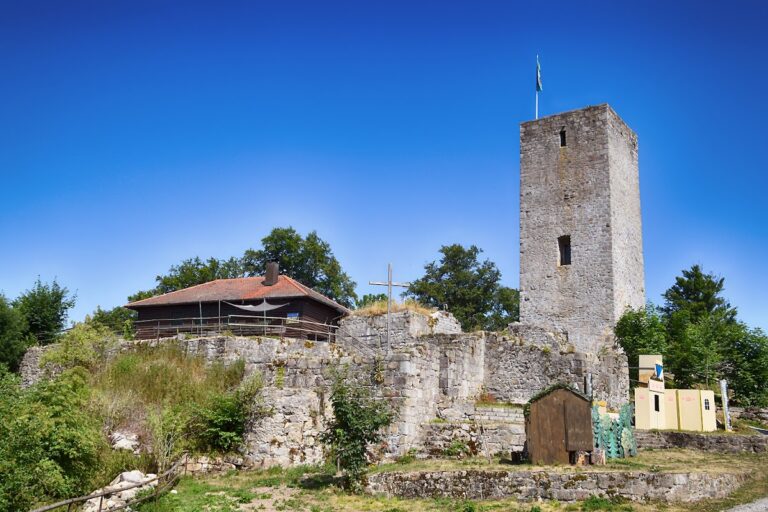
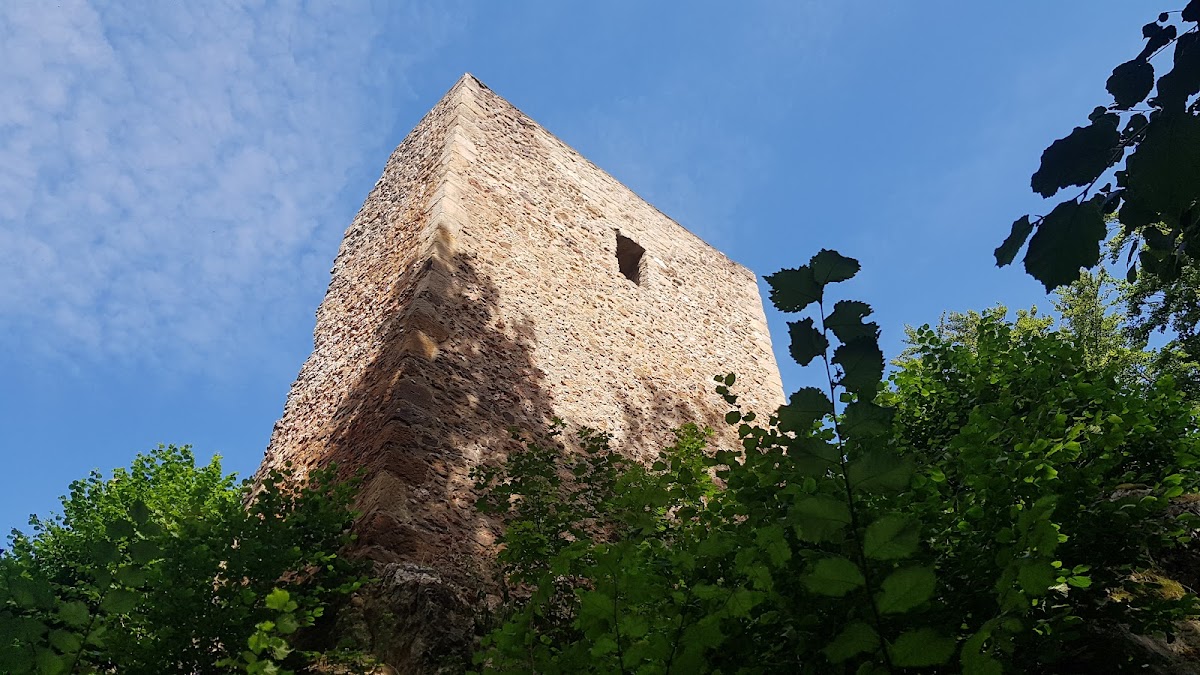
Only parts of the residential tower survive from the inner castle. This was the principal inhabitable tower of the complex. The remaining masonry includes large window openings and a garderobe projection, a projecting toilet structure connected to the tower’s interior. These fragments preserve evidence of the tower’s domestic function and its rubble-stone construction.
Outer Bailey, Rampart, and Ditch
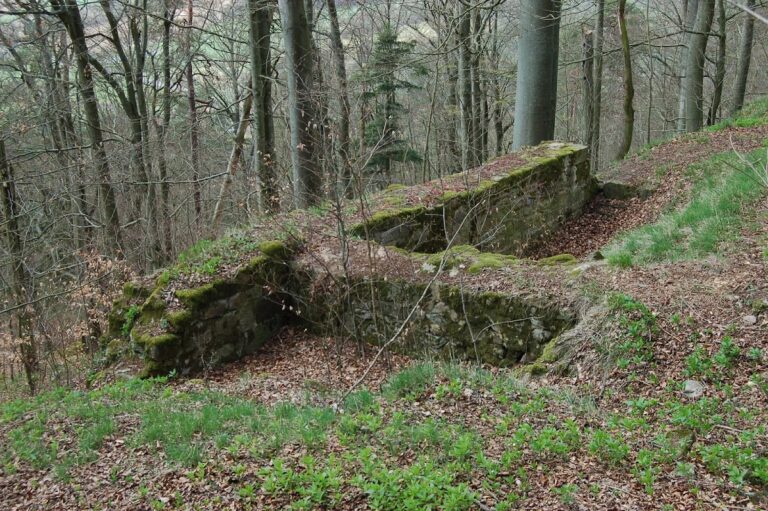
The outer bailey occupied the area indicated by the surviving earthworks. Its rampart remains recognizable, while the ditch is especially clear on the eastern side, where it separated the castle from the surrounding terrain. Together, these features show the defensive boundary and the two-part arrangement of the former hilltop castle.
Rock Formation and Archaeological Setting
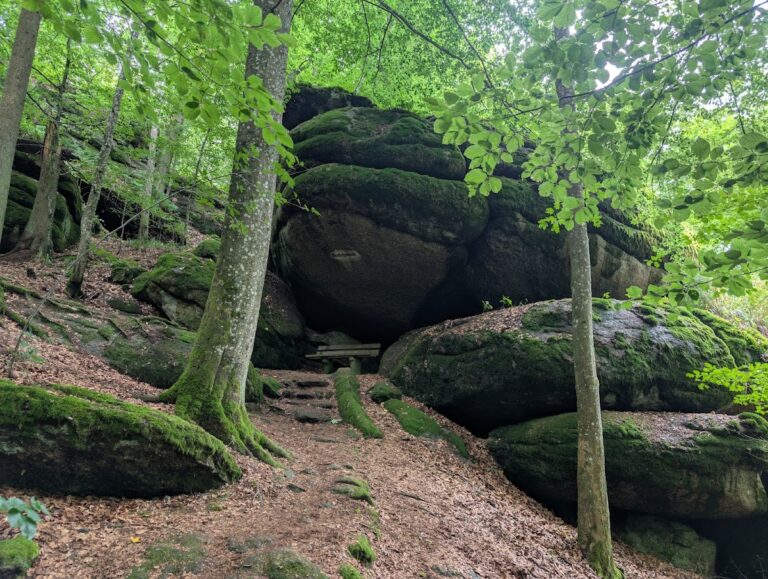
The castle stands on the Pfahl, a prominent quartz-rock ridge in the Bavarian Forest and Upper Palatinate region. The summit area is also identified as the Pfahl-Schwärzenberg Ruin nature reserve, the Schwärzenburg Castle Hill geotope, and the Pfahl quartz-rock formation at Schwärzenberg natural monument. A quarry southwest of the ruins is separately recognized as a geotope, a geological feature identified for scientific or educational importance.
Nearby sites