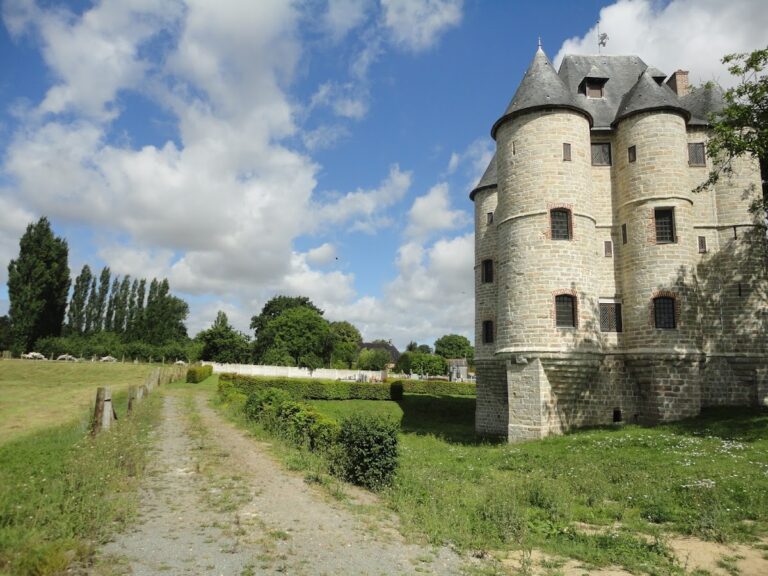
Château de la Motte-aux-Bois: A Historic Fortified Castle in France


Site at a Glance
- Rating
- 4.6
- Popularity
- Very Low
- Country
- France
- Primary era
- Early Modern
- Eras represented
- Medieval, Early Modern, Modern
- Civilizations
- County of Flanders, Duchy of Burgundy, French, Spanish
- Site type
- Domestic
- Remains
- Castle
On this page14 sections
History
Château de la Motte-aux-Bois is a historic castle in France, located in Morbecque, whose origins lie in an eleventh-century fortified residence established by Robert the Frisian, Count of Flanders. Built in the Nieppe Forest, the stronghold was known as Ter Walle and served as a residence of the counts of Flanders. Its position within a comital domain gave it control over the River Lys and connected it with the successive lordships of Flanders, Burgundy, and Morbecque.
A Flemish comital residence
The castle was associated with Philippe d’Alsace, Count of Flanders, who stayed there frequently with his wife, Mathilde of Portugal. Thomas Becket, the English church leader who became Archbishop of Canterbury and opposed King Henry II over ecclesiastical authority, stayed at the castle during his voluntary exile in France in 1164. After returning to England, he was murdered by Henry II’s knights on 27 December 1170, an event that made him a major medieval saint and martyr.
After the death of Guillaume III de Dampierre in 1251, the castle and the Nieppe Forest formed part of the dower of his widow, Beatrix of Brabant. In 1273 she transferred the dower to Gui de Dampierre, Count of Flanders, in exchange for an annual rent of 4,500 Flemish pounds.
Robert of Cassel and Yolande of Flanders
In 1326 Robert of Cassel assigned the forest and castle to his wife, Jeanne of Brittany, as her dower. The couple frequently stayed there, and Robert had the moats and a tower constructed. The Duke of Normandy dismantled the castle in 1328 after its siege during the Battle of Cassel, a conflict that formed part of the struggles over control of Flanders.
Yolande of Flanders, Robert and Jeanne’s daughter and heir, later made frequent stays at La Motte-aux-Bois. She issued acts there and appointed officers, bailiffs, and other representatives, while also carrying out improvements and embellishments. The castle’s governors exercised seigneurial justice, meaning jurisdiction administered by a lord or officials acting for him, independently of the castellany of Cassel and the court of Hazebrouck. Thierry de Haesbrouck, lord of Hoflande, was governor in 1375. The poet Eustache Deschamps may also have stayed at the castle at Yolande’s invitation, possibly in 1381.
Yolande died at the castle on either 12 October or 12 December 1395. She probably died after inaugurating a chapel dedicated to Saint Denis in autumn 1381. Around 1396, probably on the initiative of her son Robert I, Duke of Bar, the nearby Trinitarian monastery of Préavin was established at the edge of the Nieppe Forest. Its chapel of Notre-Dame-de-Piété became a pilgrimage site. The monastery survived until the end of the eighteenth century and disappeared during the French Revolution, while a chapel remained on the presumed site in the nineteenth century.
From dynastic appanage to Burgundian possession
In 1409 Robert I of Bar detached the lordship and castle from the lordship of Cassel to create an appanage, land or revenue assigned to a member of a ruling dynasty, for his son Édouard. Édouard, later Édouard III of Bar, died without heirs, and the property passed to his brother Louis I of Bar. Louis bequeathed it to his nephew René of Anjou in 1419.
The castle and its associated Flemish possessions eventually passed to Philip the Good, Duke of Burgundy, after René was captured at the Battle of Bulgnéville in 1431 and his ransom was settled in 1436. Isabella of Portugal, Philip the Good’s wife and the mother of Charles the Bold, lived at La Motte-aux-Bois and began works that almost entirely rebuilt the castle. A tradition also claims that she had the entrails of her brother, Ferdinand of Portugal, buried there in 1485, although this has not been confirmed.
The castle church contained the marble tombstone of Antoine I de Lalaing, first Count of Hoogstraten and lord of Montigny, who died on 11 April 1540. His wife, Isabeau de Culembourg and of Brossele, was buried there as well. On 8 February 1614, letters issued by the Archdukes Albert and Isabella elevated the lordship to a county for Robert of Saint-Omer, the first Count of Morbecque.
Seventeenth-century destruction and later administration
The castle was damaged and militarily dismantled during the wars of the seventeenth century. French forces captured it in 1645, and Jacques de Castelnau recaptured it in 1657. Turenne, the common name of the French marshal Henri de La Tour d’Auvergne, then ordered its dismantling. The Treaty of the Pyrenees in 1659 returned the territory to Spain, and new buildings were erected on the site in 1660.
Although the fortified complex had been destroyed, the site continued to serve judicial and administrative purposes. In 1679 it became the seat of a water-and-forests administration, a government office responsible for woodland resources, related revenues, and associated jurisdiction. The French king also maintained a hereditary captain-grand-bailiff there.
Rebuilding, war damage, and institutional use
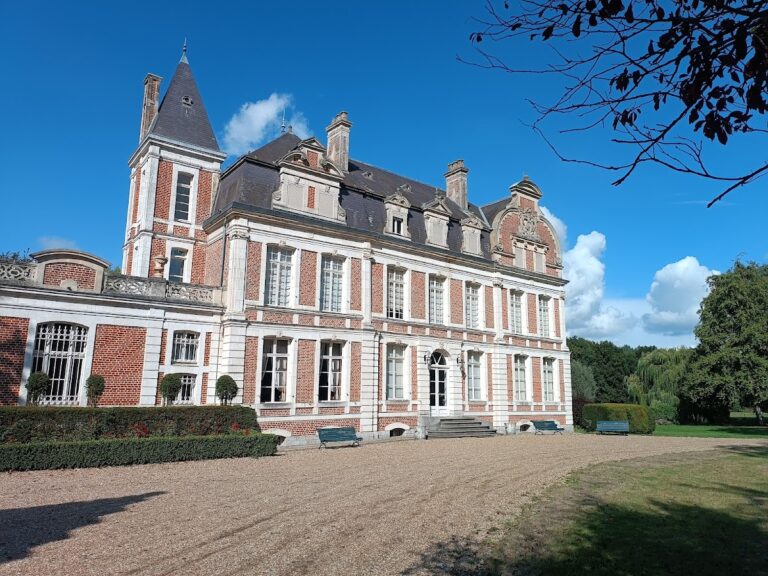
The estate was confiscated as national property during the French Revolution and sold in 1795 to Taffin of Douai. Through the marriage of Taffin’s daughter to Baron Prosper de La Grange, it entered the La Grange family, which retained it until 1962. The post-revolutionary owner demolished surviving parts of the old fortification, built a chapel, and made the complex habitable again. Further rebuilding took place in 1837, followed by extensive alterations at the end of the nineteenth century. The last remains of the fortification were demolished in 1895.
Baron Amaury de La Grange carried out further changes, including the construction of a square tower. In 1928 he purchased the facade of the former Fort-Gassion at Aire-sur-la-Lys for reuse at the castle chapel. During the First World War, when the castle stood near the front, the La Grange owners placed the estate, its lands, and surrounding farms at the disposal of British and Commonwealth forces. The baroness used part of her fortune for the war effort and hosted prominent figures, including Edward VIII; the British army gave her the honorary title “Mother.” Allied bombing struck the castle in June 1944, and the complex was reconstructed in 1950.
In 1962 the castle and its approximately 100-hectare estate passed to the Institut aéronautique et école de pilotage Amaury de la Grange. The complex continues to house this aeronautical training institution, named after the French politician and First World War aviator Amaury de La Grange. The former commune of La Motte-aux-Bois was merged with Morbecque between 1790 and 1794, placing the castle within Morbecque’s territory. The castle library houses the headquarters of the association Mémoire des pierres, which works to preserve heritage connected with the castle and organizes heritage visits. The park is included in the preliminary inventory of remarkable gardens.
Remains
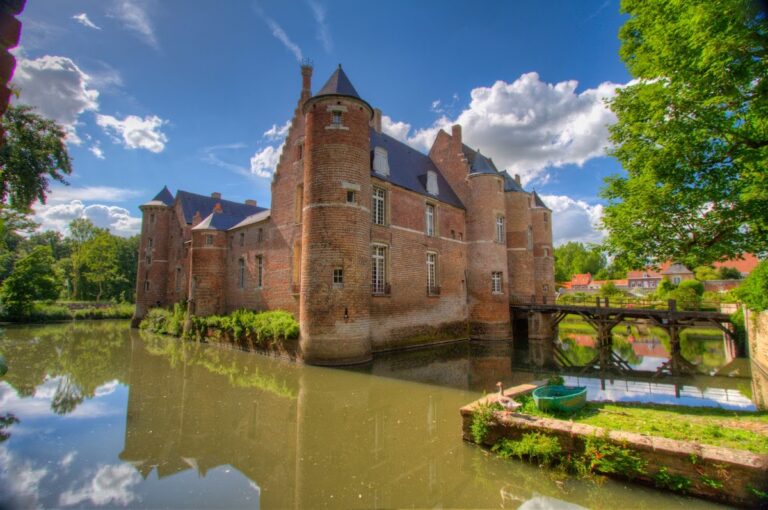
Château de la Motte-aux-Bois began as a fortified motte castle, a medieval residence built around a mound and a surrounding ditch, and was later described as a brick-built water castle enclosed by defensive moats. Fourteenth-century works attributed to Robert of Cassel added the moats and a tower. The fortifications were subsequently dismantled, with the last surviving traces removed in 1895. Buildings erected on the former fortified site in 1660 created a complex close to the form of the present castle, which was rebuilt in 1837, extensively altered in the late nineteenth century, and reconstructed after the 1944 bombing in 1950.
Chapel and surviving historic fabric
Saint Thomas of Canterbury Chapel
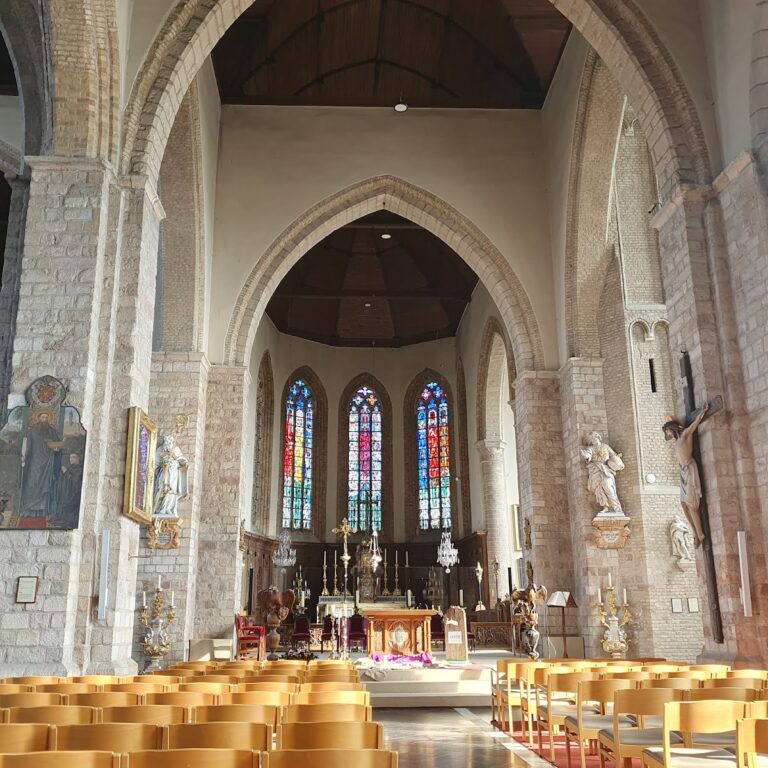
The chapel dedicated to Saint Thomas of Canterbury dates from 1831. Its facade came from the former Fort-Gassion at Aire-sur-la-Lys. Amaury de La Grange purchased it in 1928, and it was reassembled at the castle stone by stone. The chapel therefore incorporates a separate military structure into the later castle complex.
Cellars and medieval remains
A stone estimated to date from the thirteenth century was discovered and presented in the castle cellars. The cellars also contain pillars and vaults dating from the fifteenth century, providing surviving physical evidence from earlier phases of the site beneath the later buildings.
The present institutional complex
Training and residential buildings
The current castle contains part of the administration of the Amaury de La Grange institute, together with a restaurant and studios on the second and third floors. The wider complex includes a cafeteria, a gymnasium, and another building with bedrooms, a weight-training room, a computer room, and a language laboratory. The institute provides theoretical instruction for airline pilots and trains aircraft-maintenance technicians, while practical instruction takes place at Merville-Calonne Airport using former airliners and light training aircraft.
The “cathedral” building
A building known as the “cathedral” contains classrooms named after famous aviators. Its nickname comes from the glazed staircases on both sides of the building, which form a distinctive part of its design.
Park and grounds
The castle park includes an earth-filled terrace, a kitchen garden, a greenhouse, a square, and a garden enclosure. These elements form part of the grounds associated with the rebuilt castle and its later institutional use.
Nearby sites