Château de Courson: A Renaissance-Style Château and Historic Estate in France


Site at a Glance
- Rating
- 4.3
- Popularity
- Low
- Country
- France
- Primary era
- Early Modern
- External website
- Open
- Eras represented
- Early Modern, Modern
- Civilizations
- French
- Site type
- Domestic
- Remains
- Manor House
On this page9 sections
History
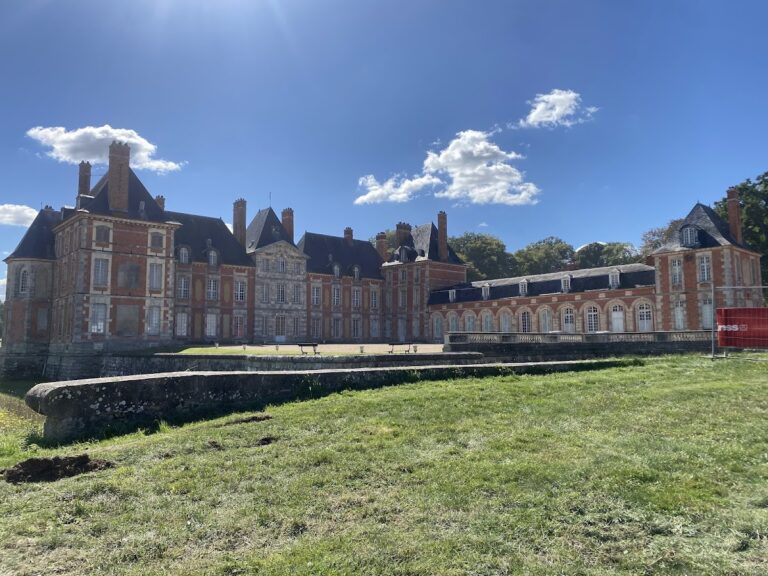
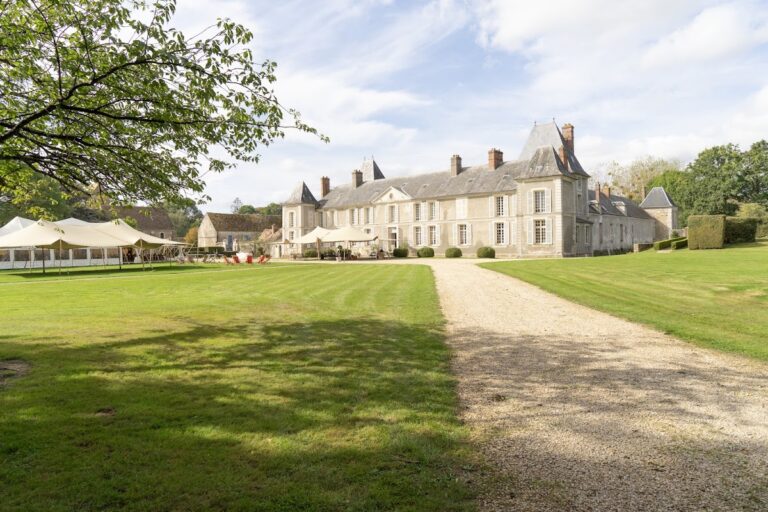
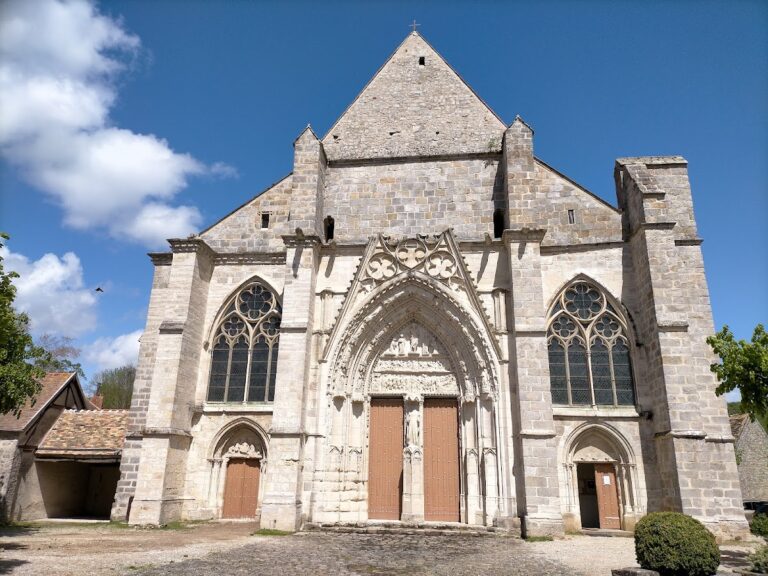
Château de Courson is a French château and manor-house residence in Courson-Monteloup, France, about 32 kilometres southwest of Paris. Its present form is a seventeenth-century building in Renaissance style, developed from a manor constructed in 1550, and the estate remains associated with the residence of successive noble families.
From the Cincehours lordship to the Le Maître manor
An act of 1468 refers to the lordship of Cincehours, also written Saint-Cehours. Geoffroy Le Maître held the lordship in 1515. His son Gilles Le Maître, an attorney general and later first president of the Parliament of Paris, acquired the fief in 1534. The Parliament of Paris was the French monarchy’s major judicial institution, and its president was a senior judicial officeholder. In 1550, Gilles had a manor built among agricultural lands, establishing the residence from which the present château developed.
The Le Maître family retained the fief until 1639. Charles and François du Tronchet then held it, followed by Balthazar de Méalet de Fargues, who acquired the estate in 1655. A captain-major in the Bellebrune Regiment and governor of Hesdin, Méalet de Fargues brought together the fiefs of Cincehours, Monteloup, and Launay-Courson. His support for the Prince of Condé, a leading noble and military figure opposed to the royal government during the Fronde, led to the confiscation of the residence in 1661. Cardinal Jules Mazarin, chief minister during the early reign of Louis XIV, directed the royal response to the Fronde and condemned Méalet de Fargues to be hanged.
The Lamoignon period
In 1672, Louis XIV gave the château to Guillaume de Lamoignon, president of the Parliament of Paris. His son Nicolas inherited it in 1677 and served as intendant of Languedoc. An intendant was a royal administrator responsible for governing a province or administrative territory. Nicolas’s work at Courson gave the building the appearance associated with the château today.
The estate remained with the Lamoignon family and their descendants until 1775. Guillaume-Urbain de Lamoignon inherited it in 1724 after serving as intendant of Rouen and later of Guyenne. His son Guillaume succeeded him in 1742; he was president of a judicial chamber and died without issue.
Later owners and family transmission
Guillaume Joseph Dupleix de Bacquencourt purchased the estate in 1775. He had previously served as intendant of Picardy and Brittany and was guillotined during the Reign of Terror in 1794, the period of intense revolutionary repression in France. That same year, Henri de Montesquiou Fezensac acquired the estate through his marriage to Dupleix de Bacquencourt’s daughter. He later became a count of the Empire.
In 1844, Courson passed to Henri’s son-in-law Jean Toussaint Arrighi de Casanova, Duke of Padua, a former general officer who later served as a deputy for Corsica. Ernest Louis Henri Hyacinthe inherited the estate in 1853, followed in 1888 by his son-in-law Georges-Ernest-Maurice de Riquet de Caraman, a deputy of Seine-et-Oise. The property passed in 1931 to Ernest Félix Anne Antoine, Count of Caraman, and in 1974 to Roland Marie Raoul Henri de Nervaux-Loys.
The estate is shared by Roland de Nervaux-Loys’s two children, Hélène and Olivier Maurice, and their spouses, Patrick Fustier and Patricia Bertin. In 2022, the château and estate were offered for sale after approximately two centuries within the same family line.
Park development and heritage protection
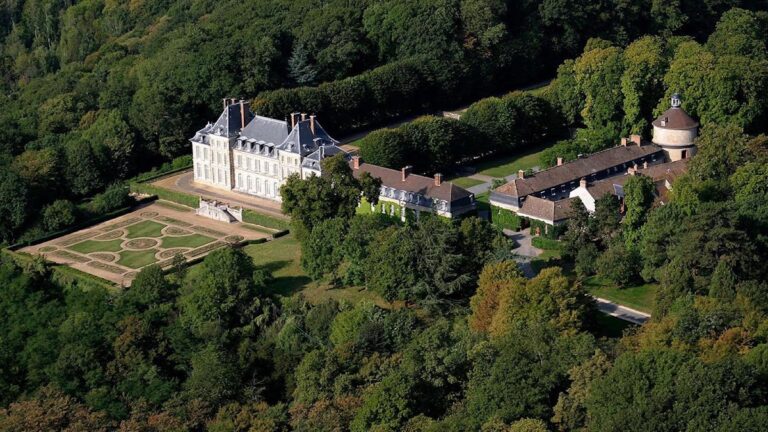
The historic park was laid out in formal style during the eighteenth century by a pupil of André Le Nôtre, the principal landscape designer associated with the ordered geometry, controlled vistas, and organized planting of the formal French garden tradition. Around 1820, Louis-Martin Berthault redesigned the gardens for Jean Toussaint Arrighi de Casanova, Duke of Padua. The brothers Denis and Eugène Bühler reshaped them again around 1860.
Château de Courson was classified as a historic monument in 1944, a French legal designation for protected cultural heritage. The classification covered the château’s façades, roofs, and hydraulic installation. In 1992, the park, perspective avenue, the façades and roofs of the outbuildings, and the chapel were registered as historic monuments. The estate also holds the French Remarkable Garden designation, which recognizes gardens of notable historical, aesthetic, or botanical value.
Courson became especially associated with the Journées des Plantes de Courson, nationally recognized plant fairs held in October from 1983 and also in mid-May from 1987. The event moved entirely to the Domaine de Chantilly in 2015.
Remains
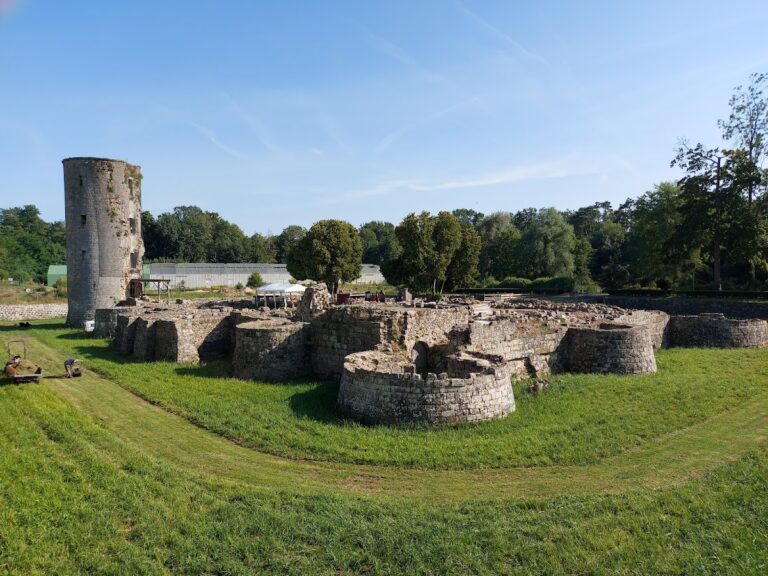
The estate combines the château with a chapel, outbuildings, a hydraulic installation, and a historic park of approximately 45 hectares. Its principal landscape elements include a formal perspective avenue and the pond of La Verrerie. The château’s façades and roofs form part of the protected historic fabric, while the grounds retain an organized garden setting shaped by eighteenth- and nineteenth-century redesigns.
Château and estate buildings
The château is a seventeenth-century Renaissance-style residence whose fabric developed from the 1550 manor built by Gilles Le Maître. Its original function was noble habitation, and it remains residential. The estate also contains a chapel and outbuildings, whose façades and roofs were included in the 1992 heritage registration. A hydraulic installation forms part of the protected château complex.
Park and botanical collections
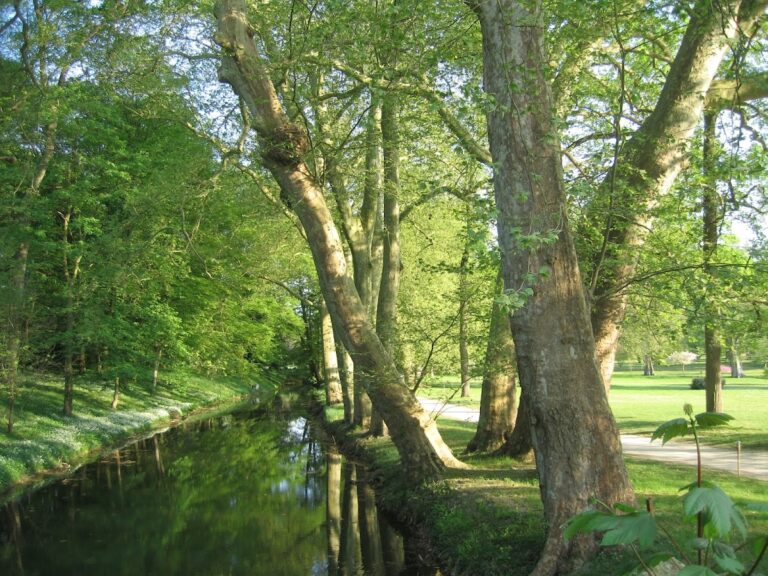
The 45-hectare park follows a formal design, with ordered vistas expressed through the perspective avenue and the pond of La Verrerie. It contains a permanent collection of ornamental trees, shrubs, and annual plants. The grounds have also hosted displays of rare ornamental plants and new cultivars, plant varieties deliberately selected and propagated through cultivation, presented by producers from a wide range of regions, countries, climates, and soils.
Interior collections
The château houses numerous objects and paintings dating from the First and Second French Empires, the imperial regimes established under Napoleon I and Napoleon III during the nineteenth century.