Château de Thévalles: A Fortified Historic Estate in France


Site at a Glance
- Rating
- 4.7
- Popularity
- Very Low
- Country
- France
- Primary era
- Early Modern
- External website
- Open
- Eras represented
- Medieval, Early Modern, Modern
- Civilizations
- French
- Site type
- Military
- Remains
- Castle
On this page15 sections
History
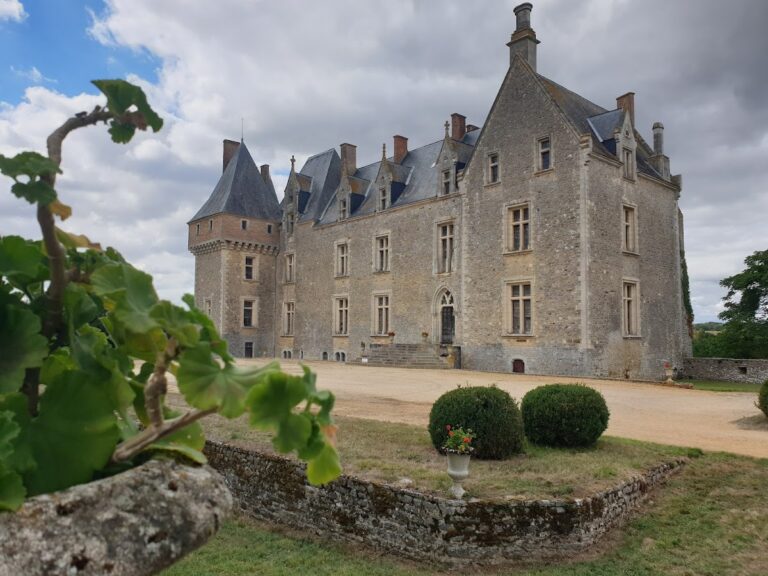
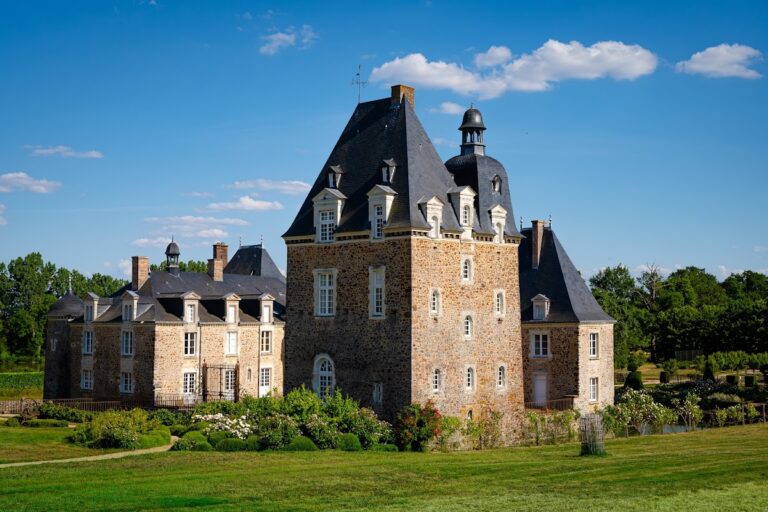
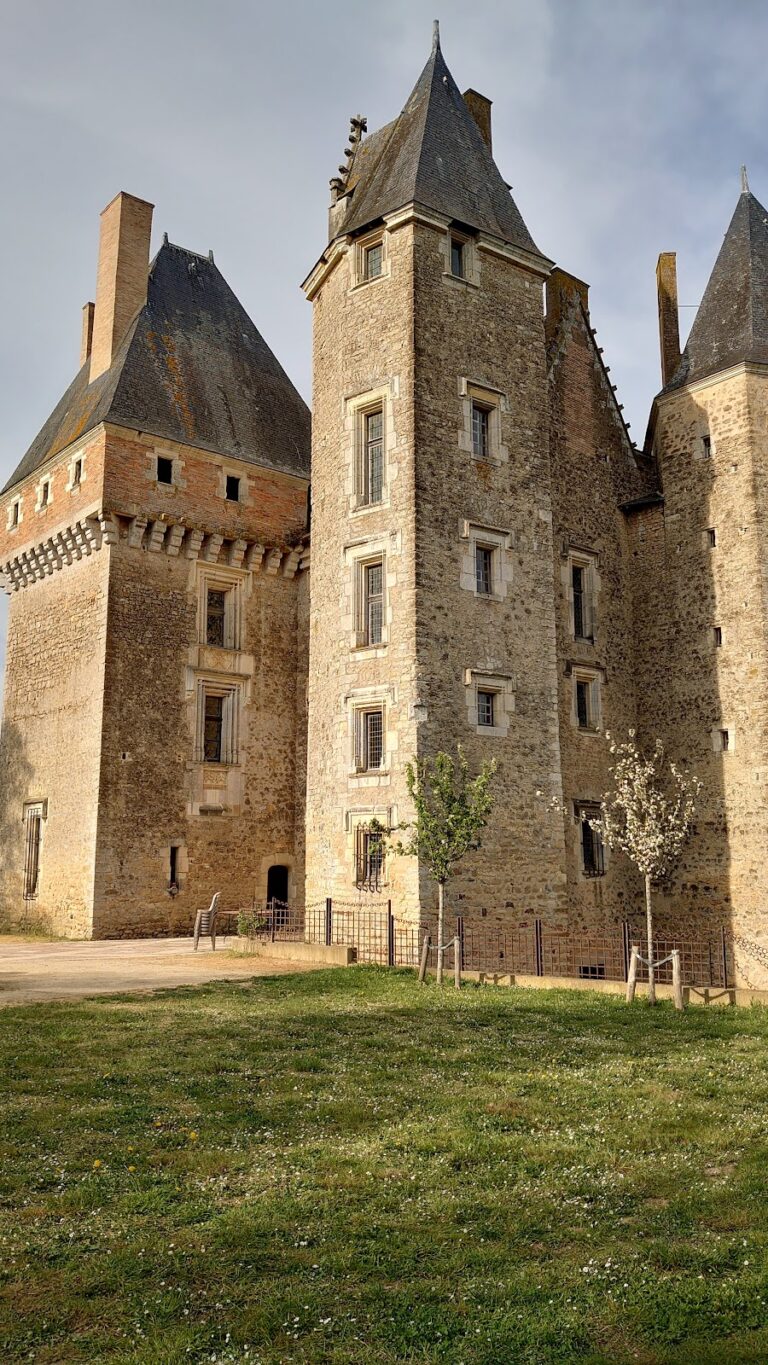
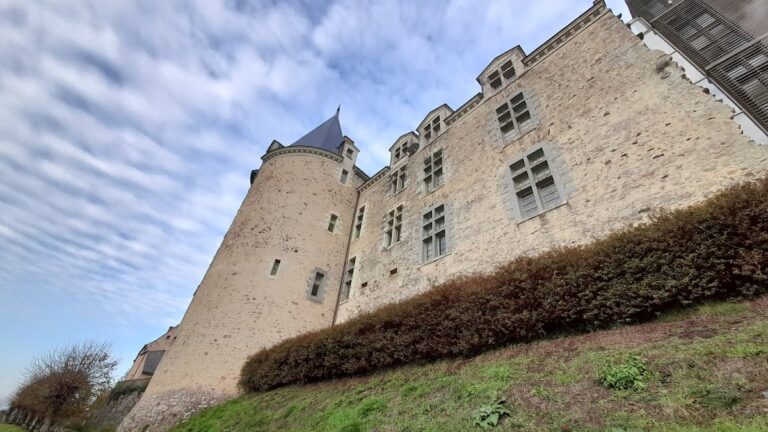
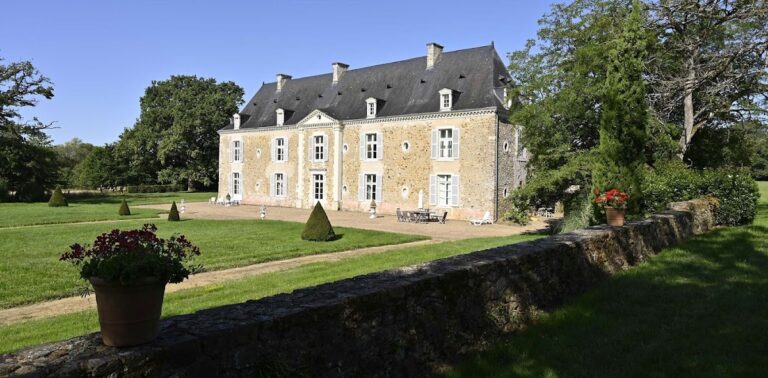
Château de Thévalles is a fortified château at Chémeré-le-Roi in France, built on the foundations of an eleventh-century structure associated with resistance to Norman invasions. The present buildings combine sixteenth- and seventeenth-century construction, while two surviving fifteenth-century towers and the surrounding defensive works preserve the site’s medieval character.
Medieval origins and the Thévalle family
The site was described in 1415 as an hébergement, meaning a fortified residence or lodging. By 1495, the estate included an hébergement, a manor house, and a dwelling. It may have been attacked by English forces in 1428 under John Talbot, an English commander and nobleman of the Hundred Years’ War, the long conflict between the English and French crowns. When a trench was cut near the château in 1852 for the Laval to Brûlon road, many human bones were found and were thought to belong to English soldiers killed in that engagement.
The Thévalle family, an old knightly lineage originating in Thévalle in Chémeré, was closely associated with the estate. Avoise and Nicolas de Thévalle left bequests to the church of Chémeré before 1367. Thomas de Thévalle served in the companies of Jean de Landivy in 1378 and Robert de la Ferrière in 1380, while Thibault de Thévalle served under Guillaume de Saint-Martin in 1380.
Other members of the family held judicial and administrative connections in the region. Herbelot, linked with the Juigné charter collection in 1383, acted as testamentary executor for Jean Chevalier, lord of Comté, in 1380. He later served as bailiff of the Count of Alençon in the châtellenie of Thorigné, a territorial jurisdiction administered from a castle, in 1390, and as seneschal of Verdelle, a senior judicial and administrative office, in 1397.
Jean de Thévalle was involved in litigation with the lord of Comté, while his daughter Isabeau married Guillaume du Châtelet. Fouquet de Thévalle, husband of N. des Écottais, appears in records from 1384 and 1405. A later Jean de Thévalle, a knight, received English safe-conducts in 1433 and 1434. His widow, Julienne de Nouray, was still living in 1451.
Rebuilding and dynastic succession
Émard de Thévalle married Jeanne de Quatrebarbes, who made him lord of Bouillé, a place subsequently known as Bouillé-Thévalle. She died in 1486, and Émard later married Renée Fournier of Angers. He appeared in the proclamation of the reformed Custom of Maine in 1508, a formal statement of the region’s customary law. His will, dated 7 November 1512, requested burial in the choir of Chémeré church beside his father Jean and his son Jean.
That will also names Émard’s uncle Jean de Thévalle, his mother Julienne de Nouray, his aunt Isabelle de Nouray, Jean Morin lord of Loudon, Étienne de Thévalle, a cleric and his son, René du Bouchet, his son-in-law, and two illegitimate daughters of the deceased Jean de Thévalle. In 1512, another Jean de Thévalle was under the guardianship of his elder brother Étienne. He married Françoise de Scépeaux, sister of François de Scépeaux, later Marshal de la Vieilleville. In 1544, their maternal half-brother Jean du Mas gave Françoise the estate of Éventard.
A deed dated 6 February 1558 describes the land of Thévalles as having been acquired with the château newly rebuilt. Jean de Thévalle later married Radegonde Fresneau. Their son Charles was living in 1582 and 1586 but died before his father. Their only daughter, Jacqueline, married Charles de Maillé on the condition that a younger son would restore the Thévalle name. Their son Charles did so, although he died as a child.
The Maillé and Bourbon-Condé periods
Urbain de Maillé, Marshal of France, then became lord of Thévalle. His daughter by Nicole du Plessis, sister of Cardinal Richelieu, married Louis II de Bourbon-Condé on 16 February 1641. The estate subsequently passed through the Bourbon-Condé family, including Louis II, Henri-Jules de Bourbon-Condé, recorded in 1695 and 1703, and Louis III de Bourbon-Condé, recorded in 1709.
Later owners included Louis IV Henri de Bourbon-Condé and his wife, Marie-Anne de Bourbon-Conti, recorded in 1712 and 1718, followed by Louise-Anne de Bourbon-Condé, known as Mademoiselle de Charolais, who was associated with the estate in 1738.
The La Rochelambert estate and nineteenth-century changes
In 1762, Louise-Anne de Bourbon-Condé transferred the estate to Louis-François-Joseph de Bourbon-Conti, Count of La Marche. He sold it in 1764 to François-Laurent-Scipion de La Rochelambert, husband of Michelle-Anne Douard de Fleurance. A second adjudication, held on 19 November 1765 for the seller’s creditors, confirmed a change in the circumstances of the sale, but the château remained with the La Rochelambert family until the beginning of the twentieth century.
Members of that family associated with Thévalles included Gabriel de La Rochelambert, Henri de La Rochelambert, and Apollonie de La Rochelambert, Countess of Valon, who lived from 1825 to 1904. The nineteenth century also brought physical changes to the estate. The Thévalles mill was rebuilt in 1850, and a Gothic chapel was constructed at the entrance to the château.
In January 2023, the château, chapel, park, and fortifications were entered on the register of protected Historic Monuments. This protection recognizes the estate as a group of connected historic elements rather than as an isolated residential building.
Remains
Fortified château
Medieval towers and defensive works
Château de Thévalles occupies a steep rocky outcrop above the Erve River and its valley. Two crenellated towers from the fifteenth century survive as the principal medieval elements. Their battlements and position within the enclosing works formed part of a defensive system designed to protect the fortified residence.
Walls and former moats
Enclosing walls and broad moats completed the château’s defensive arrangement. The moats have since been filled, while the wall line and towers continue to define the historic fortified core. The present château incorporates construction from the sixteenth and seventeenth centuries over the foundations of the earlier building.
Chapel and estate grounds
Gothic chapel
An elegant Gothic chapel stands at the château gate. Built during the nineteenth century, it forms part of the entrance complex and remains one of the later architectural additions to the estate.
Park and garden
Beyond the line of the former moats lies an English-style garden. The park, together with the château, chapel, and fortifications, forms part of the protected Thévalles estate.
Mill and entrance buildings
Thévalles mill
The Thévalles mill stands below the château, beneath the rocky position overlooking the Erve valley. It was rebuilt in 1850 and belongs to the group of buildings connected with the estate’s historic setting.
Maladrerie
A former building known as the Maladrerie stood at the entrance to the château avenue. The name refers to a building or institution associated with the care or confinement of people suffering from leprosy.