Corcelle Castle: A Historic Noble Residence in Bourgvilain, France
Site at a Glance
- Popularity
- Low
- Country
- France
- Primary era
- Medieval
- Eras represented
- Medieval, Early Modern
- Civilizations
- Duchy of Burgundy, French
- Site type
- Military
- Remains
- Castle
On this page9 sections
History
Corcelle Castle is a historic noble residence in Bourgvilain, Saône-et-Loire, France, with construction dated from the 13th to the 18th centuries. Its origins are also associated with the Verrey family, whose lordship lasted from the 14th century to the beginning of the 16th.
Early references and Verrey lordship
The name Corcelle appears in a 984 cartulary at Cluny, a major Burgundian abbey and monastic center. A cartulary is a collection of charters and records. The entry refers to the name, but does not establish that a castle stood there at that time.
Recorded Verrey lords included Jean around 1375 and Guillaume around 1421. Around 1460, Guillaume’s son Pierre held Corcelle. Philibert is named around 1512, followed around 1520 by Jean, probably Philibert’s son.
Busseul Saint-Sernin and Laube families
In 1520, the estate passed to the Busseul Saint-Sernin family. Its lords included Philibert in the mid-16th century, followed by his son Charles, who served as bailiff of Mâcon in the second half of the century. A bailiff was a judicial and administrative officer for a district. Charles’s son Laurent was baron of Corcelle in the early 17th century, and Laurent’s son Marc-Antoine held the title during the first half of that century.
The castle was sold in 1642 to Laurent de Laube, baron of Corcelle. Later Laube holders included his son Philibert-Hubert, who died around 1715, and Philibert-Hubert’s son André-Emmanuel (1684–1754). André-Emmanuel’s daughter Marie, baroness of Corcelle, died in 1780. She was the widow of her cousin Jean-Henri de Laube (1717–1747).
Leusse ownership and later history
In 1780, the property passed by marriage to Louis de Leusse (1737–1794), husband of Marie’s daughter Jeanne-Antoinette (1744–1831). After Louis was beheaded in 1794, Jeanne-Antoinette sold the estate to the Martinot brothers. One of the brothers was mayor of Bourgvilain and a tax farmer-general, a private contractor entrusted with collecting taxes for the French Crown.
Since 20 August 1976, the castle has been protected as a Monument historique, the French legal designation for historic sites and buildings.
Remains
Enclosure and courtyard
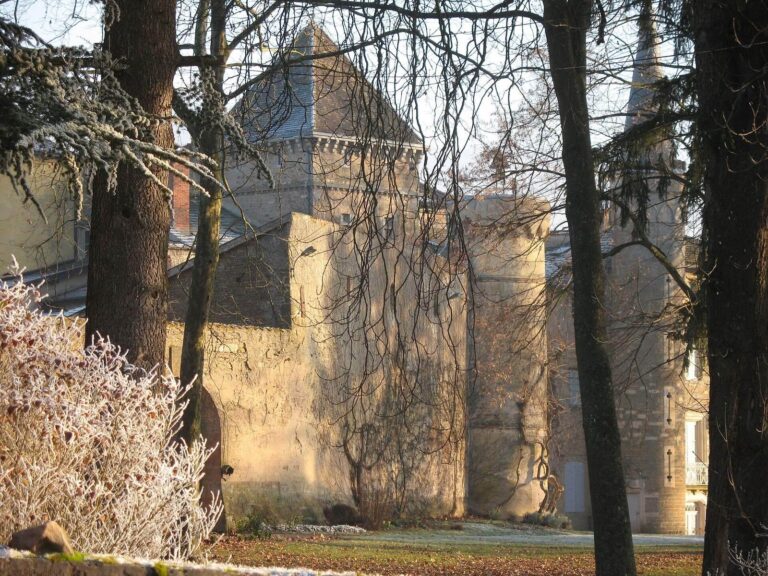
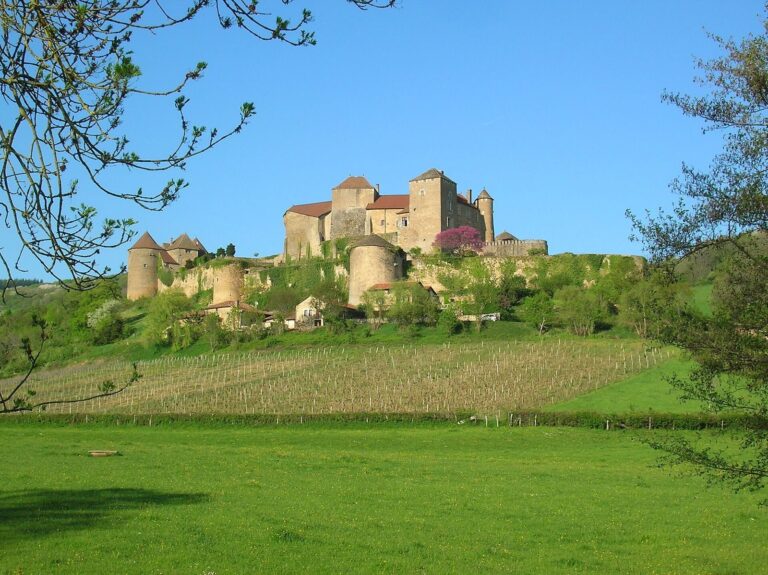
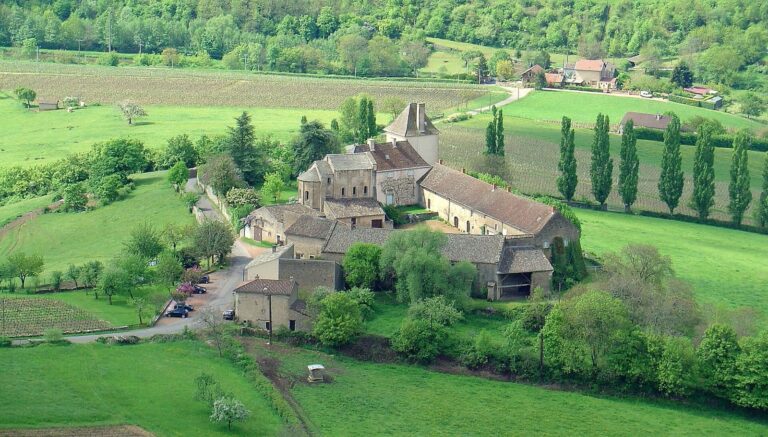
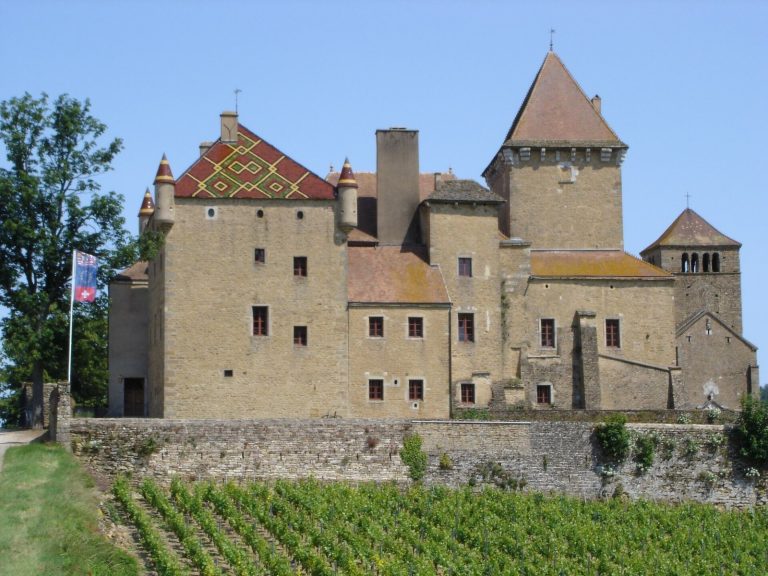
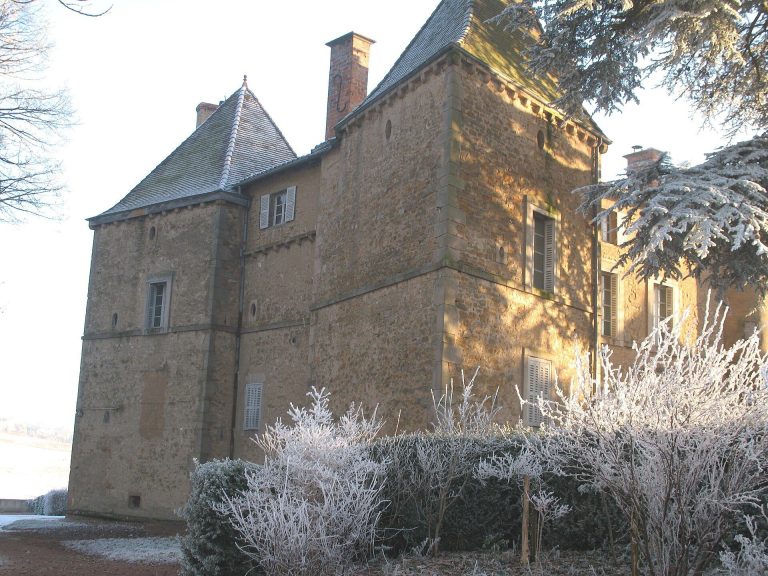
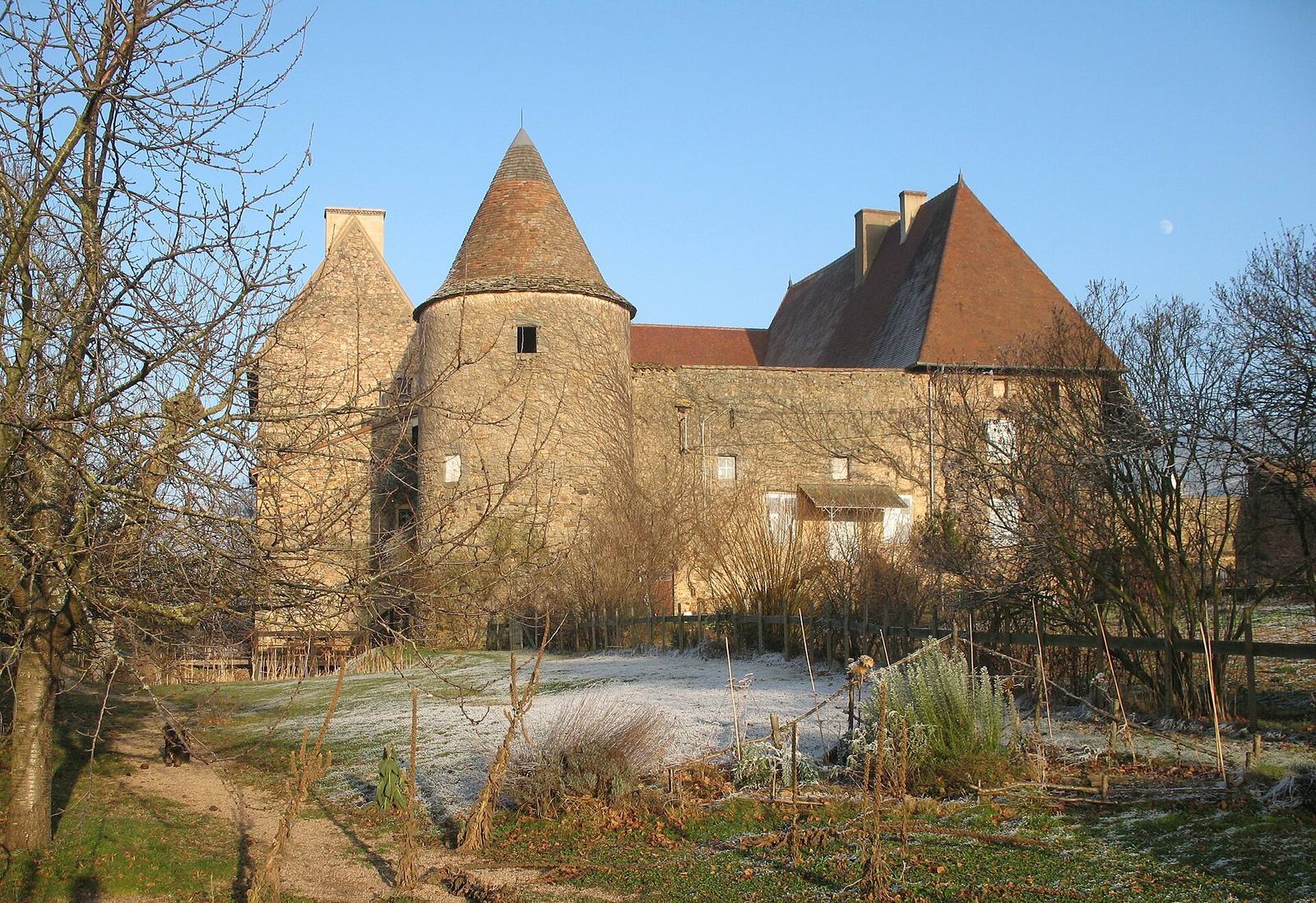
The castle occupies a small plateau overlooking the Valouze valley. Buildings of varied plans and heights are arranged around a rectangular inner courtyard and connected by sections of curtain wall, the walls joining parts of an enclosure. Partly filled-in moats border the complex on three sides. The four-sided enclosure has round towers at its northeast and southwest corners.
Buildings and access
Residential building
The principal residential building stands against the eastern curtain wall. A small rectangular building is set against its east-facing side, facing the lower courtyard.
Lower-courtyard entrances
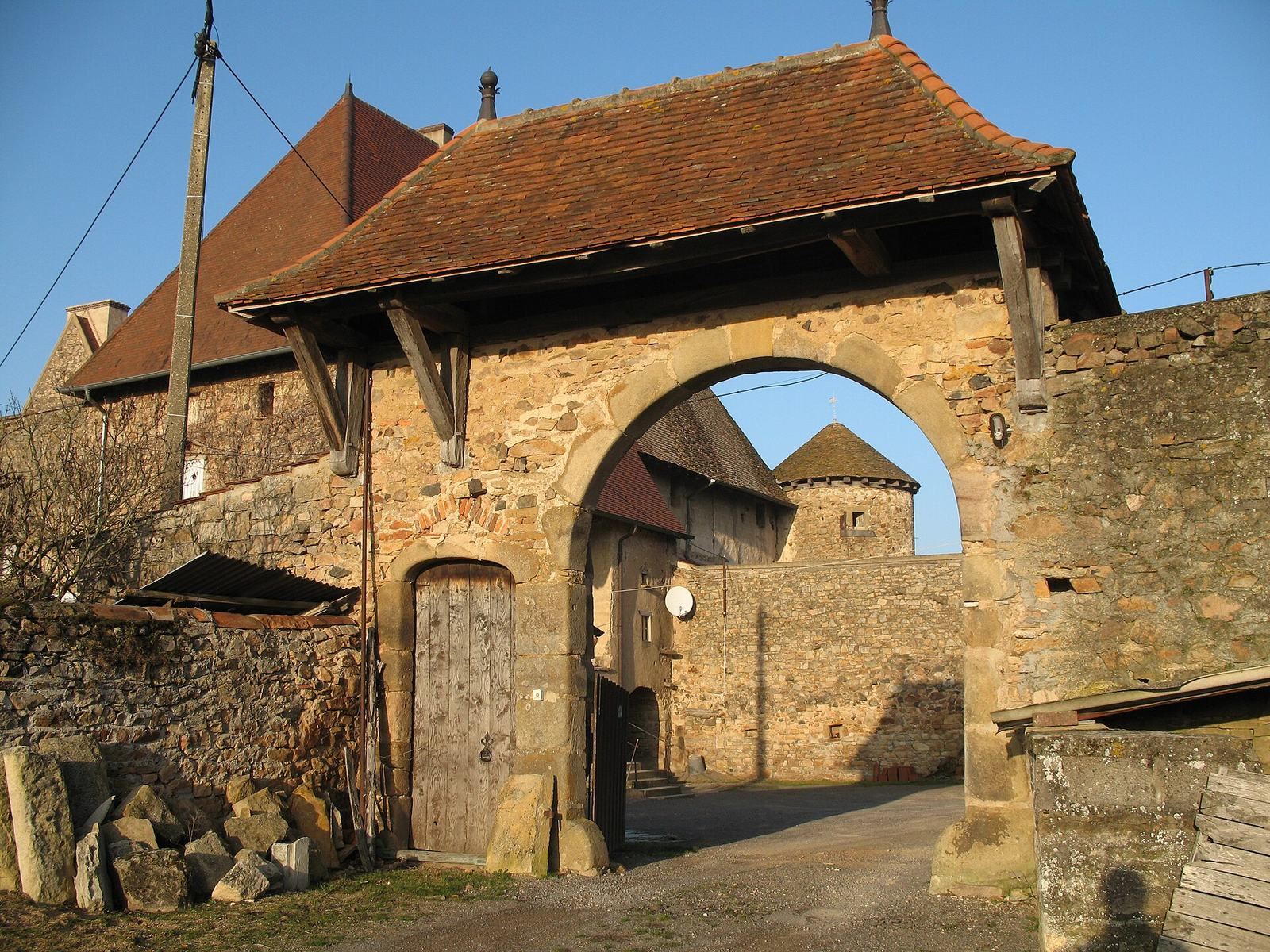
Access to the lower courtyard passes through a cart entrance with a semicircular arch. A pedestrian doorway with a shallow, basket-like arch stands beside it.