Châtillon Castle: A Medieval Lordship Center in France
Site at a Glance
- Popularity
- Medium
- Country
- France
- Primary era
- Medieval
- Eras represented
- Medieval
- Civilizations
- Holy Roman Empire
- Site type
- Military
- Remains
- Castle
On this page10 sections
History
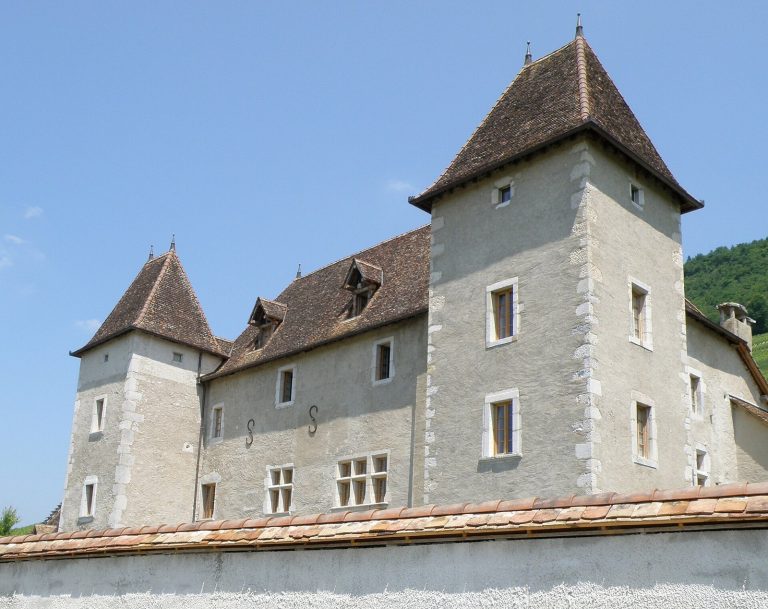
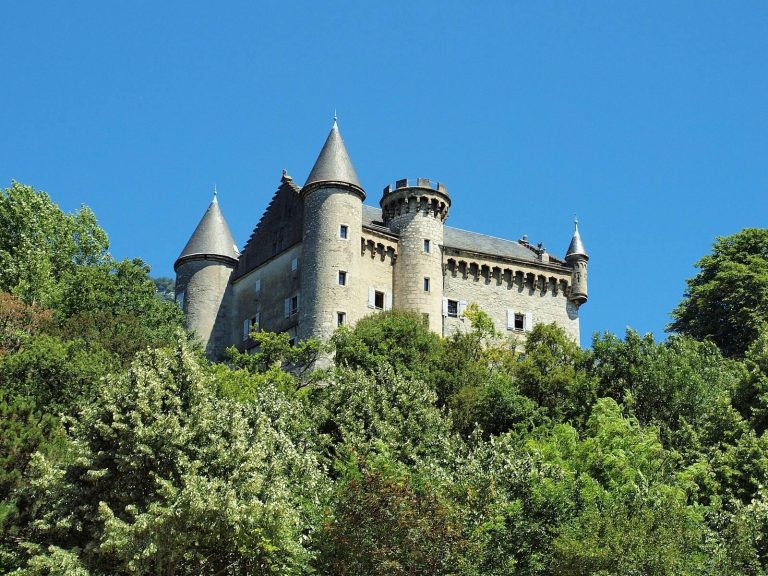
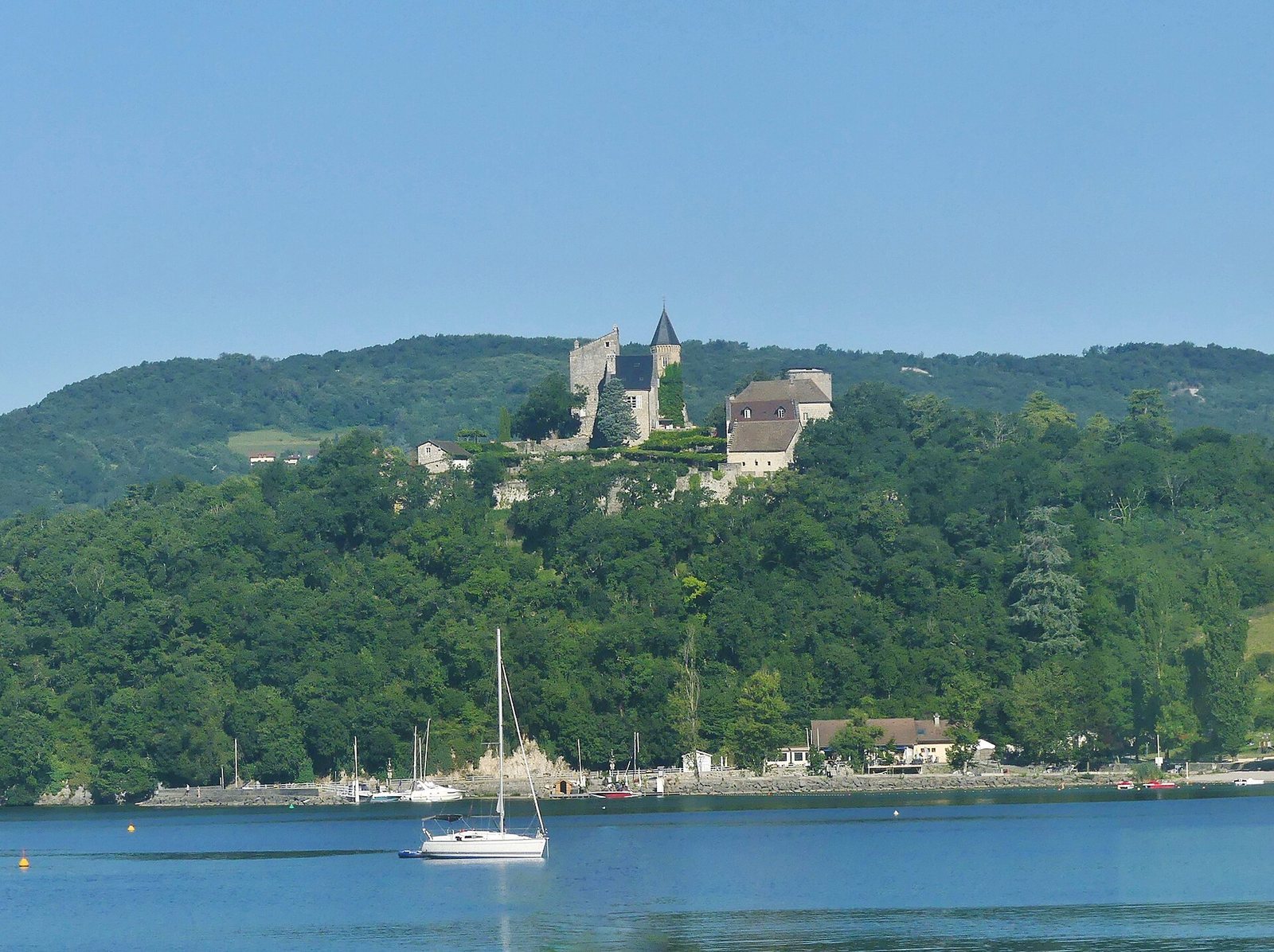
Châtillon Castle stands on a rocky rise overlooking the northern end of Lake Bourget near Chindrieux, France. Construction began in the 11th century, and the castle became the center of the lordship of Châtillon. Its architecture is described as Romanesque, a medieval European style.
Medieval lordship
The Châtillon family, a junior branch of Montluel, held the lordship from the 10th century. Its territory included the parishes of Chindrieux, Ruffieux, and Mollard de Vion. The castle is recorded as the property of the lords of Châtillon in 1125, when they were vassals of the Counts of Geneva, meaning they owed obligations to a superior lord. Historian Georges Chapier suggested that Geoffroy, also called Girard, de Châtillon was born there in the 12th century. He became pope, the bishop of Rome and head of the Catholic Church, in 1241, but his birthplace is uncertain.
Hugues de Montluel held the castle in 1263. By 1293, the lords of Montluel held it as vassals of the Count of Savoy. Guy de Montluel formally paid homage, an expression of feudal loyalty, to Count Édouard of Savoy in 1324. Jean de Montluel succeeded him, followed by Jean’s son Henri, who died in 1346. Guigues de Montluel paid homage to Count Amédée VI in either 1356 or 1358. Some superior lordship rights passed first to the Faucigny family and then to the rulers of Dauphiné, before coming definitively to the House of Savoy, the ruling dynasty of Savoy, in 1401.
Montluel and Seyssel inheritance
After Jean de Montluel died in 1455, three of his seven children, Humbert, Guillaume, and Alexandre, inherited the castle jointly in 1457. A later division gave it to Humbert, who died in 1485. The Seyssel family inherited it in 1486: Humbert’s daughter Françoise had married Claude de Seyssel in 1477. Their son Humbert held the property until his death in 1498, after which Gabriel de Seyssel inherited it and became Baron of Aix and Châtillon. Gabriel’s son François-Philibert succeeded him, followed by François-Philibert’s mother, Françoise de La Chambre, who died in 1538.
Françoise de La Chambre had paid homage to Duke Charles III of Savoy in 1517 and later named her nephew Charles de Seyssel as her universal heir. From 1538, members of the Seyssel family no longer lived at the castle and leased its lands. When Claude de Seyssel died in 1569, his brother François, governor of Savoy, inherited the property. It passed first to François’s elder son Charles-Emmanuel and then to his younger son Louis.
Louis de Seyssel, who died in 1650, had married Françoise de Grammont in 1616. Their son Maurice died without descendants or a will, and an arbitration in 1687 assigned the property to the family’s senior branch, represented by Sigismond de Seyssel, Marquis de La Serraz. Sigismond’s descendants François-Joseph, Victor-Amé, and Octave-Henry kept the castle until 1756, although they did not reside there.
Rambert ownership and later history
On 22 February 1756, the castle became the property of Joseph Rambert, a senator and president of the Senate of Savoy. He carried out extensive restoration. His son Hyacinthe Rambert inherited the property, laid out its gardens and terraces, and lived through the Reign of Terror, a period of revolutionary repression in France, without being troubled.
The poet and politician Alphonse de Lamartine stayed at the castle several times in the summer of 1819. His time there inspired the poem The Retreat, one of his Poetic Meditations. In 1850, novelist Amédée Achard described the castle in A Season at Aix-les-Bains. Hyacinthe’s son Antonin Rambert, a councillor at the court of Chambéry, succeeded him. Antonin, who lived from 1809 to 1860, married Noémie d’Anglejean; because they had no children, the castle passed to her nephew Robert d’Anglejean, who took the title Baron of Châtillon. For a time, around 1889, the castle operated as a hotel.
On 11 August 1920, owner François Boreau had a monument to Lamartine erected near the castle. The castle remains privately owned. Its polygonal keep, a principal fortified tower, its large square tower, and its entrance gatehouse, a fortified entrance structure, were listed as historic monuments by an order dated 29 April 1991.
Remains
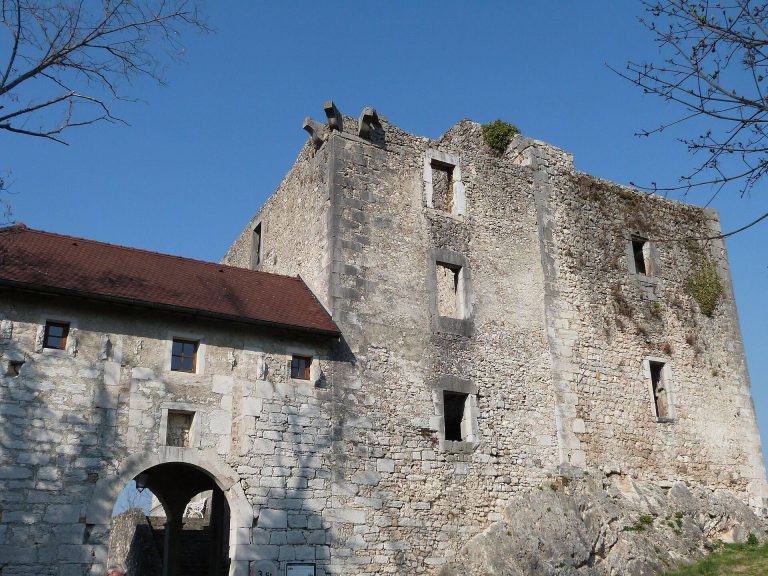
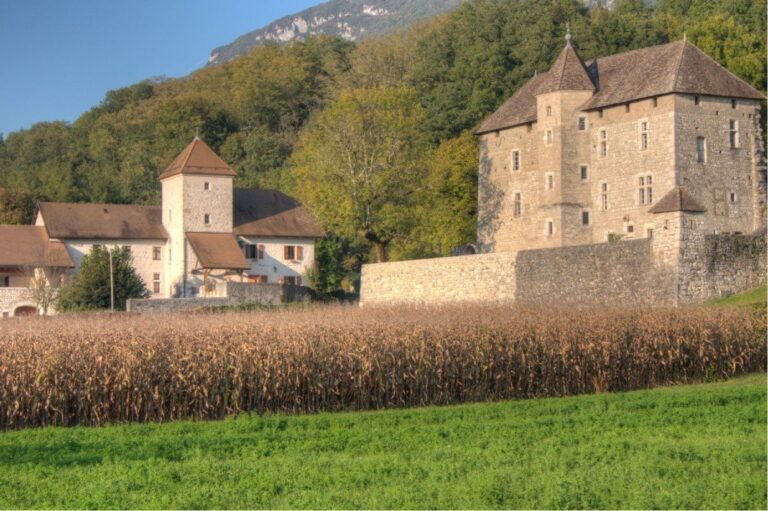
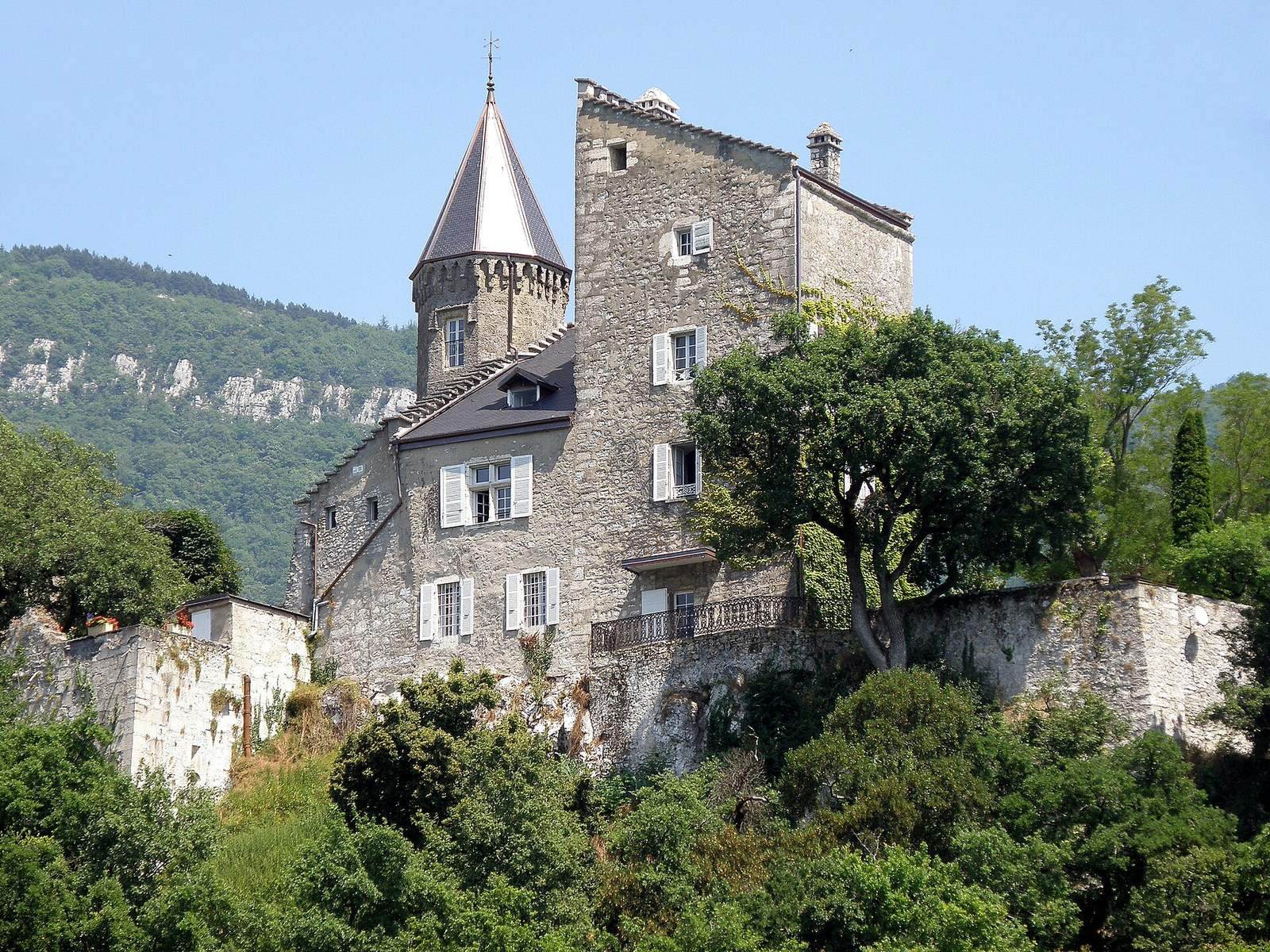
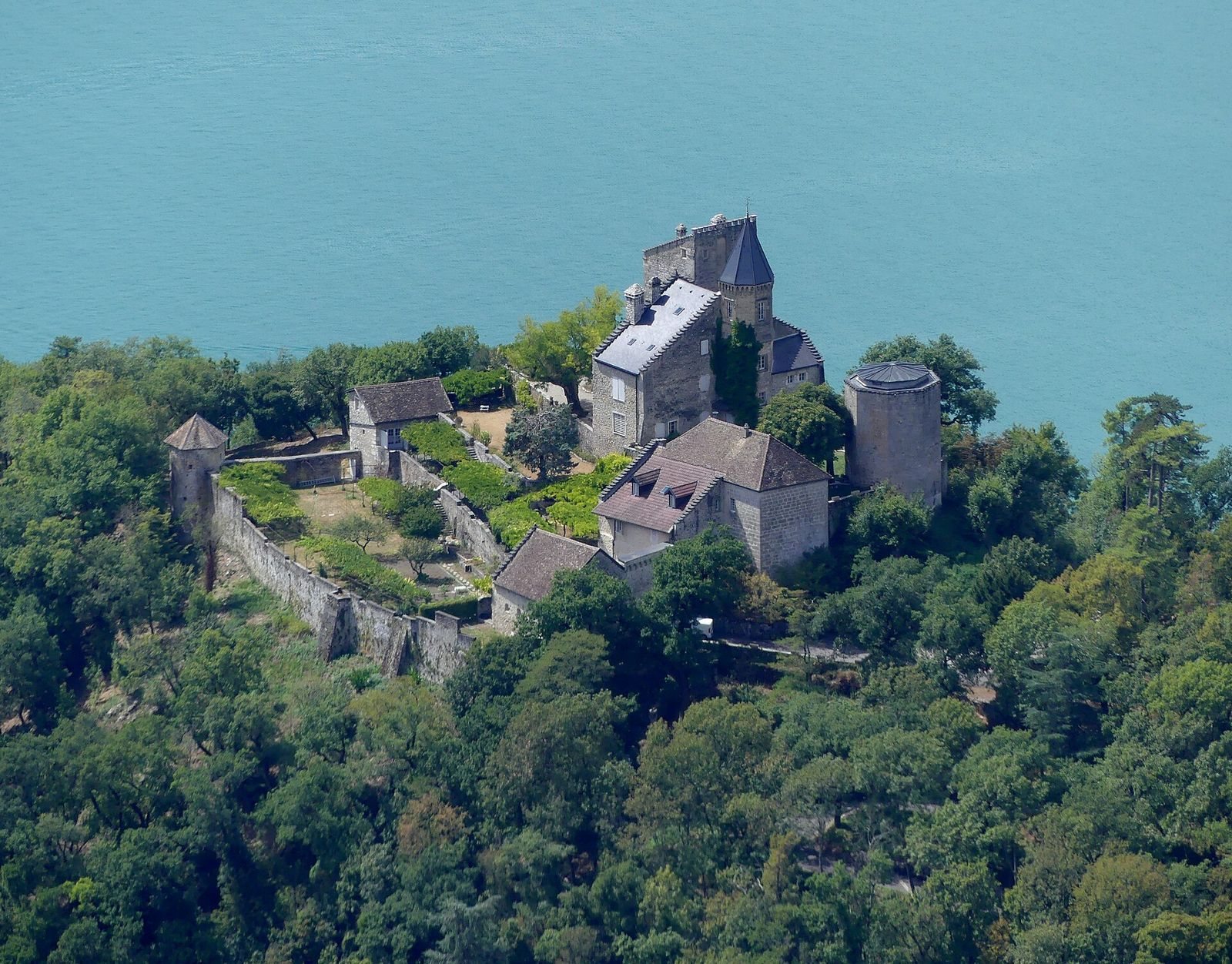
The castle occupies a rocky rise on the right bank at the northern end of Lake Bourget, about two kilometres south-southwest of Chindrieux. The lake was formerly called Lake Châtillon, after the castle and its lordship. The buildings are chiefly made of tufa, a porous stone formed by mineral-rich water, and limestone. Repeated alterations, especially in the 16th, 18th, and 19th centuries, have changed the complex.
Enclosure and residence
A 13th-century enclosure follows the contours of the rise and surrounds a residence that partly dates to the 15th century. On the side facing the lake stands another tower whose date is uncertain. Together, the boundary and buildings occupy the elevated ground above the lake.
Entrance and towers
Octagonal tower
At the northwest corner of the main entrance, on its right, is an octagonal tower built of tufa, with a circular interior. Large tufa slabs form its outer facing, and this facing is later than the inner wall. The vaulted ground floor has a dome-like shape and is estimated to date to the 15th century. The tower may have begun as a round structure before being altered to its present polygonal form. A spiral staircase beside it provides access to the upper floors.
Other defensive structures
The castle has several entrances, as well as a polygonal keep, a large square tower, and an entrance gatehouse. The available descriptions identify these structures as components of the complex without giving further construction details.
Lamartine monument
The monument near the castle is a clay statue made by Mars Valett, a sculptor from Chambéry. It was transported by boat from Chambéry, travelling along the Leysse River and across Lake Bourget before its erection. The statue stands on private property belonging to Mr. and Mrs. Cleret.