Cazilhac Castle: A Medieval Fortified Residence in France
Site at a Glance
- Popularity
- Low
- Country
- France
- Primary era
- Early Modern
- Eras represented
- Medieval, Early Modern, Modern
- Civilizations
- French
- Site type
- Domestic
- Remains
- Castle
On this page8 sections
History
Monastic origins and medieval damage
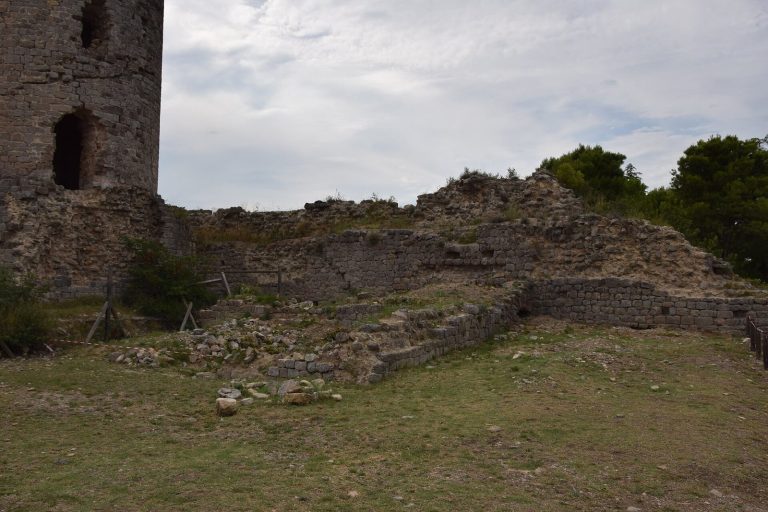
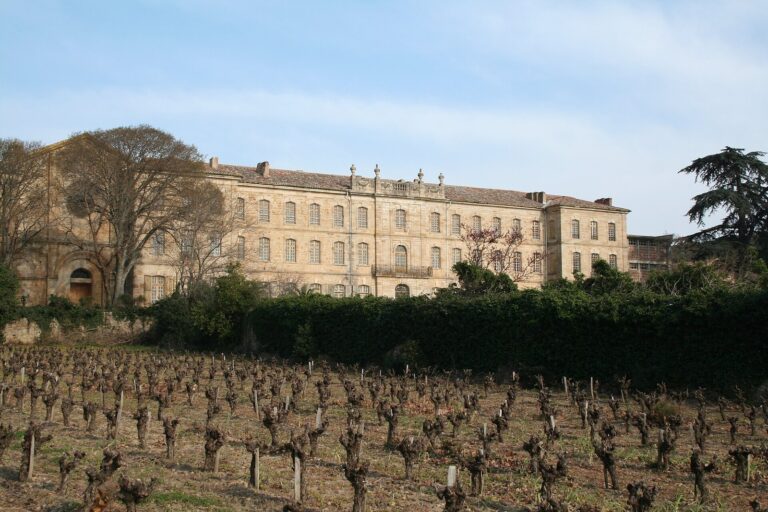
Cazilhac Castle stands on a rocky spur in Le Bousquet-d’Orb, France. Its earliest fortified residence was built by monks in the 12th or 13th century, although its precise construction date is uncertain. The site depended on the Abbey of Joncels, a monastic institution attested in 851 in an act of Pepin II, king of Aquitaine. It also lay on the Via Tolosane, a pilgrimage route leading to Santiago de Compostela. The monks used the residence to oversee the Orb valley, where they developed vineyards.
During the Hundred Years’ War, a prolonged conflict between the English and French crowns, mercenary bands known as the Great Companies ravaged the region. Cazilhac was occupied and pillaged in 1370. Plague outbreaks, including those in 1348 and 1465, further contributed to the site’s decline.
Rebuilding and changing ownership
The Peyrottes family acquired Cazilhac in 1512 and rebuilt the castle during the 16th century, when the land was recorded as a lordship, a territory under a lord’s authority. In February 1627, during the Wars of Religion between Catholics and Protestants in France, Henri II de Montmorency, governor of Languedoc, ordered the castle razed amid conflict over Protestantism. The Peyrottes family rebuilt it and retained the estate until the French Revolution.
In 1790, the hamlet and castle became part of the commune of Camplong. A territorial reorganization in 1844 placed them in the newly created commune of Saint-Martin-d’Orb, later renamed Le Bousquet-d’Orb.
In the mid-19th century, economist and politician Michel Chevalier became the owner and strongly influenced the estate and its viticulture. Around 1851, he had an aqueduct built to supply the gardens, irrigate the land, and bring water to the castle farm. After Chevalier died in 1879 without a direct male heir, his son-in-law, economist and essayist Paul Leroy-Beaulieu, took over the property. Through this marriage, the estate passed into the Leroy-Beaulieu family.
The castle’s façades and roofs, along with its garden terraces on cadastral plots B 203 and B 204, have been listed as a historic monument since 9 April 1987.
Remains
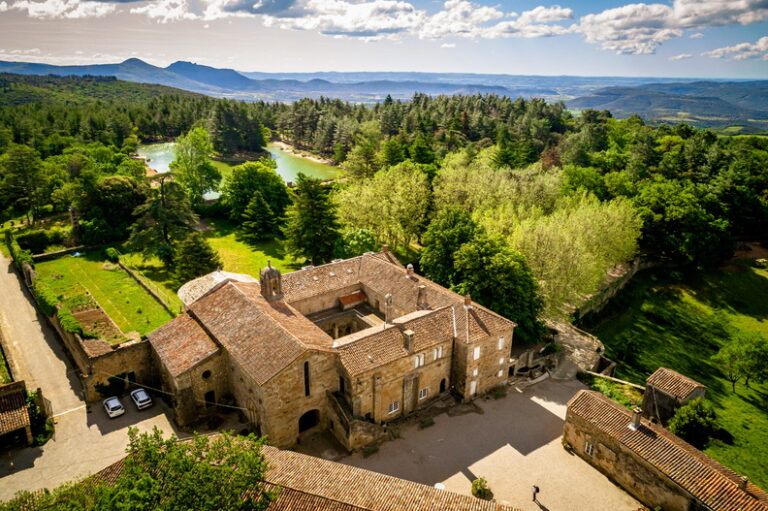
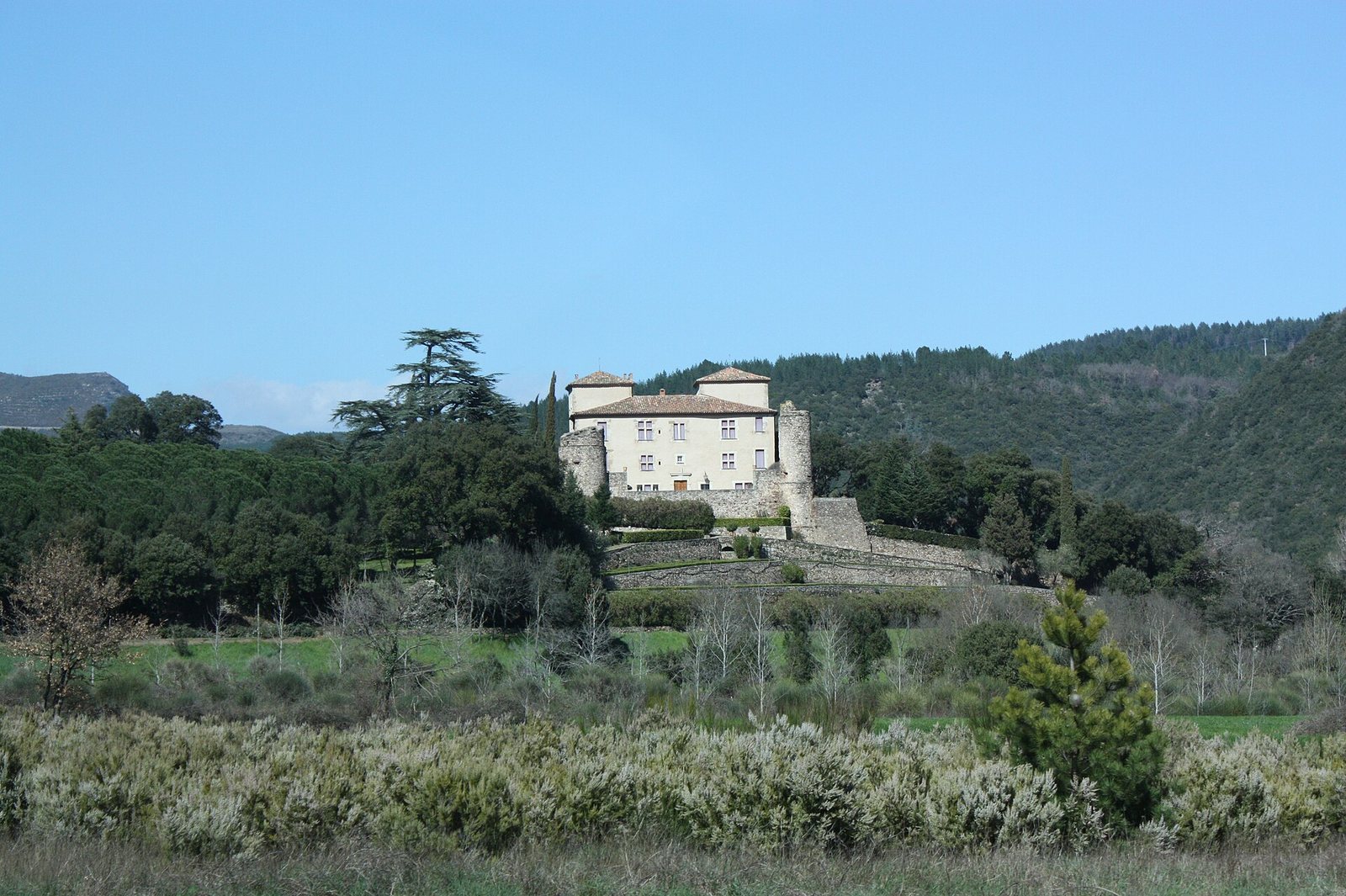
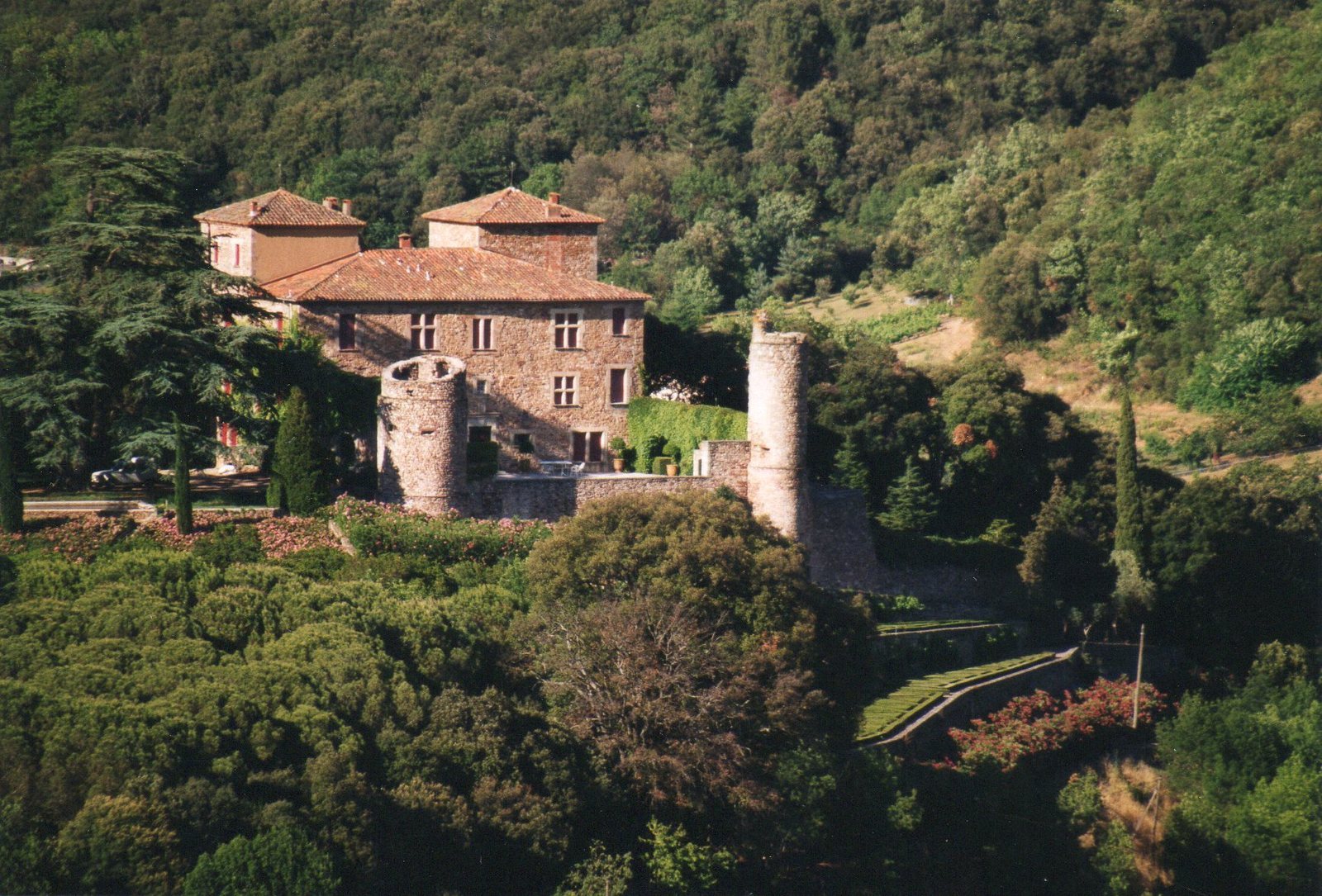
The castle estate occupies a rocky spur beneath the ridges of the Escandorgue and Méguillou. The medium-sized castle stands with terraced gardens in front, overlooking meadows and vineyards above the Orb valley.
Castle estate and waterworks
Castle
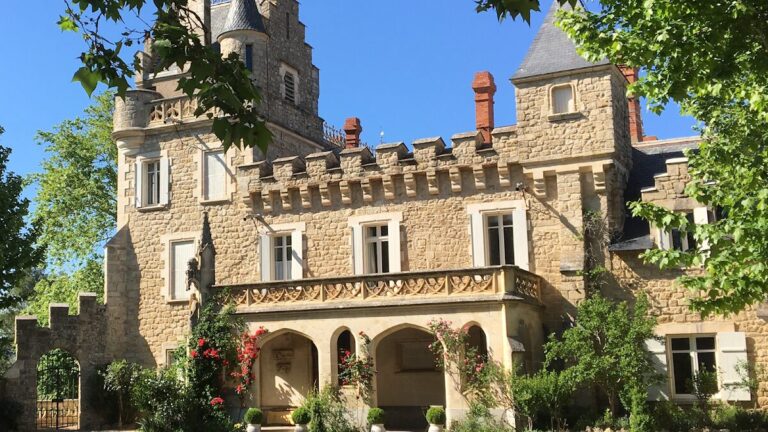
The castle has two square towers and a low-pitched roof covered with hollow tiles. Bases and fragments of openings survive from the earlier fortified residence, which formed the core of the later building.
Garden terraces
The terraces lie in front of the castle and look out over the surrounding meadows and vineyards. The elevated position also gives a broad view across the Orb valley.
Aqueduct and pumping system
The aqueduct brings water from the Orb at a rate of 150 litres per second. It is constructed from limestone, pebbles, and rubble held together with mortar. The estate’s water-supply system also included two linked pumps, which raised 2,500 litres of water per minute to a height of 30 metres through two cast-iron conduits extending for at least 300 metres.