Château de Cavagnac: A Historic Castle in France


Site at a Glance
- Rating
- 4.3
- Popularity
- Very Low
- Country
- France
- Primary era
- Early Modern
- Eras represented
- Medieval, Early Modern
- Civilizations
- French
- Site type
- Domestic
- Remains
- Castle
On this page8 sections
History
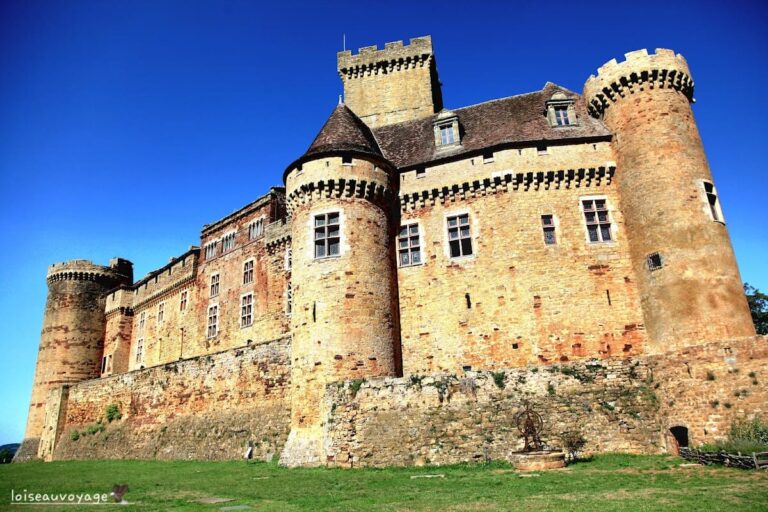
Château de Cavagnac is a historic castle in France, whose oldest surviving phase dates from the twelfth century and includes a Romanesque tower. It stands near the former Roman villa of Villa Cavaniacus, a substantial rural estate or country residence mentioned in the cartulary of Beaulieu Abbey in 868. The castle became the seat of the Robert family, whose members were known as the Robert de Cavagnac.
The Robert de Cavagnac and Beaulieu
During the middle of the twelfth century, the Robert de Cavagnac held the lordship under the suzerainty of the abbots of Saint-Pierre de Beaulieu Abbey. Suzerainty was the superior authority exercised by an overlord over a dependent lord. Around 1180, Guillaume-Robert, lord of Cavagnac, paid formal homage to the abbot for the castle. In 1142, Guillaume-Robert and the Viscount of Turenne had also helped establish the Cistercian grange of Saint-Palavy, an agricultural estate operated in connection with a Cistercian monastery.
An act of 1194 records that Bernard-Robert and the lords of Cavagnac held the castle from the abbots of Beaulieu. They had long sworn obedience and fidelity to the abbots, retained the right to burial in the abbey cemetery, and owed homage to the priors of Friac for fiefs in the parishes of Cavagnac and Condat. Homage was a formal acknowledgment of dependence by a lord or landholder.
Changes in lordship
In 1351, Rigald de Cavagnac, a direct descendant of Guillaume-Robert, swore an oath to the Viscount of Turenne for his possessions at Cavagnac. The ceremony took place on the Rhône bridge at Avignon. By then, Rigald no longer held the lordship alone, sharing its rights with the knight Guillaume de Vassal. Suzerainty over Cavagnac had passed from the abbots of Beaulieu to Guillaume-Roger de Beaufort, Viscount of Turenne and nephew of Pope Clement VI.
In 1365, Bertrand, lord of Cavagnac, served as Guillaume-Roger de Beaufort’s lieutenant, or representative. That year, the viscount recognized Charles V as his lord and submitted through Bertrand to Louis d’Anjou, the king’s lieutenant in Languedoc. These events placed the castle within changing networks of feudal authority and royal allegiance.
The Guiscard period
At the end of the fourteenth century, the Guiscard family of Gagnac inherited the castle when Bertrand de Guiscard married a member of the Cavagnac family. The Guiscards occupied Château de Cavagnac continuously for five centuries, until the French Revolution. They held high-justice rights in the Viscounty of Turenne, meaning that they possessed authority over serious criminal cases.
Antoine de Guiscard was lord of Cavagnac in 1454. His nephew, also named Antoine de Guiscard and lord of Cornac, made a feudal declaration of his holdings to the king in 1504. During the sixteenth century, the family replaced the feudal castle with a new château. The lordship became a barony in the seventeenth century, a territorial lordship held by a baron.
By the middle of the eighteenth century, the château had acquired a monumental residential block. Its design reflected the Guiscards’ taste and power, as well as their adoption of the architectural model of an elegant Parisian residence. The transformation gave the complex a more refined residential character than the earlier feudal stronghold.
Revolutionary damage and later ownership
During the unrest of the French Revolution, villagers attacked the château. Portions of the Guiscard family coat of arms, carved on a large stone at the center of the façade in the main courtyard, were cut away. The damage remains visible.
The male line of the Guiscard family ended in 1790 with the death of Jean Pierre de Guiscard, Baron of Thédirac and lord of Cavagnac and other places. He was married to Paule Augustine de Plas of the noble Plas de Curemonte family. His sister, Marie Madeleine de Guiscard, married the Marquis of Plas de Curemonte and inherited Château de Cavagnac. The property later passed through the Desplaces branch of the Plas family and is now owned by Philippe V. Desplaces. The privately owned château was listed as a historic monument in 2013.
Remains
The surviving complex combines a high medieval tower with a replacement château and a monumental residential block added by the middle of the eighteenth century. Its architectural development moves from the massive construction associated with Romanesque buildings to the restrained appearance of an elegant Parisian residence. The principal courtyard façade preserves the physical evidence of both the later residential design and the Revolutionary attack on the Guiscard family’s emblem.
Twelfth-century tower
The oldest surviving feature is a high tower from the castle’s twelfth-century phase. It is described as Romanesque, a medieval architectural style broadly characterized by massive construction and rounded arches, and has also been called “Saracen,” a traditional label that does not establish its origin or function. The tower is the remaining visible element of the first walls erected by the Robert de Cavagnac.
Residential château and courtyard façade
The original feudal castle was replaced by a new château in the sixteenth century. By the middle of the eighteenth century, a monumental residential block had been added. Its façade is notably restrained and follows the architecture of an elegant Parisian residence. At the center of the façade in the main courtyard, a large stone bears the Guiscard coat of arms. Portions of the carved arms were cut away during the Revolutionary attack, and the altered stone survives as part of the château’s fabric.
Nearby sites