Château de Cambous: A Classical Château in Languedoc


Site at a Glance
- Rating
- 4
- Popularity
- Very Low
- Country
- France
- Primary era
- Early Modern
- Eras represented
- Early Modern
- Civilizations
- French
- Site type
- Domestic
- Remains
- Castle
On this page8 sections
History
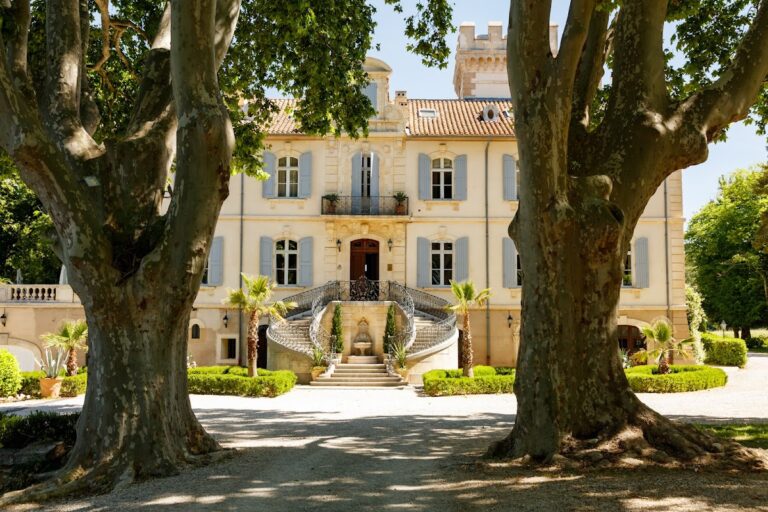
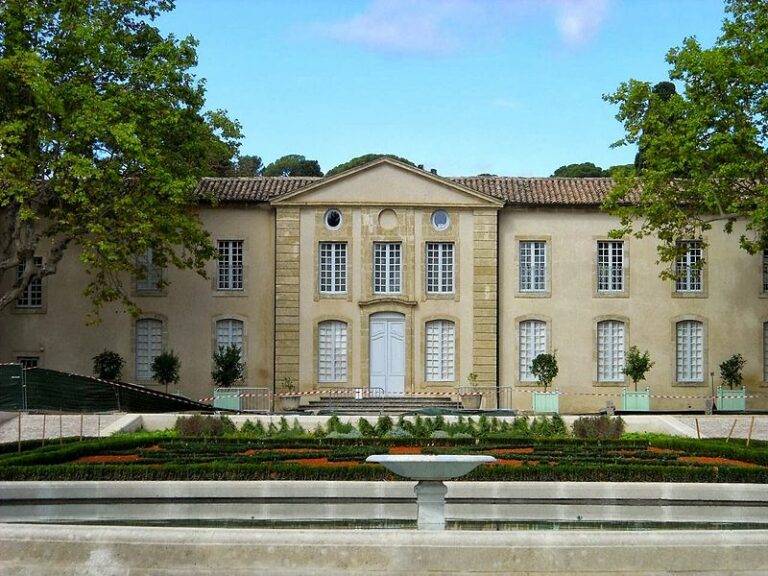
Château de Cambous is a Classical-style château in Viols-en-Laval, France, dating from the sixteenth and seventeenth centuries. Its history is closely linked to the Catholic nobility of Languedoc and to the creation of a large landed estate.
Antoine de Cambous and the Wars of Religion
During the French Wars of Religion, a series of sixteenth-century conflicts between Catholic and Protestant factions, Antoine de Cambous became a prominent Catholic partisan. In 1584, during fighting around Château de Montferrand, he recaptured the fortress from Protestant forces. The king then commended him, granted him the fief of Montferrand, a landed holding awarded within the feudal system, and extended royal favour to him.
This patronage enabled Antoine de Cambous to rebuild the family château at Cambous and begin developing it as the centre of an estate. Three centuries later, the estate covered almost 24 square kilometres. After Antoine’s eldest son died without an heir, ownership passed to his sister Marguerite, who was married to Jean de Ratte, son of the viguier of Gignac. A viguier was a judicial and administrative officer in parts of southern France.
The de Ratte family also fought the Huguenot party, the French Protestant cause, and Cambous became an important centre of Catholic activism under their control.
Later dynasties and estate ownership
Jean Joseph de Jullien de Vinezac acquired the château through his marriage to a member of the de Larret de Rigot de Cambous family. In the early nineteenth century, the property passed to Count Louis François de Vögue after his marriage to Gabrielle de Jullien, the last descendant of the Jullien de Vinezac branch.
In 1889, Élisabeth Alexandrine Marie Berthier, Princess of Wagram, purchased the extensive estate for 600,000 francs. She was the wife of Guy-Étienne, Marquis of Turenne d’Aynac. Her accumulating debts led to a court-ordered auction after a judgment of the Montpellier Civil Court on 24 December 1913. A deed dated 13 March 1914 transferred Cambous to the deputy Pierre Leroy-Beaulieu, whose Norman family had settled in Languedoc.
Historic-monument protection
On 19 October 1983, the château and associated heritage features received protection as a French Monument historique, the legal designation for a protected historic monument. The façades and roofs were registered, while the entrance gate and specified interior features received classified protection, the higher level of legal protection. The property is identified as Monument historique PA00103762.
Remains
Château and protected features
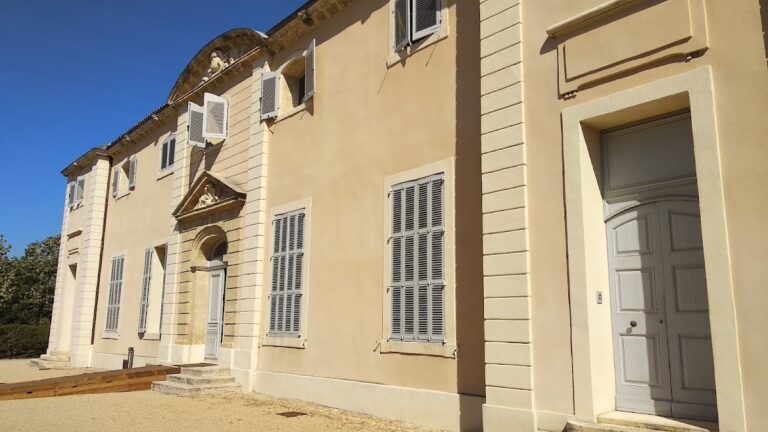
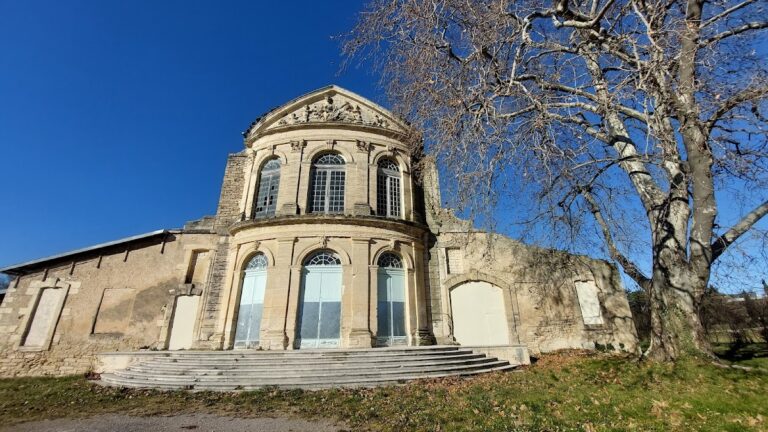
Château de Cambous is a Classical château whose surviving protected elements include the west entrance and a group of interior features. Together, they preserve parts of the building’s formal access, circulation, and principal rooms.
West entrance gate
The entrance gate is set in the west façade. It forms the principal identified approach to the château and is among the features placed under classified historic-monument protection.
Interior rooms and circulation
The protected interiors include a double interior door and the staircase. They also include the door leading to the first-floor great hall, the hall itself with its fireplace and painted ceiling, and the fireplace in the adjoining chamber.