Château de Brousse: A Fortified Castle in Aveyron, France

Site at a Glance
- Rating
- 4.6
- Popularity
- Medium
- Country
- France
- Primary era
- Medieval
- External website
- Open
- Eras represented
- Medieval, Early Modern
- Civilizations
- French
- Site type
- Military
- Remains
- Castle
On this page8 sections
History
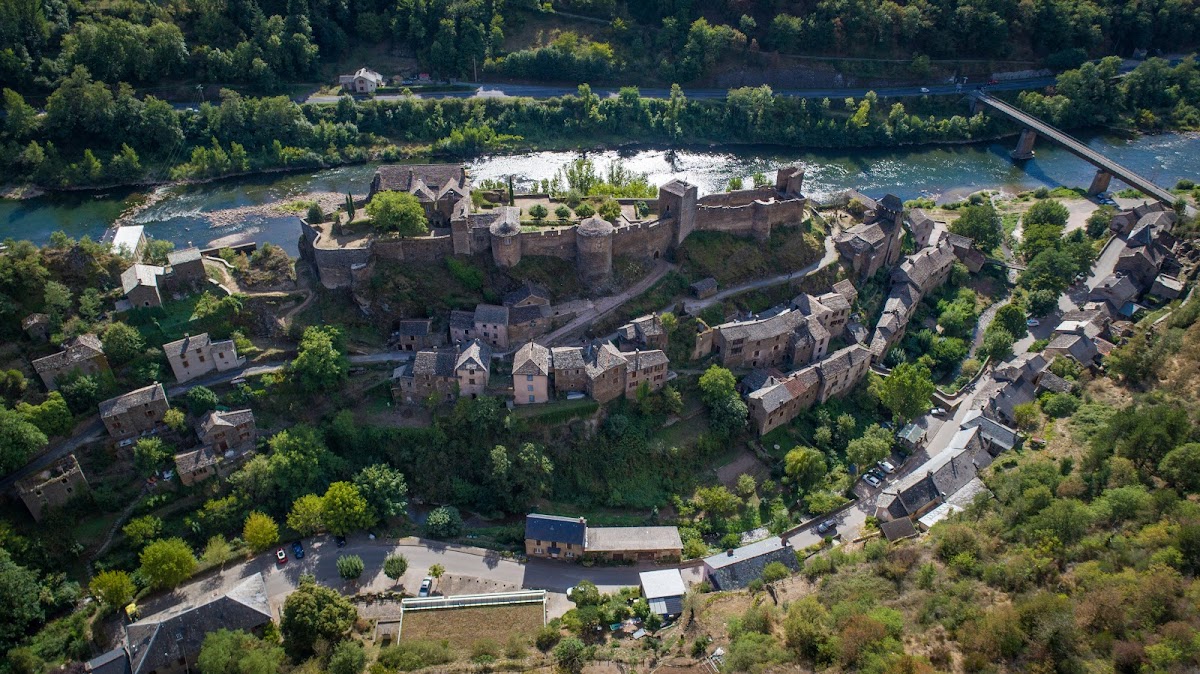
Château de Brousse is a former fortified castle in France, at Brousse-le-Château, built in the tenth century to guard the passage across the Tarn. The castle was first mentioned in 935 and stands on a rocky spur at the confluence of the Tarn and Alrance, in the historic province of Rouergue, a region corresponding broadly to modern Aveyron.
Early lordship and medieval succession
Ermengaud held Brousse in the early tenth century and was married to Adélaïde of Carcassonne. His daughter, Garsinde of Rouergue, was the widow of Raymond III of Toulouse. In her testament of 975, she transferred the lordship to her nephew Amélius, bishop of Albi.
Raymond of Saint-Gilles held the lordship around the late eleventh century. He was followed by Richard, who received part of Rouergue from him. Richard’s son Hugues I, Hugues II, and their descendants continued the succession, and this family retained Brousse for five centuries. Bernard II inherited the lordship in 1204. The later medieval line included Bernard III, Hugues I, Bérenger I, Hugues II, and Jean I.
Jean I successively married Jeanne of Morlhon-Sanvensa and Hélène of Châteauneuf. He abducted Hélène when she was six years old. At the king’s request, Géraud de la Barre led an expedition that liberated her in 1348. The castle was besieged and partly burned during the episode, although Jean married Hélène several years later.
Later owners
The succession after Jean I included Béranger II, Hugues III, Jean II, Guy, Jean, René, Antoine, Laurent, Charles, Samuel, Charles Jacob, Louis, and Catherine Françoise. Charles Jacob, who married his first cousin Rose Françoise of Arpajon, left no male heir. His uncle Louis later held the property and married Catherine Henriette d’Harcourt in 1659.
In 1700, Gilles de Grandsaignes, a secretary to the king, bought the castle from Catherine Françoise. A secretary to the king was an officeholder in the French royal administration. Gilles was followed by his brother Étienne and his son Louis-Gilles, who also held that office. Before the French Revolution, Jean-François Peyrot de Valhausy, a councillor at the Parliament of Toulouse, acquired the property. The Revolutionary Tribunal of Paris, a court created during the Revolution to try alleged enemies of the revolutionary government, condemned him to the guillotine on 6 July 1794. His eldest daughter, Caroline de Peyrot, inherited the castle.
Commune ownership and preservation
Caroline’s husband, Joseph Delauro, represented Rodez as a deputy from 1815 to 1816 and again from 1820 to 1831. He sold the castle to the commune of Brousse in 1839. The commune adopted the name Brousse-le-Château in 1919.
The castle was remodelled in the sixteenth century and restored during the nineteenth century. From 1963, the association Vallée de l’Amitié carried out further restoration. The commune’s rural community center now manages the castle and holds temporary exhibitions there. It was listed as a historic monument on 13 May 1937, but that protection order was annulled and replaced by a classification order dated 2 March 1943. The castle remains classified as a historic monument.
Remains
Fortifications and entrance
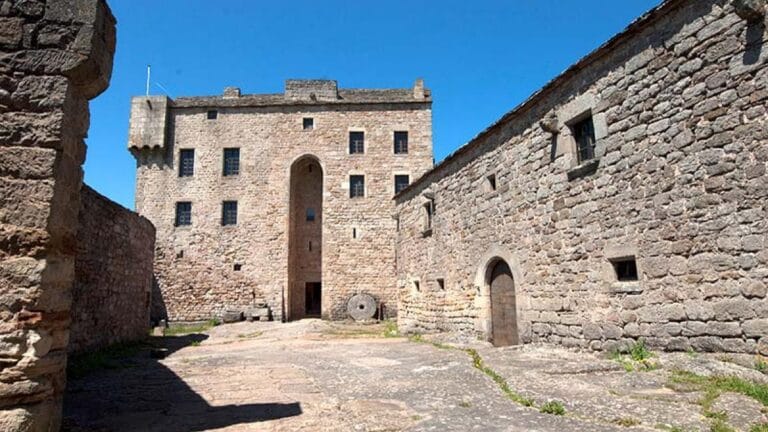
The medieval fortifications occupy the elongated summit platform of the rocky spur above the village. On the village side, a fifteenth-century curtain wall, the fortified wall joining towers or other defensive points, is flanked by towers, of which six were counted. A gate opens onto a passage vaulted through the rock, and a short ascent leads to the inner courtyard. The Prisoner Tower and Princess Tower are among the principal surviving towers. Only the foundations of the Picarde Tower remain; at 45 metres, it was the tallest tower in Rouergue. An open-gorge tower, open at the rear so defenders within the adjoining fortification could control it, protects the northwestern point.
Seigneurial residence
The square seigneurial residence, the lord’s residential building within the fortified complex, stands at the southeastern end of the spur. On the Tarn side, it is crowned with machicolations, projecting parapets with openings through which defenders could observe or attack below the walls. Renaissance alterations introduced greater domestic comfort. A ceremonial staircase was added in the seventeenth century, while broad openings were made in the eighteenth century.
Garden
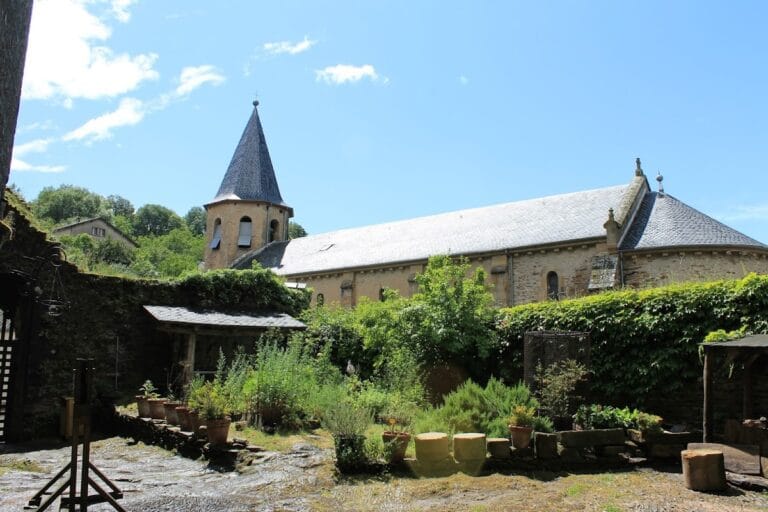
The landscaped garden contains herb beds and old rose varieties, adding a cultivated area to the fortified complex on the summit of the spur.
Nearby sites