Yeni-Kale: An Ottoman Fortress at Kerch

Site at a Glance
- Rating
- 4.5
- Popularity
- Medium
- Country
- Ukraine
- Primary era
- Early Modern
- Eras represented
- Early Modern
- Civilizations
- Crimean Khanate, Ottoman
- Site type
- Military
- Remains
- Fort
On this page10 sections
History
Yeni-Kale is a former Ottoman fortress in Kerch, Ukraine, built by the Ottoman Turks between 1699 and 1706 in the architectural and military tradition of the early modern Ottoman period. Its name means “new fortress” in Turkish and Crimean Tatar. Built on the Kerch Peninsula, then part of the Crimean Khanate, it controlled the narrowest section of the Kerch Strait and could obstruct Russian ships moving between the Sea of Azov and the Black Sea.
Earlier occupation and Ottoman construction
In antiquity, some archaeologists identified the site with Parthenion, a Greek settlement. Across the strait stood Achilleion, a small settlement associated with a temple dedicated to Achilles. From the thirteenth century, a Genoese colony occupied the site. The colony came under Ottoman rule at the end of the fifteenth century.
The Ottomans constructed the present fortress between 1699 and 1706. Work was supervised by Goloppo, an Italian who had converted to Islam, with several French engineers also taking part. During the Ottoman period, Yeni-Kale included a large slave market. This trade declined after the Russian conquest.
Russian conquest and later decline
On 21 June 1771, during the Russo-Turkish War of 1768–1774, Russian units from the Second Army under Major General Nikolai Borzov took the fortress without a fight. The Ottoman garrison was commanded by Abaza Muhammad Pasha, a pasha being a high-ranking Ottoman provincial, military, or administrative official. Although reinforcements had arrived by ship shortly beforehand, the garrison abandoned Yeni-Kale. Abaza Muhammad Pasha fled through Feodosia to Sinop.
The Treaty of Kuchuk-Kainarji, the 1774 peace settlement that ended the war and reshaped territorial relations between Russia and the Ottoman Empire, transferred Kerch and Yeni-Kale to Russia. In 1821, the two formed the Kerch-Yenikale municipal administration within Taurida Governorate.
An 1818 military statement listed 52 cannons, 10 mortars, and 7 unicorn guns, a Russian smoothbore artillery type combining features of a cannon and a howitzer. The fortress had barracks for 770 personnel. By the beginning of the nineteenth century, however, Yeni-Kale had lost its military importance. Military-hospital buildings were established inside the fortress in 1835, and the hospital remained in operation until 1880. The fortress was then abandoned.
Modern preservation
Several restoration campaigns took place during the second half of the twentieth century, but Yeni-Kale remains largely ruined. It is a state-protected architectural monument and is listed as a federally significant cultural-heritage object in the Russian heritage register.
Remains
Fortifications and layout
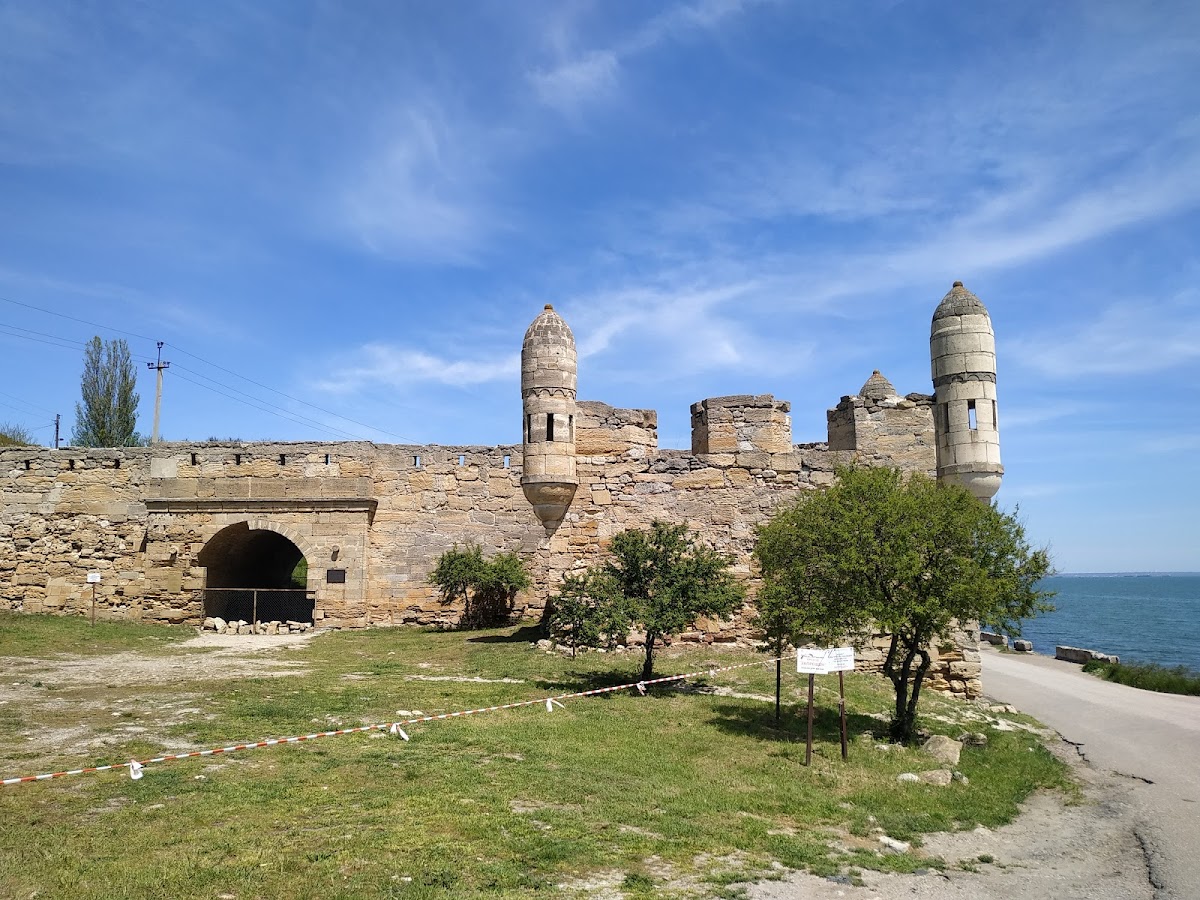
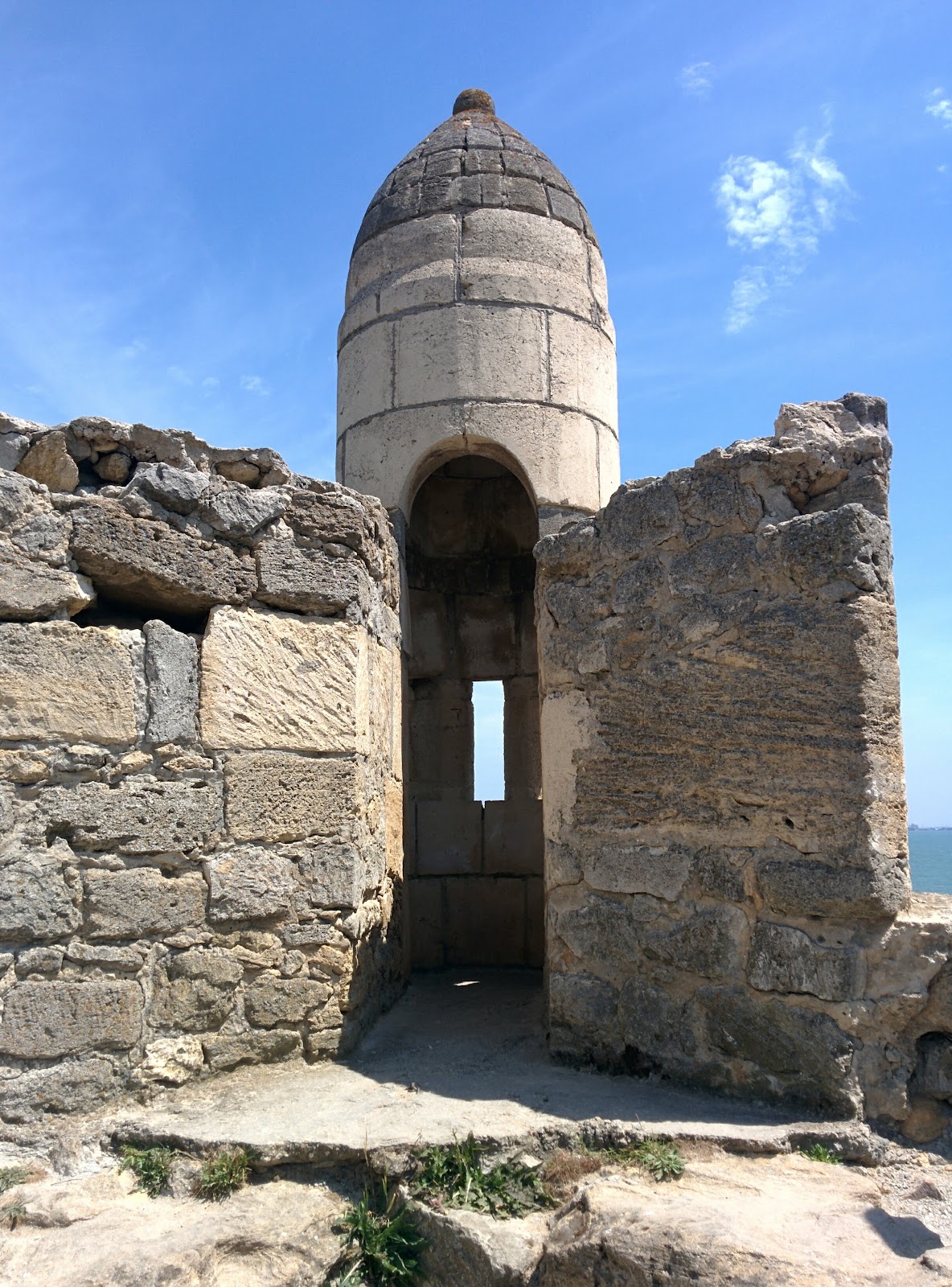
The fortress covered approximately 2.5 hectares, or about 25,000 square metres. Its plan formed an irregular pentagon arranged across several levels to fit the steep terrain. Five semi-bastions, projecting defensive works designed to protect adjoining walls and permit flanking fire, stood at the corners. Some extended well beyond the wall line, widening the field of fire and enabling defenders to fire along areas beside the fortifications.
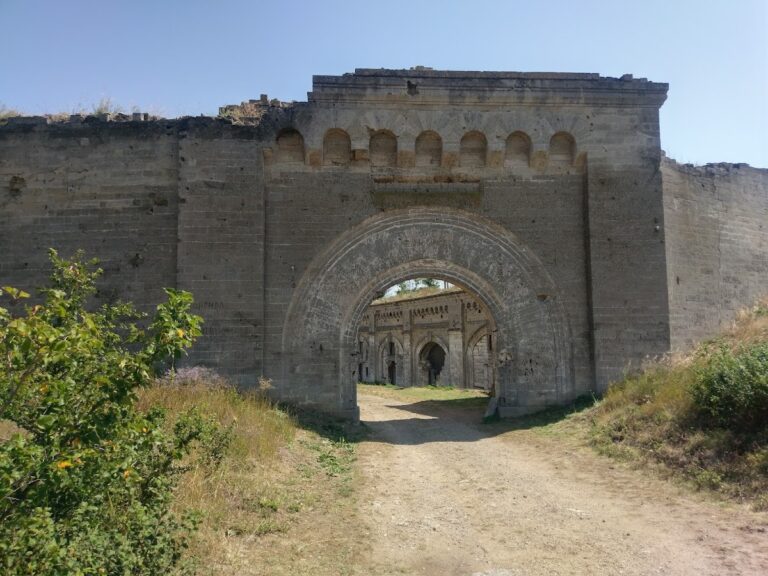
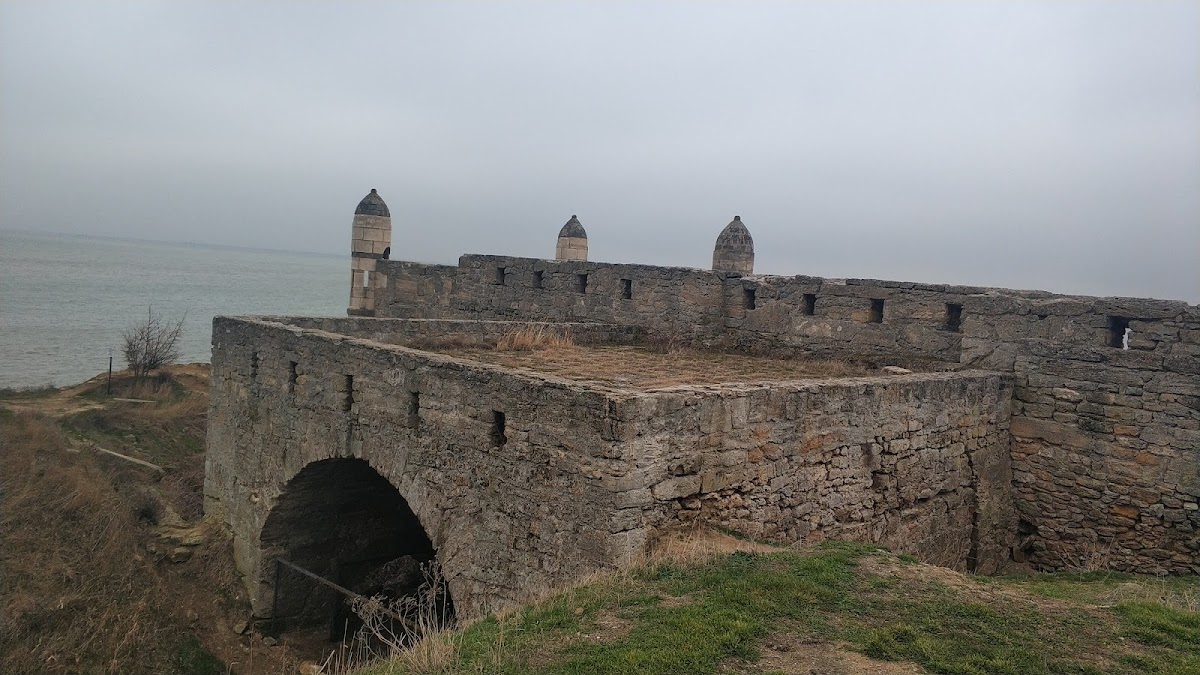
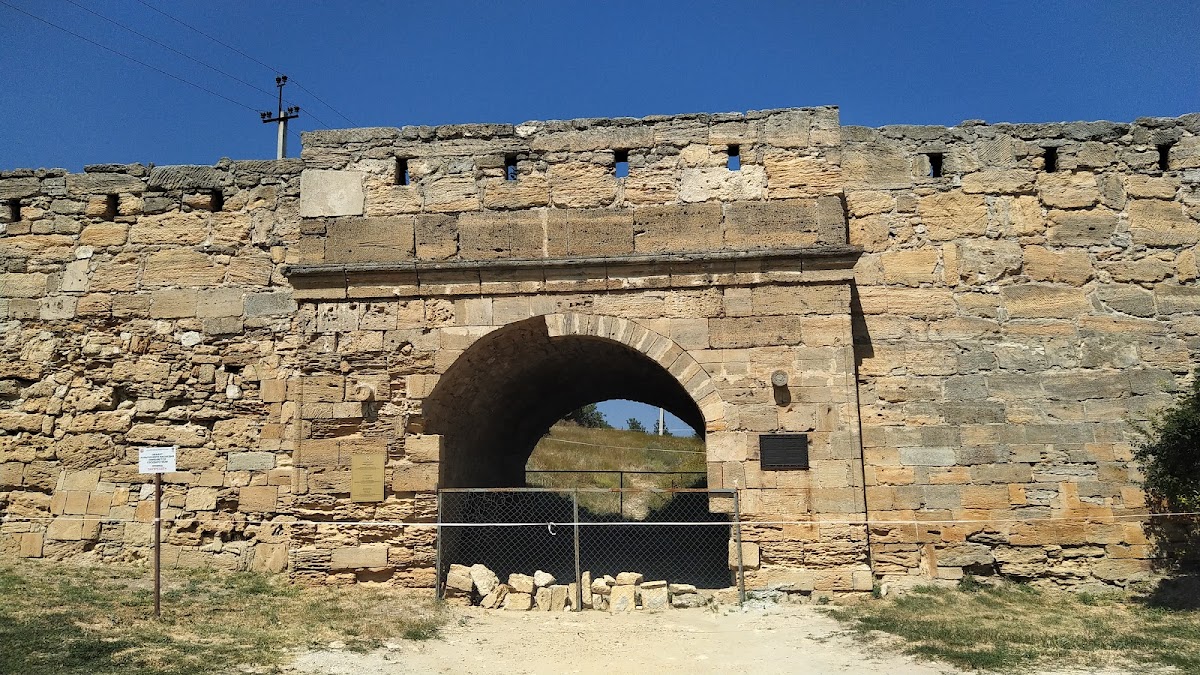
A moat formed an additional defensive line around three sides of Yeni-Kale, while the side facing the coast was left without one. The gates, fragments of the fortification walls, and the coastal semi-bastion are the best-preserved elements. Nearly all of the remaining fortress is in ruins.
Buildings and water supply
Military and residential buildings
Inside the fortress were two powder magazines, fortified buildings for storing gunpowder, together with an arsenal for weapons and military equipment. Residential buildings, a water reservoir, a bathhouse, and a mosque also occupied the site. The remains belong to a fortified settlement that combined military, residential, religious, and supply functions within its irregular, sloping enclosure.
Underground water conduit
The fortress’s only well could not provide enough fresh water for its entire population. To supplement it, the builders installed a ceramic underground conduit linking Yeni-Kale with a spring several kilometres away in the area of the modern settlement of Glazovka.
Railway crossing
A single-track railway branch crosses the fortress grounds, linking Kerch with the Kerch ferry crossing. Vibrations from passing trains threaten further deterioration of the surviving monument.