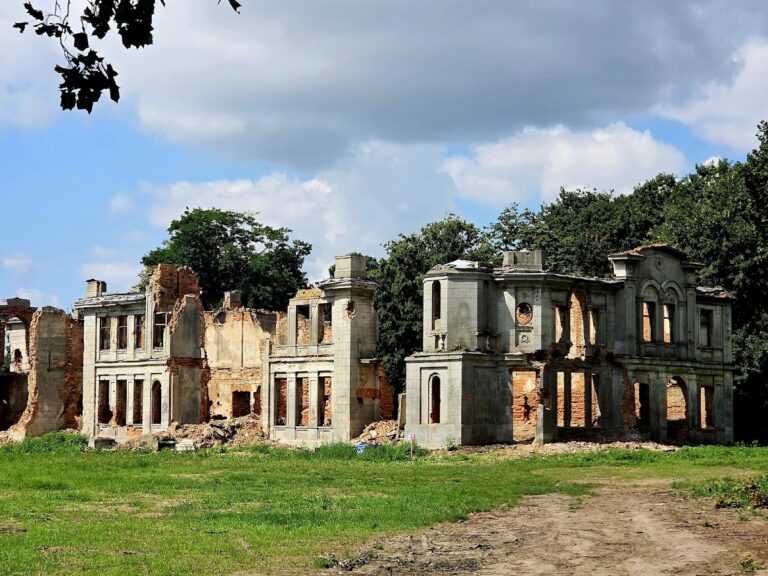
Dzików Castle: A Tarnowski Family Residence and Museum in Poland


Site at a Glance
- Rating
- 4.6
- Popularity
- Medium
- Country
- Poland
- Primary era
- Early Modern
- External website
- Open
- Eras represented
- Medieval, Early Modern, Modern
- Civilizations
- Habsburg, Kingdom of Poland, Polish–Lithuanian Commonwealth
- Site type
- Domestic
- Remains
- Castle
On this page13 sections
History
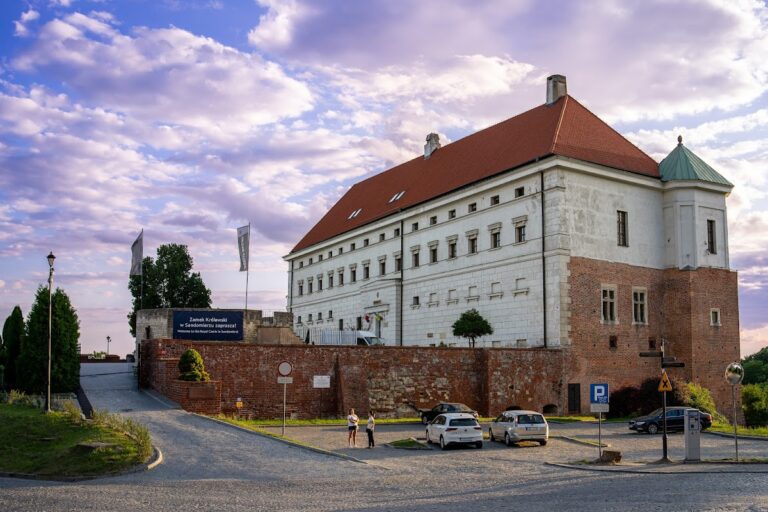
Dzików Castle is a historic residence in Tarnobrzeg, Poland, with origins in a fifteenth-century fortified manor and a present character shaped by Baroque and Baroque Revival transformations. From 1834, it served as the principal residence of the older line of the Polish noble Tarnowski family. Over the centuries, the complex changed from a defensive stronghold into a palace, museum, and important centre for preserving national cultural collections.
Medieval Manor and Tarnowski Expansion
A fortified tower manor occupied the site by the fifteenth century, possibly with beginnings in the late fourteenth century. In the early sixteenth century, the estate belonged to the Ossoliński family. Jan Spytek Tarnowski of Wielowieś purchased Dzików from Andrzej Ossoliński in 1522, bringing the residence into the possession of the Tarnowskis.
The family enlarged the medieval complex during the sixteenth century by adding a semicircular bastion, a projecting fortification that allowed defenders to cover the faces of adjoining walls. After 1638, Michał Stanisław Tarnowski built a brick section at right angles to the tower and surrounded the residence with a pentagonal fortified enclosure. The expanded defenses included bastions, a masonry entrance with a passage, and a moat.
Baroque Palace and the Dzików Confederation
During the 1770s, Jan Jacek Tarnowski added the eastern wing. This produced the palace’s horseshoe-shaped plan and turned the former defensive castle into a Baroque residence. The dry moat, entrance building, and curtain wall, the connecting wall between fortified projections, were also altered as the complex became less military in character.
Dzików Castle entered Polish political history on 5 November 1734, when it hosted the Dzików Confederation. Led by Adam Tarło, the starosta of Jasło, a senior official responsible for administering a designated territory, the confederation supported the restoration of Stanisław Leszczyński as king after the death of August II the Strong. Leszczyński withdrew from command because he doubted that the movement could overcome the stronger Saxon and Russian armies. After failing to secure assistance from France, Sweden, Turkey, and Prussia, he abdicated on 26 January 1736. The confederation consequently failed, although Leszczyński retained a perpetual right to use the royal title.
Nineteenth-Century Residence and Collections
The castle was destroyed by Austrian troops in 1809. During the following century, the estate took on the appearance of a landscaped park, a designed estate landscape arranged to look naturalistic rather than formally geometric. At the direction of Jan Feliks Tarnowski in the 1830s, the palace was remodelled as a Gothic Revival residence and museum. The work was associated with the architect Franciszek Maria Lanci.
The Tarnowskis developed extensive collections at Dzików. They included European paintings from the sixteenth to the eighteenth centuries, a library, a family archive brought from Horochów, and many items connected with Polish national history. The nineteenth-century collection contained about 250 paintings, including works attributed to Titian, Rubens, Rembrandt, Jacek Malczewski, and Jan Matejko.
The library and archive held the oldest known copy of the Polish Chronicle by Gallus Anonymus, Adam Mickiewicz’s manuscript of Pan Tadeusz, the first copy of Bogurodzica, the original chronicles of Wincenty Kadłubek, the Wiślica Statutes, and Juliusz Słowacki’s Balladyna. Mickiewicz’s manuscript is now preserved in the Ossolineum in Wrocław, while the Balladyna manuscript is held by the National Library in Warsaw.
Rembrandt’s Polish Rider, also called Lisowczyk, belonged to the Dzików Tarnowski collection. Zdzisław Tarnowski sold the painting to Henry Frick in 1910 despite public protests. It was taken to New York and is now displayed in the Frick Collection.
War, Fire, and Reconstruction
During wartime, valuable Polish and European cultural objects were concealed at Dzików or placed in the National Museum in Warsaw and the Ossolineum in Lwów. After the war, state institutions took possession of parts of the collections. Nearly 500 objects associated with Dzików were held at Łańcut Castle and more than 80 at the Rzeszów Museum. Some deposited objects were lost after the Soviet Union seized the eastern territories.
In 1920, the castle served as the central location for forming a volunteer unit for the Polish-Soviet War. Seven years later, it hosted the Dzików Convention, where Galician conservatives met representatives of the Sanacja movement, the political camp associated with the government established after Józef Piłsudski’s 1926 coup.
On 21 December 1927, severe frost froze the water pipes. Attempts to warm them with gasoline lamps preceded a fire that spread through the castle. Michał Marczak, the castle librarian and a teacher at a nearby secondary school, tried to save the collections with servants, local residents, and students. The fire brigade used snow because the hydrants were frozen. Eighteen people participated in rescuing the library holdings, while the collapsing library ceiling killed nine people, including the athlete Alfred Freyer. About one-third of the collections survived. Count Zdzisław Jan Tarnowski was in Kraków, and his mother, Zofia z Zamoyskich Tarnowska, was rescued from the burning building.
Wacław Krzyżanowski directed the rebuilding in 1930 and 1931. The reconstruction gave the castle an early Baroque or Baroque Revival character. The Tarnowski family retained ownership until 1945, when the property passed to the State Treasury. During the 1970s, workers discovered a collection of valuable old silverware in the cellars. It was transferred to Łańcut Castle.
Museum Use
The building housed an agricultural technical school until 2007. Renovation beginning that year, followed by a major modernization completed in 2011, replaced the roof, installed new foundations, and repaired the cellars and attic. These spaces were adapted for museum exhibitions. The Historical Museum of the City of Tarnobrzeg was established at the castle in 2009 under the direction of Adam Wójcik and the patronage of the city. From 2011, Dzików Castle became the museum’s seat and its collections were moved there.
Remains
Palace Core and Fortifications
Medieval Tower and Sixteenth-Century Bastion
The oldest surviving part of the palace is the fortified tower manor forming its western section. A semicircular bastion added to the northeastern corner during the sixteenth century preserves the defensive phase of the complex. Together, these elements represent the earlier fortified residence that preceded the later palace extensions.
Principal and Eastern Wings
The brick wing built after 1638 at a right angle to the tower forms the principal wing of the palace. The eastern addition of the 1770s completed the horseshoe-shaped plan and belongs to the conversion of the fortified residence into a Baroque palace. The building’s later Gothic Revival remodelling and the rebuilding of 1930 and 1931 account for the mixture of historical forms visible in its present early Baroque or Baroque Revival character.
Moat and Entrance Defenses
The former enclosure was organized around a pentagonal fortified wall with bastion defenses, a masonry gate building with a passage, and a moat. The eighteenth-century defensive setting included a dry moat, gate building, and curtain wall. The moat is the element that survived the nineteenth-century alteration of the grounds, while the other defensive structures were removed as the estate was reshaped as a park.
Park and Estate Buildings
Dzików Castle stands within a park complex containing gardens and a nineteenth-century landscaped park. A sundial on the front wall carries the Tarnowski family motto, “Tendite ad astra viri.” Beside the entrance is a former guardhouse, which has been adapted for a new use. The estate also retains a stable and riding-school complex. These buildings now contain the Regional Centre for the Promotion of the Tarnobrzeg Vistula Valley Natura 2000 Area and a natural-history museum.
Museum Spaces and Recovered Collections
Renovated cellars and attic rooms now serve as museum galleries. Their exhibitions address the ancient history of Tarnobrzeg, the ceramics of Miechocin, and the history of Dzików Castle. The silverware recovered from the cellars consisted of old collections containing many valuable Polish artifacts. The entire recovered group was relocated to Łańcut Castle.