Les Crayères: A Historic Château, Hotel, and Champagne Estate in Reims


Site at a Glance
- Rating
- 4.7
- Popularity
- Low
- Country
- France
- Primary era
- Modern
- External website
- Open
- Eras represented
- Modern
- Civilizations
- French
- Site type
- Domestic
- Remains
- Elite Residence
On this page7 sections
History
Les Crayères is a château in Reims, France, built in the early twentieth century as an elite private residence in the classical Mansart style, a French architectural manner known for symmetry and steeply pitched roofs with usable attic space. The estate later became a hotel and gastronomic establishment, while remaining connected to the Pommery Champagne house and the cultural landscape of Champagne.
The Pommery Estate
Jeanne Alexandrine Pommery, head of the Pommery Champagne house, began developing the estate in 1889 as a landscaped park for receiving clients and presenting Pommery champagne. She commissioned the landscape architect Édouard André, and the park was laid out before the château was built. Pommery died before the project was completed.
The château was commissioned for her daughter, Louise Pommery, Marquise de Polignac. Designed from plans by the architect Théodore Dauphin, it was built in the early twentieth century and inaugurated in 1904. Marie Charles Jean Melchior de Polignac, Pommery’s grandson, lived there from 1910 to 1940. He was president and managing director of the Pommery house and a member of the International Olympic Committee.
Wartime Damage and Reconstruction
During the First World War, the château and park were damaged. A French gunboat was stationed in the park to protect one of Reims’s entrances. After the war, Édouard Redont reconstructed the gardens according to their original design in 1920.
In the Second World War, the estate was used for military accommodation. About 80 English personnel lodged there, although the property provided only 30 lodgings. German forces also built a bunker at the foot of the park to house a radio centre.
Restoration and Conversion
The château was restored between 1947 and 1955. Charles de Polignac, head of the Pommery house, then occupied it, followed by his successors. In 1979, the estate was sold to Xavier Gardinier and his group, and the Gardinier family remained in the château until 1983.
In 1983, the property was converted into a hotel and gastronomic establishment associated with the discovery of the Champagne terroir and the production methods of major Champagne houses. The estate was owned by the BSN group, now the Danone group, for eighteen years before returning to the Gardinier family in 2001. Ownership and culinary leadership changed in 2003, when Didier Elena took over the kitchen, followed by Philippe Mille in 2009. In the same year, the former stables were converted into the Brasserie Le Jardin.
Les Crayères forms part of the UNESCO World Heritage inscription “Champagne Hillsides, Houses and Cellars,” made in 2015. This international designation recognizes places of outstanding cultural or natural importance. The Champagne inscription includes vineyards, production-related buildings and cellars, and prestigious residences connected with the Champagne industry. The estate also hosts an annual producers’ market, held since 2010, and the Soirée Blanche park picnic evening, organized since 2011.
Remains
The Château
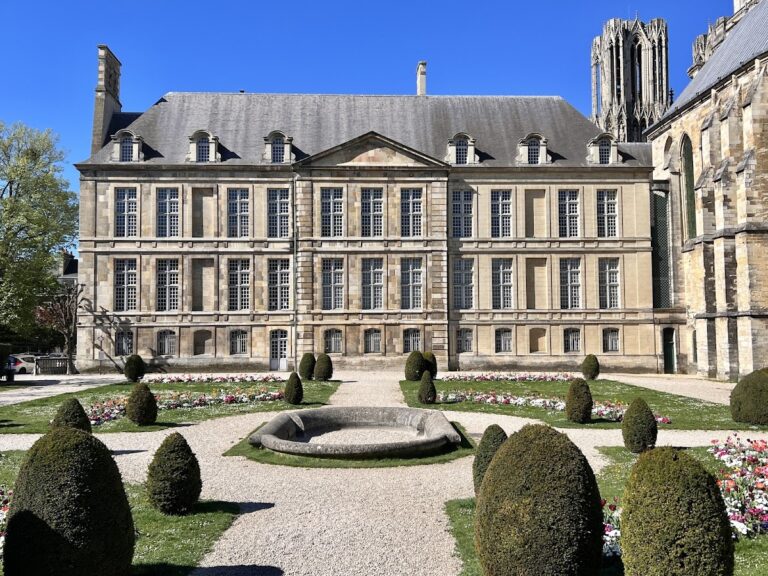
Les Crayères has a U-shaped plan, with a principal wing framed by two long lateral wings. The building is constructed of dressed stone and rises over two storeys, with an attic level covered in slate and zinc. Its strictly classical Mansart design gives the residence a symmetrical architectural character and incorporates the steep roof form associated with the style.
On the garden side, a large terrace is framed by two wrought-iron verandas. The château’s salons received wood panelling when the property was converted into a hotel and gastronomic establishment in 1983. The building stands within the estate’s high enclosing wall, which screens the park from view.
The Park and Estate Grounds
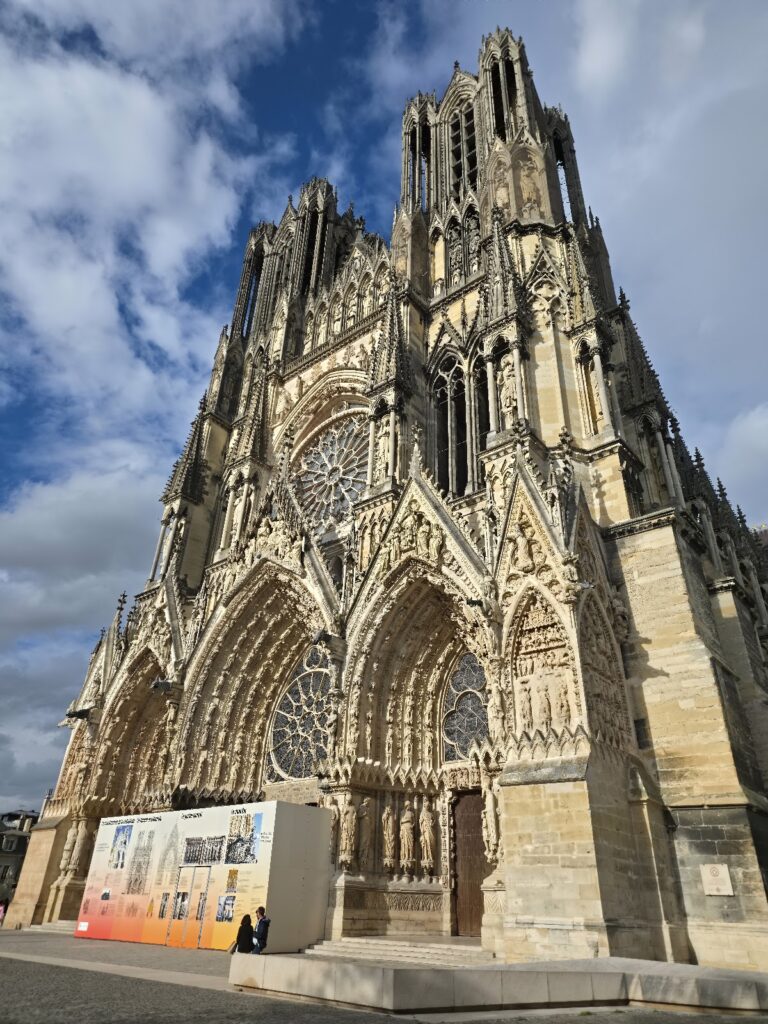
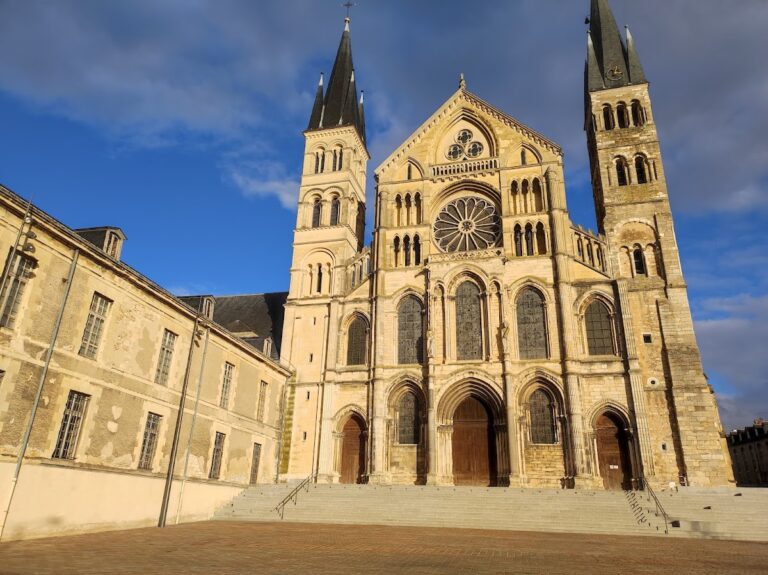
The château occupies Saint-Nicaise Hill in Reims and is set within a landscaped English-style park designed by Édouard André and Édouard Redont. The park and residence were conceived as parts of one estate, although the park was created first. From the château, the view extends across Reims toward the Basilica of Saint-Remi, Reims Cathedral, and the Montagne de Reims.
A vineyard belonging to the Pommery house lies within the estate walls. At the rear of the garden, the former stables now house Brasserie Le Jardin, which is accessed from Avenue du Général-Giraud. The surviving relationship between the residence, enclosed park, former service buildings, and vineyard preserves the estate’s connection with the production and presentation of Champagne.