Bourg-Charente Castle: A Historic Residence and Liqueur Production Site
Site at a Glance
- Popularity
- Medium
- Country
- France
- Primary era
- Early Modern
- Eras represented
- Medieval, Early Modern, Modern
- Civilizations
- French
- Site type
- Domestic
- Remains
- Castle
On this page9 sections
History
Bourg-Charente Castle is a historic residence in Bourg-Charente, France. The present château replaced a medieval fortress, with construction beginning in 1607 and completion dated to the nineteenth century.
The medieval castle
The land of Bourg belonged to the Ollivier family by 1262. A castle and chapel stood there by 1264. In 1363, Messire Ollivier, Baron of Bourg, paid homage, a formal declaration of loyalty by a vassal to a lord, to the Prince of Wales, a title held by the English monarch’s heir. At that time the castle was an English possession. Its English status was linked to Eleanor of Aquitaine, duchess of Aquitaine, and her marriage to Henry, later Henry II of England, which brought the duchy under the English king’s rule.
Both the castle and chapel were destroyed in 1378. The Marshal of Sancerre, a senior military commander, destroyed the castle while trying to retake it from the English during the Hundred Years’ War, a series of conflicts between the English and French monarchies that lasted principally from 1337 to 1453.
Rebuilding and changes of lordship
Pons de Pons built the present château to replace the destroyed fortress. Work began in 1607, with completion dated to the nineteenth century. The lordship later passed through the Bragier, Gouffier, and Pons de Pons families, then to the Count of Miossens, who was lord of Pons and governor of Guyenne, a historical region in southwestern France. François Michel Claude Benoît Le Camus de Néville, husband of the château’s heiress, Thérèse Rambaud, was its last lord.
Industrial and residential use
The Marnier-Lapostolle family bought the château in 1921 and installed cellars for producing Grand Marnier, a French liqueur made with cognac and bitter-orange flavoring. In 2012, stills for distilling the bitter oranges used in the liqueur were installed there. The château is also a private residence.
Remains
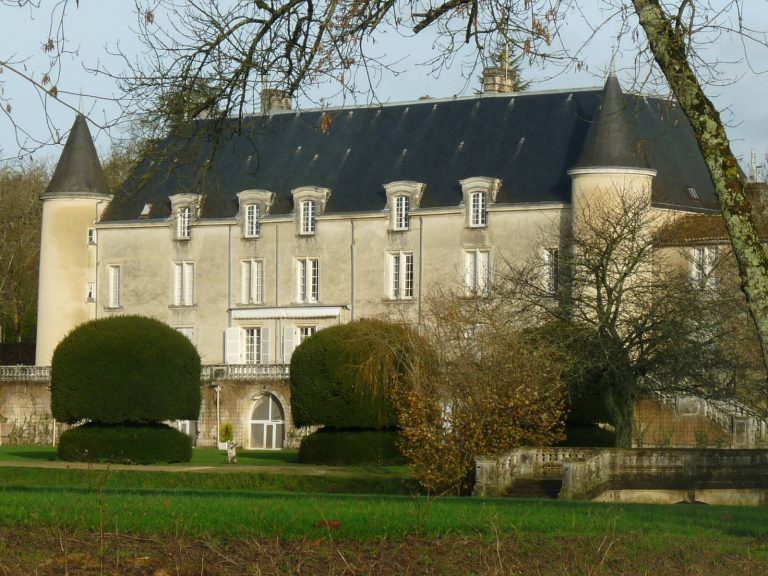
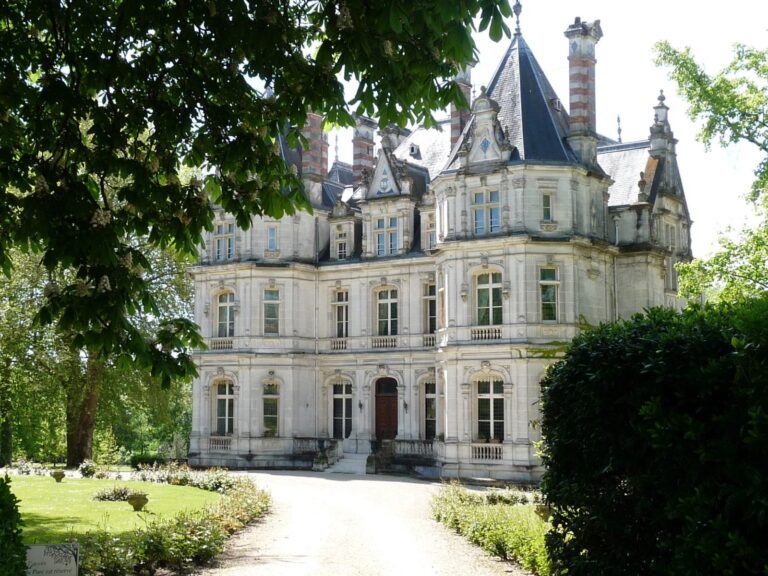
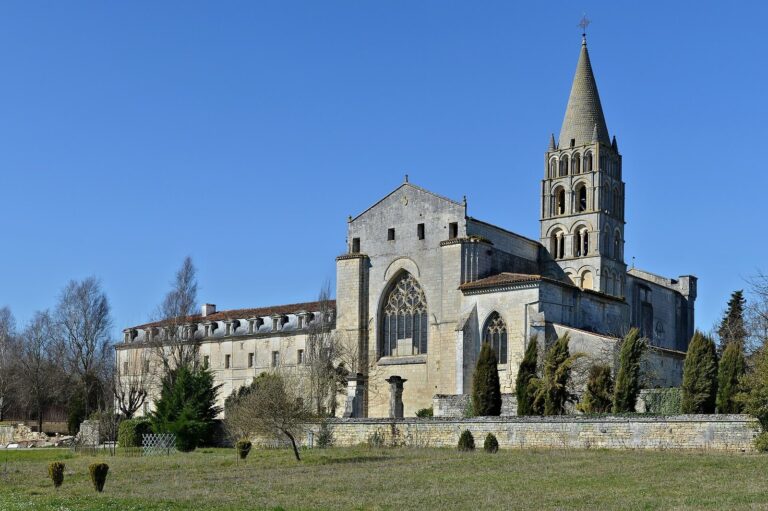
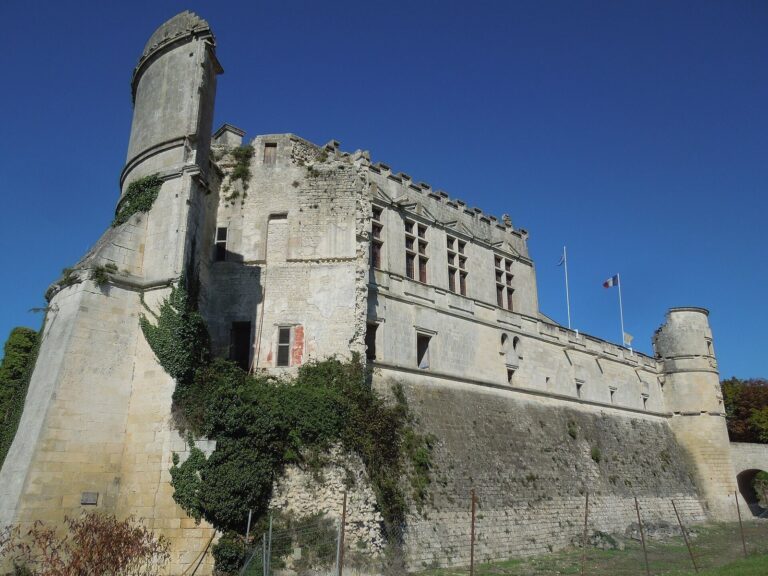
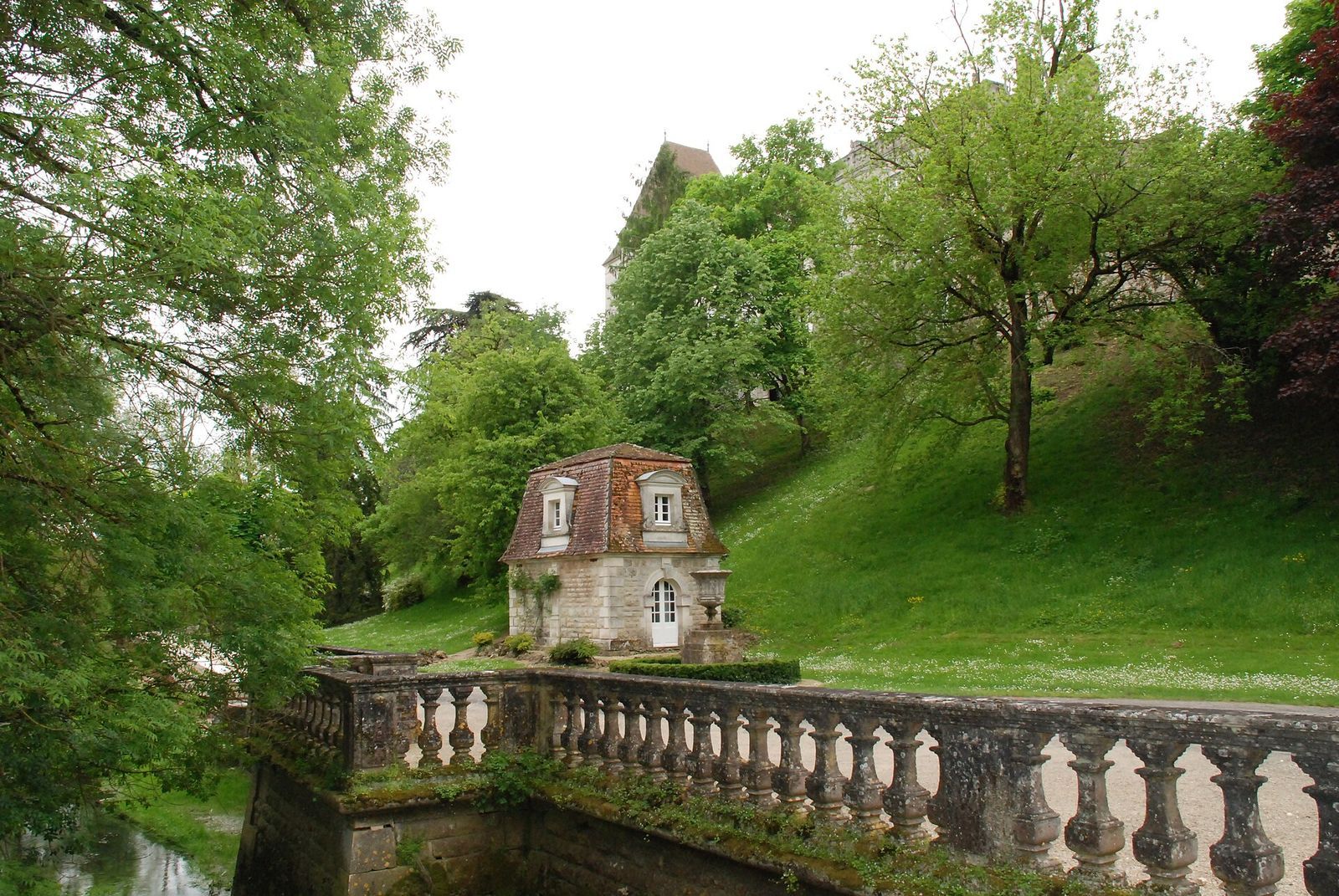
The château stands on a rocky promontory overlooking the Charente River and its valley, upstream from Cognac. Its visible remains include features that may belong to the earlier castle and chapel, alongside the rectangular principal residence and its attached wing.
Earlier features
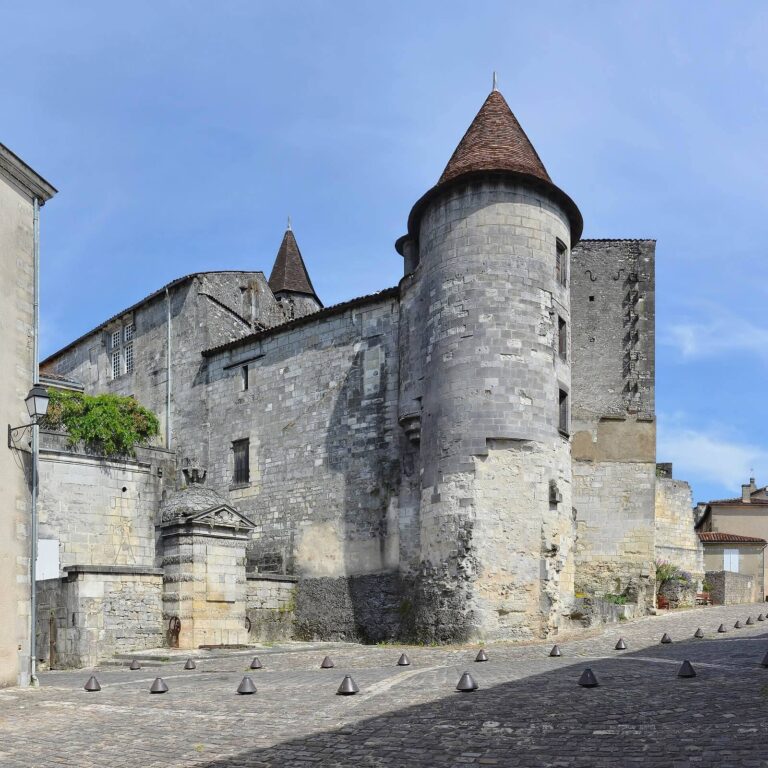
A moat and a fragment of a tower to the northwest may date from the earlier castle-and-chapel complex.
The present château
Principal residence and pavilion
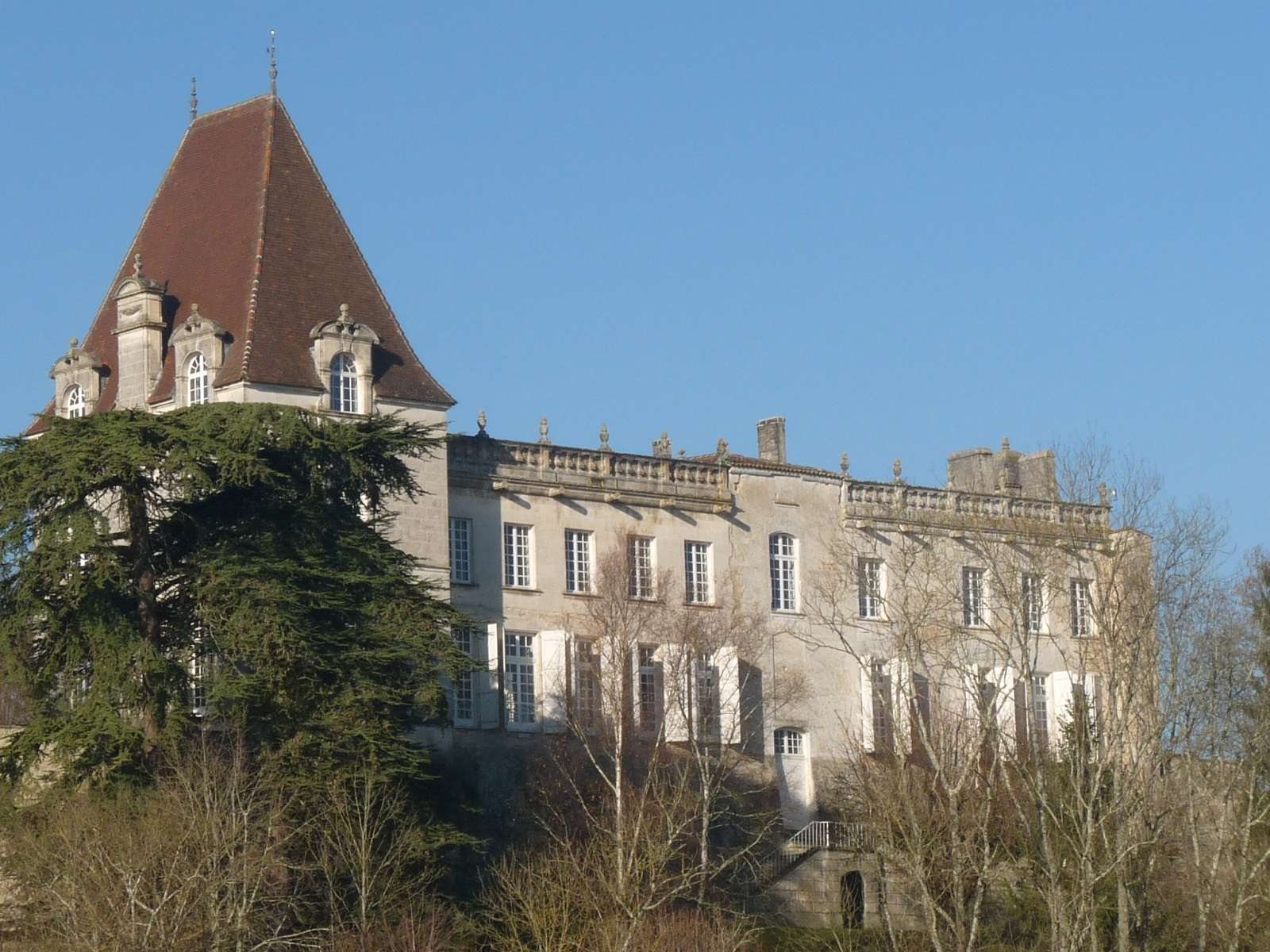
The main residence is rectangular and topped by a balustrade, a low railing formed by a row of supports. A pavilion, or distinct building section, carries a very high pyramidal roof. The south pavilion was reassembled in the nineteenth century.
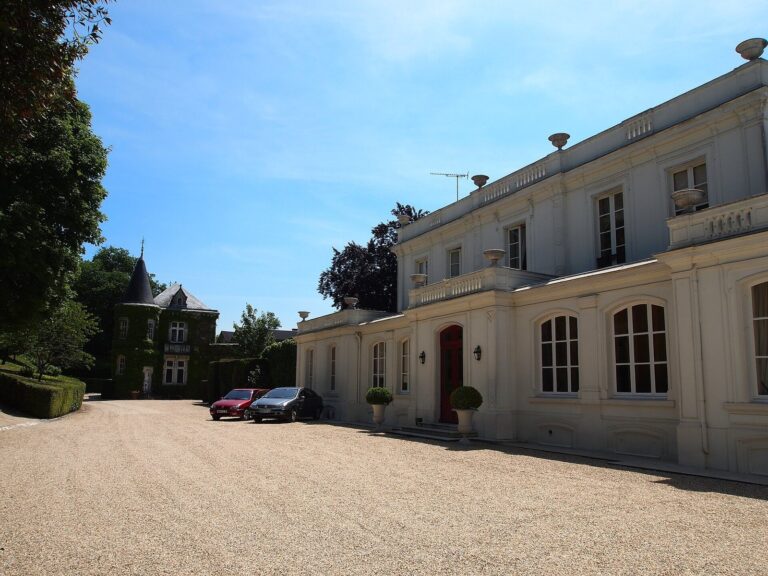
Right-angle wing
A wing extends at a right angle from the main building. Its notched parapet is decorated with framed ornamental panels taken from Bouteville Castle. A monumental fireplace from that château was also brought to Bourg-Charente.