Château de Bagnolet: A Hennessy Estate in Cognac


Site at a Glance
- Rating
- 4.5
- Popularity
- Low
- Country
- France
- Primary era
- Modern
- Eras represented
- Modern
- Civilizations
- French
- Site type
- Domestic
- Remains
- Castle
On this page10 sections
History
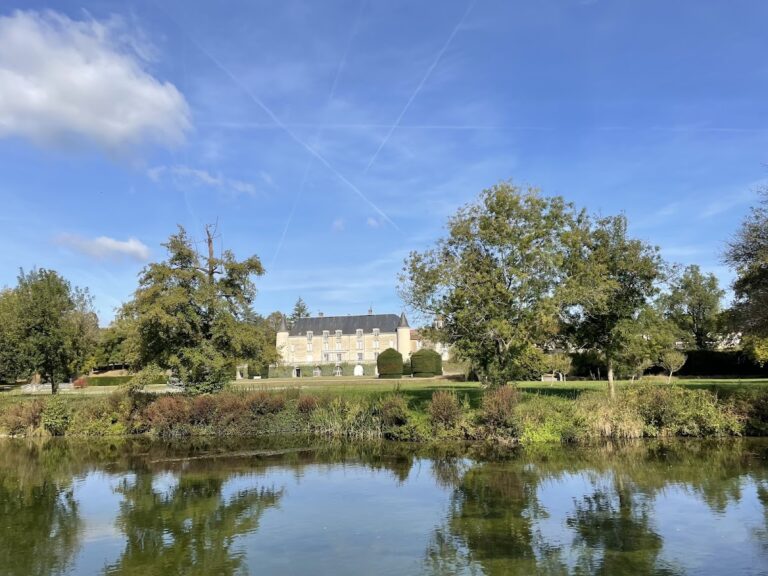
Château de Bagnolet is a country estate in Cognac, France, built by the Augier family in 1810 on the right bank of the Charente. Its simple white architecture belongs to the early nineteenth century, and its grounds formed part of Cognac’s “grand park,” which had remained royal property until the French Revolution. The name Bagnolet comes from a natural spring and may suggest that baths existed at the site in antiquity.
The Augier and Hennessy estate
Auguste Hennessy acquired Bagnolet in 1841. A member of the family associated with the Hennessy cognac house, a producer and trading company connected with Cognac brandy, he settled at the château with his wife, Irène d’Anthès-Hennessy, and their three children. Two further children were born there.
During the nineteenth century, Bagnolet became a setting for the Hennessy family’s domestic and business life. Auguste Hennessy held hunting parties, receptions, and concerts at the estate, while international clients were entertained there. In this role, the château functioned as an “embassy” of the Hennessy house. The garden was redesigned as an English-style park in 1842, and a later redesign was carried out by a landscape gardener in 1910.
Wartime occupation and Hennessy ownership
From 1939 to 1945, during the Second World War, the German army occupied the château and housed Luftwaffe officers there. The Luftwaffe was the German air force under the Nazi regime. In 1945, the French general and statesman Charles de Gaulle visited Bagnolet, and General de Larminat stayed at the property with his Moroccan troops.
In 1963, Francis Hennessy, Auguste Hennessy’s great-grandson, transferred the estate to Jas Hennessy & Co. From 1963 to 2010, Bagnolet served as Hennessy’s prestigious guest house. It remains a Hennessy property and is used as a guest house, with the estate primarily reserved for private receptions and guests of the brand.
Remains
Château and winter garden
The main château
Château de Bagnolet stands beside the Charente in the Borderies, one of the legally recognized growth areas, or crus, of the Cognac-producing region. Its white, restrained design combines features likened to Louisiana colonial houses and Italian villas. The original composition comprised a square central pavilion flanked by two smaller pavilions. Facing the river, the building looked across an English-style park that descended gently toward the Charente. Another pavilion was added in 1890.
The winter garden
Inaugurated in 1876 during the baptism of Richard Hennessy, the winter garden is a glasshouse attached to the right side of the château when approached from the rear. A glasshouse is a glazed structure used to shelter plants. Its botanical collection includes hibiscus, bougainvillea, and citrus trees. The structure opens onto a small courtyard and a terrace overlooking the park and the river.
Avenues and ornamental grounds
The avenues and arboretum
The main avenue begins at the entrance grille and runs toward the rear of the château, parallel to the Charente. Tall box hedges border its course. The Allée du Silence follows a winding descent toward the riverbanks, while the Allée Auguste Hennessy forms an arboretum, a park area devoted to cultivating and displaying trees and shrubs. Its plantings include yews, maples, Japanese spindle trees, and silver lindens.
Garden structures
Several ornamental features remain within the park, including the Temple of Love and the Angel and Fish Fountain. A pergola is covered with wisteria, trumpet vines, and climbing roses, adding another planted structure to the grounds surrounding the château.