Bannes Castle: A Medieval Fortress Rebuilt as a Noble Residence
Site at a Glance
- Popularity
- Medium
- Country
- France
- Primary era
- Early Modern
- Eras represented
- Early Modern
- Civilizations
- French
- Site type
- Military
- Remains
- Castle
On this page11 sections
History
Bannes Castle is a fortified residence in France whose written history begins in the fourteenth century, amid the Hundred Years’ War, the prolonged conflict between the English and French crowns.
Early settlement and the Hundred Years’ War
A small settlement probably stood at Bannes in the fifth or sixth century. A legend of Saint Avit describes it as a vicus, or small settlement, although the saint’s identity is uncertain. The name Bannes may come from a Celtic word also used in the Périgord dialect for a horn or point, perhaps referring to the shape of the site.
The castle first appears in written records in the fourteenth century, when it belonged to Jean de Seignal, a captain of the Écorcheurs, bands of former mercenaries active during the war. In 1409, Ramonet de Sorts, captain of the English-held castle at Castelnaud, seized Bannes. The knight Jean de Lot was imprisoned there in 1417 and freed by Pierre de Bosredon. The following year, Sarlat’s inhabitants paid the captains of Bannes and three other castles to make a truce and end hostilities.
In 1441, Bannes was controlled by Jean de L’Aigle, Count of Périgord. A peace treaty dated 8 August ordered him and Pierre de Beaufort to evacuate and demolish several castles, including Bannes. The castle was not demolished and came under English control. Sarlat forces besieged it in 1442, and the garrison surrendered in exchange for payment. On 15 November, Sarlat’s consuls sent workers to dismantle the castle. The destruction was incomplete: Brandelis d’Abzac could still live there, and parts of the walls remained.
Ownership was disputed after the siege. Jean d’Esclamat claimed Bannes as a former part of the barony of Pujols, a territorial lordship held by a baron, and argued that Ramonet had taken it by force. Jean Faulcon replaced d’Esclamat in the claim and became the owner. In November 1510, Faulcon’s descendant Albret sold the lordship of Bannes to Brandelis de Gontaut-Biron.
Rebuilding and sixteenth-century conflict
After the purchase, Brandelis de Gontaut-Biron began a major rebuilding and modernization that lasted about 20 to 25 years. His uncle Armand de Gontaut-Biron, bishop of Sarlat from 1498, may have helped. Brandelis’s son François continued work on the stone defenses. He was wounded at the Battle of Ceresole in 1544, a French victory over imperial forces during the Italian Wars. His widow, Françoise de Salignac, received Bannes as her dower, a provision from her husband’s estate. She later married Antoine de la Reynie, whose family then controlled the castle.
Jean II de Losse bought Bannes in July 1571. In 1573, King Charles IX appointed him lieutenant-general of Guyenne, a senior royal official with delegated authority in the province, including over lands on the near side of the Garonne. On 23 February 1574, Protestants entered the castle and nearly killed him. During the French Wars of Religion, the sixteenth-century conflicts between Catholics and Protestants in France, Bannes changed hands repeatedly.
Decline and restoration
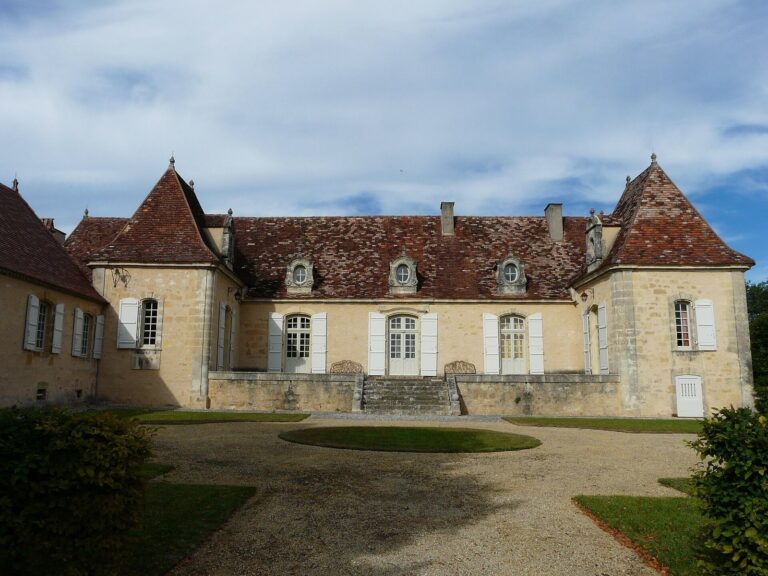
After the religious conflicts, the castle lost its former importance. Its stone defenses went unrepaired, and it was effectively abandoned; by the beginning of the nineteenth century, it lay in ruins. The Fayolle du Moustier family acquired Bannes in 1882 and restored it. In 1960, businessman Lemasson acquired the property, undertook a major restoration, and made it a private family residence, with the work intended to preserve the castle’s earlier forms. Bannes was listed as a French historic monument in 2002.
Remains
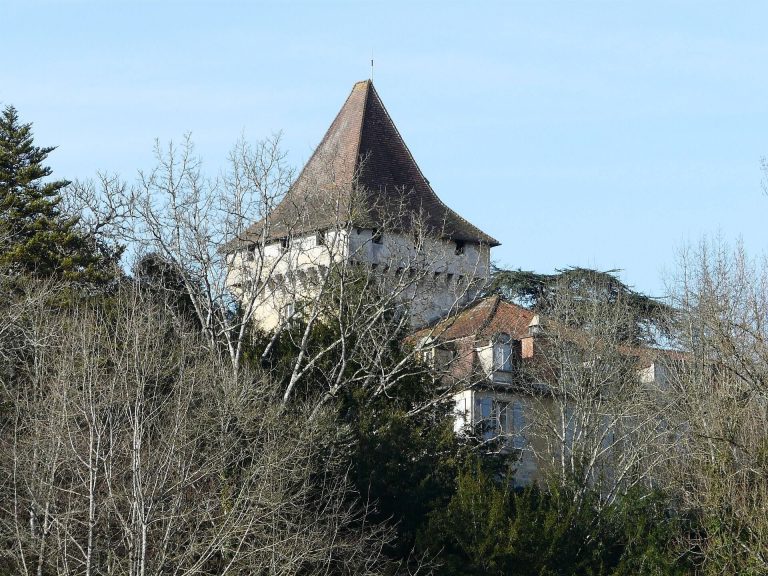
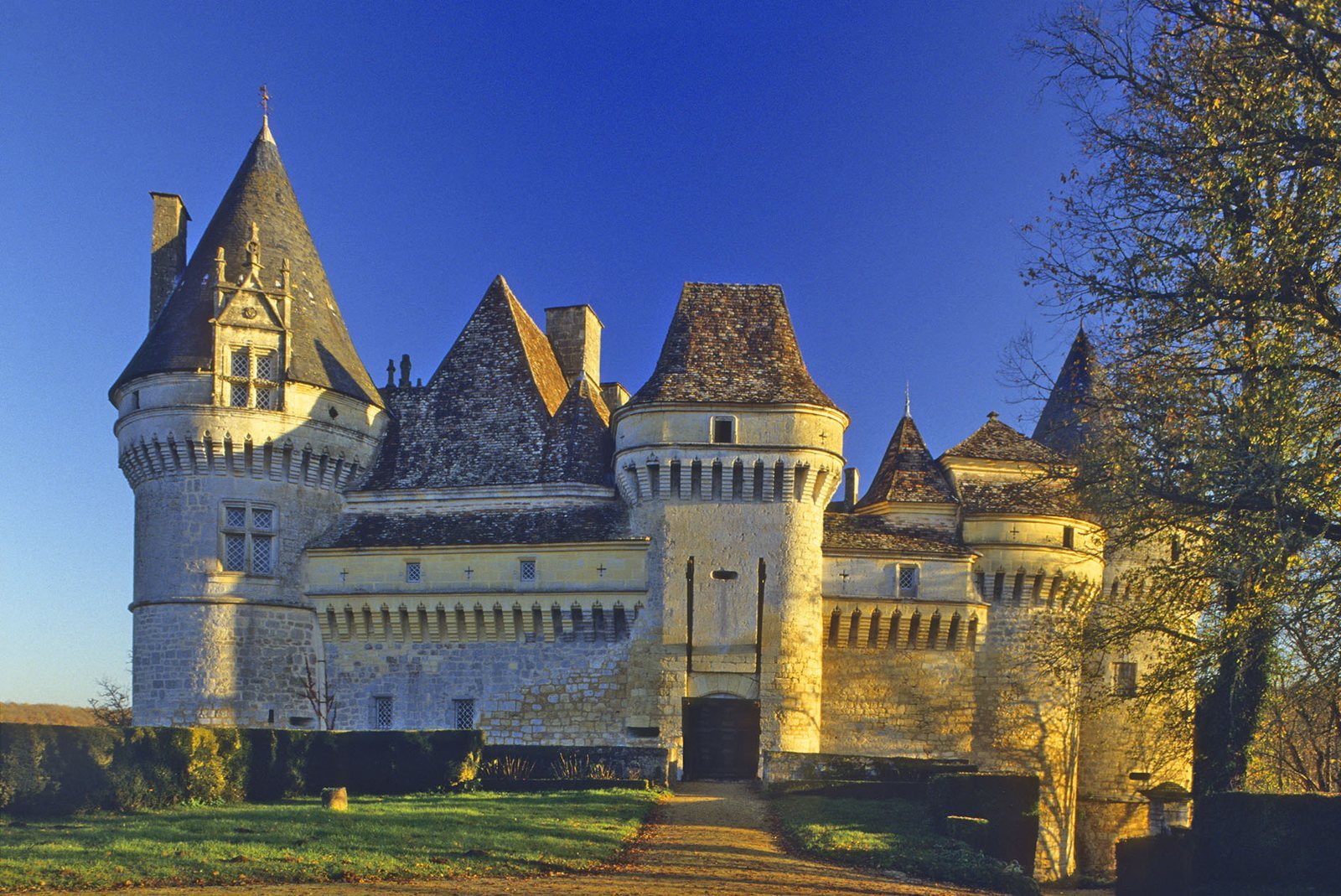
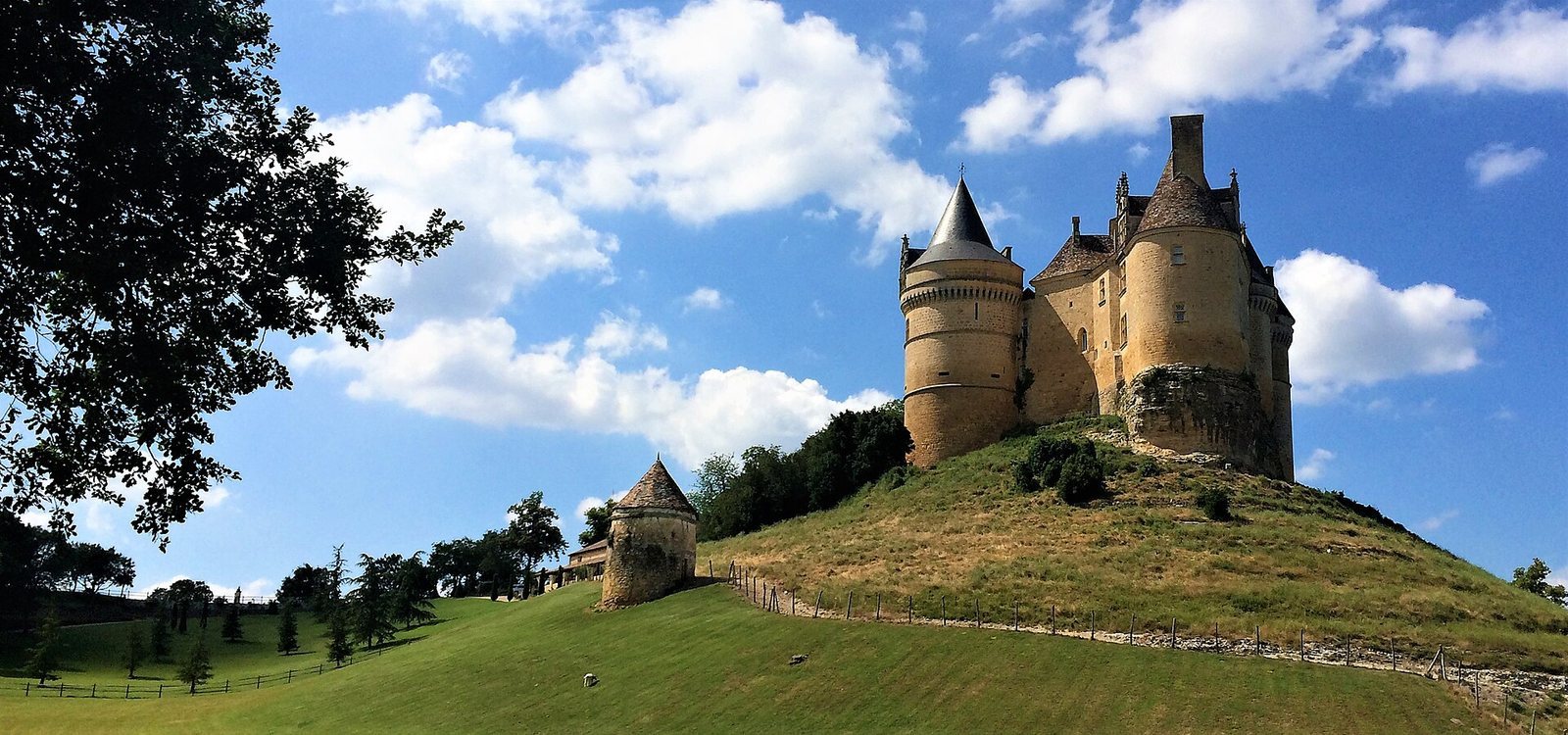
The castle occupies a rocky spur overlooking the Couze valley. Its defenses follow the plateau’s contours, giving the complex an elongated plan. Stone and brick form its construction, and a deep well was cut into the rock to reach water.
Defensive layout and towers
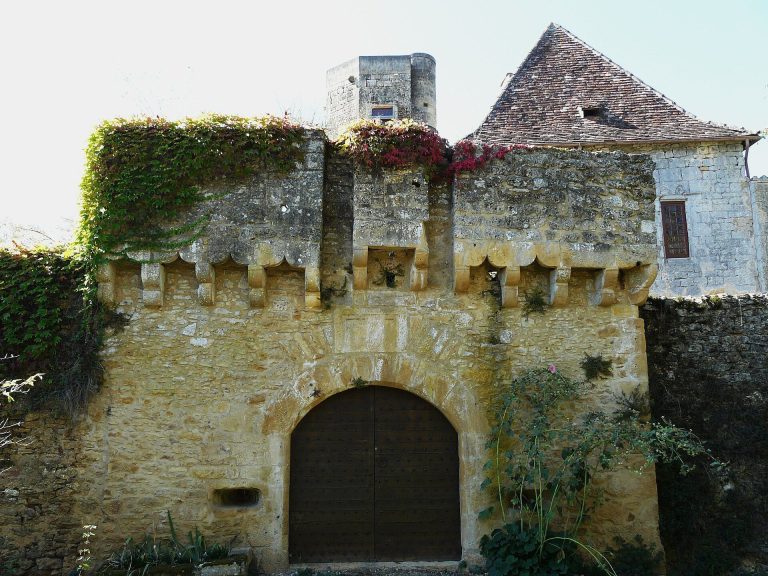
Northern entrance and outer court
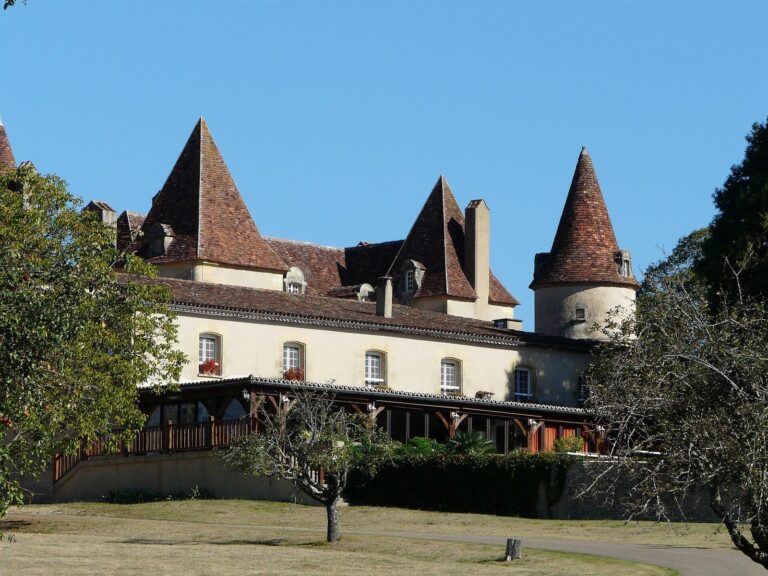
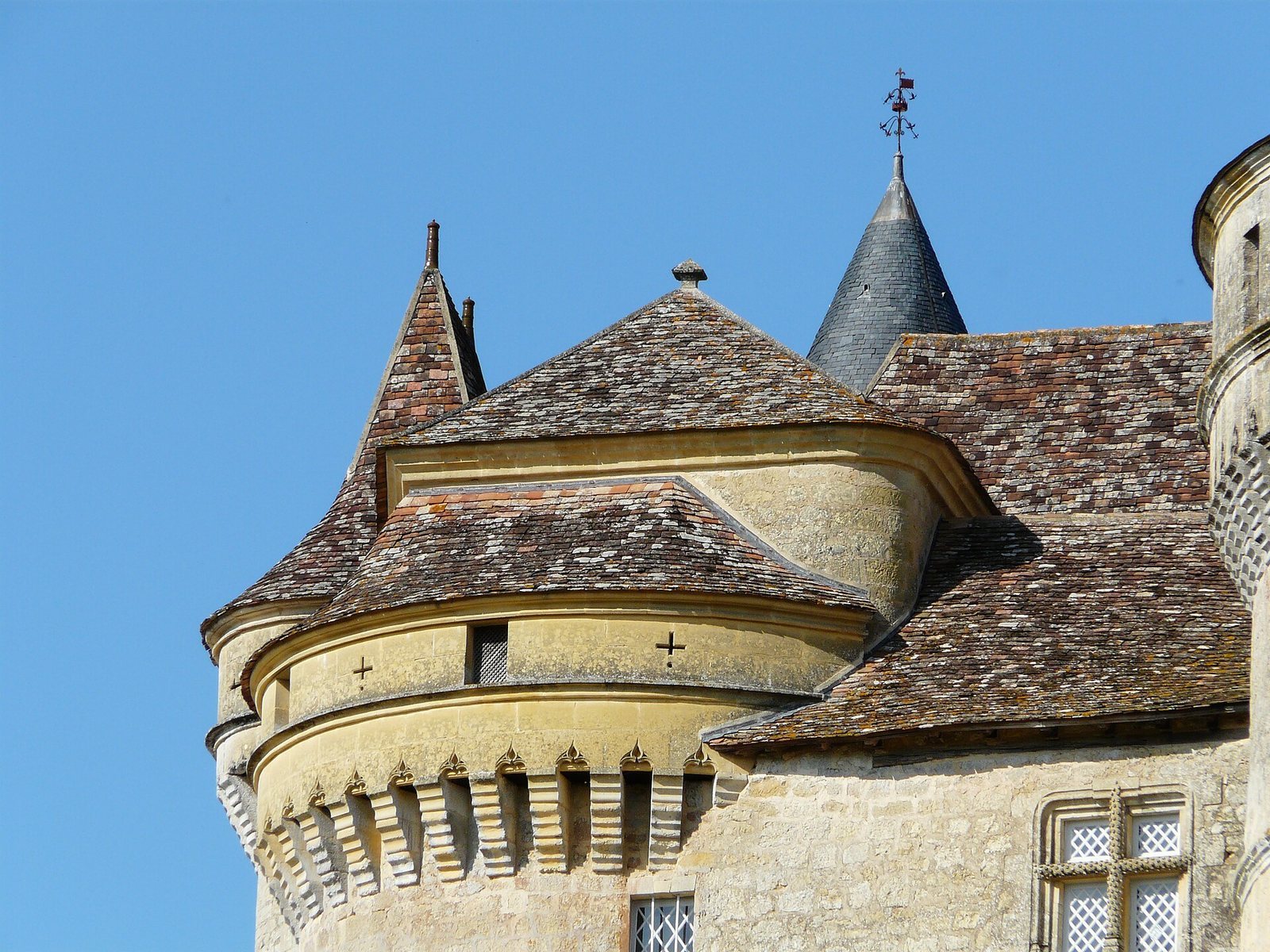
The sole entrance is on the north side, where a drawbridge once provided access. An enclosed outer court stood before the main gate; this area was later turned into a garden. The gatehouse is decorated, and ornamented dormers add detail to the roofs.
Walls and towers
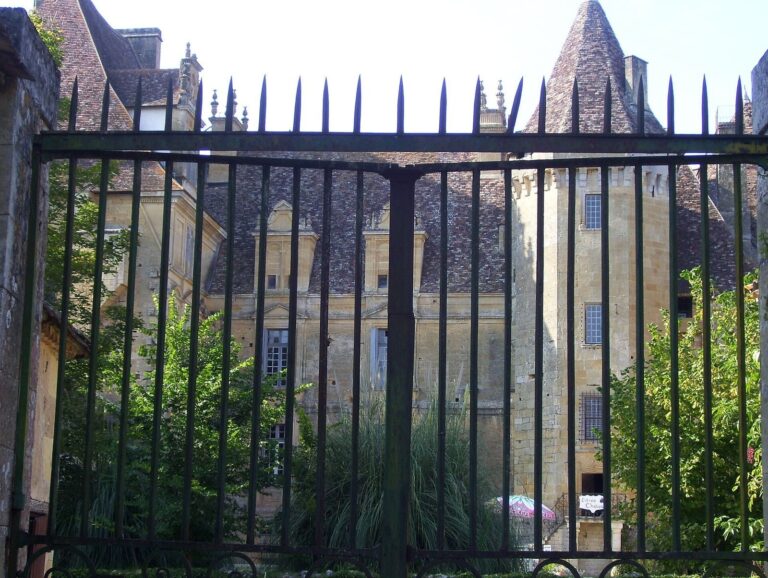
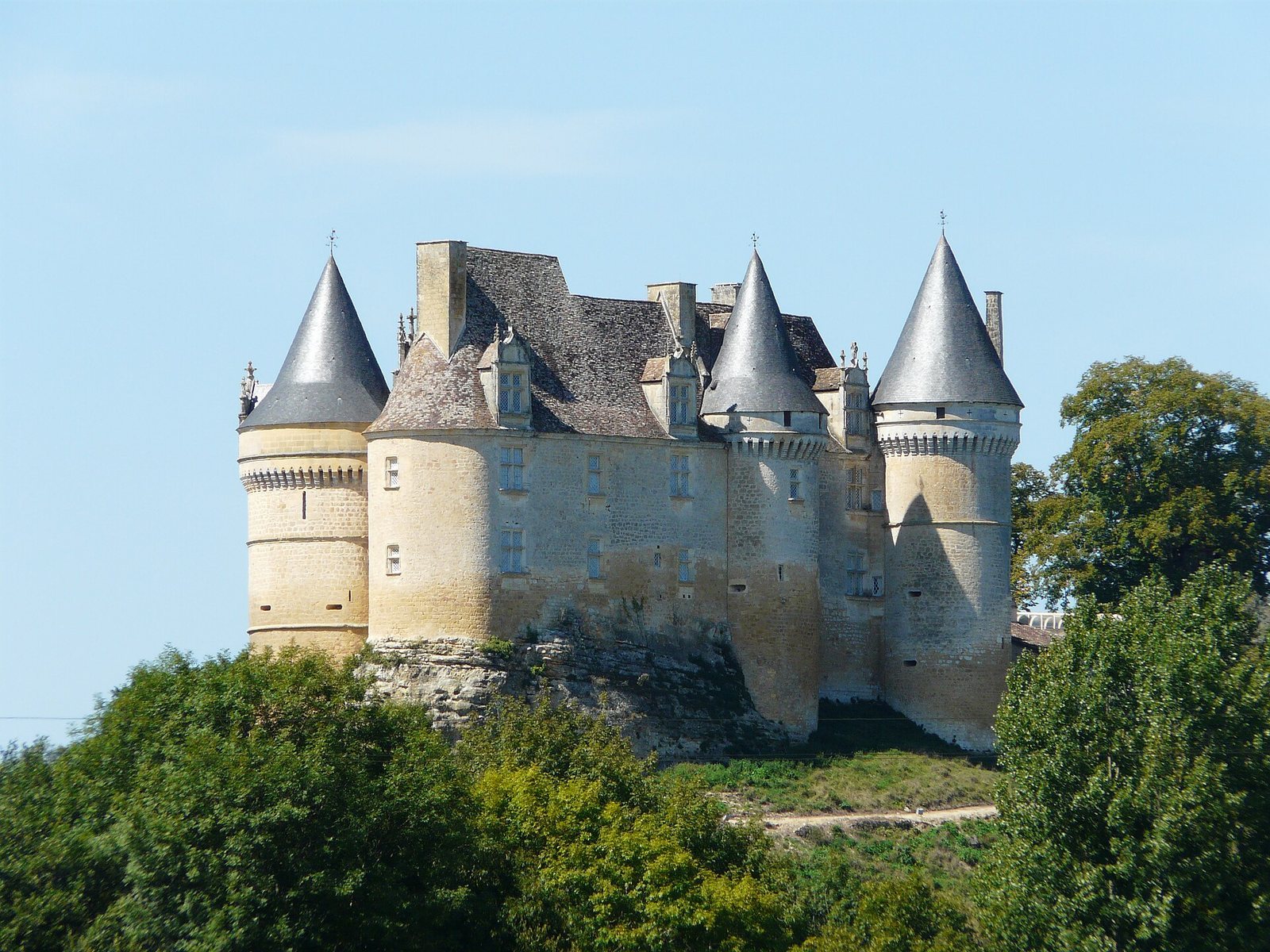
Massive round towers project well beyond the curtain wall, the defensive wall enclosing the castle’s main area. The southern tower, known as the Henry IV Tower after Henry IV, king of France from 1589 to 1610, has a larger diameter than the medieval tower it replaced.
Interior features and archaeological finds
Hall and tower
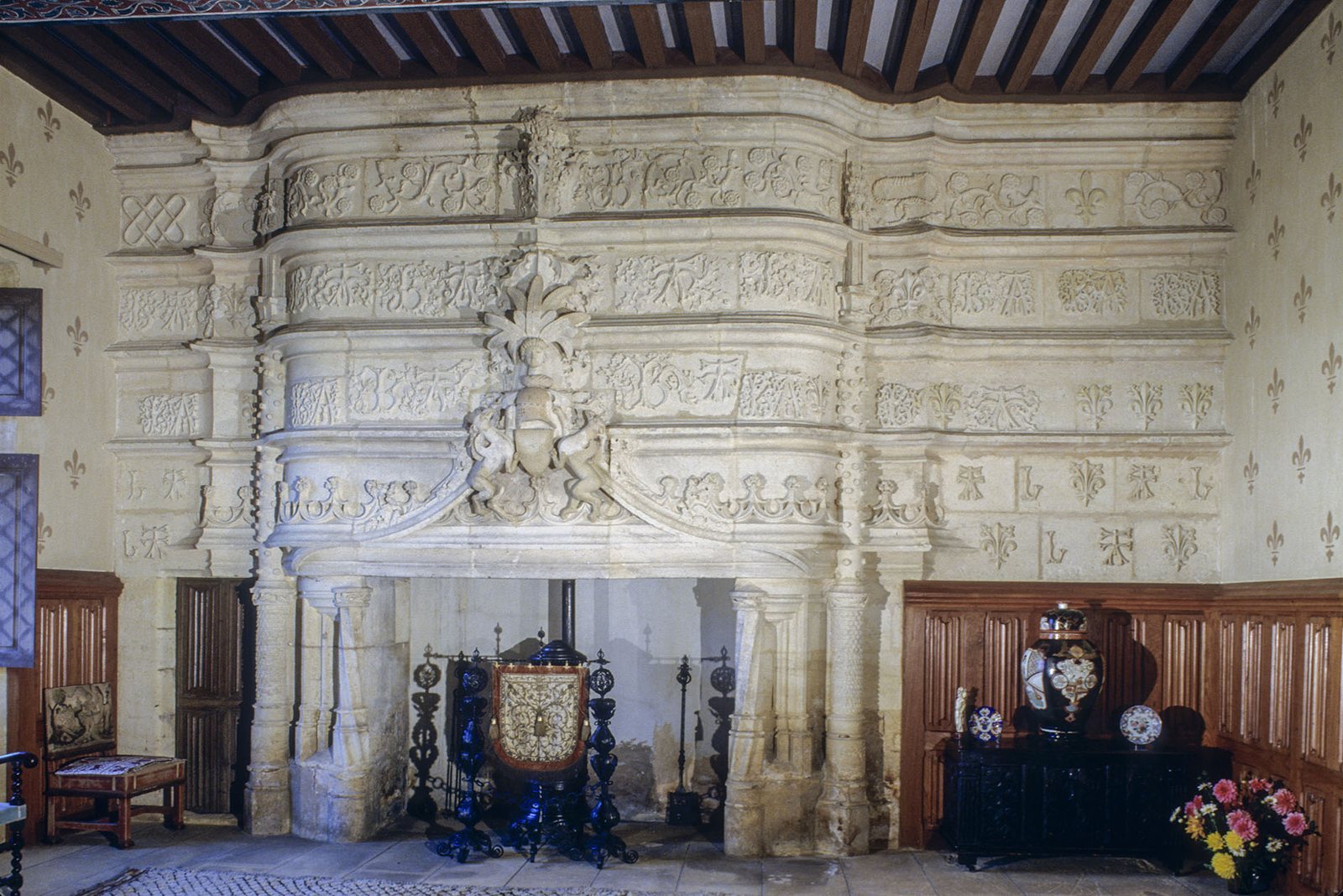
The hall fireplace bears the monograms of Louis XII and Anne of Brittany, who had visited the castle by 1515. The fireplace indicates that the hall was completed before then. In the tower overlooking the valley, a curved stone ceiling bears the Gontaut-Biron family arms.
Finds beside the church
Stone coffins and coins were found around 1840 between the castle and the church. The coins date to the reign of the Roman emperor Vespasian, from AD 69 to 79.