Château d’Auvers: A Seventeenth-Century Residence and Art Interpretation Center


Site at a Glance
- Rating
- 4.1
- Popularity
- Medium
- Country
- France
- Primary era
- Early Modern
- External website
- Open
- Eras represented
- Early Modern
- Civilizations
- French
- Site type
- Domestic
- Remains
- Castle
On this page7 sections
History
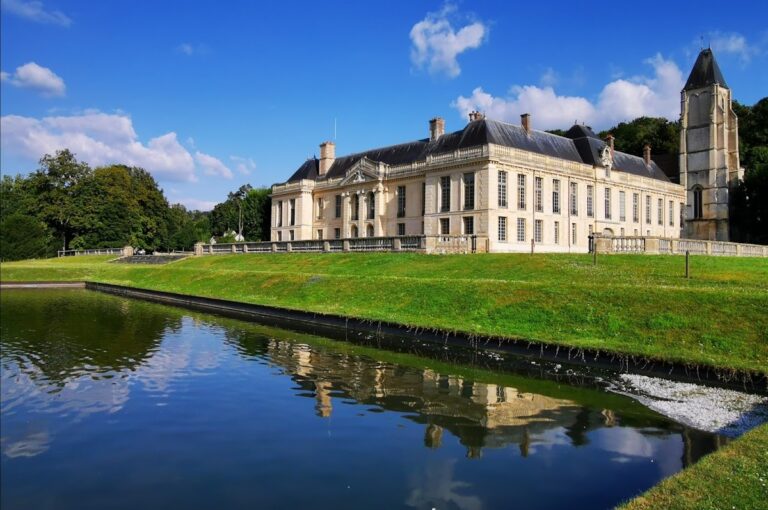
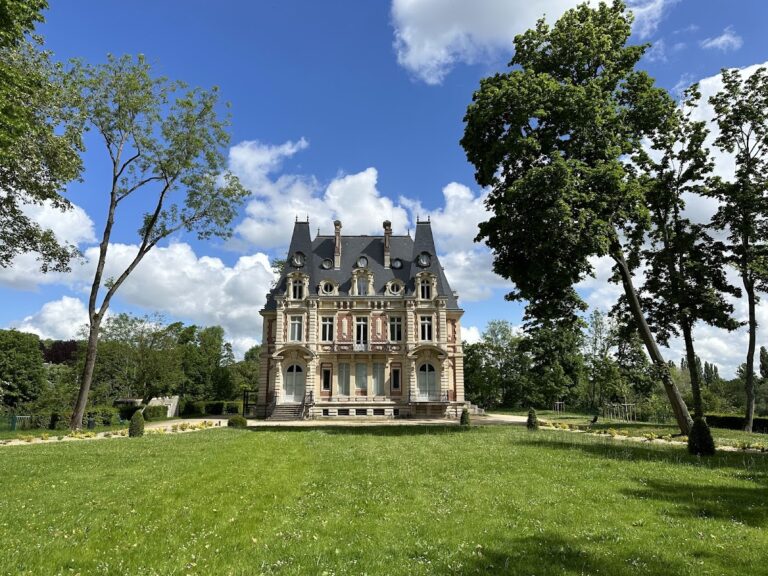
Château d’Auvers is a seventeenth-century residence in Auvers-sur-Oise, France, built by the Italian banker Zaboni Lioni in 1635. Lioni belonged to the entourage of Marie de Medici, the Italian-born queen of France and mother of Louis XIII. The building combines Louis XIII architecture, a French style associated with the early seventeenth century, and later Classical design.
From Italian Pavilion to French Château
At the end of the seventeenth century, Jean de Leyrit acquired the property and converted its Italian-style pavilion into a French château. Leyrit held several important offices: he was a royal councillor, a royal household officer, and treasurer-general of France. Under his ownership, the estate became a fief, a landed estate held within a feudal relationship and carrying recognized rights and obligations. The property is also known as Château de Leyrit and is sometimes spelled Léry.
The château belonged to the d’Espremenil family in 1720 and was completely transformed in 1756. In 1765, it was sold to Prince Louis François de Bourbon-Conti, who used the estate mainly for occasional hunting visits. Ownership changed several more times after this, while the buildings gradually deteriorated.
Van Gogh and the Modern Interpretation of the Estate
In 1890, the château inspired Vincent van Gogh’s painting Château d’Auvers at Sunset. Van Gogh, a Dutch post-Impressionist painter, helped give Auvers-sur-Oise lasting visibility through his paintings. The village had already attracted artists, including Charles-François Daubigny, described as a forerunner of Impressionism, as well as Corot, Pissarro, and Cézanne. Daubigny anchored his studio boat in front of Auvers, while the others later came to the village in connection with the artistic development associated with Impressionism.
The General Council of Val-d’Oise acquired the entire site in 1987 and undertook its full restoration. In 1994, the château became an art interpretation center. From 1994 to 2017, it presented Journey Through the Age of the Impressionists, an educational program examining nineteenth-century society and its influence on artistic practice and the emergence of Impressionism. Reconstructed interiors and exteriors, projected paintings, music, sound effects, and commentary created a journey through settings that included Haussmann’s Paris, cabarets, riverside guinguettes, the countryside, Normandy beaches, railway stations, and workplaces. The approach was inspired by the technique developed for the Cité Ciné exhibition at the Grande Halle de la Villette, and the program was translated into nine languages.
After major works, the château reopened in October 2017 with a permanent digital exhibition route, Impressionist Vision: Birth and Legacy, tracing Impressionism from its origins to the present. In 1997, the château and its park received protection under France’s historic-monuments designation, including the façades and roofs, the entrance vestibule, the stairwell with its staircase and handrail, and the entire park.
Remains
The Château and Its Park
Facades and Interior Features
Château d’Auvers combines Louis XIII and Classical forms, reflecting its construction in 1635 and its major transformation in 1756. The north façade, built in the Louis XIII style, survived the eighteenth-century redesign. The entrance vestibule and the stairwell, including the staircase and handrail, form part of the protected architectural fabric. The restored building stands within a park that is included in the protected site.
Gardens and Nymphaeum
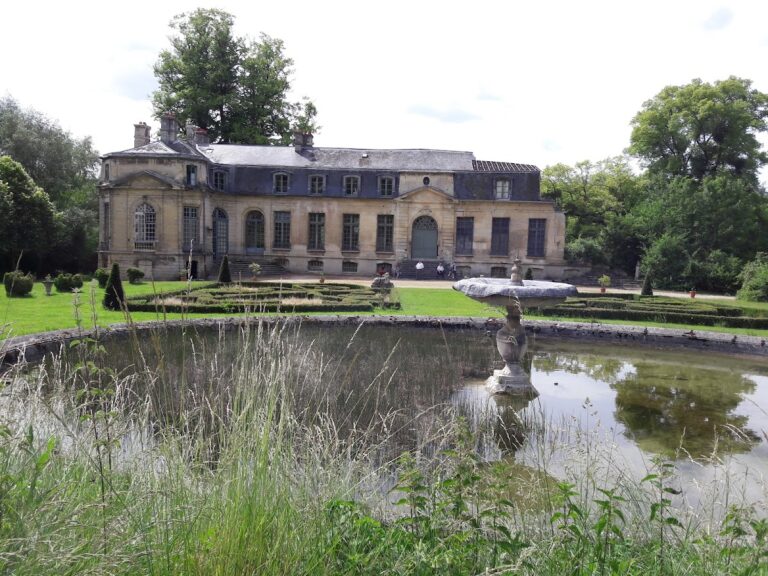
The south façade and gardens were redesigned from seventeenth- and eighteenth-century engravings. Two additional pavilions were added to the south side during the 1756 transformation. The gardens contain boxwood parterres and fountains. A nymphaeum, an ornamental grotto or structure associated with a spring or fountain, carries the monogram of Prince Louis François de Bourbon-Conti, whose decorative treatment was restored.
Nearby sites