Château d’Arlay: An Eighteenth-Century Château-Vineyard in France


Site at a Glance
- Rating
- 4.4
- Popularity
- Low
- Country
- France
- Primary era
- Early Modern
- External website
- Open
- Eras represented
- Medieval, Early Modern
- Civilizations
- French, Holy Roman Empire
- Site type
- Domestic
- Remains
- Elite Residence
On this page10 sections
History
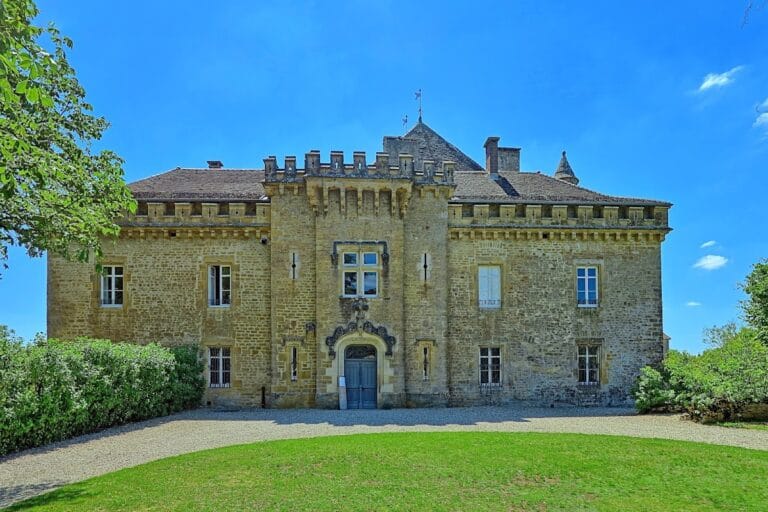
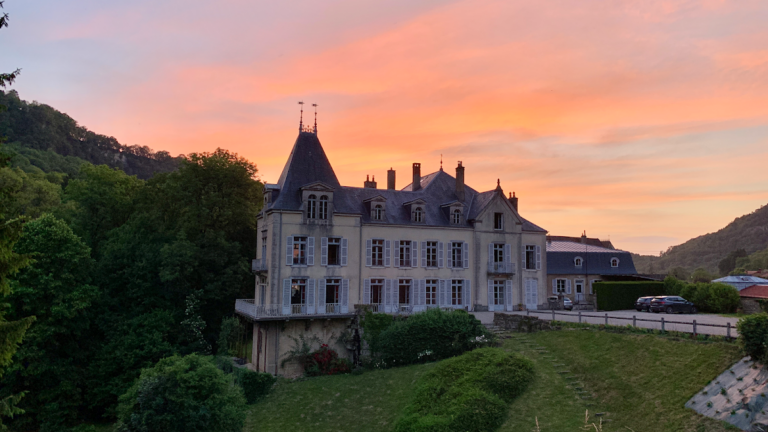
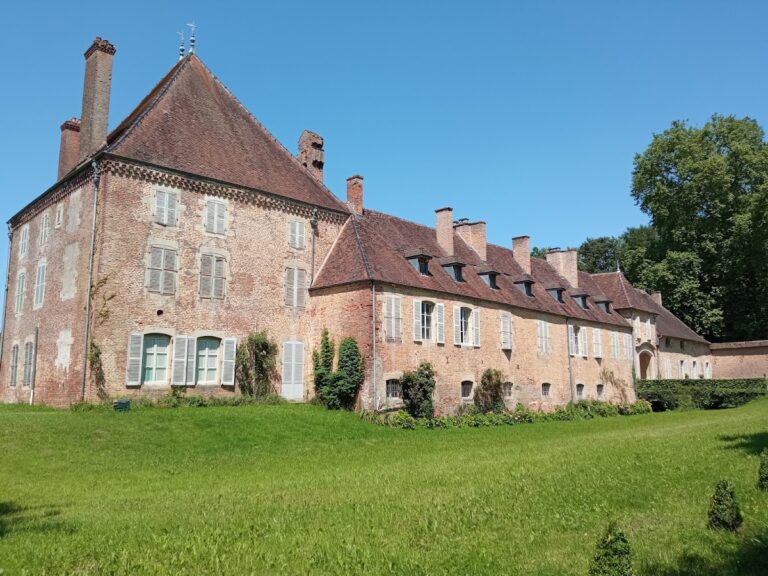
Château d’Arlay is an eighteenth-century private château in Arlay, France, built below the ruins of an earlier fortress. It is regarded as France’s oldest château-vineyard, combining a historic residence with a working wine estate in the Jura.
Origins and the medieval fortress
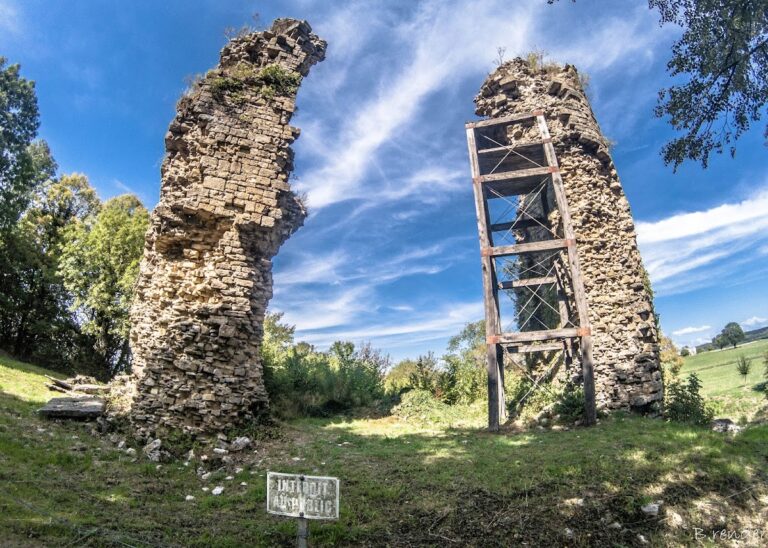
The fortress stood on a hill above Arlay and the present château, on the site of an earlier Gallo-Roman oppidum, a fortified settlement associated with Roman-era communities in Gaul. Its beginnings are traditionally attributed to Girart de Roussillon in the ninth century, although that attribution remains uncertain.
From the thirteenth century, the lords and later barons of Chalon-Arlay and Salins became among the most powerful lords in the medieval Jura. Their prosperity was supported by the salt mines at Salins, and they established an important fortress at Arlay. The stronghold occupied a strategic position above the settlement and became closely associated with the political history of the Chalon-Arlay family.
The Chalon-Arlay and Orange succession
In the early fifteenth century, Jean III of Chalon-Arlay married Marie des Baux, heiress to the principality of Orange. Their descendants consequently became the princes of Orange, linking Arlay with the succession that later formed the House of Orange-Nassau.
The fortress was destroyed in 1479 by the army of Louis XI, king of France from 1461 to 1483. The attack followed the death of his rival, Charles the Bold, Duke of Burgundy, at the Battle of Nancy in 1477. It formed part of Louis XI’s campaign against fortresses resisting his annexation of the Duchy of Burgundy and his temporary seizure of the County of Burgundy.
In 1530, Philibert of Chalon-Arlay, Prince of Orange, Viceroy of Naples, and a commander in Emperor Charles V’s armies, died without a direct heir at the Battle of Gavinana near Pavia. His titles and possessions passed to his nephew René of Nassau. After René died without descendants in 1544, the inheritance passed to his first cousin William I of Orange-Nassau, known as William the Silent, founder of the Dutch House of Orange-Nassau.
The eighteenth-century residence
A legal dispute over part of Philibert of Chalon’s inheritance continued from the sixteenth or early seventeenth century until about 1730. Louis XV then assigned a share of the inheritance, including the Arlay estate, to Louis of Gand-Vilain de Mérode de Montmorency, Marshal of France and Prince of Isenghien, and to his niece and heiress Elisabeth-Pauline of Gand, Duchess of Lauragais.
Around 1770, Elisabeth-Pauline acquired the former Minimes convent at the foot of the ruined fortress and converted it into her principal residence. The Minimes were a Catholic mendicant order founded in the fifteenth century, so the new château occupied a former religious house rather than the destroyed medieval stronghold. Two stables and a park were incorporated within the old fortress walls, and the transformation required ten years of work.
Revolution, recovery, and the modern estate
During the French Revolution, in February 1794, Elisabeth-Pauline was arrested, tried, condemned, and guillotined in Paris during the Terror, the Revolution’s most repressive phase. The château was placed under sequestration, and its furnishings were dispersed.
In 1825, her grandson Pierre d’Arenberg recovered possession of the family properties. The estate later passed through the Arenberg and Vogüé families before reaching the La Guiche family. Pierre d’Arenberg commissioned new furnishings from Alexis Répecaud, a cabinetmaker from Poligny. Made in the French Restoration style associated with the Bourbon monarchy’s return after Napoleon, these furnishings remain connected with the château.
Since 1960, Renaud de Laguiche and later his son Alain de Laguiche have operated the family’s ancestral wine estate. Around 80,000 bottles of Jura wine are produced, with most of the production exported internationally. In 1996, Renaud and Annie de Laguiche created the Jardin des Jeux, a botanical garden organized around entertainment and games. The château became a classified historic monument that year, while its gardens received the Jardin remarquable designation. The property remains a private estate owned by the de Laguiche family.
Remains
The fortress hill and present château
The surviving complex is arranged in two historical levels. The ruined fortress occupies the hill overlooking Arlay, while the eighteenth-century château stands below it on the site of the former Minimes convent. The earlier stronghold was built on the Gallo-Roman fortified settlement and is described as an important fortress in an Anglo-Saxon style. The present residence retains the former convent’s position at the foot of the hill, with two stables standing on either side.
Park and gardens
Approximately eight hectares of parkland lie within the ramparts of the former fortress. The grounds are described as a romantic park associated with the present château, preserving the relationship between the residence and the enclosure of the older stronghold.
Created in 1996, the Jardin des Jeux is a botanical garden whose planting and layout combine horticulture with games. It contains a rose garden, a croquet course marked by green arches and a central bell, and boxwood spheres. Other designs refer to the four suits of cards, dominoes, and checkerboards. Salads, fruits, vegetables, and flowers are brought together in the garden’s planting schemes.
Interiors and furnishings
The château’s current furnishings date from the nineteenth century and were commissioned by Pierre d’Arenberg from Alexis Répecaud of Poligny. They follow the Restoration style, using light-colored walnut, ash, and bird’s-eye maple with restrained classical forms. Their continued association with the residence reflects the rebuilding of the château’s interiors after the revolutionary dispersal of Elisabeth-Pauline’s furnishings.
Vineyard
The working vineyard covers 21 hectares on the slopes around the ruined fortress. It lies within the Jura wine region and produces AOC Côtes du Jura wines, a French designation that regulates geographical origin and production standards. The vineyards use Pinot Noir, Trousseau, Poulsard, Chardonnay, and Savagnin to produce red, rosé, and white wines, as well as Jura macvin, vin de paille, vin jaune, and Jura eaux-de-vie.