Prieuré de Saint-Lothain: A Former Benedictine Priory in France

Site at a Glance
- Rating
- 4.8
- Popularity
- Very Low
- Country
- France
- Primary era
- Medieval
- Eras represented
- Medieval
- Civilizations
- Carolingian
- Site type
- Religious
- Remains
- Monastery
On this page11 sections
History
The Prieuré de Saint-Lothain is a former monastic complex in France, founded in 480 by the abbot Lautein on the site of the present church of Saint-Lothain. The foundation was dedicated to Saint Martin of Tours, while the surviving church belongs to the Romanesque period and dates from the tenth century. The complex is also described as the Château de Baume and is associated with the Diocese of Saint-Claude.
Lautein and the first community
Lautein, who lived approximately from 448 to 518, was born at Autun and entered the monastery of Saint-Symphorien Abbey there. He later received permission to live as a hermit at Saint-Lothain. His austere and penitential way of life attracted followers, and the community eventually grew to as many as 70 monks.
At that time, the settlement was known as Silèze or Salèce. It had Celtic Sequani origins and lay in Sapaudie, within the Burgundian kingdom. Lautein established his community in woodland at the top of the village, on the site of an earlier temple and pagan cemetery. As the settlement became too large, he founded a second priory dedicated to Saint Symphorian of Autun at Maximiacus or Maximiac, identified with present-day Buvilly or the locality called Carillot. That community accommodated a further 40 monks.
Destruction and Benedictine revival
Around 888, Viking invasions ruined both monasteries. The Saint-Lothain priory was later re-established by Saint Bernon, the abbot of Saint-Pierre Abbey at Baume-les-Messieurs. Saint Bernon was a Burgundian monastic leader who founded or revived several important communities, including the early foundation that developed into Cluny.
After its re-establishment, Saint-Lothain adopted the Benedictine Rule, the monastic code associated with Benedict of Nursia. The priory first became dependent on Baume-les-Messieurs and later on Cluny and the Cluniac order, a network of monasteries shaped by Benedictine observance under Cluny’s influence.
Revolution and later condition
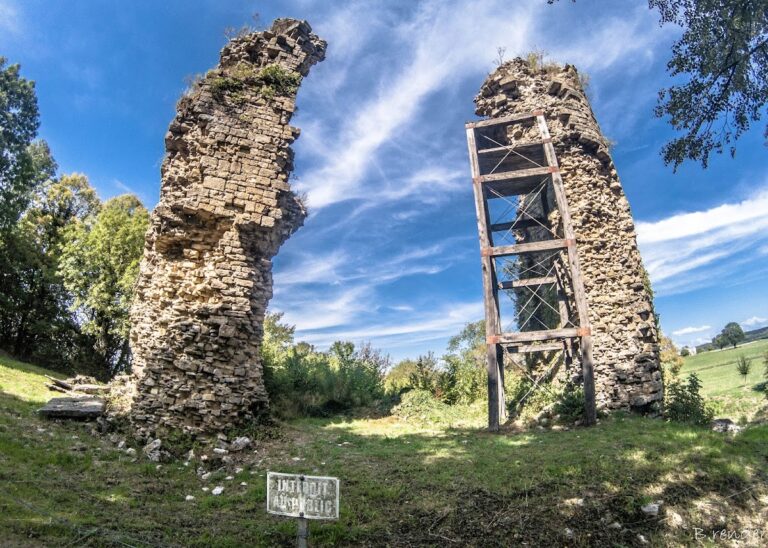
In 1791, during the French Revolution, the priory house and its estate were sold as national property. The former priory is now ruined. Some buildings survive in poor condition and have been converted to private use. The vaulted wine cellars beneath the complex preserve evidence that the monks cultivated and exploited the vineyards of the Jura. No known remains of the priory at Buvilly survive.
Remains
The surviving complex combines the ruined former Benedictine priory with the church of Saint-Lothain. Its principal remains belong to several periods, including the ninth-century crypt and former priory house, the tenth-century Romanesque church, and substantial vaulted cellars beneath the priory.
Church and crypt
Saint-Lothain church
The present church of Saint-Lothain is a Romanesque building dating from the tenth century. Romanesque architecture is characterized broadly by massive masonry, rounded arches, and robust forms. The church stands on the site of the foundation established by Lautein under the dedication of Saint Martin of Tours.
Ninth-century crypt
The crypt dates from the ninth century and preserves Lautein’s altar, a Merovingian sarcophagus, and relics of Lautein. A Merovingian sarcophagus is a stone coffin from the early medieval period associated with the Frankish dynasty that ruled much of Gaul from the fifth to the eighth century.
Priory buildings and cellars
Former priory house
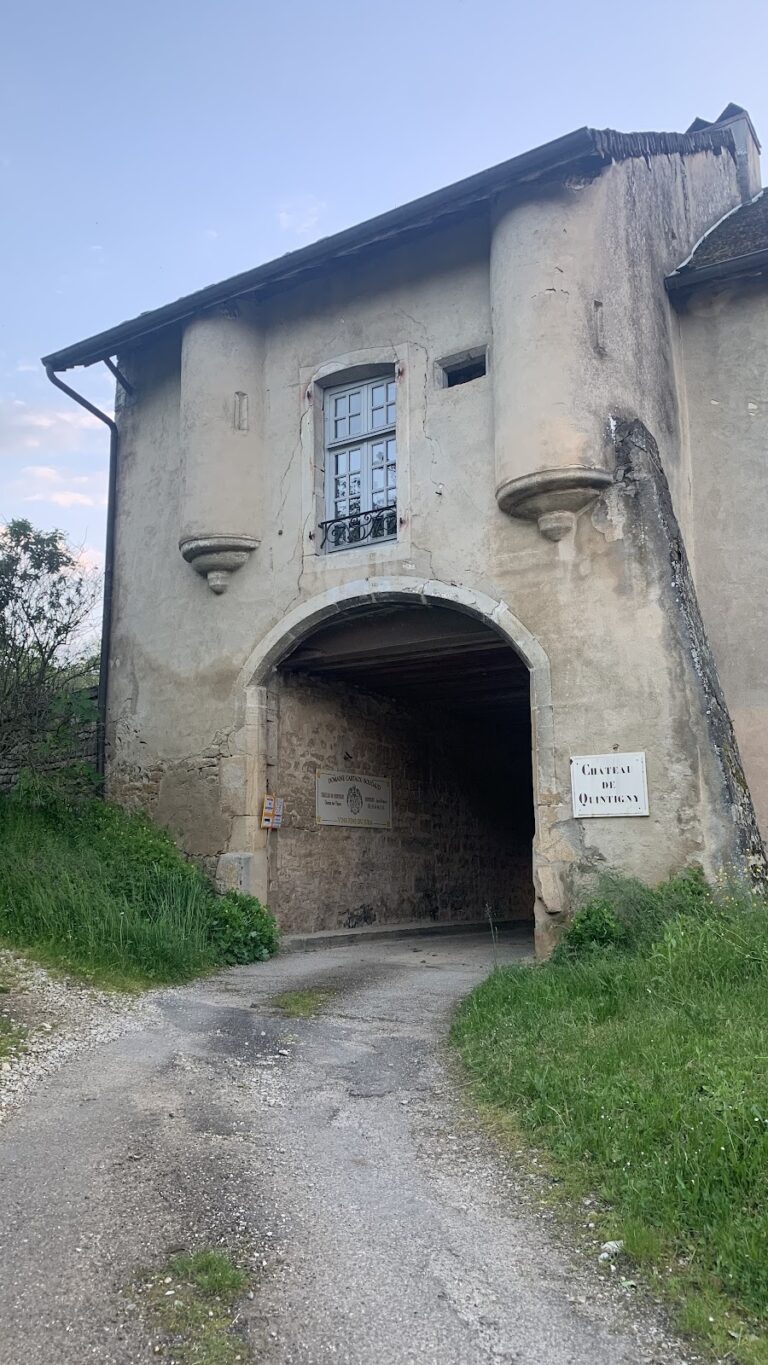
The former priory house also dates from the ninth century. It has been converted into private dwellings, while other private buildings and traces of additional structures survive in deteriorated condition. These remains form part of the ruined former priory complex.
Vaulted wine cellars
Substantial vaulted wine cellars survive beneath the priory. Their preservation reflects the complex’s connection with vineyard cultivation and wine production in the Jura, activities historically undertaken by the monks.