Saint Peter’s Church of Bredons: A Romanesque Priory Church in France
Site at a Glance
- Popularity
- Low
- Country
- France
- Primary era
- Medieval
- Eras represented
- Medieval
- Civilizations
- French
- Site type
- Religious
- Remains
- Church
On this page12 sections
History
Saint Peter’s Church of Bredons is an 11th-century Romanesque church in Albepierre-Bredons, France. Romanesque architecture was a medieval European style that flourished from the 10th to the 12th centuries. The church served a priory, a monastic house subordinate to a larger abbey, and was used for Catholic worship.
Foundation and medieval use
Durand de Bredon, abbot (the head of an abbey) of Moissac Abbey, founded the priory in 1067. Moissac was a medieval monastery in southwestern France, and Durand led it from 1048 to 1071. Construction of the church began in the 11th century, and its first building was consecrated in 1095.
Modern history
The church was classified as a historic monument in 1840, and the site was listed as protected in 1943. In 1954, a child from Bredons found a reliquary statue concealed behind the high altar, where it had been hidden for several centuries.
A Romanesque wooden Madonna and Child known as Our Lady of Sion was stolen in 1959. The largest of several thefts took place on the night of June 29, 2002, when about 50 objects were taken. A stolen object was later recovered in Germany, and the relief of Aaron was recovered in 2009. Other stolen pieces were thought to have entered private collections. Renovation work on the façade and the entire roof took place from 2021 to 2025.
Remains
Setting and church fabric
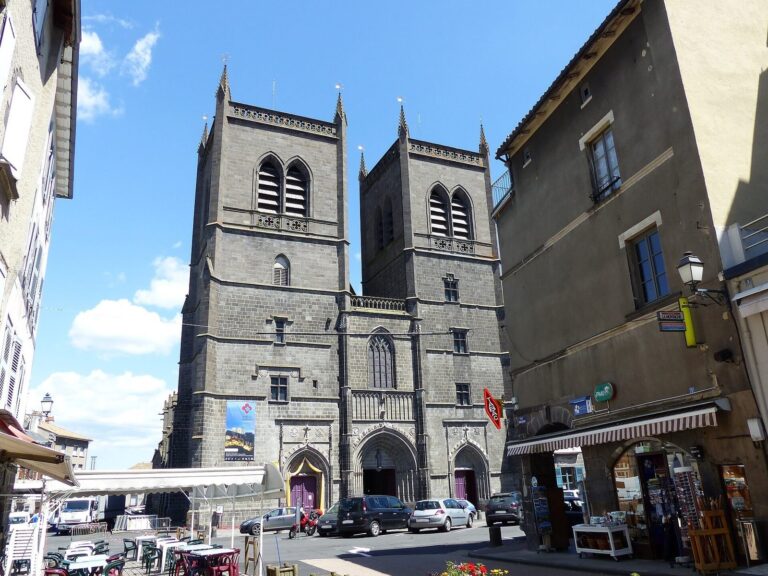
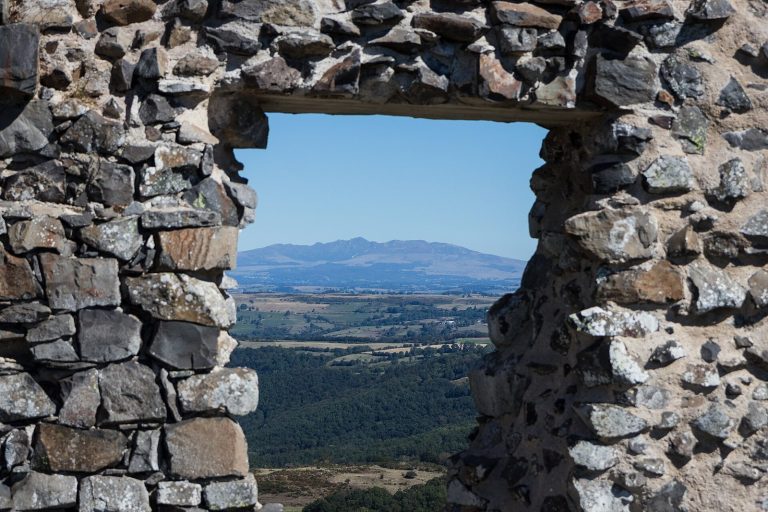
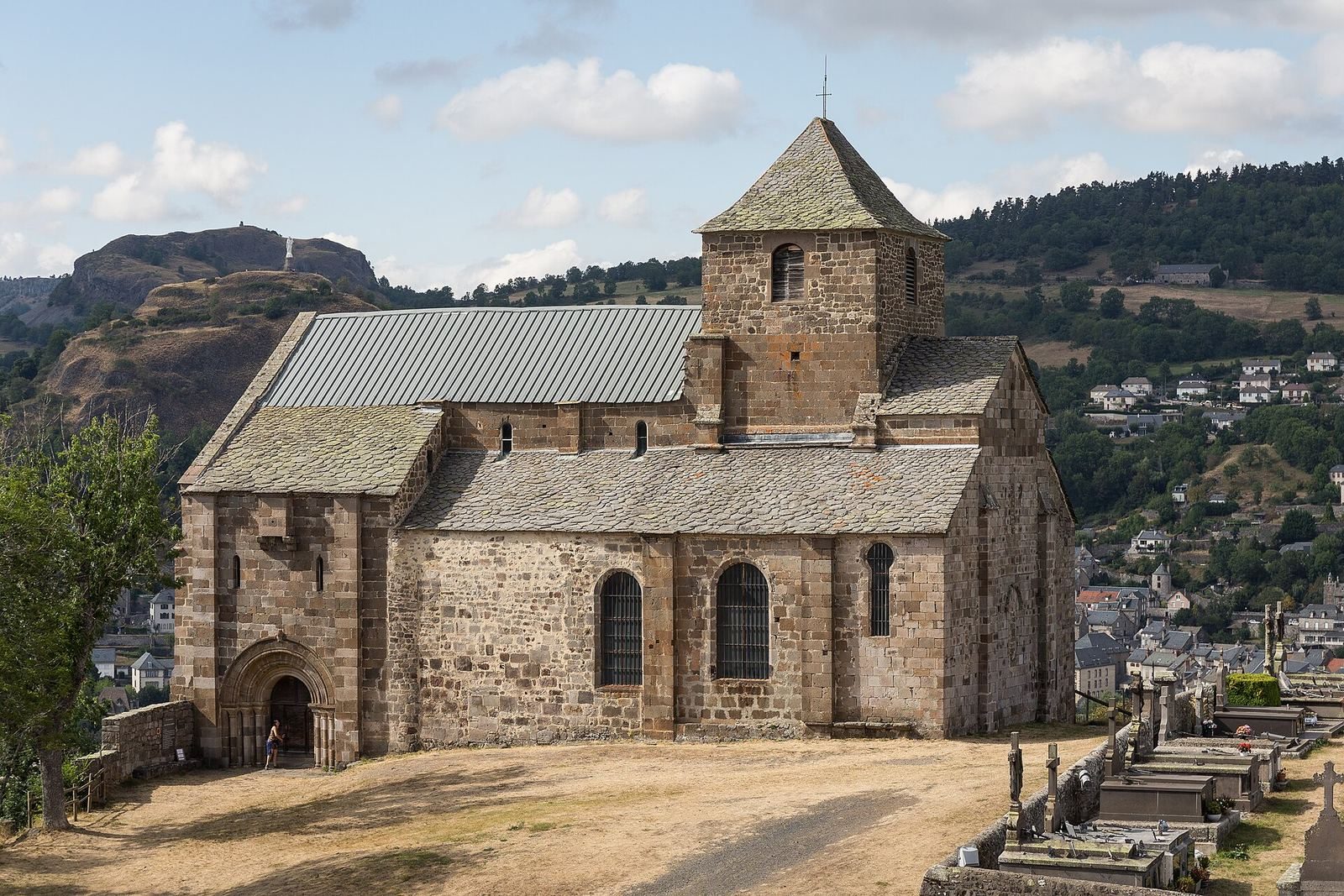
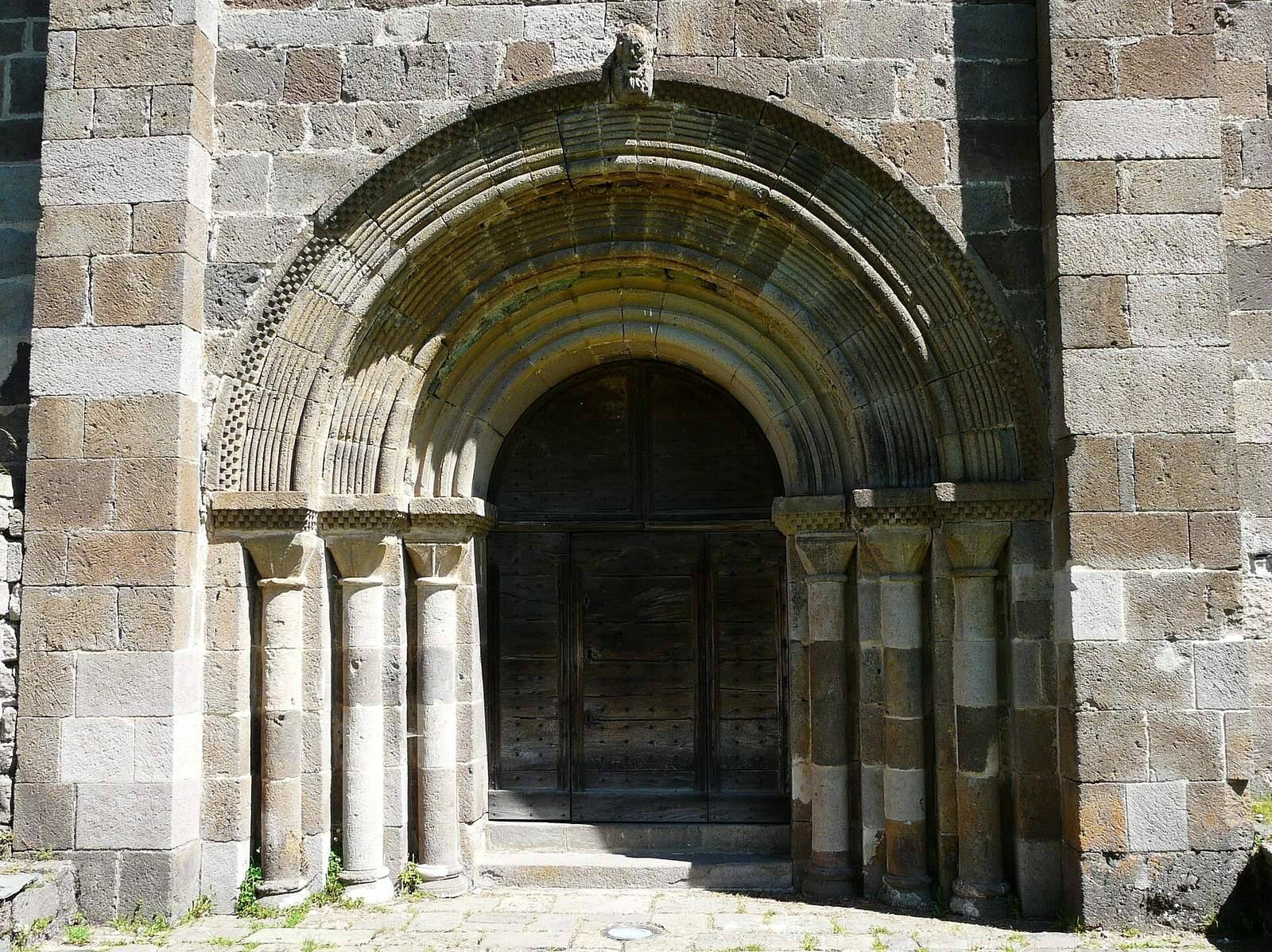
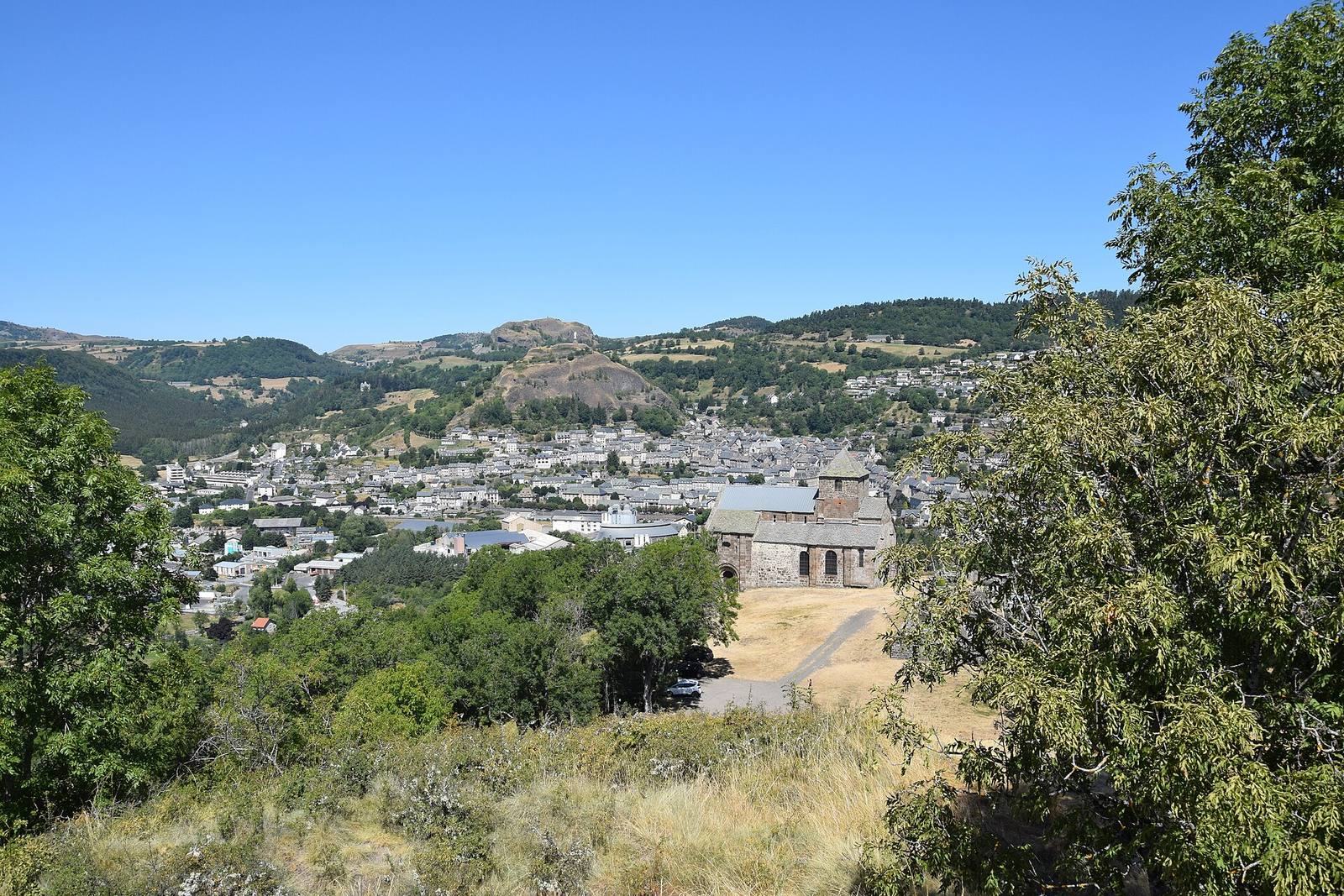
The church stands on a geological dyke, a sheet of igneous rock cutting across surrounding rock, above the Alagnon valley and the town of Murat. Built of basalt, it has a roof of stone slabs. Its façade, south side, and entrance portal are identified features, and part of the priory’s façade is also visible.
Religious artworks and furnishings
Saint Peter reliquary statue
The walnut reliquary statue, a sculpted container for a religious relic, dates to the first half of the 12th century. It is one of the few well-preserved Romanesque wooden reliquary figures in France. The statue has decoration in several colors and metal plates in some places. It portrays Saint Peter seated on a throne in a pleated tunic, raising two fingers of his left hand in blessing. It is now preserved at the Musée de la Haute-Auvergne in Saint-Flour.
Altarpiece
An altarpiece, an artwork placed at or behind an altar, by Antoine Boyer is associated with the church.
Madonna images and canopy niche
The wooden Madonna and Child called Our Lady of Loreto of Bredons was among the objects stolen in 2002. The theft also took a canopy niche supported by two cherubs and containing the Virgin Mary. The earlier theft of Our Lady of Sion, a Romanesque wooden Madonna and Child with painted decoration, took place in 1959.
Paintings
Paintings taken in 2002 included a canvas attributed to Drouais, a surname shared by several French painters, and a 17th-century canvas by Nicolas Gargan showing the giving of the Rosary. Another stolen canvas depicts Saint Paul handing the epistles to Saint Timothy.
Statues and sculptural groups
Among the stolen figures were statues of Saint Blaise and Saint Timothy, along with 18th-century statues of Mary Magdalene, the Virgin Mary, and John. Other statues represented John the Baptist, the Virgin and Child, and Saint Roch. Two sculptural groups showed Adam and Eve with a cherub and cartouche, an ornamental framed panel, and Jesus and the Virgin with a cherub and a cartouche bearing the words Life comes from wood.
Reliefs and crucifix
A bas-relief, a sculpted image that projects slightly from its background, represented Moses. A crucifix and a bas-relief of Aaron were also among the stolen objects; the Aaron relief was recovered in 2009.