Château Barrière: A Medieval Castle in Villamblard, France


Site at a Glance
- Rating
- 4.5
- Popularity
- Low
- Country
- France
- Primary era
- Early Modern
- External website
- Open
- Eras represented
- Medieval, Early Modern
- Civilizations
- English, French
- Site type
- Military
- Remains
- Castle
On this page13 sections
History
Château Barrière is a medieval castle in Villamblard, France, begun by the Barrière family in the thirteenth century and documented by 1312. An earlier castle probably stood here by 848, when inhabitants gathered around it during Viking attacks. Its position helped protect the route from Agen to Périgueux through Bergerac, and a church was built at the site in the tenth century.
Medieval lordship
During the twelfth century, Périgord formed part of the Duchy of Aquitaine. After Eleanor of Aquitaine married Henry Plantagenet in 1152, the duchy came under English rule when Henry became King Henry II of England in 1154. By the thirteenth century, the Barrière family, established at Château Barrière in Périgueux, held the castle at Villamblard.
Foucaud de Barrière, first recorded in 1190, took Villamblard from the English and repeatedly expelled English forces from Périgueux. The family also supported the counts of Périgord in their conflict with the bourgeois community of Puy-Saint-Front. In the fourteenth century, Villamblard belonged to the Grignols châtellenie, a territorial lordship administered from a principal castle, of the Taillefer family. This lordship included ten parishes. Customary rights were granted to the inhabitants in 1312 and confirmed in 1390 by Hélie III de Taillefer, lord of Grignols and Chalais.
From the Barrières to the Lurs
Anne de Barrière, daughter and heiress of Boson de Barrière and Marie de Fayolle, married the knight Bardin de Lur on 26 January 1448/1449. Through this marriage, the Lur family became lords of Château Barrière. The castle was transformed during the fifteenth and sixteenth centuries.
On 18 June 1541, Bertrand II de Lur, vicomte of Roussille and lord of Longa, Barrière, Villamblard, and part of Freyssinet, acquired high, middle, and low justice over Villamblard, Jaure, and Breuil. He died in 1558, and an inventory of Château Barrière was drawn up in 1559. His wife, Jeanne de Cardaillac, made her will in 1575.
Jeanne de Cardaillac was close to Jeanne d’Albret, the Protestant queen of Navarre, and became Protestant herself. She converted the castle chapel into a Protestant temple. Tradition holds that she received John Calvin, a major French-speaking Protestant reformer, at the castle, which was besieged soon afterward. Her will left 200 livres for the construction of a Protestant temple at Villamblard.
The Taillefer inheritance and reconstruction
Jeanne’s son Michel de Lur, vicomte of Roussille and lord of Barrière and Villamblard among other possessions, served as chamberlain to the king of Navarre. After his sons died young without heirs, his daughter Anne de Lur inherited his estates. Her marriage to Daniel de Taillefer in 1599 brought the lordships of Barrière and Villamblard into the Taillefer family.
The castle was besieged in 1591 during the Wars of Religion, the conflicts between Catholics and Protestants in France during the sixteenth and early seventeenth centuries. The event was commemorated in a song. From 1619, Daniel de Taillefer enlarged and restored the castle after damage sustained during these conflicts. By 1632, its arrangement included two large round towers joined by a residential building that ended in a large square tower. Daniel had built this residence over older remains.
Henry François Athanase de Taillefer, known as Wlgrin de Taillefer, was born at Château Barrière in 1761. After ten years of exile in Germany, he returned to France and worked to preserve the Gallo-Roman heritage of Périgueux. He published the two volumes of Antiquities of Vésone in 1821 and 1826. Vésone was the ancient Roman city at the site of modern Périgueux. Wlgrin de Taillefer died in 1833.
Decline and preservation
The Taillefer family retained the castle until the French Revolution, when its farm buildings were sold as national property. The castle was subsequently used as a stone quarry. The Count of Taillefer sold it in 1809, and the Murat family gave it to the commune in 1824.
The southwest tower was partly demolished around 1860 to permit a street to pass through the site. A fire ravaged the property in 1898, and the chapel tower collapsed in 1980. Château Barrière was protected as a registered historic monument by an order dated 24 June 1948. The Wlgrin de Taillefer Association was founded in 1996 to promote knowledge of and safeguard the heritage of the Villamblard area. Since the 2000s, the commune has carried out consolidation work, including reinstating floors in the northern residential building and the keep and restoring a staircase. Restoration of the ruins has continued since the 2010s, enabling several rooms to be fitted out and furnished.
Remains
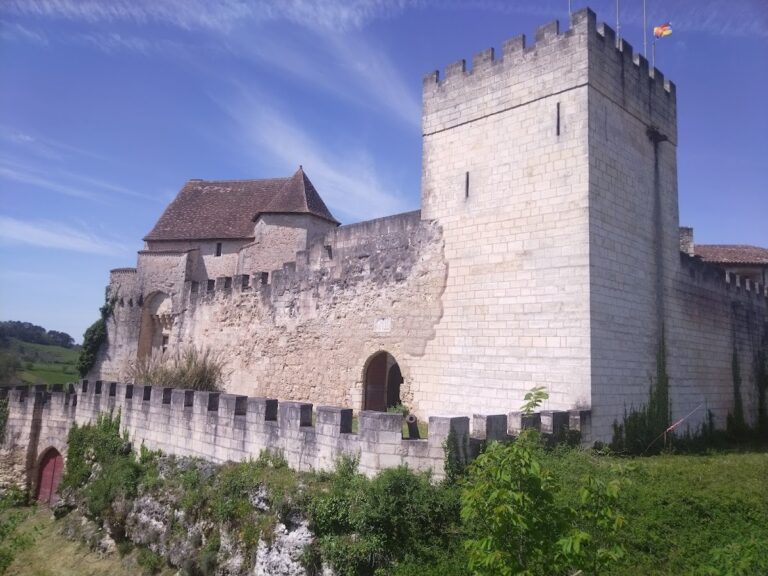
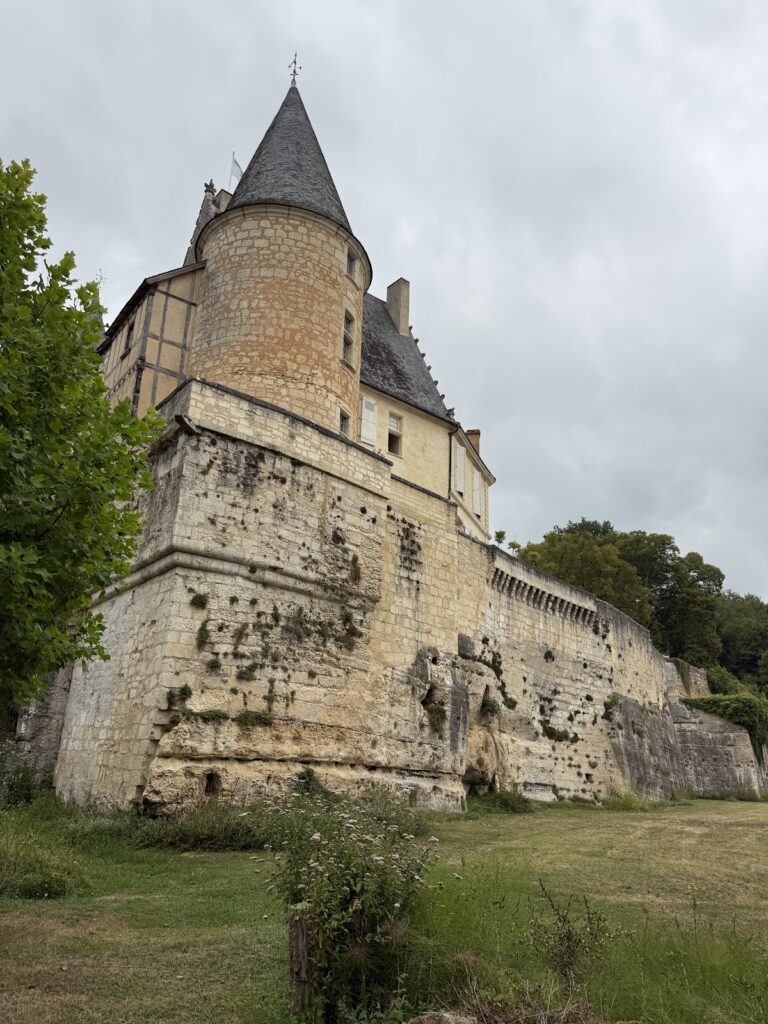
Château Barrière stands in the village of Villamblard, in the valley of the Crempse. The medieval fortress included a keep, the principal fortified tower of a castle, surrounded by moats cut into the rock and supplied by a natural spring. Later building phases altered this fortified core, while surviving restorations now present rooms and structures across several levels.
Fortified core and towers
Keep and moats
The keep forms the principal surviving element of the medieval defensive complex. Its surrounding moats were cut directly into the underlying rock and fed by a spring. Floors have been reinstated in the keep as part of modern consolidation work, allowing the restored structure to be arranged over several levels.
Eastern towers and square tower
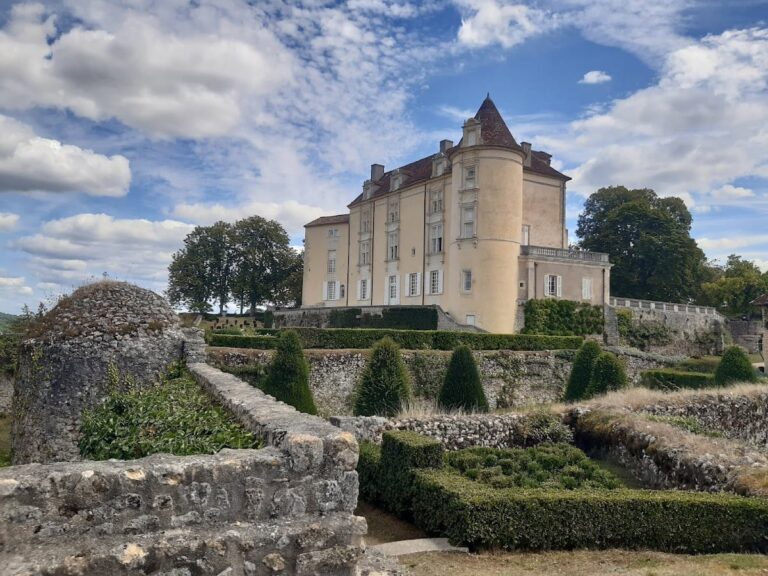
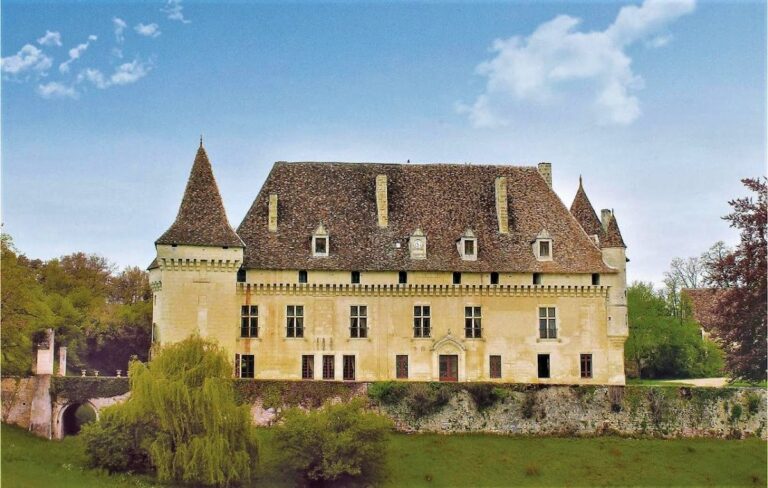
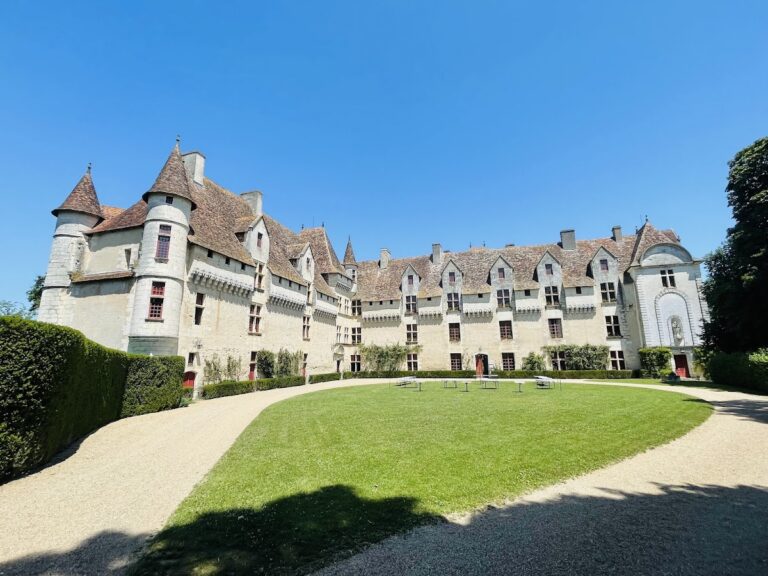
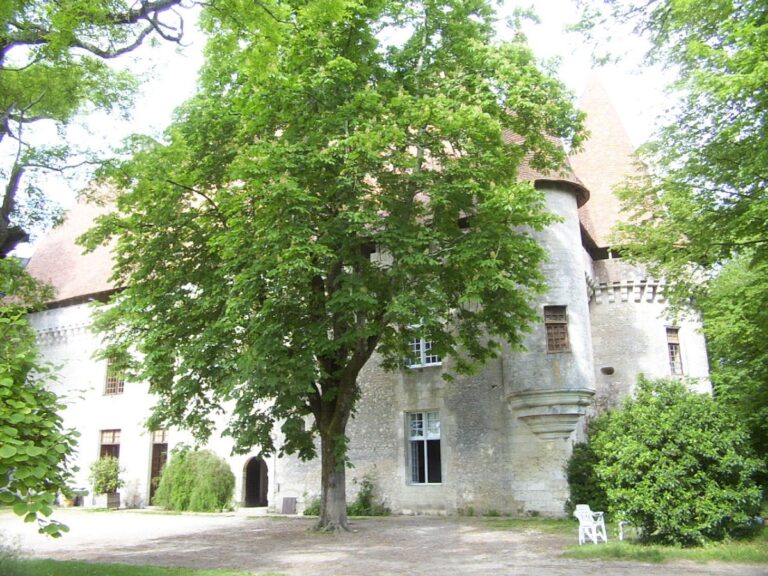
The seventeenth-century arrangement comprised two large round towers on the eastern side. A large residential building connected them and ended in a large square tower. This layout reflects the rebuilding and enlargement undertaken by Daniel de Taillefer after the castle’s wartime damage.
Southwest and chapel towers
The southwest tower survives only in part after its demolition around 1860 to make way for a street. The chapel tower collapsed in 1980, leaving a breach in the facade facing the village.
Residential remains and displays
Residential buildings and cellar
The former Renaissance residential building has been almost entirely lost, with only its small cellar surviving. This cellar is described as the only surviving element from the castle’s original construction. The northern residential building has received reinstated floors, and restored remains contain furnished rooms arranged over several levels. Ground-floor rooms are reached by a ramp.
Furniture and historical objects
The castle displays old furniture, kitchen utensils, and fireplace plaques dating from the sixteenth to the eighteenth centuries. The collection includes plaques from the Revolutionary period, including one bearing the arms of Philip II of Spain and dated 1561. Another shows a Phrygian cap and a ribboned pike, emblems associated with liberty and the French Revolution. A further plaque represents the Sacrifice of Abraham.
Nearby sites