Cave of the Signs: A Prehistoric Rock-Art Shelter in Spain
Site at a Glance
- Popularity
- High
- Country
- Spain
- Primary era
- Stone Age
- Eras represented
- Stone Age
- Civilizations
- Unclassified
- Site type
- Civic
- Remains
- Rock Art
On this page8 sections
History
Discovery and prehistoric art
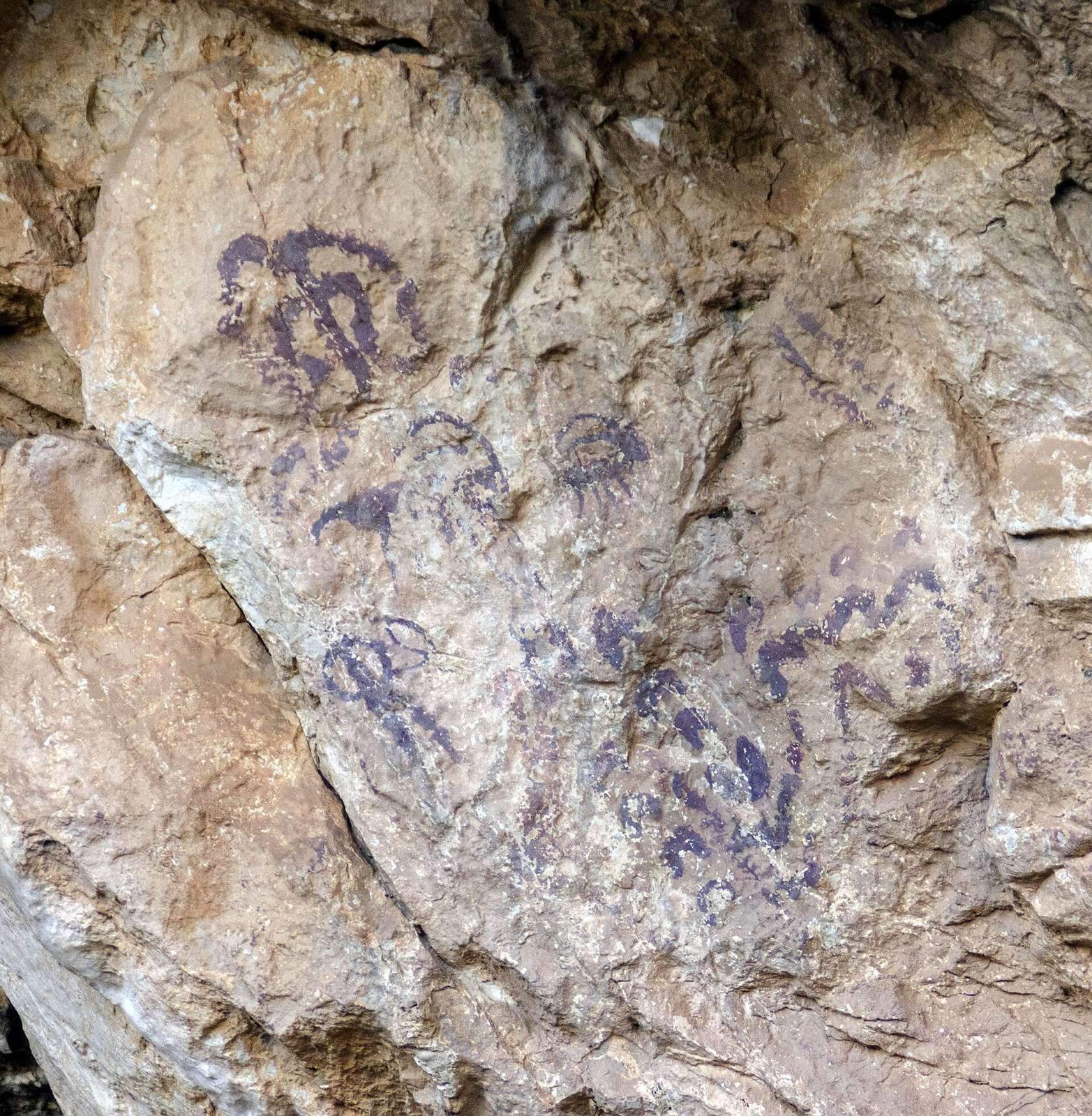
The Cave of the Signs is a prehistoric rock shelter in Vélez-Blanco, Almería, Spain, known for paintings dated to 4000 BC. Discovered in the nineteenth century, it is regarded as one of the earliest caves in which rock art was identified.
The Indalo figure is assigned to the late Neolithic or Copper Age. The Neolithic was a period associated with farming and settled communities, while the Copper Age followed it and was marked by the use of copper. The Indalo later became the most representative symbol of Almería province.
Heritage recognition
Since 1924, the cave has held the status of a National Monument and it is also a Property of Cultural Interest, a Spanish legal designation for protected cultural assets. In 1998, it became part of the Rock Art of the Mediterranean Basin on the Iberian Peninsula, inscribed on UNESCO’s World Heritage List under criterion (iii). This criterion recognizes exceptional testimony to a cultural tradition or civilization.
Remains
Shelter layout
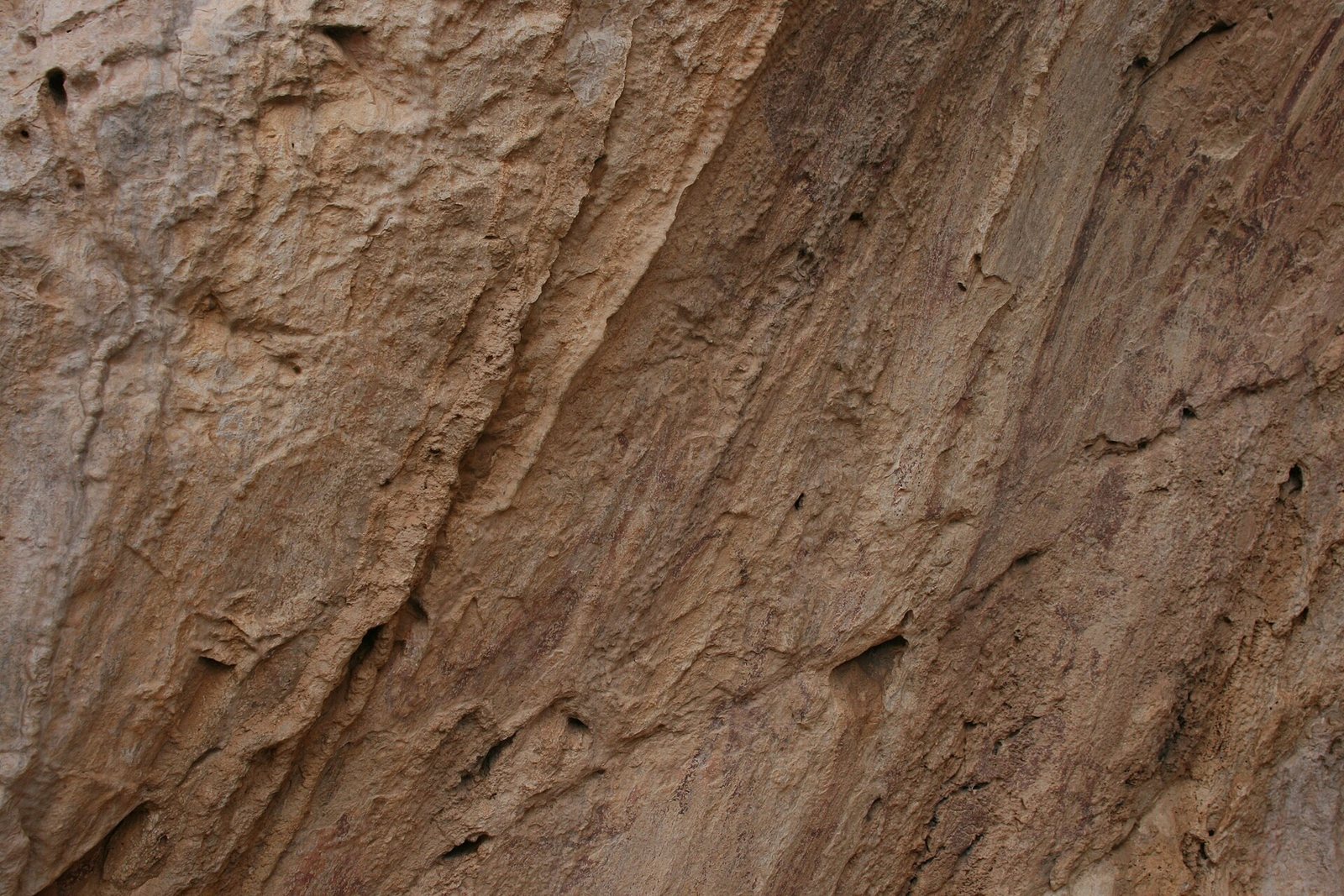
The shelter lies beneath the rock face of Maimón Grande, within Sierra María-Los Vélez Natural Park. It measures about 25 metres across and extends roughly 6 metres into the rock; its central area rises 8 to 10 metres. A steep approach leads to the entrance by ramps and zigzag stairs.
Painted panels
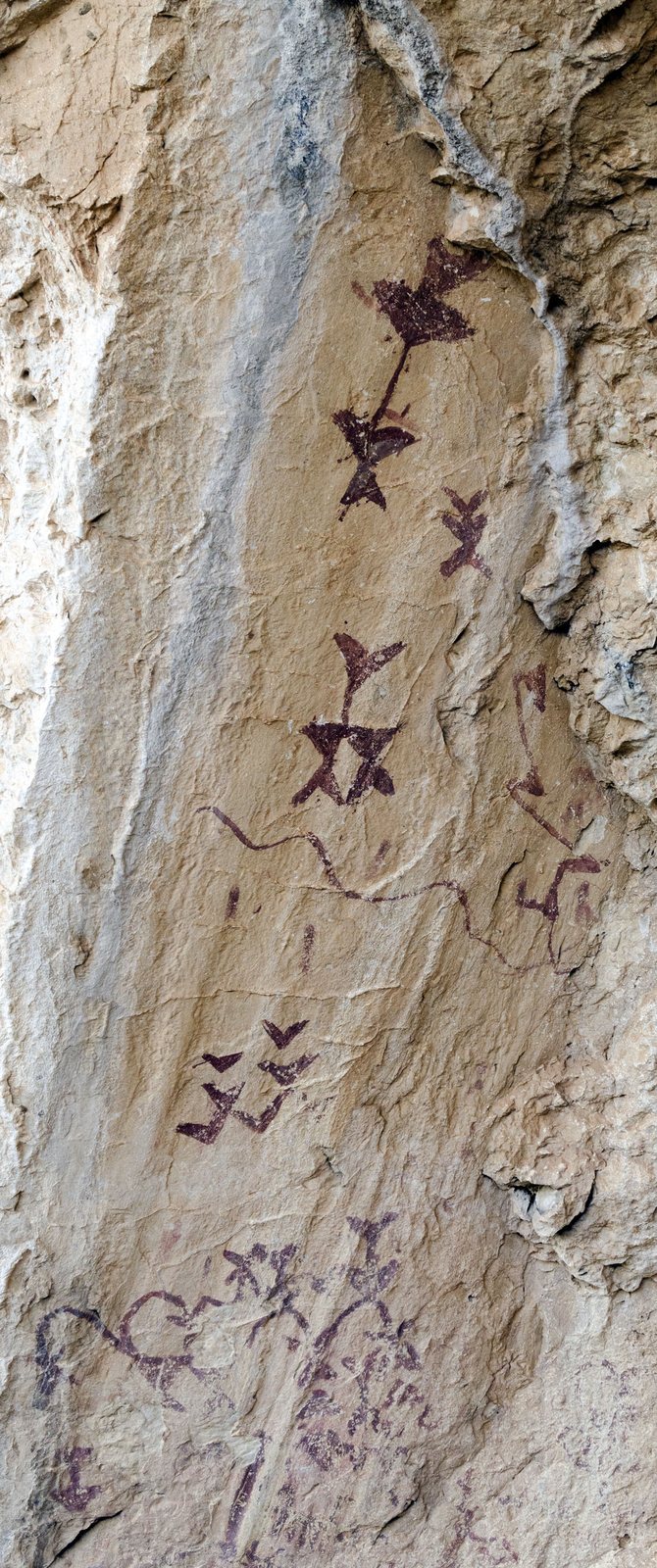
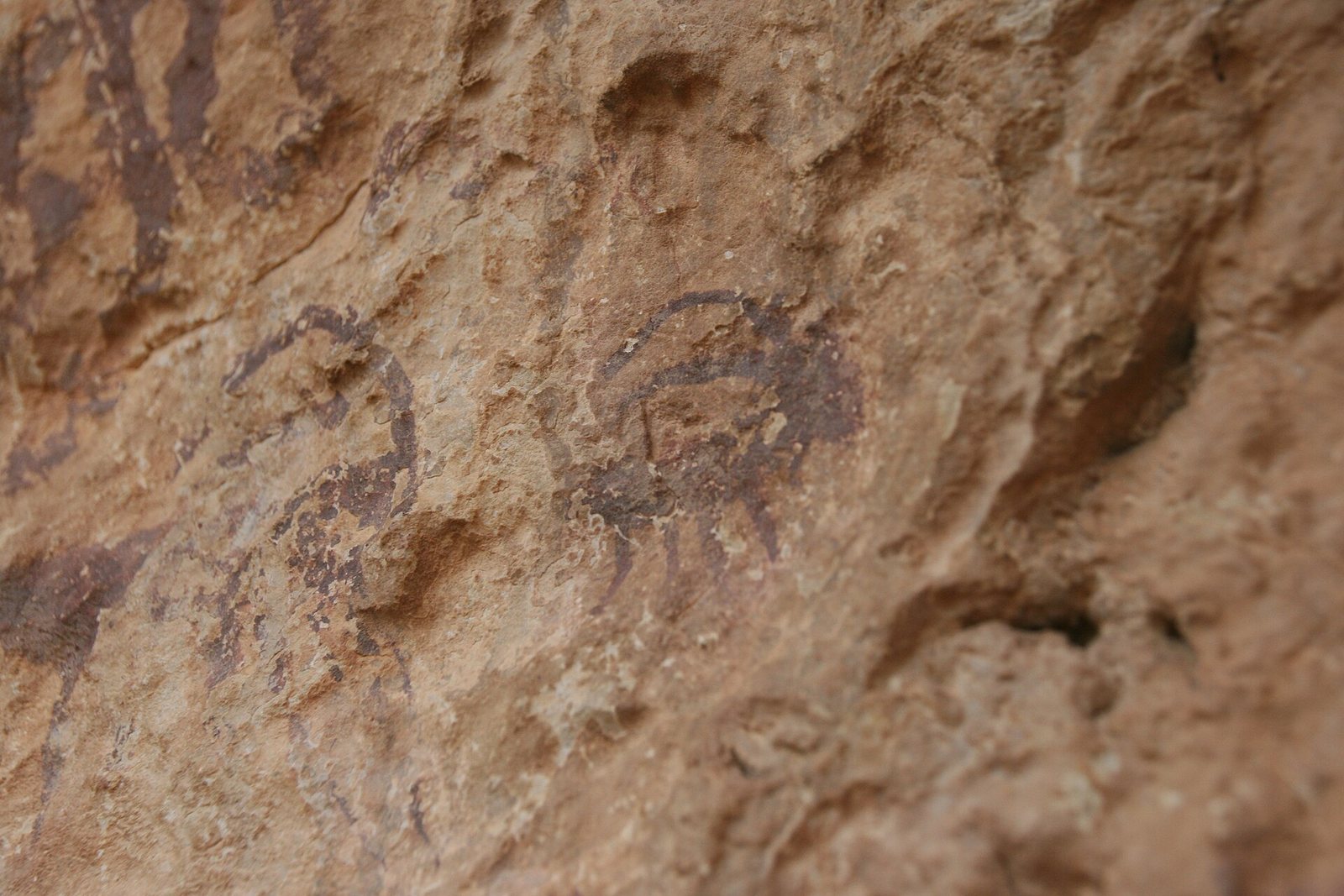
Red and brown paintings cover seven panels, including some on blocks on the shelter floor. Their arrangement includes a large display on the left-hand wall and a separate panel set higher and to the right.
Principal wall panel
The main panel extends from ground level to about 3 metres up the shelter’s left wall. It contains El Brujo, meaning the Sorcerer, a descriptive name for a human-like figure rather than an identified person. Nearby are interwoven figures formed from paired triangles, interpreted as expressions of kinship-based social organization. Deer, goats, human figures, branch-like and wavy forms, and sun-like shapes also appear.
Other panels
The Indalo depicts a human figure with arms outstretched and a bow held above them. Other paintings include a dance scene on a floor block, net-like figures, comb-shaped animal forms, and people with loop-shaped arms and radiating headdresses. Panel 7 sits above and to the right of the other panels. Its human figure has long, wavy arms and is interpreted as part of a hunting scene.