Schloss Balgstädt: A Baroque Water Castle and Manor Seat
Site at a Glance
- Popularity
- Low
- Country
- Germany
- Primary era
- Early Modern
- Eras represented
- Early Modern, Modern
- Civilizations
- Holy Roman Empire
- Site type
- Domestic
- Remains
- Castle
On this page6 sections
History
Schloss Balgstädt is a 17th-century water castle in Germany, built in the Baroque style, a European architectural and artistic movement associated with elaborate forms and ornament. An earlier building was destroyed in 1397. The castle that followed began as a wooden structure built by Hans Friedrich Heßler.
Remodelling and estate administration
From 1744, owner Ernst Sperling remodelled the castle, giving it its present appearance. The Balgstädt manor included the outlying farms of Toppendorf and Rödel. In 1750, the estate changed from a fief, a grant whose inheritance was restricted to male heirs, into a hereditary knight’s estate, a landed manor with recognized legal status.
The Patrimonial Court, a manorial court through which an estate’s lord exercised judicial authority, was based in the castle until its dissolution in 1849. Its jurisdiction extended to the villages of Größnitz and Städten.
Later use
The castle remained the seat of the lords of the Balgstädt estate until the postwar land reform in the Soviet occupation zone. It now houses the municipal office, a childcare facility, and the office of the Balgstädt Leisure and Tourism Association.
Remains
Castle architecture
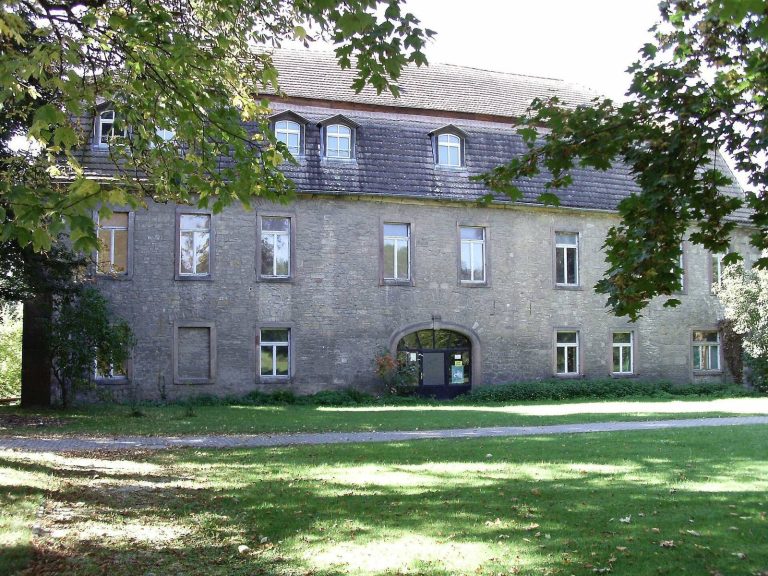
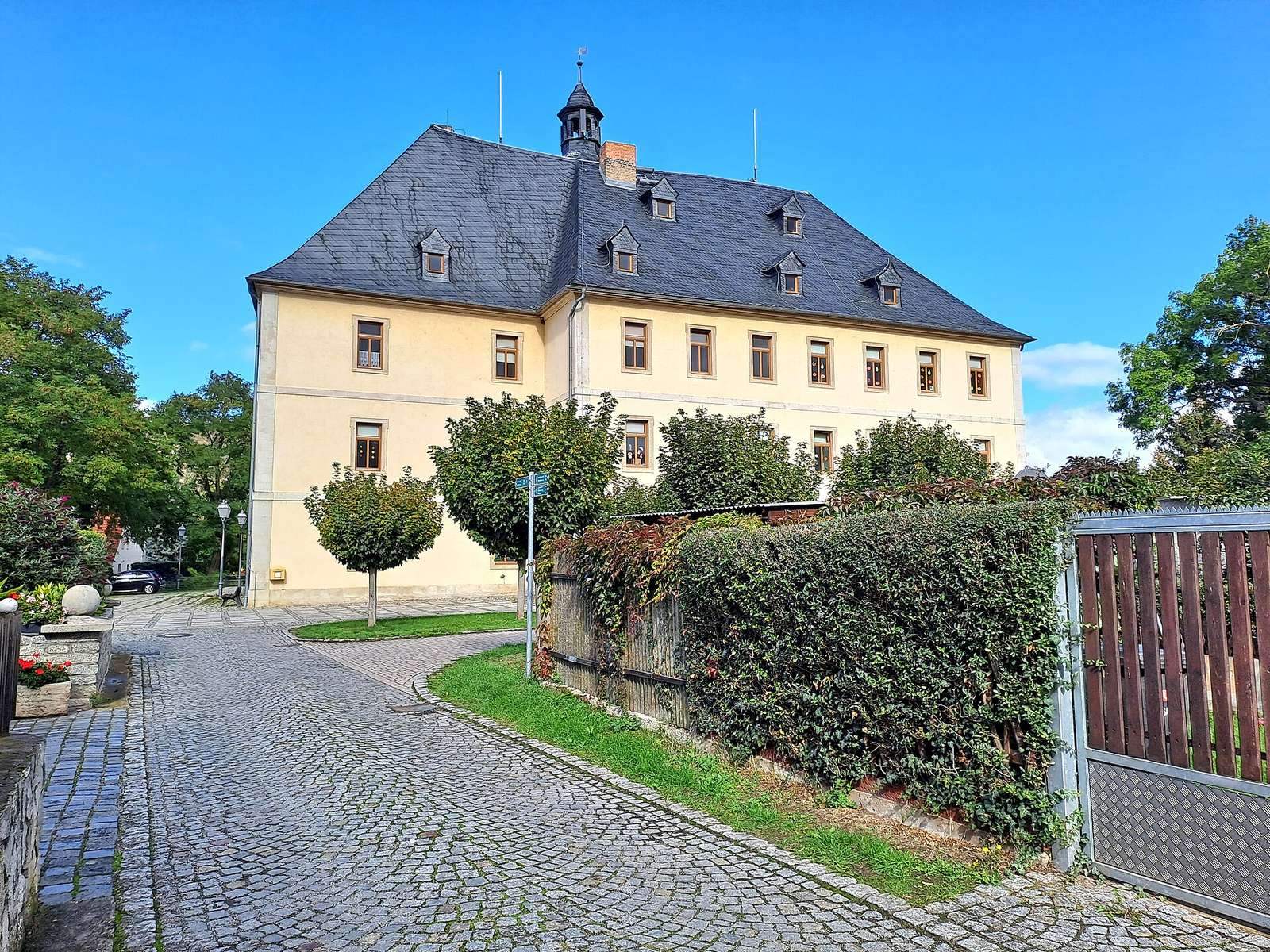
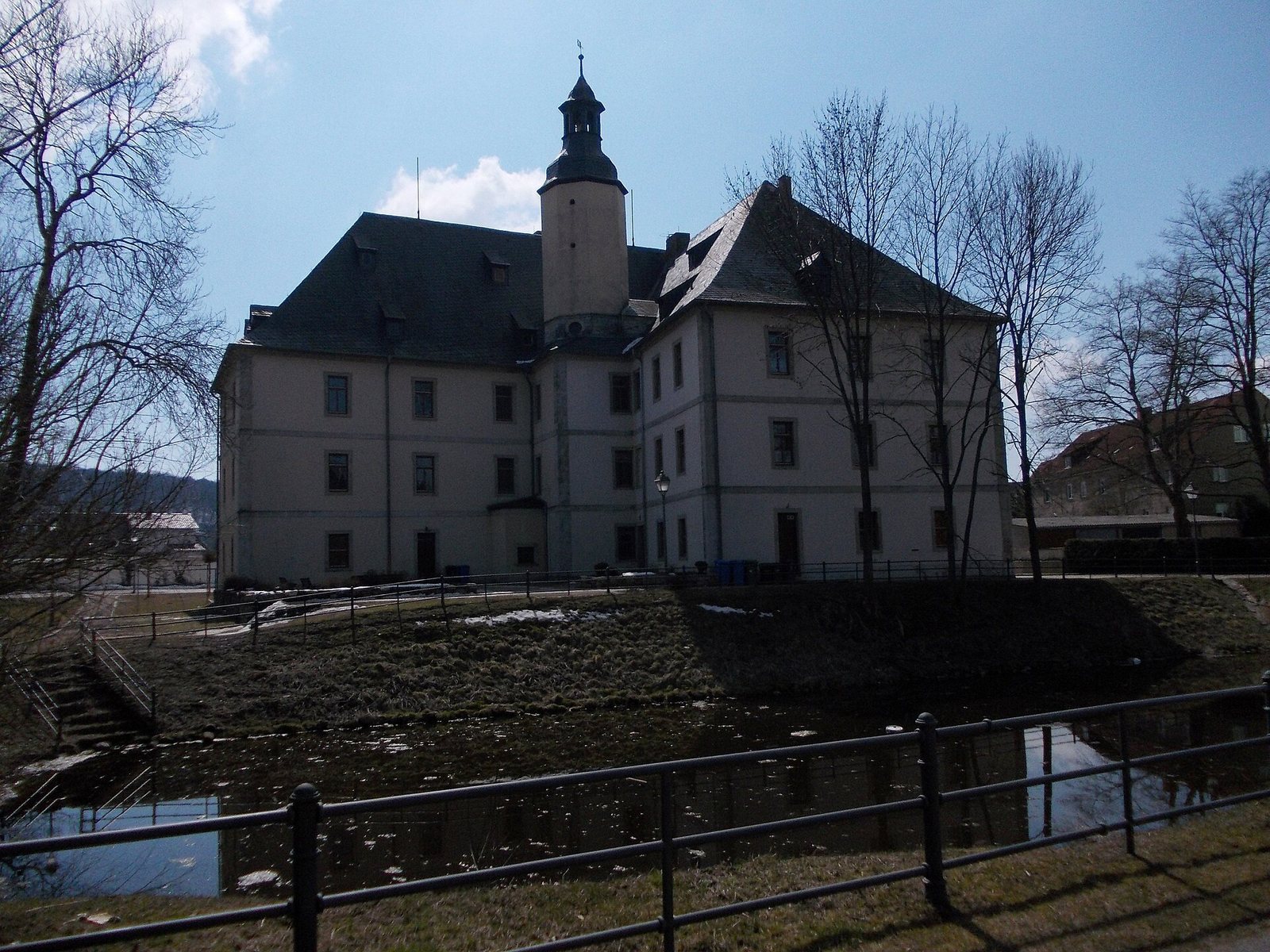
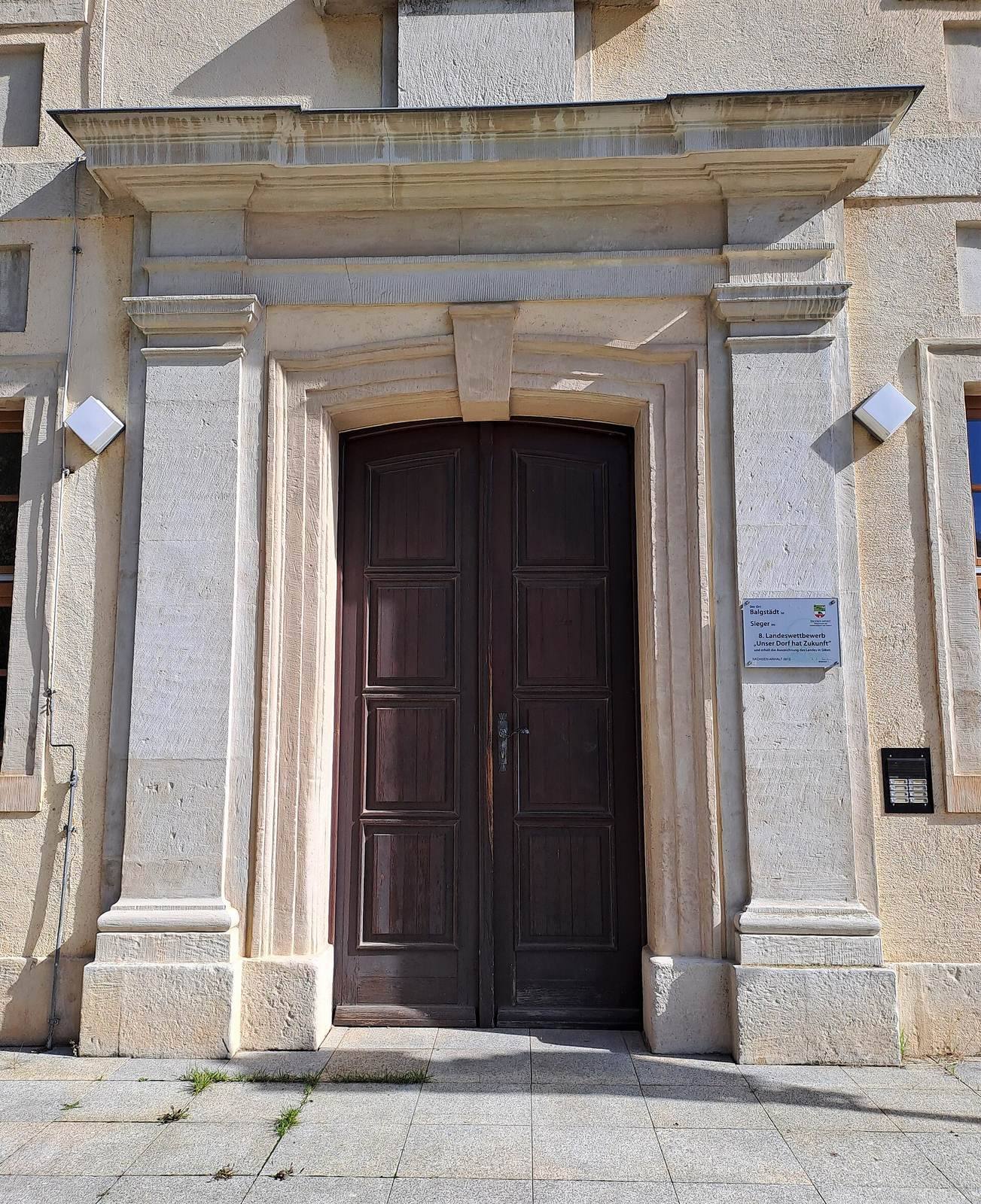
The large, austere castle has two wings and three storeys divided by cornice bands. A tall hipped roof with dormer windows rises above the building. On the south-facing main front, a shallow projection with three vertical sections frames the portal. A square stair tower stands where the wings meet; its upper section is octagonal and topped by a hood and lantern.
Park
A park was laid out northwest of the castle in the 19th century. A ditch surrounds it.