Palacio de Guevara: A Baroque Civil Palace in Lorca, Spain


Site at a Glance
- Rating
- 4.5
- Popularity
- Low
- Country
- Spain
- Primary era
- Early Modern
- External website
- Open
- Eras represented
- Early Modern
- Civilizations
- Crown of Castile, Spanish
- Site type
- Domestic
- Remains
- Elite Residence
On this page11 sections
History
The Guevara family residence
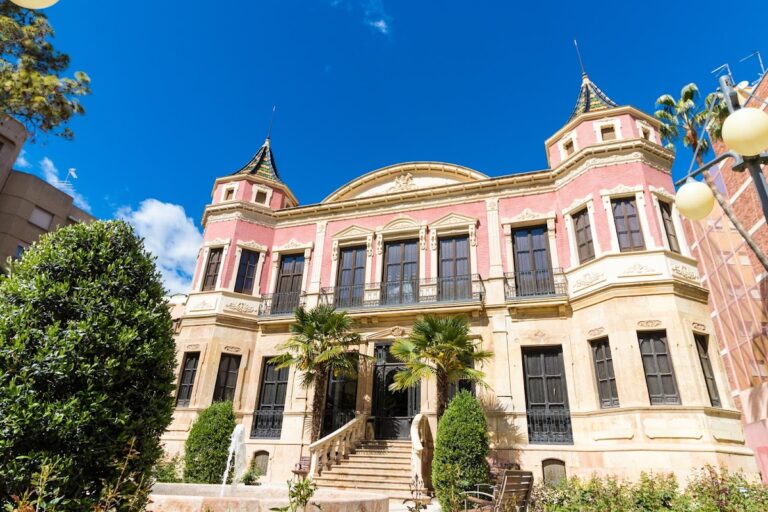
Palacio de Guevara is a Baroque civil residence in Lorca, Spain, whose definitive form emerged through successive fortification and alteration within the Guevara family entail, an inheritance institution that kept designated property within a lineage. It is regarded as the most important example of Lorca’s civil Baroque architecture and represents the city’s historical past and the palatial architecture of the Region of Murcia.
The palace was reshaped by Don Juan de Guevara García de Alcaraz, a Guevara nobleman and knight of the Order of Santiago, a military-religious order founded in medieval Iberia. He had held that rank since 1689 and carried out reforms between 1691 and 1705. The main staircase was completed in 1691, while the principal portal bears the date 1694. Its designer is uncertain, although Nicolás de Bussy and Caballero have been proposed. The courtyard was completed in 1705 by the stonemason Pedro Sánchez Foriún.
The palace stands on Lope Gisbert Street, an area where Lorca’s aristocracy and bourgeoisie built grand residences during the eighteenth and nineteenth centuries. Its architecture and furnishings reflect the continuing role of the building as a high-status urban home.
Donation, protection, and rehabilitation
Palacio de Guevara remained inhabited until the late twentieth or early twenty-first century. In 1996, its last owner, Concepción Sandoval, Baroness of Petrés and Mayals and a descendant of the Guevara family, donated the palace to Lorca City Council for use as a museum. The building was also restored that year.
Because of its historical and artistic importance, the palace was declared a Property of Cultural Interest in 2008. The earthquake of 11 May 2011 damaged the building, leading to a complete rehabilitation. It formally reopened on 23 April 2013 and is used as a museum and for cultural activities, exhibitions, and guided visits.
Remains
Facade and courtyard
Monumental portal
The principal facade is dominated by a monumental portal conceived like a large Baroque altarpiece. Four Solomonic columns, which are twisted or spiral columns associated with Baroque architecture, frame the composition. A central coat of arms is crowned by the arms of the Order of Santiago. Instead of the religious imagery normally associated with an altarpiece-like facade, the portal uses the heraldry of the Guevara family.
The design drew on the Baroque facade of Lorca’s Santo Domingo Convent, produced several decades earlier by Andrés de Goenaga. The convent had been founded in 1551 over the former hermitage of Our Lady of Piety. Its present church has a single nave, chapels between the buttresses, and a flat-ended apse.
Square courtyard
The square courtyard has two arches on each side, supported by white marble columns. Its decoration combines vegetal motifs, child heads, coats of arms, and illusionistic architectural elements. Pedro Sánchez Foriún completed the courtyard in 1705, and he signed the rear of one leaf of the main door.
Historic interiors and collections
Ballroom and chapel
The Yellow Room, also called the Ballroom, retains eighteenth-century furnishings, including Venetian seating and a large mirror with a carved frame. Its floor is paved with Valencian ceramics from the same century.
A private chapel contains an image of the Immaculate Conception from the Granada school. Its walls also preserve eclectic-style paintings from the mid-twentieth century.
Furniture
Other furnishings include bargueños, Spanish writing cabinets with drawers traditionally used to store documents and valuables, and occasional tables in different styles. The collection also includes a Portuguese-style bed with turned spindles.
Paintings
The painting collection includes a large portrait of Juan de Guevara and approximately twenty works by Pedro Camacho Felizes. Two particularly distinguished representations of the Virgin are by the Madrid painter José Antolínez and the Italian painter Giambattista Salvi, known as Il Sassoferrato. The palace also contains a substantial series of small portraits by the Madrazo family, a prominent Spanish dynasty of painters, and their circle.