Cave of Euripides: A Site of Worship, Burials, and Refuge
Site at a Glance
- Popularity
- Medium
- Country
- Greece
- Primary era
- Classical
- Eras represented
- Classical
- Civilizations
- Ancient Greek
- Site type
- Religious
- Remains
- Sanctuary
On this page9 sections
History
The Cave of Euripides is a natural cave in Peristeria on Salamis Island, Greece. Evidence indicates use during eight periods, beginning in prehistory and extending into the medieval era.
Prehistoric and Bronze Age use
During the Late Neolithic, approximately 5300 to 4300 BCE, people used the cave as a place of worship. In the Late Helladic phases II to IIIB, periods of Mycenaean Bronze Age Greece, it served as a burial place.
Classical and Roman periods
Pottery indicates activity in the fifth century BCE. The cave’s name reflects a tradition that the fifth-century BCE Greek tragedian Euripides wrote one of his plays there, and his tragedy Hippolytus has been linked specifically to the site. The ancient historian Philochorus and the writer Satyrus described Euripides as someone who avoided society by withdrawing to a cave. In the second century CE, the Roman author Aulus Gellius recalled visiting a forbidding cavern while in Athens and referred to a now-lost work by Philochorus that portrayed it as unpleasant and frightening.
During the Hellenistic and Roman periods, the cave may have attracted pilgrims or other visitors. Finds from a nearby sanctuary suggest that Euripides and Dionysus, the Greek deity associated with theatre, were venerated there in the third and second centuries BCE. Archaeologist Yannos G. Lolos interpreted the sanctuary as dedicated to Dionysus. A group of 39 silver coins associated with Roman emperor Gallienus and empress Salonina was probably hidden during a Gothic attack in 267 or 268 CE.
Medieval use and archaeological work
Use of the cave for worship and shelter recurred over a long period. A refuge phase is associated with Frankish rule in the thirteenth and fourteenth centuries. Yannos G. Lolos led excavations in the cave from 1994 to 1997, then excavated the nearby sanctuary from 1998 to 2000. Some finds from this work are displayed at the Salamis Archaeological Museum.
Remains
The cave
Layout and chambers
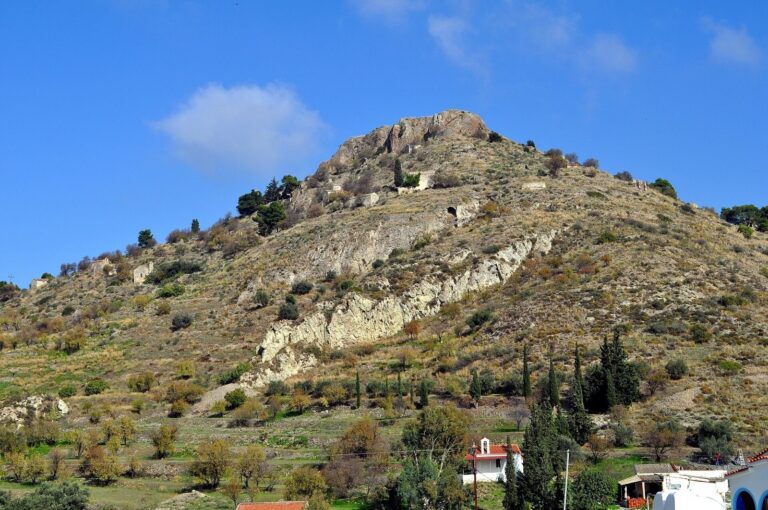
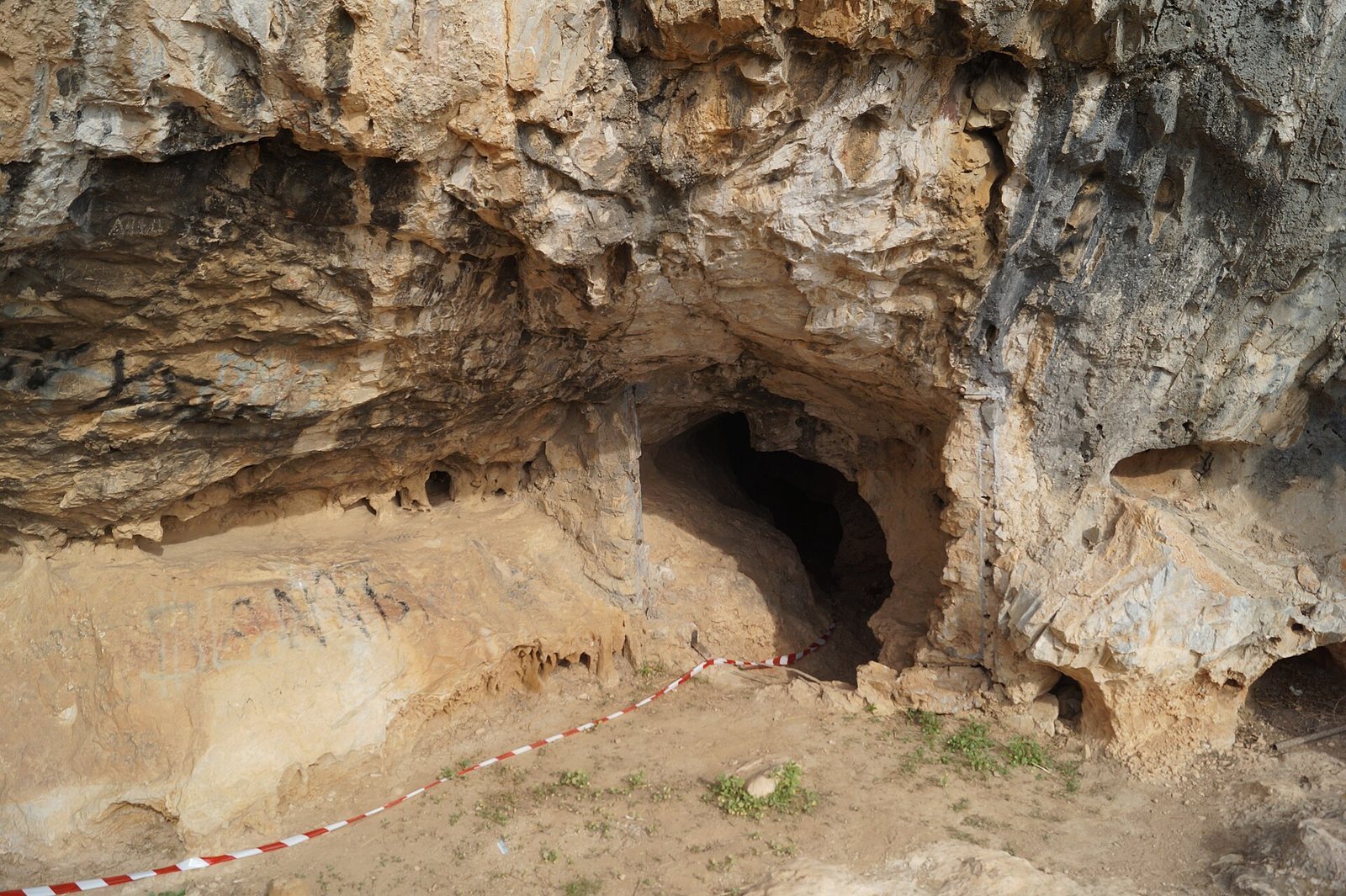
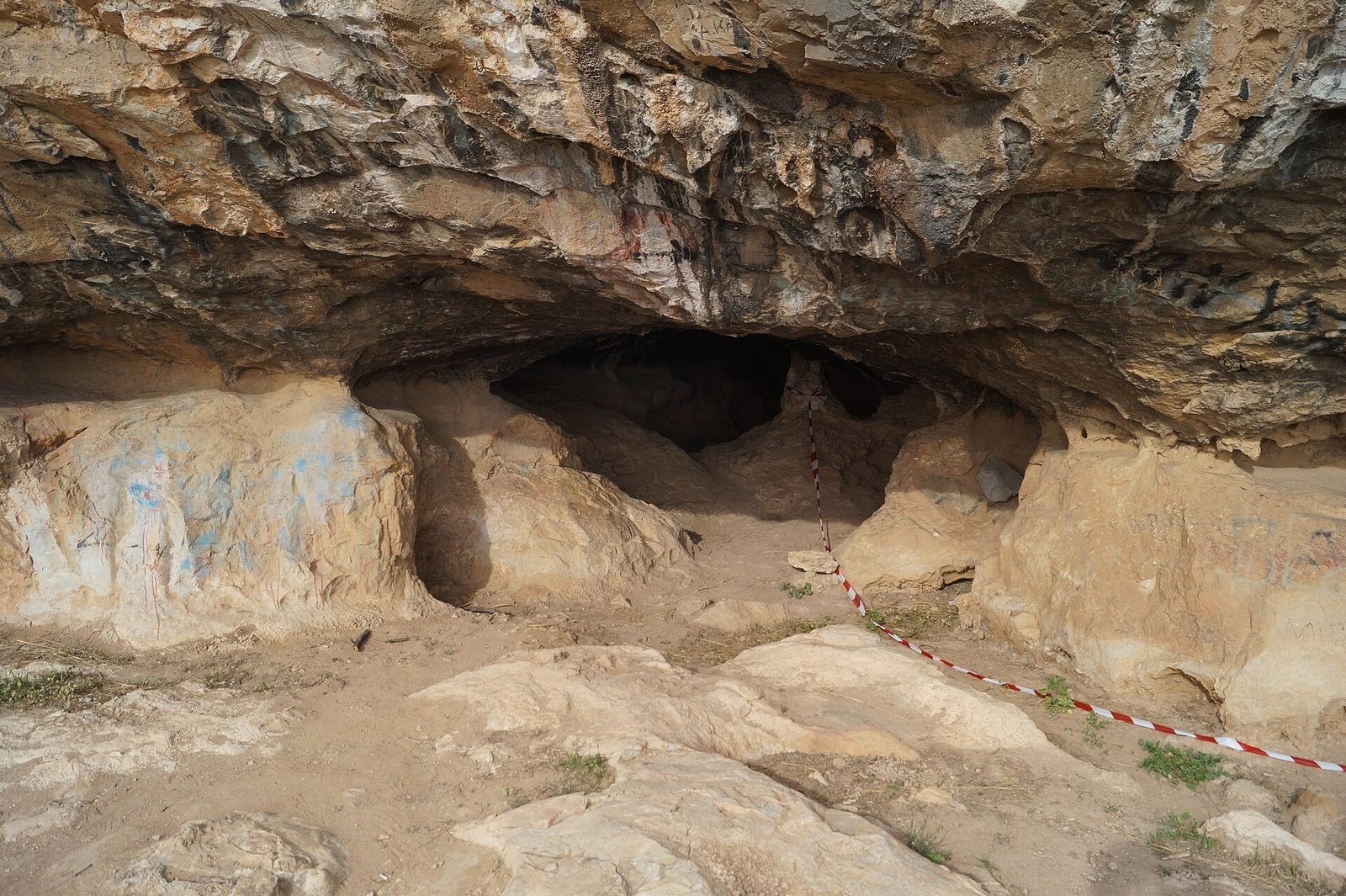
The narrow natural cave extends about 47 metres into a hillside. Its entrance is approximately 115 metres above sea level, and a ledge outside it overlooks the Saronic Gulf and Aegina. A low entrance leads into winding passages and ten small chambers, numbered I to X. Stalactites hang from the ceilings, and chamber VIII is notably large. A steel door closes the entrance.
Finds and inscriptions
Neolithic finds include pottery and arrowheads made from obsidian and flint. Mycenaean graves in chamber VIII yielded decorated pottery, jewelry, and bronze objects. Classical pottery includes black-glazed and red-figure examples. A fragment of a black-glazed drinking cup called a skyphos dates to about 430 to 420 BCE. It bears an inscription identified as the first six letters of Euripides’ name, dated to the first through third centuries CE. Lolos interpreted the fragment as an offering to Euripides and as evidence of later devotion to his poetry. A Roman-period skyphos-type cup measures 5.2 centimetres high and 8.3 centimetres in diameter. Other finds include stone tools, Roman coins, figurines offered in worship, and jewelry from the Frankish period.
The nearby sanctuary
About 70 metres southwest of the cave, along a trail from the shore, lie the foundations of a small rural sanctuary. South of a retaining wall, a rectangular space for worship has benches and a water basin, with a spring nearby. Finds from the sanctuary include a marble phallus and other phallic objects, the right hand of a statue of Dionysus, a black-glazed kantharos, a deep cup with handles, and a stamped beehive lid.