Cathedral of the Dormition of the Mother of God: Serbian Orthodox Cathedral in Šibenik
Site at a Glance
- Popularity
- Medium
- Country
- Croatia
- Primary era
- Early Modern
- Eras represented
- Early Modern, Modern
- Civilizations
- Austrian Empire, Habsburg, Venetian
- Site type
- Religious
- Remains
- Cathedral
On this page8 sections
History
The Cathedral of the Dormition of the Mother of God, named for the Christian feast commemorating Mary’s death and her being taken into heaven, is a Serbian Orthodox cathedral in Šibenik, Croatia. Its church is in the Baroque style, an ornate European architectural tradition that flourished from the late 16th through the 18th century, and dates from the 17th and 18th centuries. It is Šibenik’s principal and largest Orthodox church and the central church of the Eparchy of Dalmatia, an Orthodox diocese within the Serbian Orthodox Church.
Earlier Catholic history
Before its Orthodox use, the site had a Roman Catholic history. It was associated with the Templars, a medieval Catholic religious and military order, in the 12th century, and later with flagellant groups, whose members practiced penitential self-whipping. The church served as St Saviour and formed part of a Benedictine nunnery, a women’s monastery belonging to the Benedictine tradition. Its nuns were of noble origin.
Orthodox communities in Šibenik
Orthodox Greeks and Serbs lived in Šibenik from the early medieval period, with many Serbs settled in the suburb of Varoš. In 1569, the Venetian Senate allowed Orthodox Greeks to live within the city walls. That year, Greeks and Serbs built the Church of St Julian there.
Serbs in Varoš established the Church of the Holy Cross in 1600. In 1778, a larger Church of the Ascension, also called St Spas, became the community’s principal place of worship. In 1810, during French rule in Dalmatia, the Serbian Orthodox community purchased the former monastic church. It passed to the Eparchy of Dalmatia under Serbian Orthodox Bishop Benedikt Kraljević and became the community’s cathedral, taking over the principal role from St Spas.
Remains
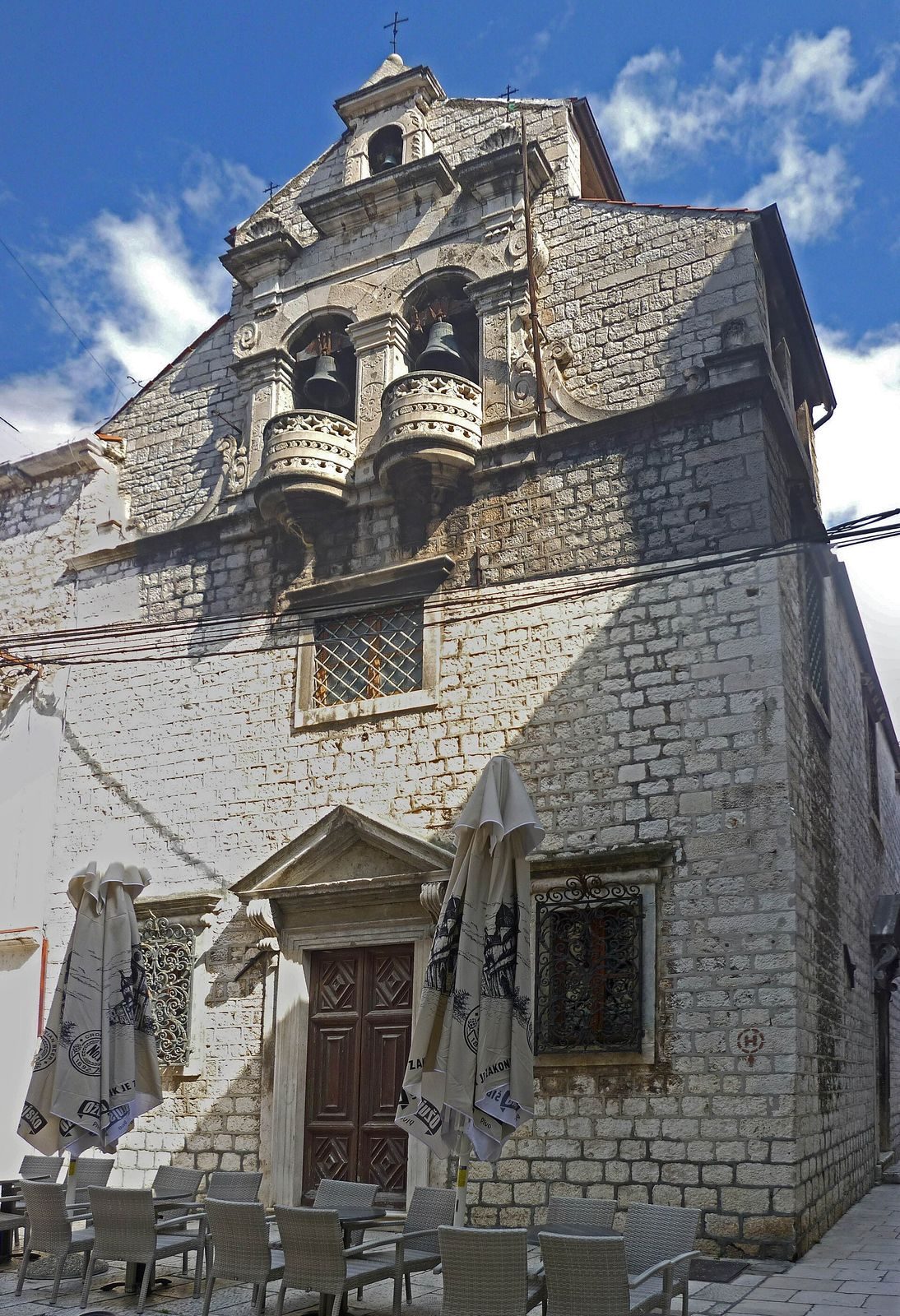
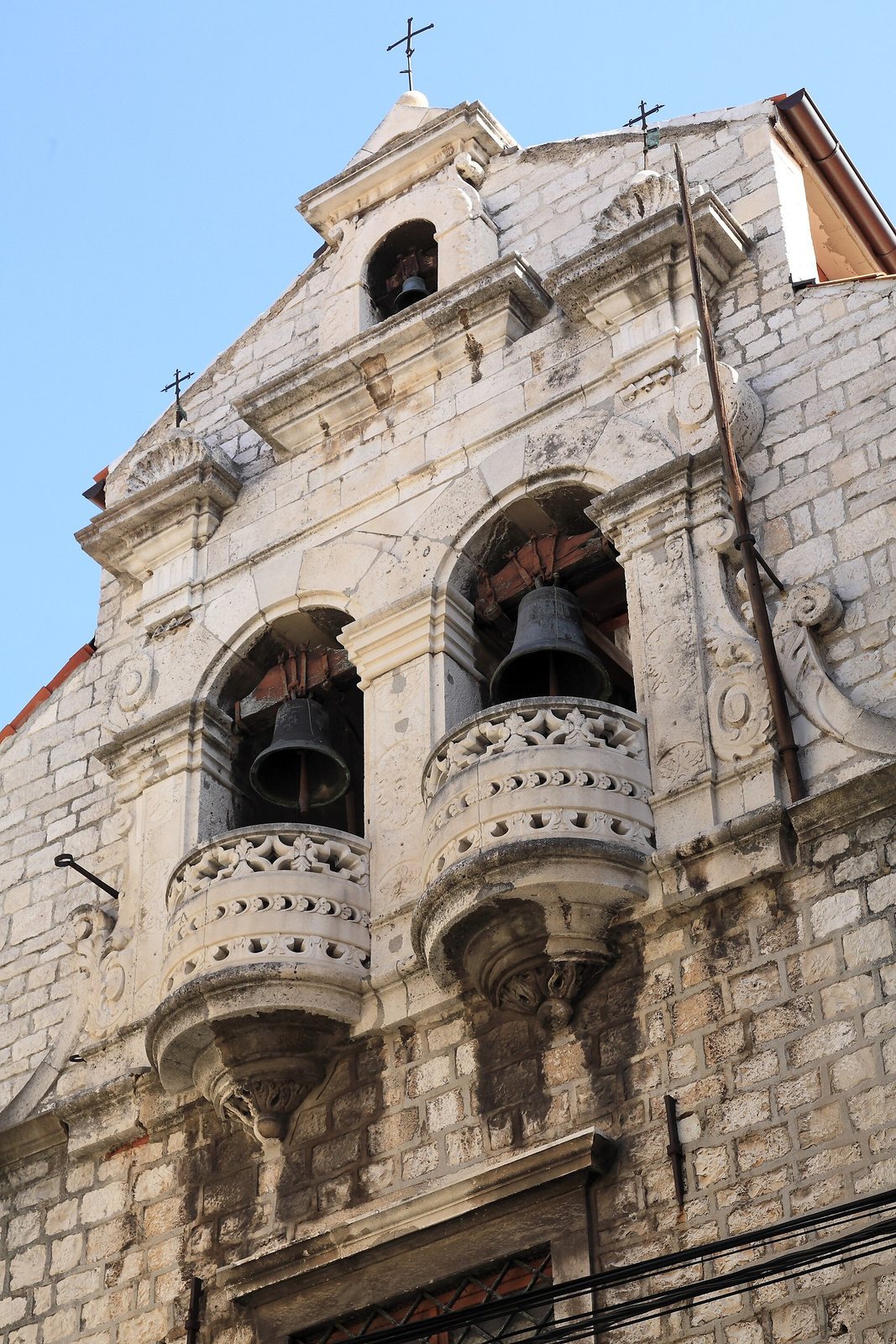
The church stands beside the episcopal palace, the seat of the Eparchy of Dalmatia. Its façade carries a Baroque bell tower, linking the building’s exterior to the style of its church fabric.
Church architecture and furnishings
Façade bell tower
Local master craftsman Ivan Skoko designed the Baroque bell tower on the façade in the early 18th century.
Iconostasis
The iconostasis, an icon-bearing screen that separates the sanctuary from the main worship space, was made in 1827 by the painters Simeon and Aleksije of the Lazović family.
Treasury and library
The church treasury holds more than 100 Byzantine-style icons dating from the 15th to the 19th centuries, including Italo-Cretan works from a tradition combining Cretan icon painting with Italian artistic influence. The collection also includes liturgical objects and manuscripts, and the church has an extensive library.