Castro de Viladonga: A Gallaecian-Roman Hillfort in Spain


Site at a Glance
- Rating
- 4.8
- Popularity
- Low
- Country
- Spain
- Primary era
- Classical
- External website
- Open
- Eras represented
- Classical
- Civilizations
- Roman
- Site type
- Military
- Remains
- Fort
On this page10 sections
History
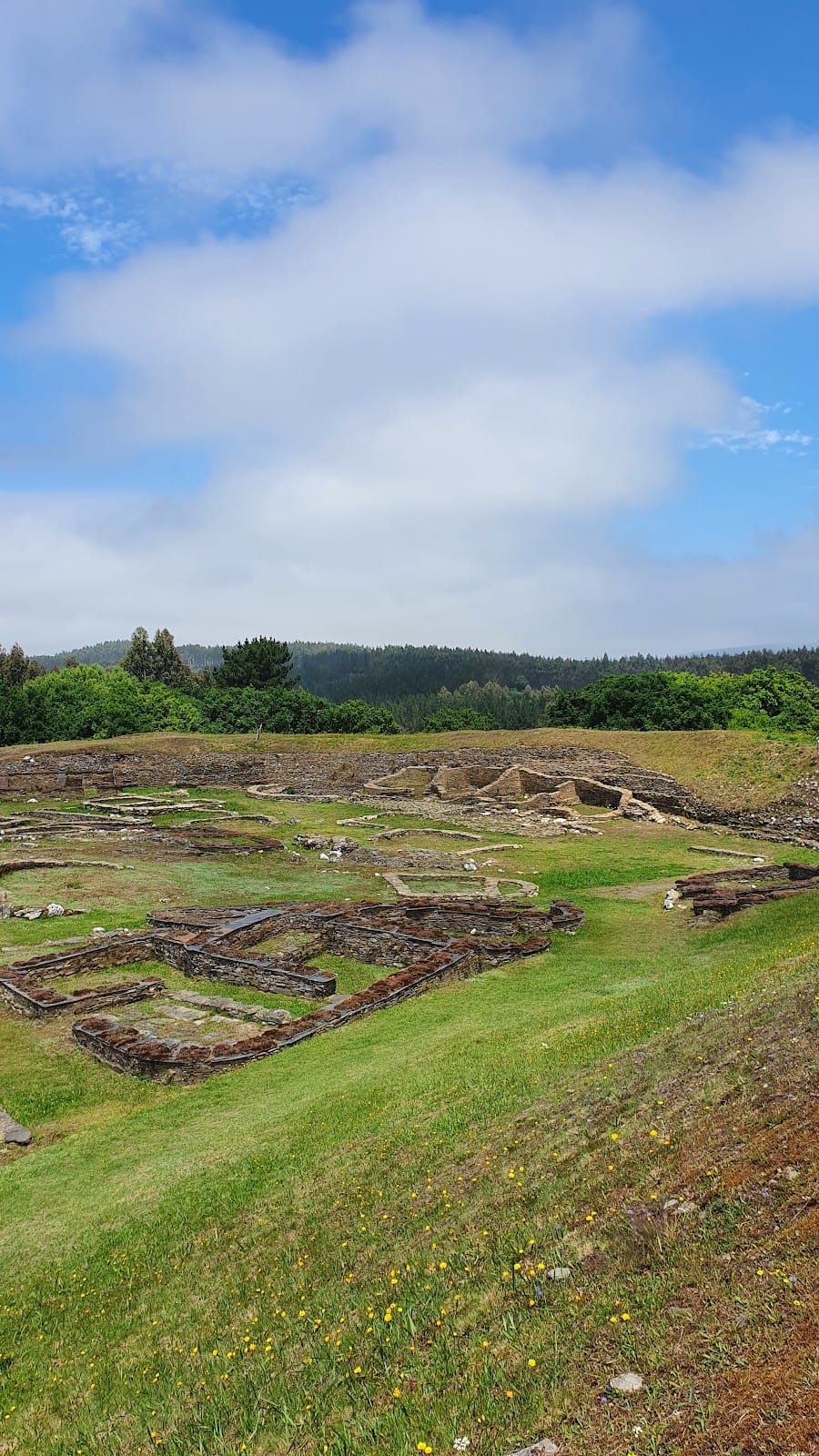
Castro de Viladonga is a Gallaecian-Roman hillfort in Spain, near Castro de Rei in Galicia, built in the third century and occupied from the second to the fifth century AD. It belongs to the Castro culture, the hillfort-based societies of northwestern Iberia before and during Roman rule, and combines that regional tradition with developments associated with the Roman period. Built on an elevation overlooking much of the Terra Cha plain, approximately 25 kilometres northwest of Lugo, it is one of Galicia’s best-known and best-preserved hillforts.
Early recognition and archaeological work
The site entered early twentieth-century historical literature when the Galician writer and historian Manuel Amor Meilan cited it in his Historia de la Provincia de Lugo, published in 1918. Archaeological work began in 1971 through the initiative of Ramon Falcon Rodriguez and continued until 1978. Excavations from 1972 to 1975, directed by the archaeologist Manuel Chamoso Lamas, exposed most of the structures in the central enclosure and examined the outer terraces and defensive systems.
A further campaign in 1983, directed by Felipe Arias Vilas, removed the strips of unexcavated earth retained by earlier archaeologists to preserve and display the layers of occupation. The work also examined the layers within the central enclosure, cleared its internal area, continued the development of the associated museum, and led to a topographic survey and site plans prepared in 1984. A museum devoted to the hillfort has operated at the site since 1983.
Protection and interpretation
The Xunta de Galicia declared Castro de Viladonga an Asset of Cultural Interest in the monument category on 11 December 2009. The protected area includes the archaeological site and a broad northern zone containing the separate hillfort of Rodela de Balmonte.
Remains
Enclosures and defensive layout
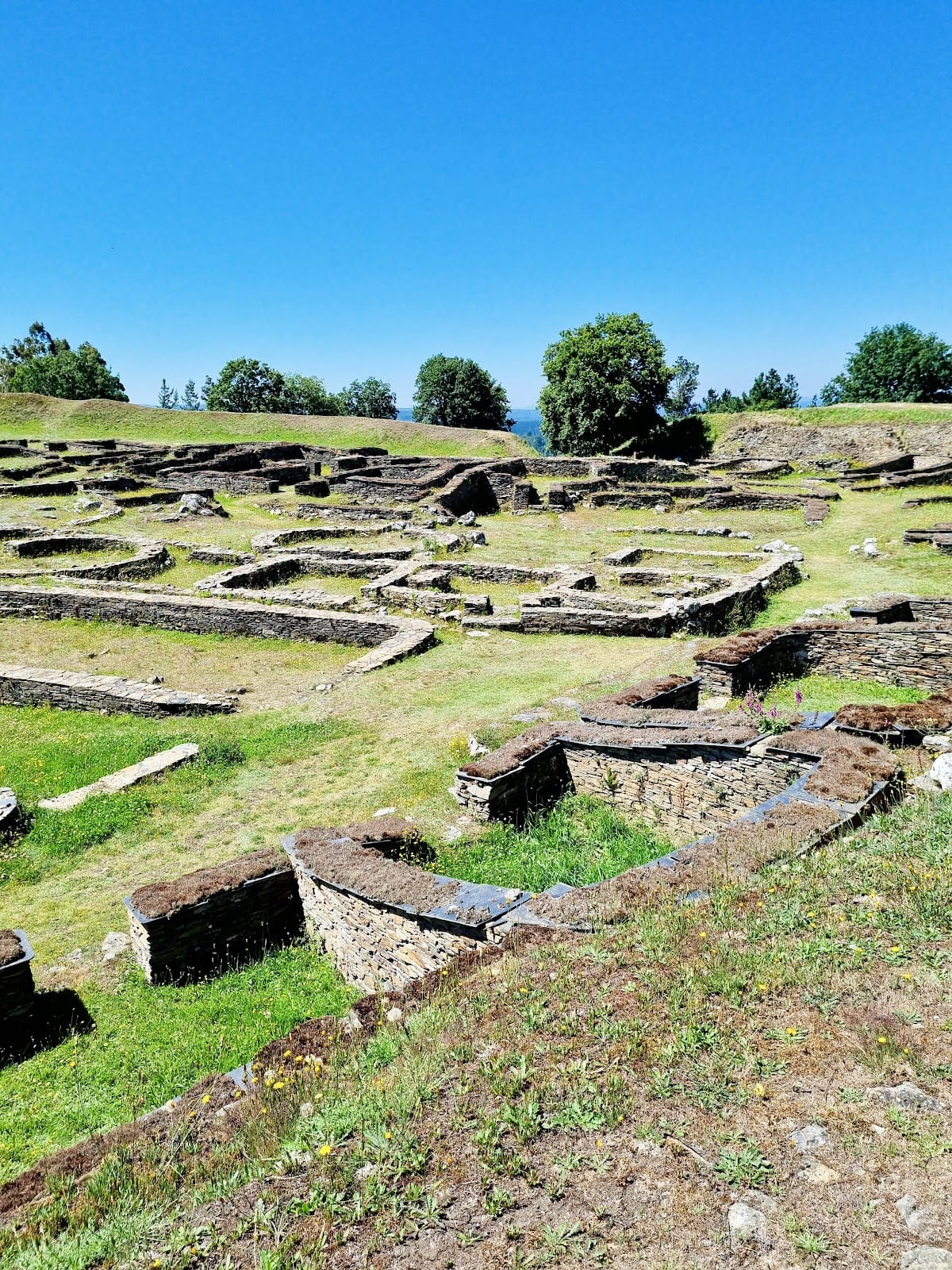
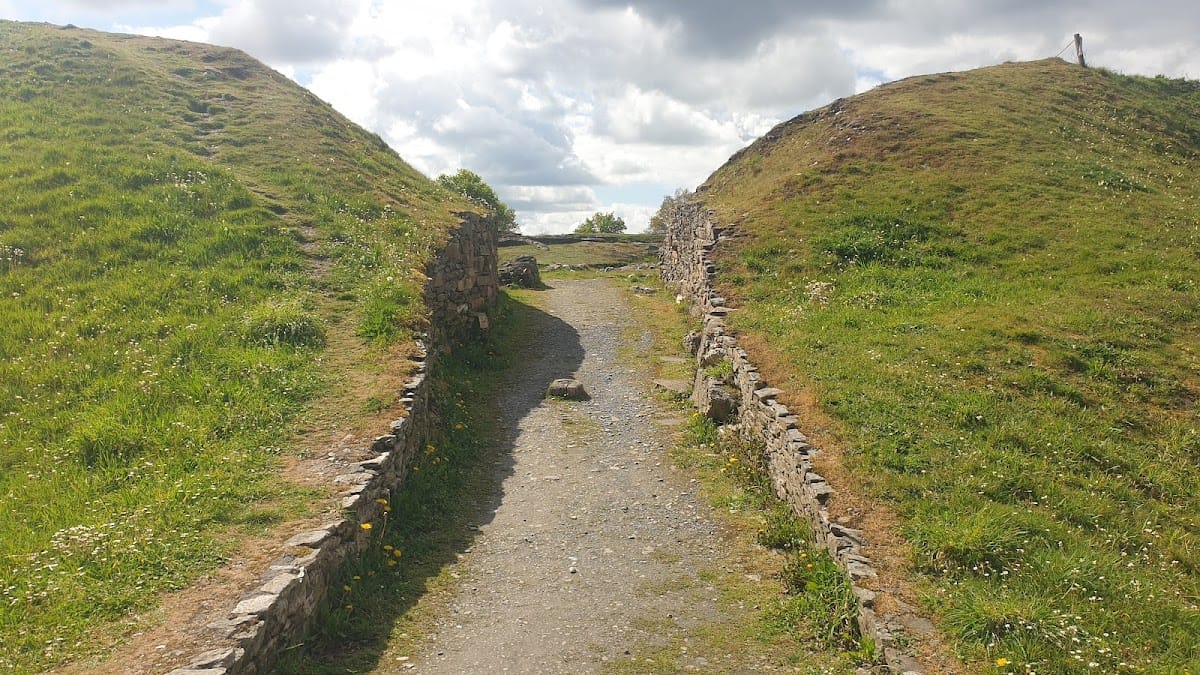
Castro de Viladonga occupies approximately 4 hectares within its walls. Its formal layout consists of several walls and ditches, two outer terraces known as antecroas, and a large central croa, the usually highest enclosed area of a hillfort. The croa covers about 10,000 square metres and has an irregular quadrangular plan measuring approximately 100 by 95 metres, with rounded corners. The main wall is built of schist masonry and rises approximately 12 to 14 metres on the side facing the ditch.
Buildings and internal organization
Most of the exposed buildings lie within the croa. They include dwellings, animal enclosures, storage buildings, and at least one structure interpreted as serving a social or communal purpose. The buildings are arranged in groups or neighbourhoods around two principal streets and a ring road that runs parallel to the main wall. The archaeological materials associated with these structures come predominantly from the later Roman or late Roman period.
Objects and archaeological finds
Gold ornaments and Roman objects
A gold torque found at the site in 1911 has pear-shaped terminal knobs, is made of 20-karat gold, and weighs 180 grams. Farmer Jose Abelleira Palmeiro discovered it accidentally, and it is now preserved in the Provincial Museum of Lugo. The excavations of 1972 to 1975 produced a second torque of similar type but lower-grade gold, a gold ring set with an emerald, and two gold aurei, Roman gold coins, issued under Arcadius, who ruled the eastern Roman Empire from AD 395 to 408.
Weapons, tools, and gaming equipment
Other finds from the excavations include fittings, brooches, fibulae, compasses, and a guide for a horse rein. Two tabula latrunculata, Roman-period strategy game boards played with counters, provide evidence of gaming. The assemblage also contains a bronze socketed axe with four rings and a bronze dagger with an antenna-shaped hilt.
Ritual axe from the reservoir
In June 2020, a bronze ritual axe dating to the third century BC was found in the monumental cistern, on the steps leading to its reservoir. Bone fragments, charcoal, and pottery accompanied it. Its decoration includes motifs of a torque, bull, ram, and boar.