Castro de Irueña: A Vettonian Hillfort and Roman Municipium in Spain
Site at a Glance
- Rating
- 4.3
- Popularity
- Very Low
- Country
- Spain
- Primary era
- Iron Age
- External website
- Open
- Eras represented
- Iron Age, Classical
- Civilizations
- Roman
- Site type
- City
On this page14 sections
History
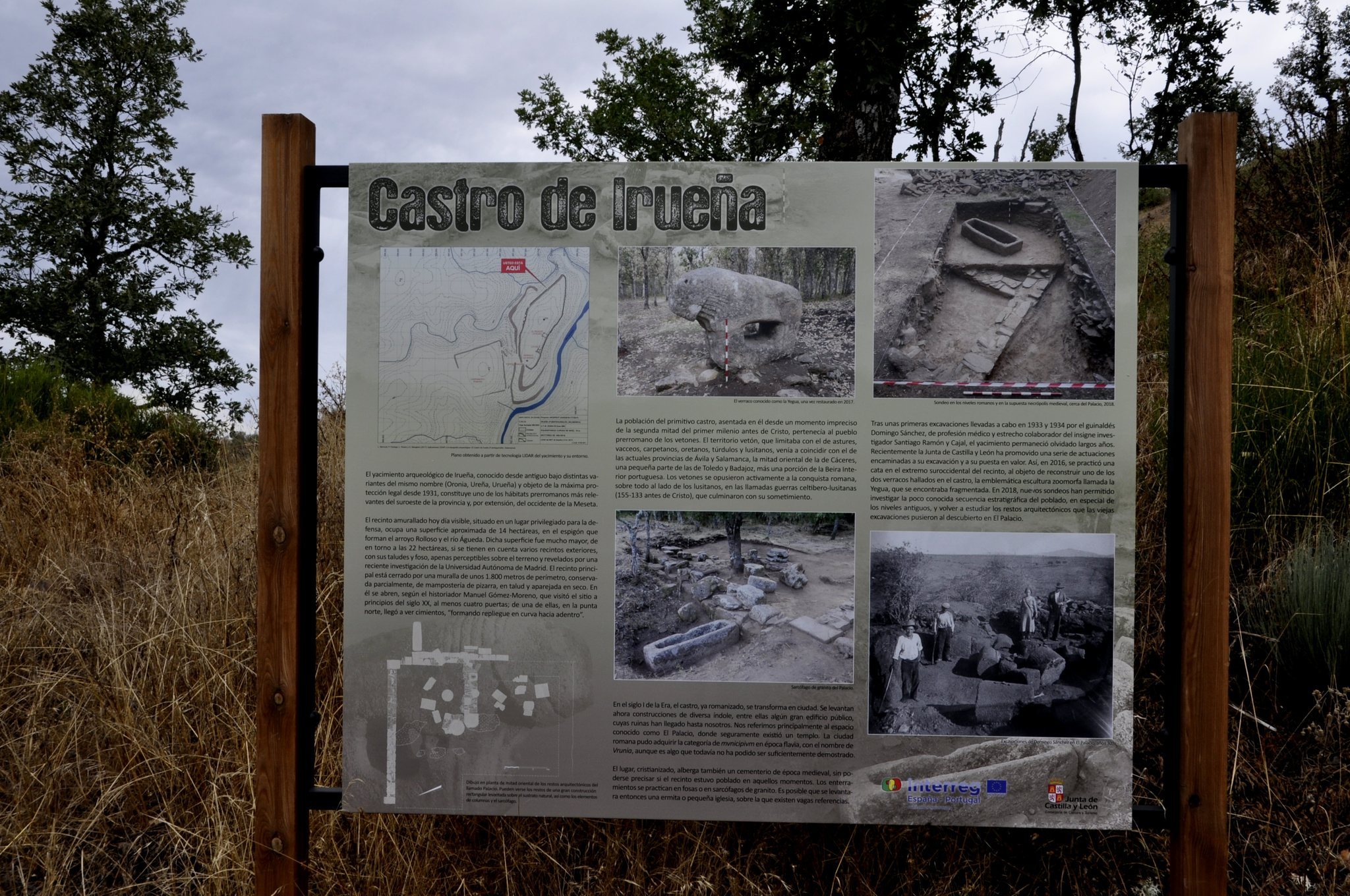
Castro de Irueña is a Vettonian hillfort near Fuenteguinaldo in Spain, established during the second half of the Iron Age, probably in the sixth or fifth century BC. The Vettones were a pre-Roman people of the western Iberian Peninsula associated with fortified hilltop settlements and stone animal sculptures called verracos.
Iron Age and Roman occupation
The settlement remained inhabited after the Roman conquest and gained the status of a municipium, a Roman town with recognized civic ties to Rome and local government within the imperial system. This change followed the Latin Edict associated with Emperor Vespasian in AD 74, which broadly extended Latin civic status to communities in Roman Spain. Numerous surviving structures belong to this Roman phase.
Visigothic and medieval phases
Occupation continued during the Visigothic period, the era when the Visigoths ruled much of the Iberian Peninsula after the end of Roman imperial authority in the West. The settlement then continued into the early Middle Ages, when it began to be progressively abandoned. A Visigothic necropolis formed part of this later history.
Ownership and archaeological recovery
In 1168, Ferdinand II of León granted Castro de Irueña to the Bishopric of Ciudad Rodrigo. Following the nineteenth-century Mendizábal confiscation, a program that expropriated and sold substantial ecclesiastical and institutional property, the site passed into private ownership. The Duero Hydrographic Confederation acquired it in 2008 and has since been involved in its recovery with associations and other institutions.
Repeated looting has affected the site. Archaeological research and recovery have involved local administrations and the Association of Friends of Irueña, continuing earlier work by Father César Morán and Domingo Sánchez. Sánchez, a disciple of Santiago Ramón y Cajal, worked under the Higher Board of Excavations during the Second Republic. Recent studies have examined the stone animal sculpture known as the Yegua de Irueña, while part of the Visigothic necropolis has also been recovered. Consolidation and heritage presentation are underway, with dense undergrowth and woodland still covering parts of the settlement.
Remains
Castro de Irueña occupies an approximately elliptical, plateau-like hilltop, or teso, on a natural promontory. The settlement covers nearly 15 hectares and is among the largest hillforts in Salamanca Province, together with Las Merchanas. Its position combines steep natural defenses with an artificial enclosure adapted to the terrain.
Natural and artificial defenses
Ravines and river setting
The Rolloso stream borders the eastern and northern sides, where ravines descend more than 40 metres. The Águeda River runs along the eastern side beside near-vertical granite walls exceeding 70 metres. A reservoir has partly inundated the surrounding ravines and river channel, leaving the settlement approximately 30 metres from the flooded channel.
Granite enclosure
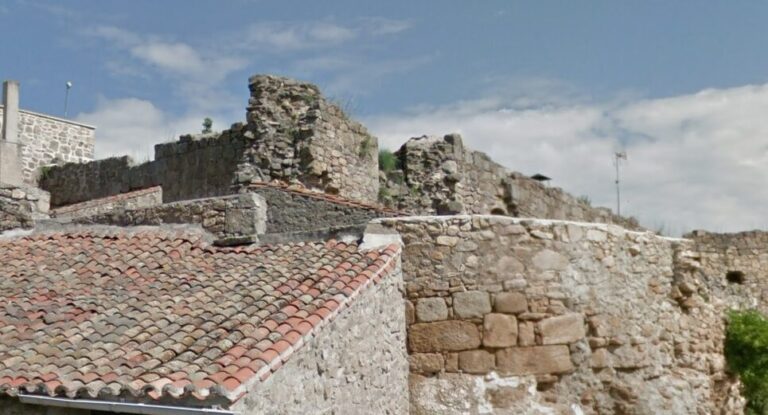
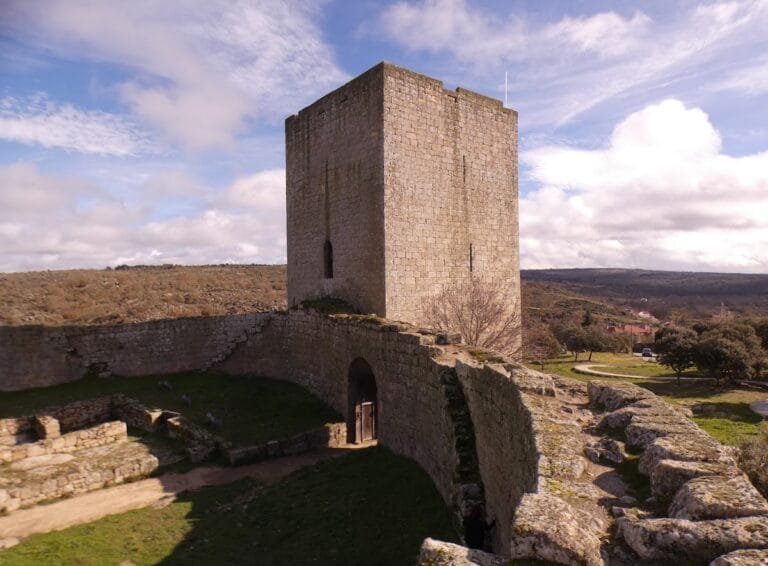
About 1 kilometre of dry-laid granite-block walls encloses the eastern and southern sides of the settlement. The walls are battered, meaning that their faces slope inward as they rise, and their course follows the shape of the ground. Smaller defenses occur on the northern side. Dense vegetation covers the defenses and obscures the field of upright stones known as piedras hincadas.
Roman and Visigothic remains
Roman structural remains
Numerous visible structural remains belong to the Roman occupation. Their individual forms and functions have not been specified, but they form a substantial part of the surviving archaeological fabric within the Iron Age enclosure.
Visigothic necropolis
Part of a Visigothic necropolis survives within the settlement. Its recovery adds physical evidence for continued occupation after the Roman period and for the community that used the hillfort during Visigothic rule.
Vettonian stone sculptures
Yegua de Irueña
The Yegua de Irueña is a Vettonian verraco, a prehistoric or protohistoric stone animal sculpture associated especially with Vettonian settlements. It remains in its original location and has been examined in recent studies.
Other verracos
Early twentieth-century researchers recorded four verracos at Castro de Irueña. At least one of these sculptures has since been recovered, adding to the surviving evidence for the settlement’s Vettonian identity.