Castle of Alfaiates: A Medieval Frontier Fortification in Portugal


Site at a Glance
- Rating
- 4.5
- Popularity
- Very Low
- Country
- Portugal
- Primary era
- Medieval
- Eras represented
- Medieval, Early Modern
- Civilizations
- Portuguese
- Site type
- Military
- Remains
- Castle
On this page8 sections
History
The Castle of Alfaiates is a medieval military fortification in Alfaiates, Portugal, whose construction began in the twelfth century. Built on a strategically important hill on a plateau, it formed part of the defense of the frontier and, together with the Fortress of Almeida, controlled a large territory.
Frontier Defense
The castle’s position gave it a role in organizing and protecting the frontier. Its military importance continued into the Portuguese Restoration War, the conflict that began in 1640 as Portugal reasserted its independence from the Spanish Habsburg monarchy.
During that war, the Castle of Alfaiates played a decisive part in national defense. Alongside the castles of Almeida and Elvas, it was regarded as one of the “keys of the kingdom,” a phrase reflecting the strategic value assigned to these frontier strongholds.
Modern Protection
The castle received protection as a Portuguese National Monument in the mid-twentieth century. It is also classified by IGESPAR as a Site of Public Interest, preserving its place within Portugal’s recognized heritage.
Remains
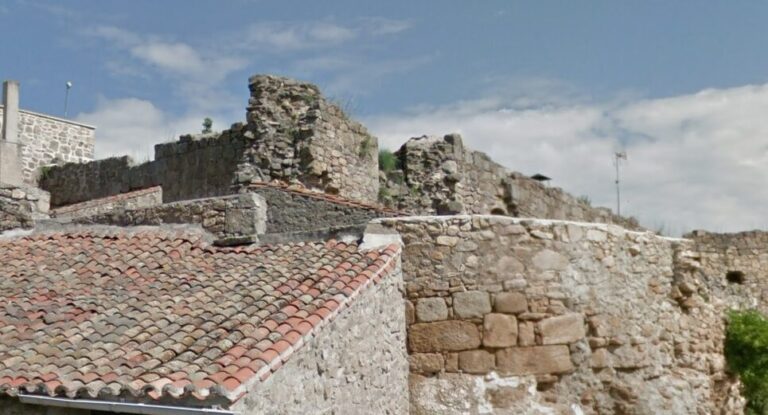
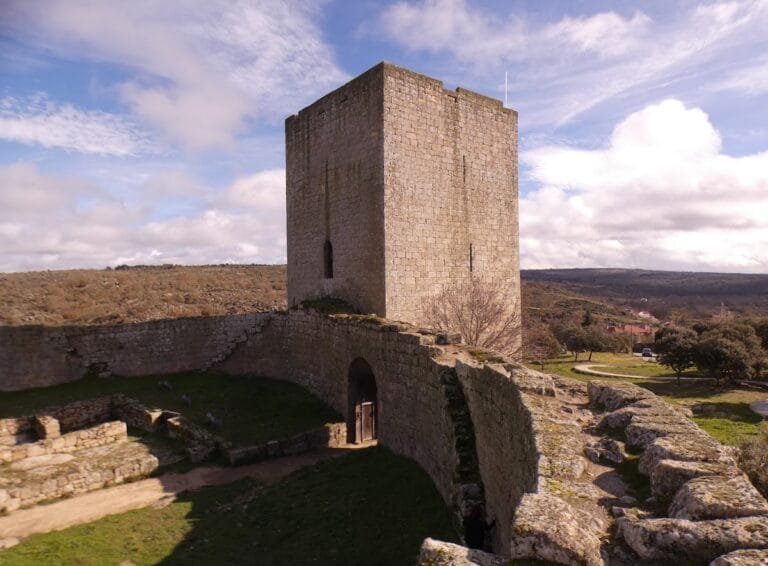
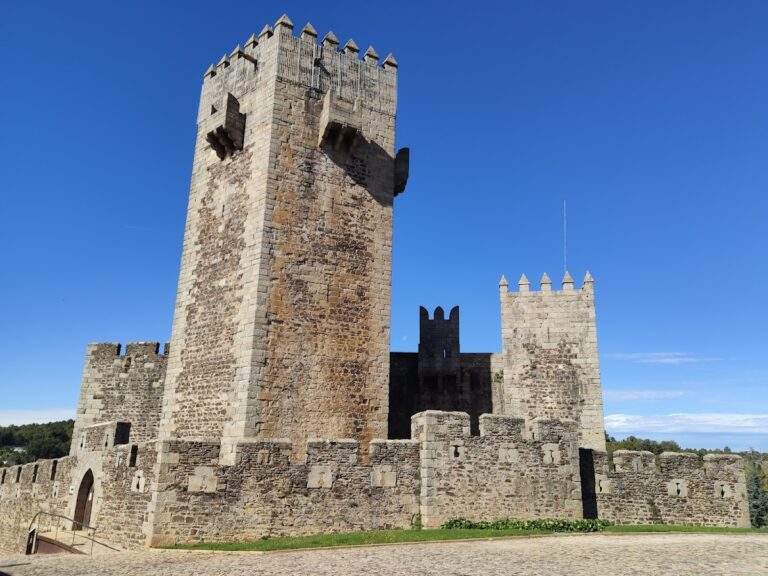
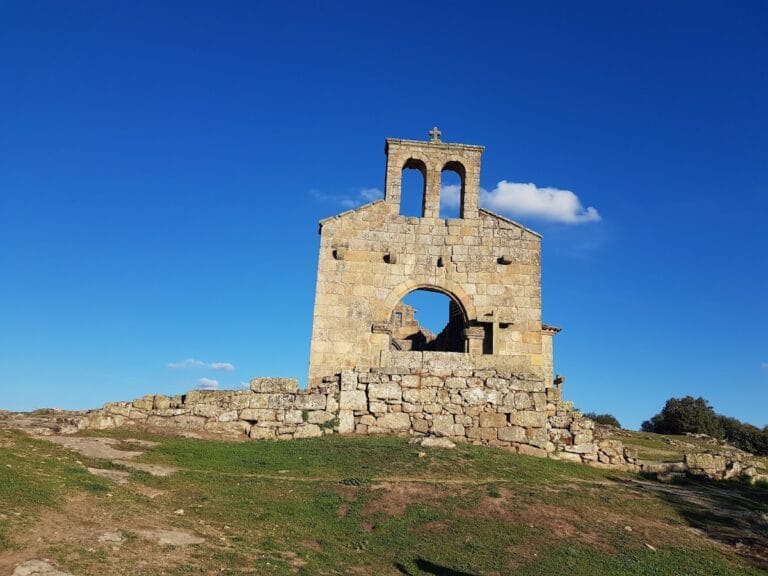
The castle has a quadrangular layout on the hill, with an inner fortified enclosure, a second circuit of walls, and a projecting main gate. A quadrangular tower stands at the highest point and faces the town. Parts of the inner walls are ruined, while the surviving arrangement preserves the castle’s layered defensive organization.
Fortified Enclosures
Inner Walls and Tower
The inner enclosure follows a quadrangular plan. Its walls are partially ruined, and a quadrangular tower occupies the highest point, facing the town. Together, these elements define the principal fortified core of the site.
Second Wall Circuit
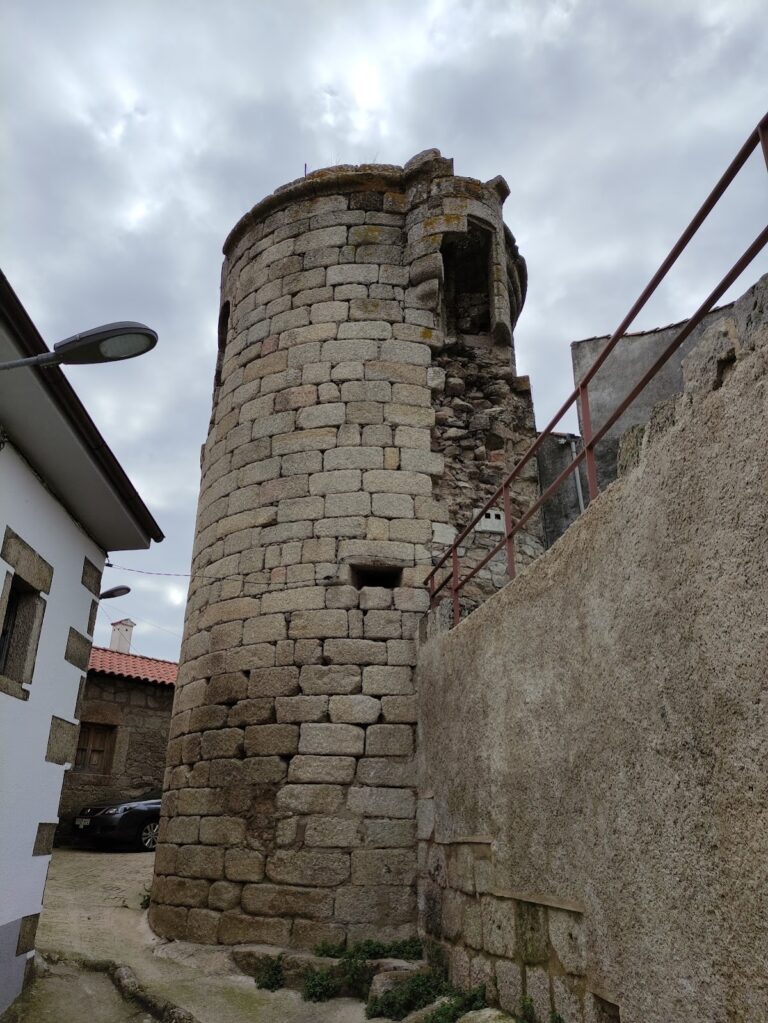
A second circuit surrounded the inner defenses. Small towers were incorporated at three of its corners, extending the castle’s defensive perimeter beyond the central enclosure.
Manueline Main Gate
The projecting main gate carries a Manueline sculptural composition. Manueline is a Portuguese late-Gothic style associated especially with the reign of King Manuel I in the early sixteenth century and known for elaborate stone decoration with royal, maritime, and religious imagery.
At the center of the composition is a royal crown. Two armillary spheres, models of the celestial sphere that also served as Portuguese royal and maritime emblems, flank it, together with two crosses of the Order of Christ. This Portuguese military-religious order succeeded the Templars in Portugal and held an important place in the kingdom’s religious and political life.
Nearby sites