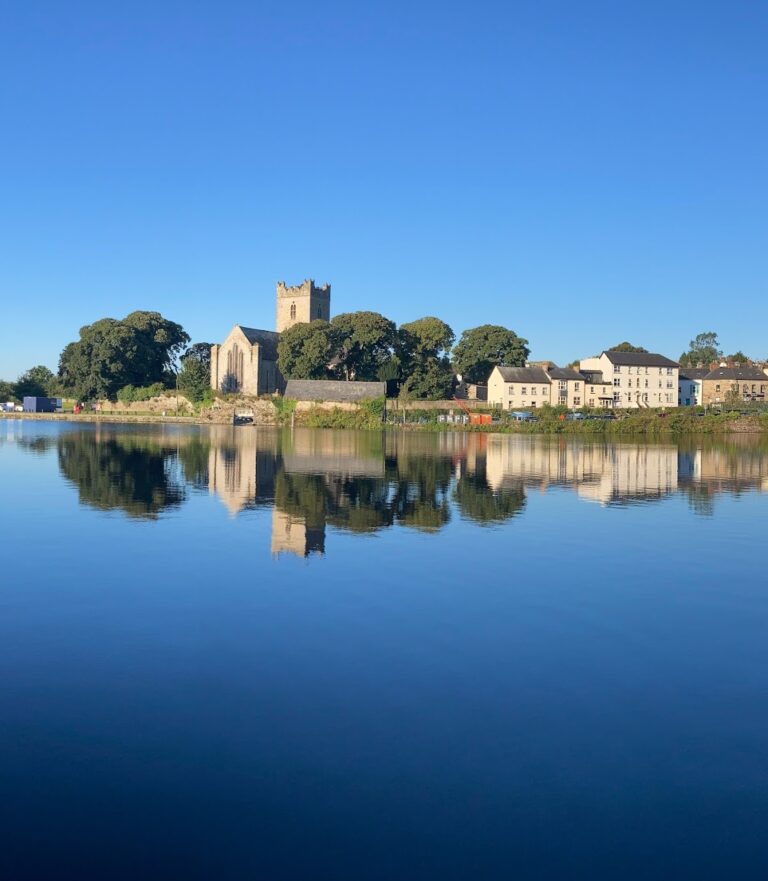
Castle Troy: A Medieval Defensive Castle near Limerick, Ireland


Site at a Glance
- Rating
- 4.3
- Popularity
- Very Low
- Country
- Ireland
- Primary era
- Medieval
- Eras represented
- Medieval
- Civilizations
- Irish
- Site type
- Military
- Remains
- Castle
On this page9 sections
History
Castle Troy is a ruined medieval castle in Ireland, on the outskirts of Limerick city, built in the thirteenth century by the Irish O’Brien clan to defend its lands. It formed part of a wider chain of castles around Limerick, a defensive system that was later destroyed. The site may have had an earlier fortification or fortress before the present castle was built.
Origins and changing control
The castle was constructed during the reign of Henry III of England, whose rule lasted from 1216 to 1272. Its name, however, is older than the building. The Irish name Caladh an Treoigh means “the seat of Troy,” and Treogh may have been the personal name of an earlier clan chief. Another explanation connects the name with the O’Tourrain clan, which once controlled the surrounding lands and used the local harbour for navigation.
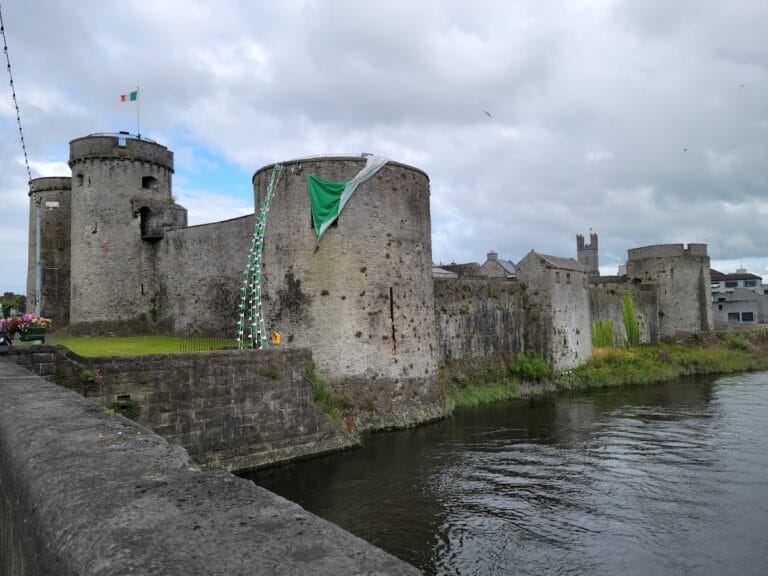
Anglo-Norman feudal lords later expanded beyond O’Brien territory and built King John’s Castle. Castle Troy subsequently came into the hands of the Irish Mac Keogh clan. The circumstances remain uncertain: the transfer may have followed a seizure, or it may have resulted from an agreement with the O’Brien clan.
The Mac Keoghs claimed descent from Fergus Mac Roich, a figure of Irish heroic tradition associated with the Ulster Cycle, a body of medieval literary narratives. In the clan’s tradition, Fergus was a king of Ulster who fought Queen Medb of Connacht. Castle Troy was also linked with a tragic story about the daughter of a Mac Keogh chief. She was abducted by another clan leader, and, after refusing to marry him, was killed during the pursuit and battle that followed.
The poet Michael Hogan included this story in Legends of Thomond, in the poem “The Beauty of Plassey.” Local fishermen repeated the tale of the daughter’s voice echoing across the river in the evening. The legend became part of the castle’s later cultural memory while the Mac Keoghs retained possession for a long period.
The Desmond period
During the reign of Elizabeth I, Castle Troy was seized by the Earls of Desmond, hereditary nobles of the Geraldine family. The Geraldines were of Anglo-Norman origin, but the Desmond earls opposed English rule and supported Irish independence. In 1574 Gerald Fitzgerald, Earl of Desmond, began another revolt against English authority. The fighting continued until 1582, when members of the Moriarty clan of Castledrum killed him.
The Moriartys had sought royal favour and control of the surrounding lands. Their leader was later executed in the Tower of London, and the Desmond and Moriarty estates were divided among English feudal lords. Castle Troy then became the property of Sir John Burke Brittas.
Sir John Burke and the 1607 siege
Sir John Burke belonged to a prominent English aristocratic family established in Limerick and was related to the Burke barons of Castleconnell. Despite his English background, he supported Irish Catholics and sheltered priests who were escaping persecution. He also refused to surrender priests who celebrated Mass at Castle Troy.
In 1607, Burke’s cousin Theobald brought English soldiers to arrest the priests. Burke would not hand them over, and the castle was besieged. He escaped and tried to reach Spain, but was captured. Authorities hesitated at first to enforce his sentence because he was popular in Ireland. He was eventually hanged, and Castle Troy, together with his estates, passed to Theobald.
Seventeenth-century destruction
Theobald received the title Baron Brittas. During the Irish uprising and the conflict between the Irish Confederate army and Oliver Cromwell’s forces, General Henry Ireton first besieged Limerick in 1650 before withdrawing for the winter. On his return in 1651, Ireton’s route took him past Castle Troy. Artillery fire destroyed the castle, which was then captured by assault.
The ruins suffered further attack during the Williamite or Jacobite wars around Limerick in 1690 and 1691. These conflicts were fought between supporters of the deposed Catholic king James II and forces supporting the Protestant William III. Catholic troops defending James held Limerick against Williamite forces. The Treaty of Limerick, the settlement associated with the end of the war in Ireland, allowed the Catholic army to leave the country and promised Catholics equal rights. That settlement was soon breached, and Castle Troy endured another attack and destruction.
Later history
A historic Jewish cemetery near the castle was heavily damaged in 1904 by a crowd of religious extremists led by the priest John Creagh. Residents of Cork sheltered members of the local Jewish community. The cemetery was restored in 1990. Castle Troy and the cemetery remain separate features in the same immediate area, while the ruined castle preserves evidence of medieval clan control, early-modern ownership, siege warfare, and repeated military damage.
Remains
Surviving castle structure
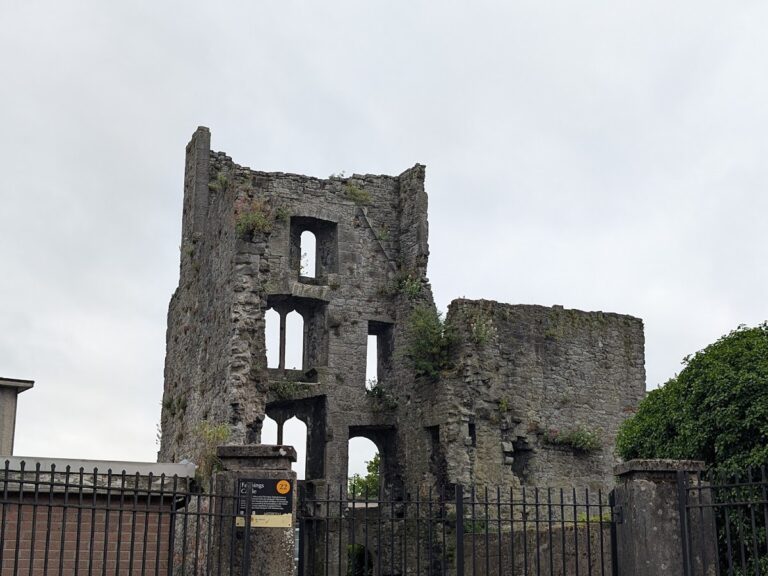
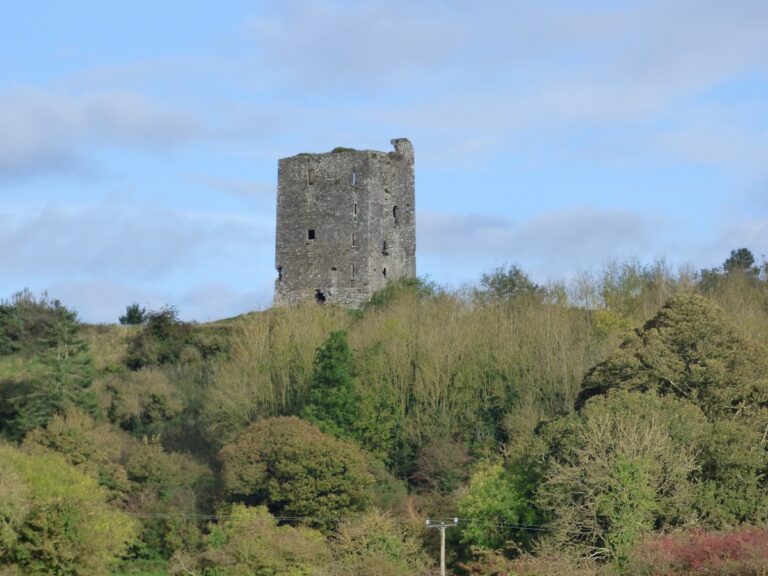
Castle Troy survives as a fragmentary defensive ruin. One wall remains almost to its full height, providing the main surviving element of the building. Portions of rooms remain on the second and fourth storeys, indicating the former vertical organization of the castle even though the structure has been extensively reduced.
A small opening in the surviving wall gives access to a spiral staircase, a stairway arranged around a central axis within a narrow space. The staircase continues to the third storey, while only fragments survive above that level. A corner turret remains on the third storey, preserving part of the castle’s defensive form and its relationship to the surviving wall.
Nearby Jewish cemetery
A historic Jewish cemetery lies close to Castle Troy as a separate burial ground. Its damage in 1904 and restoration in 1990 form part of the history of the immediate surroundings, but the cemetery is not a surviving component of the castle itself.