Castle Rapsóné: A Medieval Refuge Castle in Romania
Site at a Glance
- Rating
- 3.3
- Popularity
- Very Low
- Country
- Romania
- Primary era
- Medieval
- Eras represented
- Medieval
- Civilizations
- Hungarian
- Site type
- Military
- Remains
- Castle
On this page7 sections
History
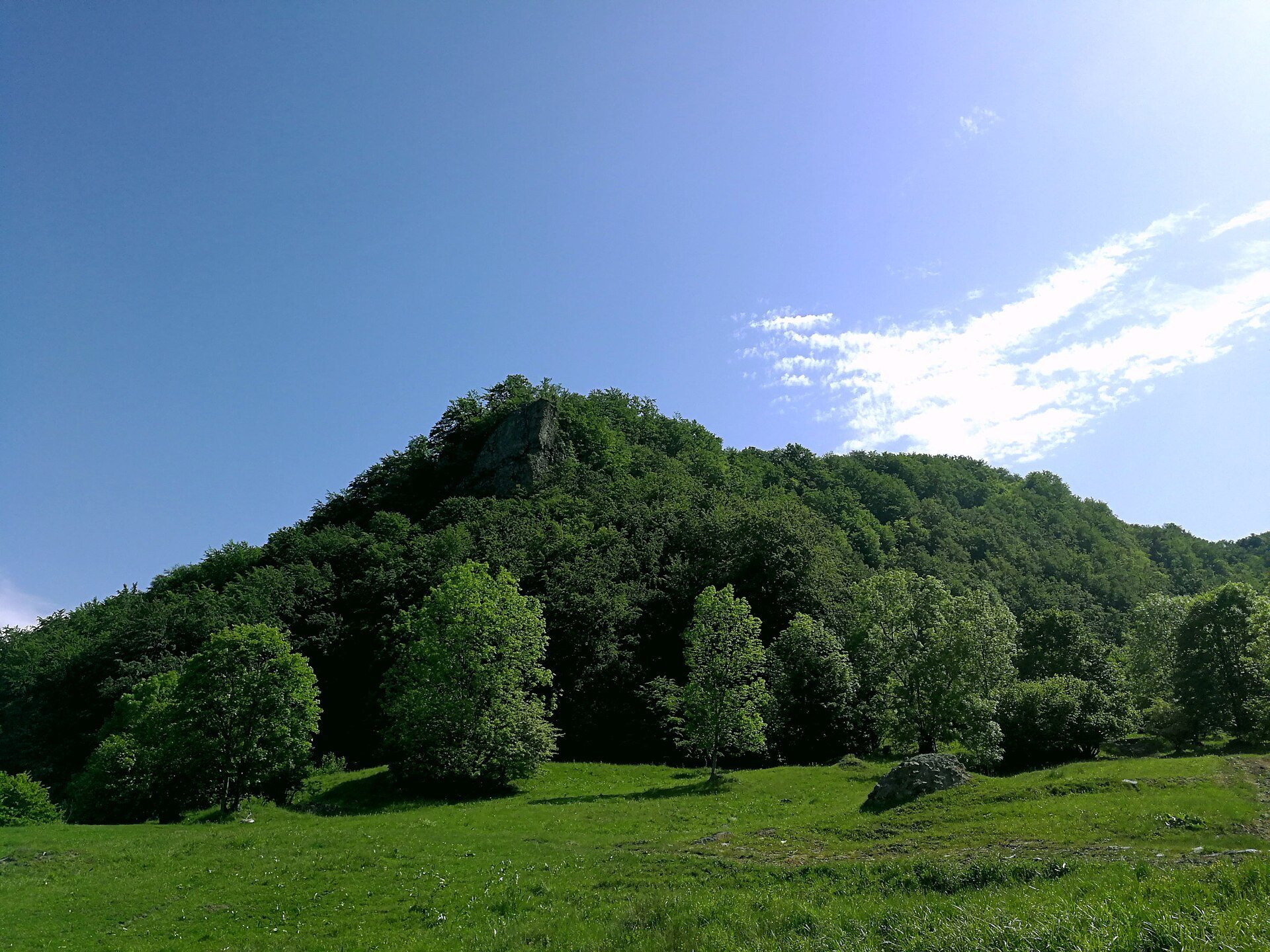
Castle Rapsóné is a medieval castle ruin near Praid in present-day Romania, built on a rocky height above the Juhod Valley. Its origins are debated: some researchers place its construction in the eleventh or twelfth century as part of the Hungarian royal frontier-defense system, while archaeological interpretations favor a thirteenth-century refuge castle for communities in the Kis-Küküllő and Korond valleys.
Medieval refuge and frontier defense
Under the thirteenth-century interpretation, construction may have taken place during the second half of that century, perhaps after the Mongol invasion, the destructive incursion that devastated parts of the Kingdom of Hungary and had serious consequences in the Székely Land. The castle probably remained prepared for military use until the middle of the fourteenth century.
Felsősófalva or Sóvárad have been proposed as the communities responsible for maintaining the refuge. Other nearby settlements developed later, making these two places possible candidates for organizing the castle’s use. Its position and construction suggest a defensive role for inhabitants seeking protection during periods of danger.
Names, archaeological work, and memory
The castle first appears in a written source during the second half of the seventeenth century under the name Rabsuna. The forms Rabsonné and Rapsonné later circulated alongside the locally used Rapsóné. Balázs Orbán helped establish Rabsonné in wider usage through his nineteenth-century writings, while Rapsonné is regarded as a literary creation. The place-name Rapsó was used in the Sóvidék region from the early nineteenth century.
Balázs Orbán described the ruins in detail during the mid-nineteenth century, when several long stretches of wall still stood between one and 1.2 metres high. Excavations followed in 1974 and 2009. The summit has also been repeatedly disturbed by treasure hunters, a practice already noted in Orbán’s account.
Legends of Rapsóné
Rapsó, Firtos, and Tartód, the three castles of the Sóvidék region, became homes of legendary figures in Székely oral tradition. The Székely are a Hungarian-speaking community historically associated with eastern Transylvania and the Székely Land. Many versions of the stories are thought to have developed from witch-hunt traditions dating from the sixteenth to the eighteenth century.
In one group of tales, Rapsóné is a fairy-like witch who raised the castle on its nearly inaccessible rock with the aid of a magical rooster and a supernatural cat. Another version credits the building to her husband, Rapsó, a rabonbán, a title used in Székely tradition for a prominent leader or dignitary. He later died in battle. His legendary sisters, Firtosné and Tartodné, were said to light candles in their castles at the same time, while golden-haired fairies lived in a cave below the Borza Saddle and accompanied Rapsóné on visits to her sisters.
Other stories portray Rapsóné as a wealthy and devout widow who went to Torda, or in another version Kolozsvár, every Sunday to attend Mass. She supposedly bargained with the Devil, sometimes called Duromó, for a magical road in exchange for a mountain of gold and a valley of silver. After Rapsóné outwitted him, he destroyed the road. Some versions add that the rocks were shattered, that Rapsóné vanished in an earthquake, and that she returned each year on the day after Pentecost, the Christian feast commemorating the descent of the Holy Spirit upon the apostles, to celebrate with her fairy court until dawn.
Several elements of the legends may preserve transformed memories of historical practices. The candles could represent signal fires, the fairy retinue could recall soldiers, and the magical road may reflect memories of the Székely salt mines becoming princely property during the middle of the sixteenth century. The traditions also shaped modern cultural memory. The poet Lajos Áprily, who grew up in Parajd, drew on Rapsóné as an image of childhood nostalgia in poems including Álom a vár alatt, Rapsóné erdejében, Pele-ütő Dénkó, Hypertonia, Ott vándoroltál, and Vágy. Around Parajd, the globeflower is known as Rapsóné’s Rose, reflecting the belief that it was her favorite flower. The motif also appears in a novella by József Nyirő.
Remains
Summit setting and fortification
The castle occupied the summit of Medvehegy, which rises to approximately 952 metres above sea level at the western end of a spur of the Gurghiu Mountains. The height stands above Kápolnásmező and is bordered on two sides by tributaries of the Juhod stream, the Hideg-Juhod and Szilas. From the summit, the Sóvidék region lies within view. The position appears to have directed attention westward toward the Transylvanian Basin, while the mountains to the east were not regarded as the likely direction of attack.
The summit fortification had a rounded-ended rectangular plan measuring about 115 by 41 metres. Walls between 1.8 and 2 metres thick enclosed the site. They were built from andesite blocks, pieces of volcanic stone, laid in lime mortar. The entrance stood in the northeastern corner and was formerly protected by a wooden gate. Timber buildings inside the enclosure served as residences and storage spaces.
Western earthworks
A connected series of embankments and other earthworks extended west of the castle. An earthwork is a defensive structure made mainly from shaped or compacted soil, such as a bank, embankment, or ditch. Known as Rapsóné’s Road, these remains reinforce the impression that the defenses faced west from the interior of the country. Some interpretations compare them with the Csörsz Ditch, a long linear earthwork traditionally associated with defensive boundaries in the Carpathian Basin.
The surviving ruins occupy the rocky summit, where later treasure-hunting pits have altered the surface. Together, the stone enclosure, timber-building traces, and western earthworks preserve the physical setting of a medieval refuge associated with the valleys of the Sóvidék region.