Castle Poběžovice: A Medieval Castle and Baroque Palace in Czechia
Site at a Glance
- Popularity
- Medium
- Country
- Czechia
- Primary era
- Early Modern
- Eras represented
- Medieval, Early Modern, Modern
- Civilizations
- Habsburg, Habsburg Austria, Holy Roman Empire, Kingdom of Bohemia
- Site type
- Domestic
- Remains
- Castle
On this page7 sections
History
Castle Poběžovice is a castle in Czechia, first recorded in the first half of the fifteenth century, although it may have existed earlier. Its architectural development includes Renaissance and Baroque forms, successive periods in European art and architecture.
Origins and early transformations
The site of the earliest castle is uncertain. It may have been where the present rectory stands or at the current castle site. Dobrohost z Ronšperka is said to have rebuilt it as a castle at the current site while he held the estate, from 1459 until his death in 1506.
In 1620, under Piotr ze Švamberka, imperial troops attacked and devastated the castle and the town. The assault came before the Battle of White Mountain, a major battle fought in Bohemia that year.
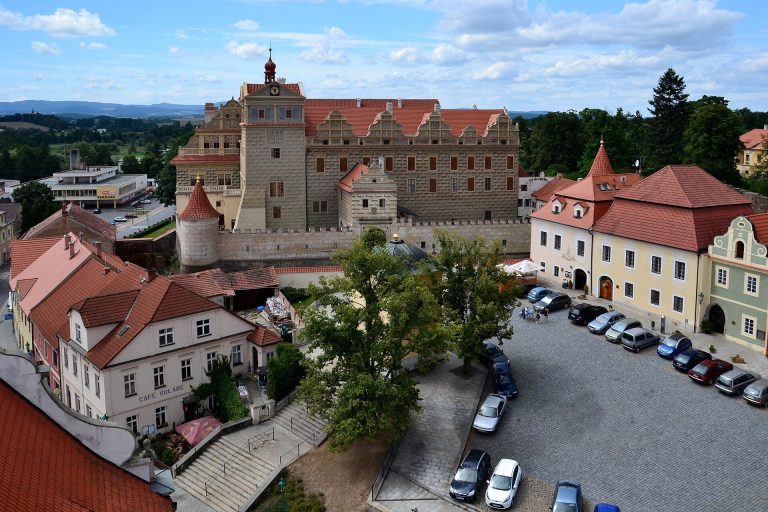
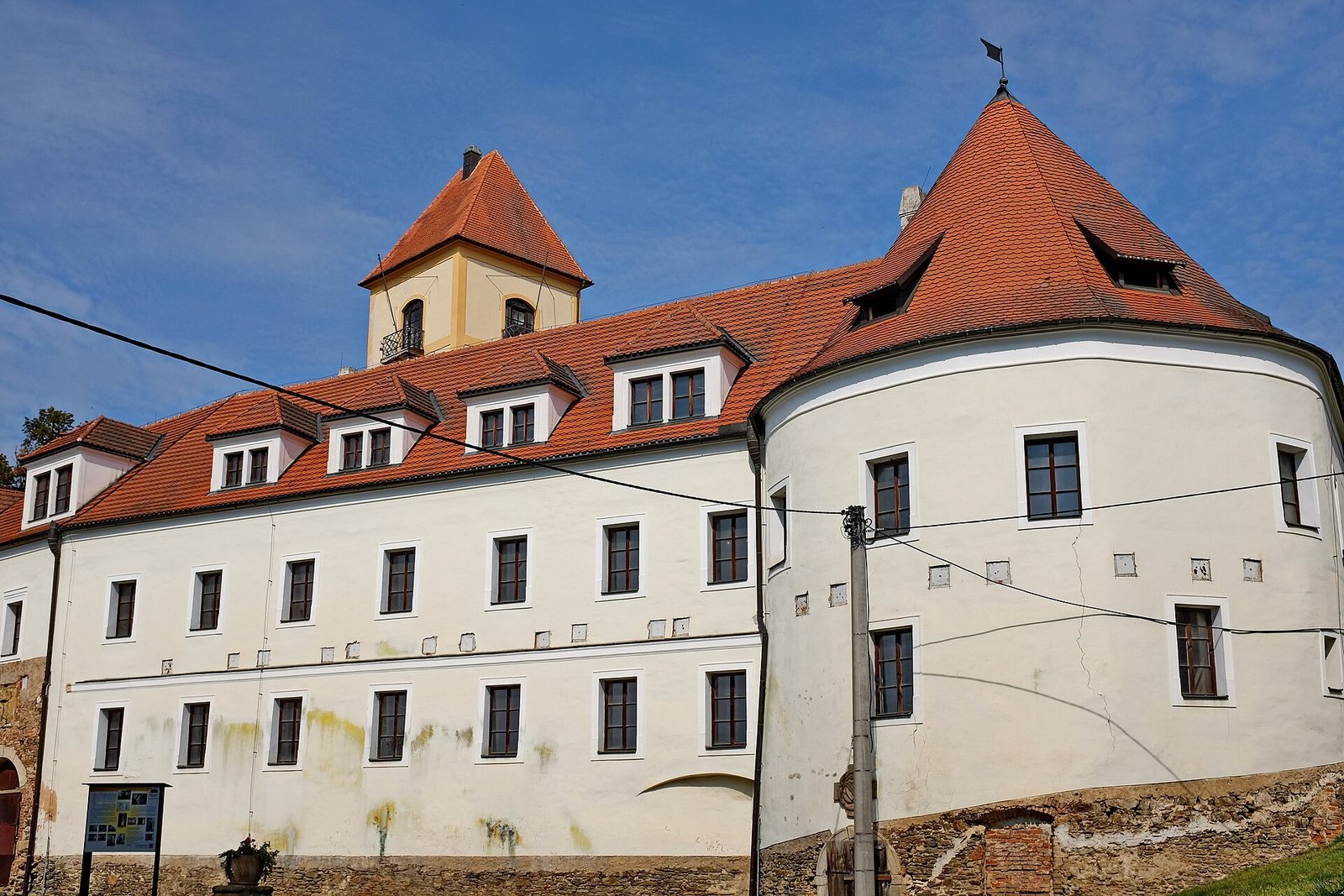
Matyáš Bohumír z Venušvic, governor of the Plzeň region, acquired the castle in 1662. Between 1682 and 1695, he transformed it into a Baroque palace, and further alterations followed in the eighteenth century. During the First Silesian War, an eighteenth-century conflict between Prussia and the Habsburg Monarchy, the castle served as an infirmary. The Czech composer Bedřich Smetana worked there as a music teacher.
Nineteenth- and twentieth-century history
The Coudenhove family owned the castle until 1945. Baron Heinrich Coudenhove-Kalergi and his Japanese wife, Mitsuko Aoyama, lived there with their seven children. Their son Richard Nikolaus Coudenhove-Kalergi became known for his idea of a united Europe.
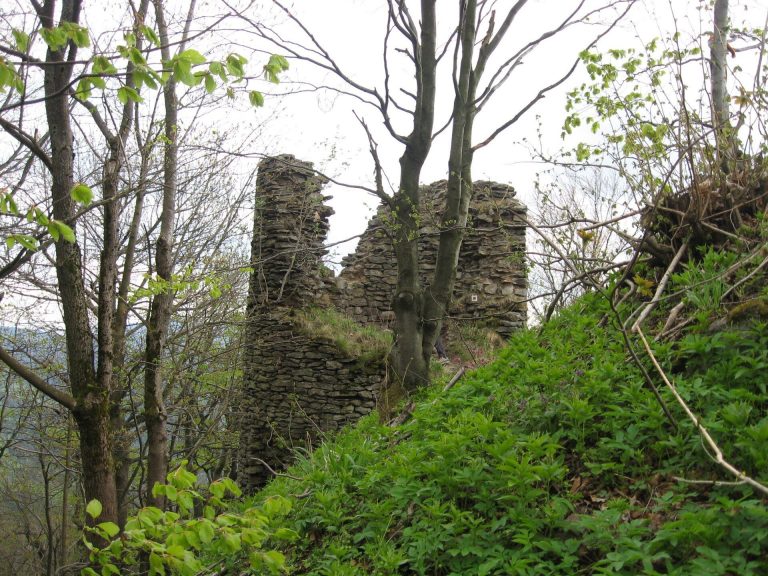
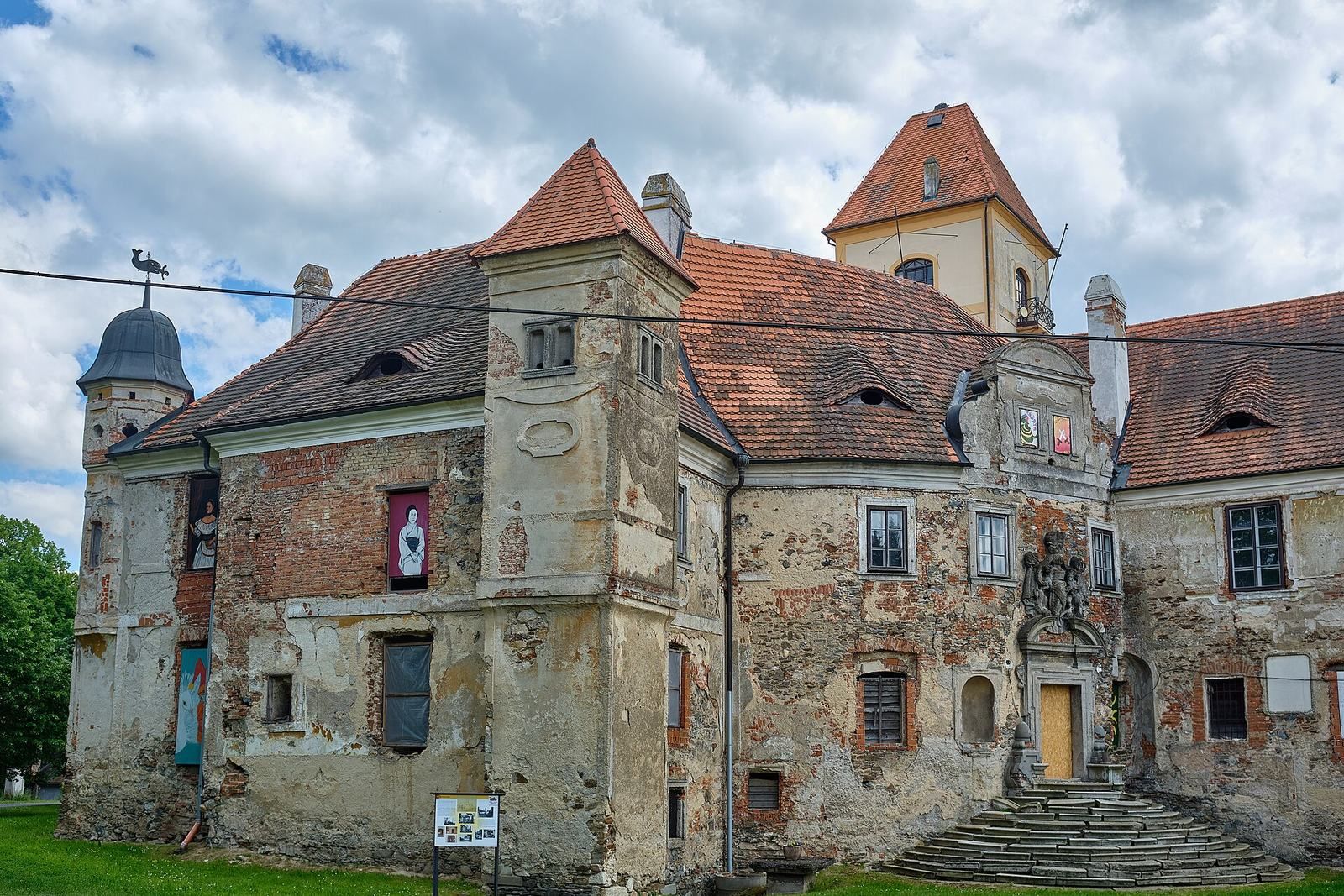
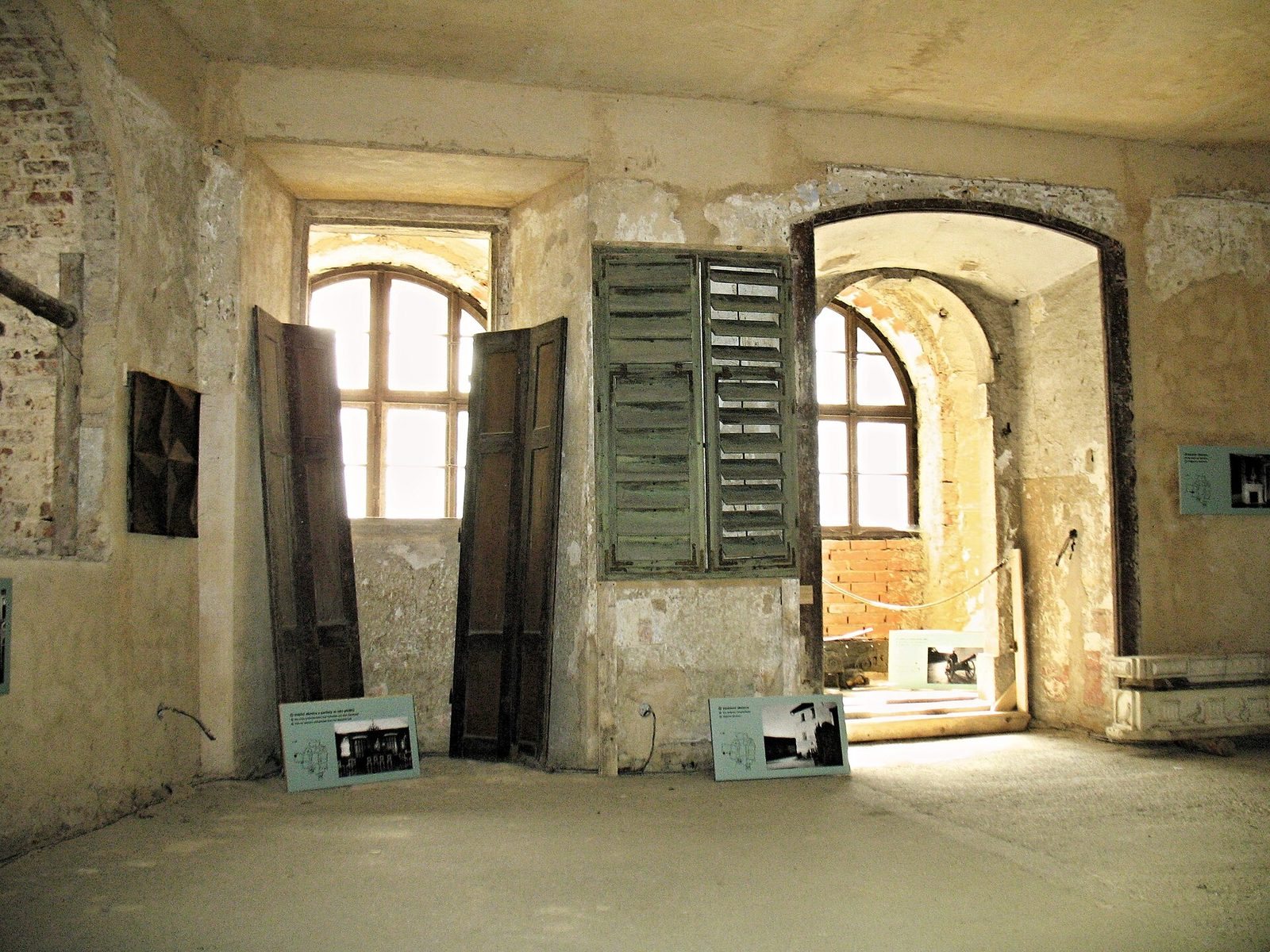
After the Second World War, the castle became state property and briefly housed a Border Guard garrison. After the garrison left, the building fell into ruin. Demolition was planned in the 1980s but did not take place, and the castle was partly renovated after 1989.
Remains
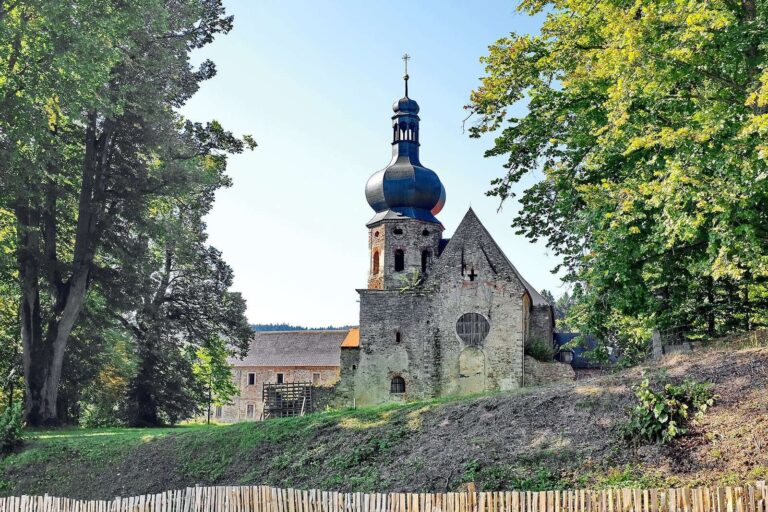
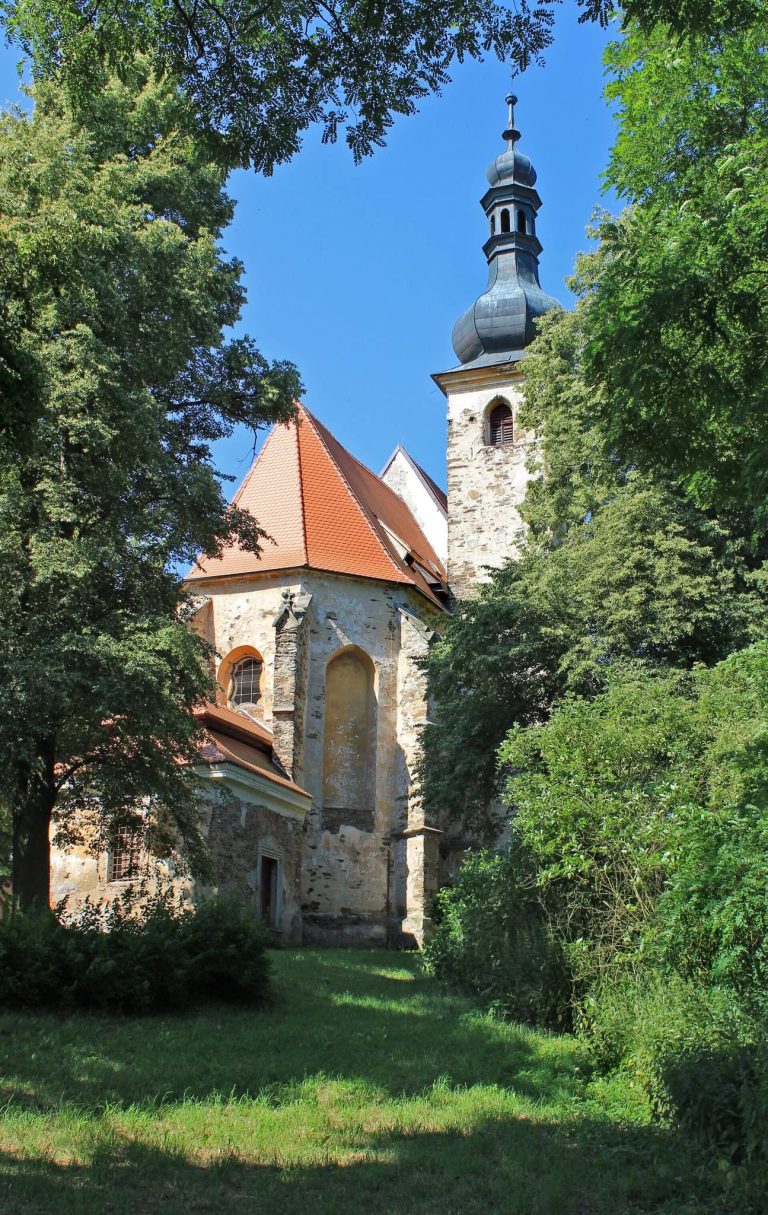
The castle’s architectural character combines Renaissance and Baroque forms, with a courtyard and a gate connecting it to a fort.
Palace and fort connection
Courtyard
The Baroque transformation brought the building into a unified form and added a courtyard with balconies and arcades, a series of arches supported by columns or piers.
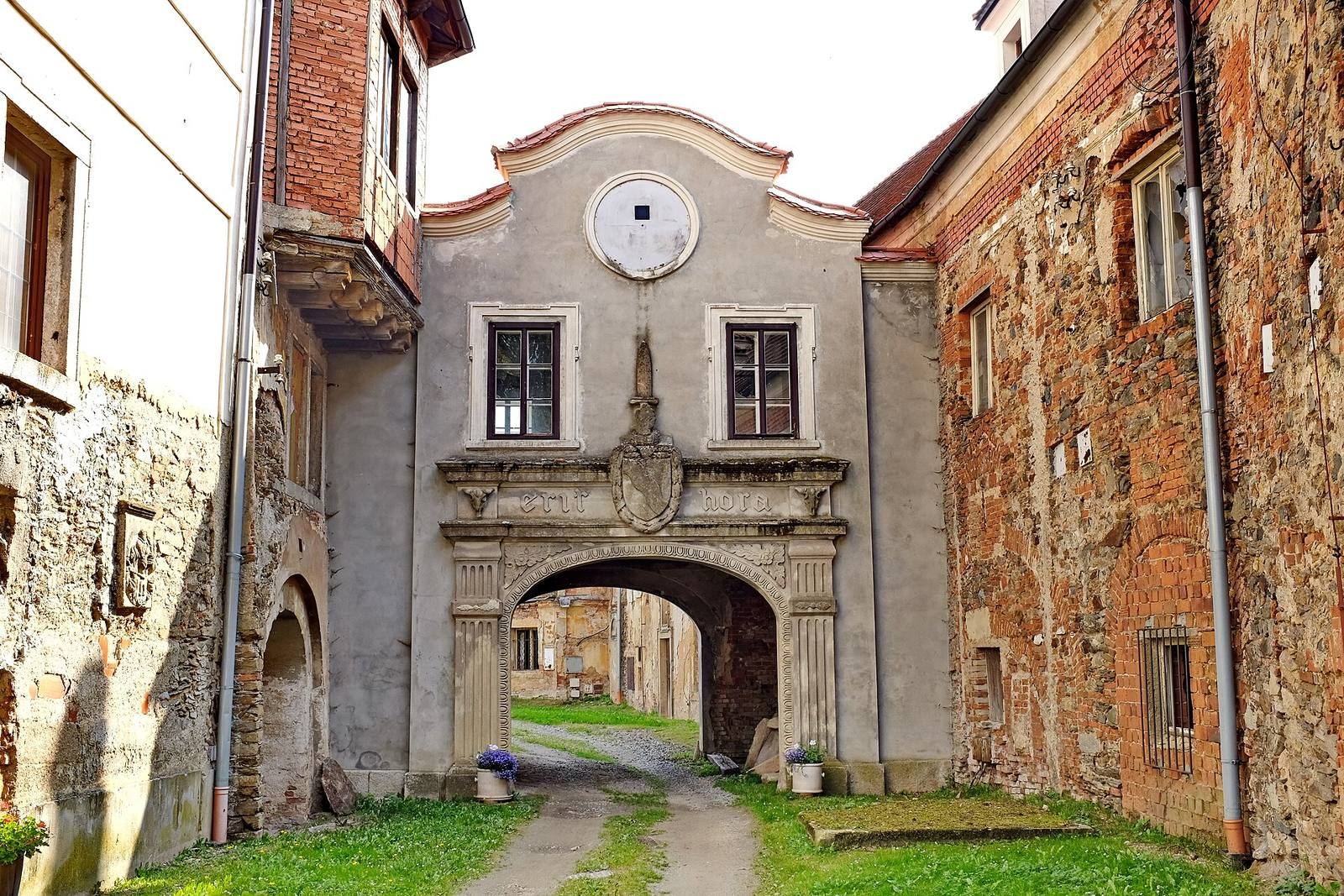
Gate and tower
A Neo-Renaissance gate, a later revival of Renaissance forms, connects the castle with a fort. The castle tower was raised during the Coudenhove family’s ownership.