Stanwell Place: A Manor House and Estate in the United Kingdom
Site at a Glance
- Popularity
- High
- Country
- United Kingdom
- Primary era
- Unclassified
- Eras represented
- Unclassified
- Civilizations
- Unclassified
- Site type
- Domestic
- Remains
- Manor House
On this page5 sections
History
Stanwell Place was a manor house and estate west of Stanwell village in the United Kingdom. The house was standing by the early nineteenth century, though its construction date is uncertain. During the Second World War, it was lent for high-level Allied meetings connected with preparations for the Normandy invasion.
The Gibbons estate
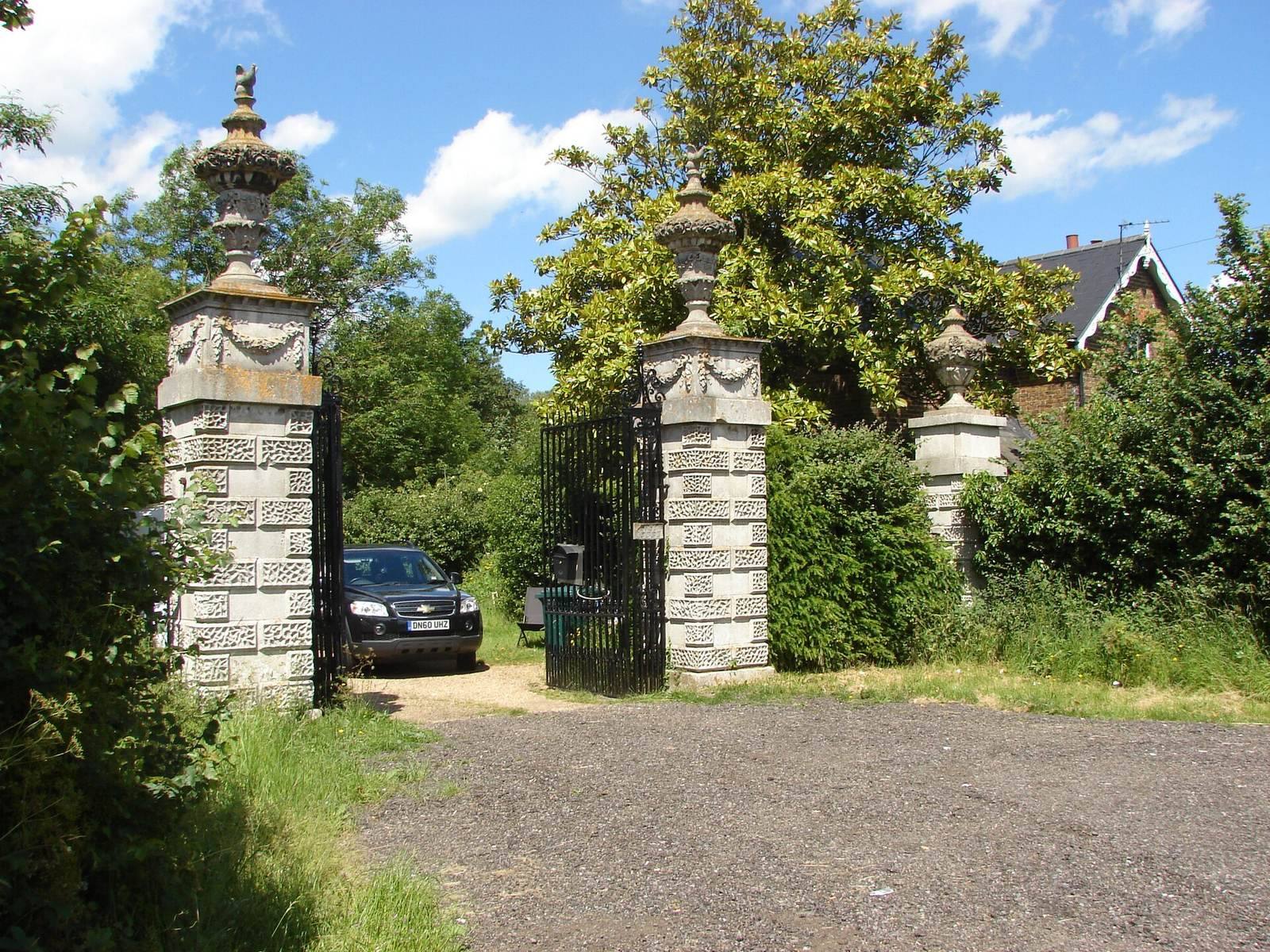
Sir John Gibbons, 2nd Baronet, acquired Stanwell Place, and the Gibbons family held the manor rights from 1754 until 1933. The estate’s parkland was laid out in the eighteenth century. The curve in Park Road by the entrance gates probably followed Gibbons’s diversion of the road in 1760. After he enclosed Borough Field in 1771, the park expanded.
Water projects and wartime use
Parts of the estate were sold in the early twentieth century for a reservoir and smallholdings. In 1933, the last Gibbons family resident sold Stanwell Place to civil engineer Sir John Watson Gibson. Before the purchase, Gibson had lived at Stanwell Lodge while building the Queen Mary Reservoir at Littleton, then the world’s largest water-storage reservoir. His purchase included Stanwell Place with 90 acres and adjoining Stanhope Farm, 261 acres including Hammonds Farm. In 1936, the Metropolitan Water Board, the public authority responsible for London’s water supply, acquired most of his estate under a 346-acre contract. The land was used to develop the King George VI Reservoir in 1947.
Gibson served as deputy director-general of civil engineering (special) at the Ministry of Supply in 1943–44 and was among those principally responsible for constructing the Mulberry Harbours, temporary artificial ports for the Normandy landings. He lent Stanwell Place to commanders of SHAEF, the Allied headquarters directing operations in northwest Europe. Two high-level meetings took place at the house during preparations for D-Day. The American figures who stayed there included Henry L. Stimson, secretary of war; Generals George C. Marshall and Dwight D. Eisenhower; Admiral Ernest J. King; and Henry H. Arnold, head of the U.S. Army Air Forces. In 1942, the house also appeared as a manor house in the British war film Went the Day Well?
Sale and demolition
After Gibson’s death, Stanwell Place and 22 acres were sold to King Faisal II of Iraq; 17 acres of Stanhope Farm remained with Gibson’s sons. Following Faisal’s assassination in 1958, the house and grounds were bought for gravel extraction. The house was left to deteriorate and was demolished in the 1960s, despite local efforts to save it.
Remains
The estate lay west of Stanwell village, with the house north of Park Road. The principal building was a two-storey brick manor house with a later west wing. Its park extended from Oaks Road in the east to Borough Green in the north, covering more than 300 acres after the 1771 enclosure; the area later contracted.
The house contained about 30 rooms and had cement-rendered brick walls. Its low-pitched roof was screened by a parapet, a low protective wall along the roof edge. The west wing was built of red brick, and some outbuildings predated the main house.
The original entrance gates and their piers on Park Road survive.