Castle of Stilo: A Norman Fortress in Calabria



Site at a Glance
- Rating
- 4.5
- Popularity
- Low
- Country
- Italy
- Primary era
- Medieval
- External website
- Open
- Eras represented
- Medieval
- Civilizations
- Norman
- Site type
- Military
- Remains
- Castle
On this page9 sections
History
The Castle of Stilo is an eleventh-century Norman fortress in Italy, built above the town of Stilo on Monte Consolino. Its construction is attributed to Ruggero I of Sicily, the Norman count who established Norman rule in Sicily and parts of southern Italy. The castle’s earliest written reference dates to 7 May 1093, when a concession by Ruggero to San Bruno, the religious founder associated with the Carthusian order, referred to a place between Arena and Stilo.
Royal administration and castellanship
During the thirteenth century, the castle formed part of a group of 17 Calabrian castles administered by the Royal Curia, the royal authority governing territories and institutions for the monarch, under Charles I of Anjou. The Angevin ruler governed Sicily and southern Italy during this period. Stilo also served as a prison, and repairs to the fortress were listed in folio 233 of the Archive of the Royal Mint in 1281.
On 14 April 1323, the Duke of Calabria, son of King Robert, granted the castellanship of Stilo to Marco, a nobleman, constable, and Baron of Settingiano. A castellan administered the castle and commanded its defensive garrison. Marco’s descendants subsequently held the office for a long period, linking the fortress to a family succession within the local administration.
Sieges, privileges, and decline
In the sixteenth century, the provincial governor reportedly besieged the castle for three months with 4,000 infantry and 2,000 cavalry. After the siege, the fortress was granted to the Duke of Arena. In 1677, Padre Apollinare Agresta described it as a powerful stronghold that protected Stilo from large enemy forces. He placed it among the strongest castles in the province and stated that it enjoyed royal privileges, including an obligation on many barons and feudal landowners to contribute to repairs. Giovanni Fiore da Cropani also mentioned the castle during the seventeenth century.
Under the Kingdom of Naples in the eighteenth century, a castellan appointed directly by the king commanded the garrison and received two tarì each day. A tarì was a monetary unit used in medieval and early-modern southern Italy. During the nineteenth century, the castle entered a period of abandonment and decline, leaving the fortress in ruins.
Legends and later conservation
Local tradition places a Saracen siege at the site in 982, when the Arab caliph Ibrahim ibn Ahmad supposedly landed in Byzantine Calabria during an attempted conquest. The legend itself recognizes that the castle probably did not yet exist. It says that inhabitants took refuge on the mountain by order of a grand duke and threw ricotta made from the milk of women who had recently given birth into the enemy camp, creating the impression that the fortress possessed plentiful supplies. After the caliph fell ill, his nephew Gabir ordered a retreat. The tradition connects the place where the ricotta fell with the name Vinciguerra, said to survive locally.
Other traditions associate the castle with the imprisonment and mutilation of hundreds of Stilo rebels after a revolt and attempted escape during the rule of Charles I of Anjou. One version describes a prison cut into the cliff beneath the walls, with a drop of about 500 metres toward the opposite side of the settlement. Prisoners were supposedly lowered or raised by rope, while an attempted escape by jumping would have been fatal.
The same tradition tells of Regina, a noblewoman believed to possess a magical golden hen that laid one golden egg each day. Governor Costa Peloga allegedly imprisoned and tortured her to learn the secret. Her nephew Costa Condomicita returned from Crotone, formed a conspiracy with 13 companions, and had the governor captured and put to death by the people. He then became governor and arranged Regina’s release. Another story concerns a drummer boy who led people through a dark underground passage. His drumming supposedly stopped before he reached the end, and local tradition says that drumbeats can sometimes still be heard at the castle.
A long restoration campaign began in 2009 under the supervision of the Superintendency for Architectural and Landscape Heritage of Calabria, directed by Margherita Eikeberg. The work was completed on 14 May 2016. The municipality of Stilo is identified as the castle’s current owner.
Remains
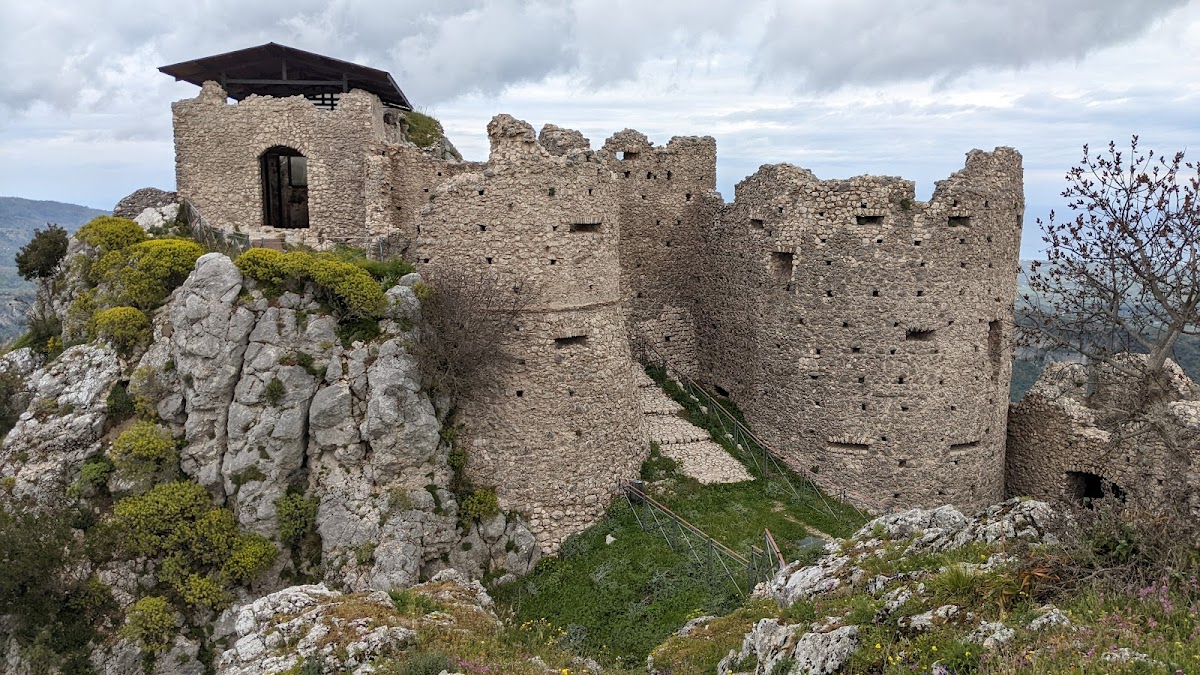
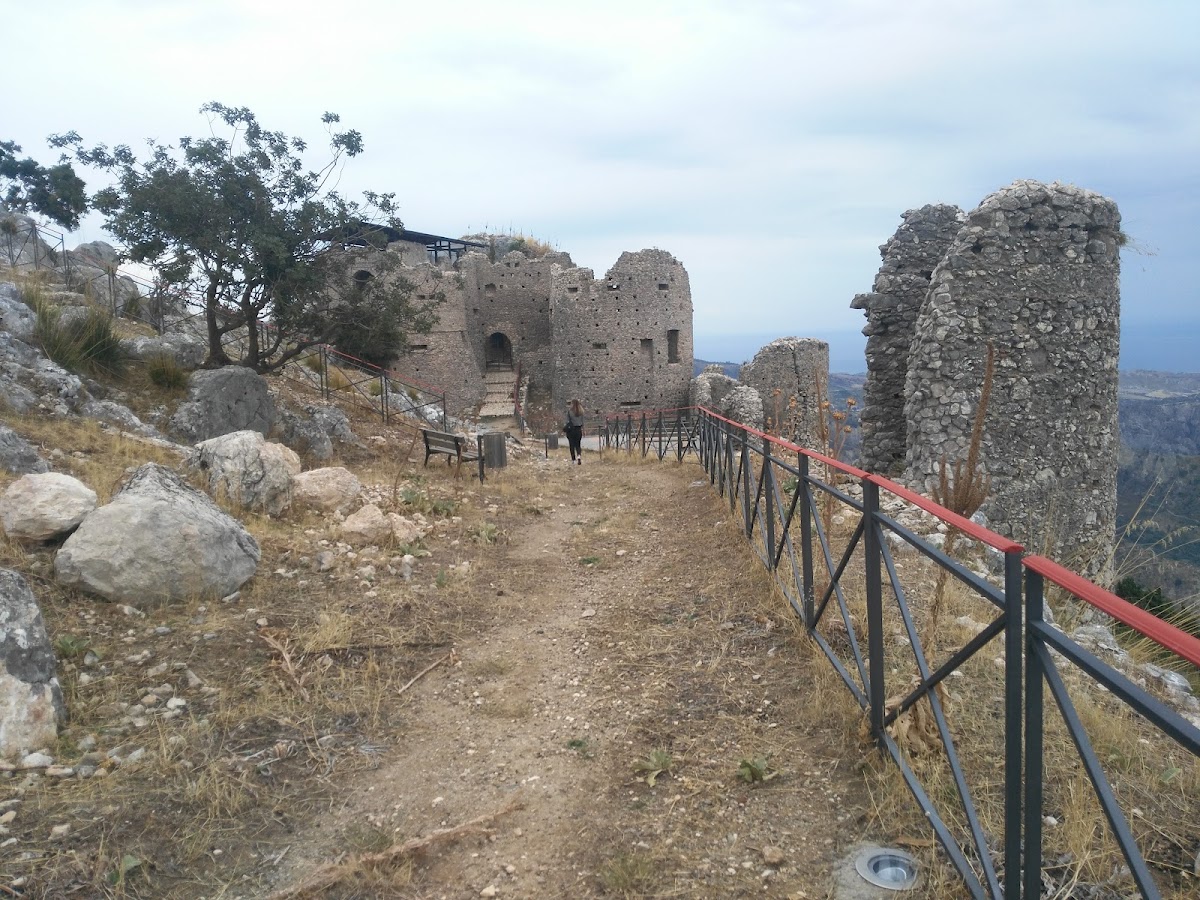
The Castle of Stilo survives as a ruin practically at the summit of Monte Consolino, above Stilo. Its masonry rises from the same limestone rock that forms the mountain. Nineteenth-century descriptions portray the fortress as a central stronghold surrounded by towers, with defensive openings and arrangements that allowed timber platforms to be installed for the defenders.
Central stronghold
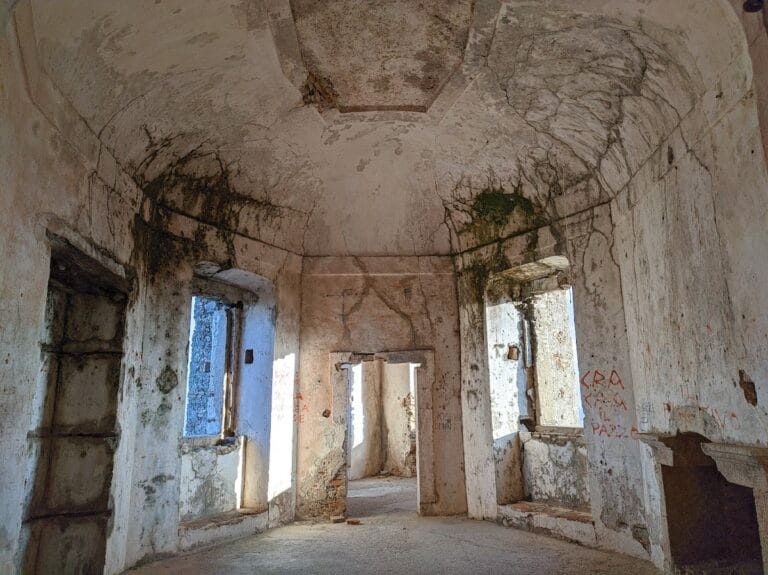
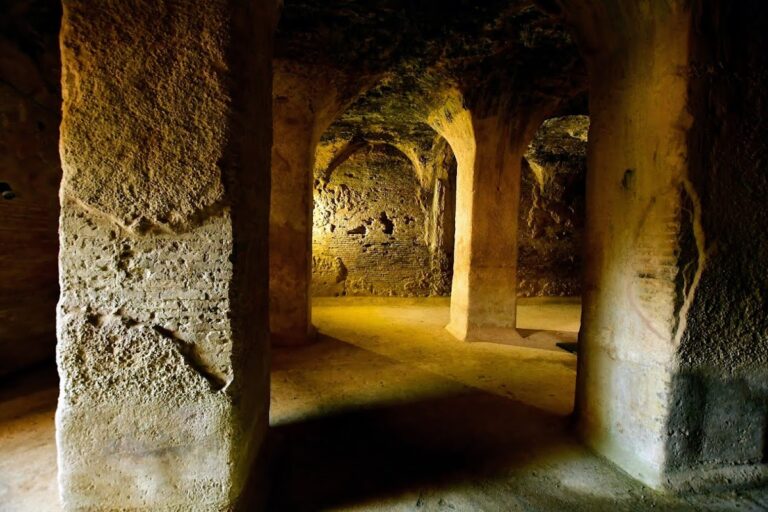
The central area contained a church-chapel with one principal altar and four additional altars set against the walls. Rainwater was gathered through earthenware pipes and channels made from paired roof tiles, then directed into a cistern beneath the central building. The main structure had a single opening on its western side, leading toward the rest of the mountain and its summit.
Towers and defensive masonry
Several triangular towers formed part of the fortress, while the towers surrounding the central stronghold were circular and equipped with loopholes, narrow openings through which weapons could be used while exposing defenders to limited danger. One of these towers is known as Altavilla. The towers remained open at the top and retained some conical merlons built from masonry matching the principal structure. Their sides carried no doors or windows, reinforcing the defensive character of the surviving arrangement.
Internal defensive arrangements
The walls were built with moderately large stones taken from the limestone rock beneath the fortress. Internal and lateral holes indicate that temporary timber floors could be fitted when required. Arrow slits and openings for throwing stones were positioned above these provisional levels, allowing the defenders to use the vertical interior space during military action.
Legendary prison
The prison associated with the stories of the Stilo rebels was said to have been cut into the precipitous rock below the castle walls and reached through a single opening from above. This feature belongs to the local tradition surrounding the fortress rather than to the architectural description of the surviving structures.