Castle of Levanto: A Genoese Defensive Castle in Italy
Site at a Glance
- Popularity
- Low
- Country
- Italy
- Primary era
- Early Modern
- Eras represented
- Early Modern
- Civilizations
- Genoese
- Site type
- Military
- Remains
- Castle
On this page7 sections
History
Medieval defenses and Genoese rebuilding
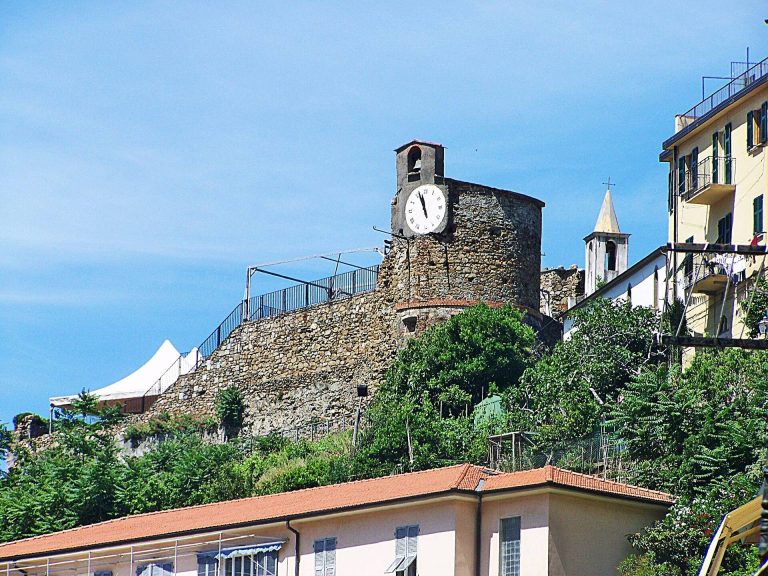
The Castle of Levanto is a defensive stronghold in Italy, built in the second half of the sixteenth century under the Republic of Genoa, a maritime republic. A defensive structure at Levanto is mentioned in 1165, when the territory was under the Malaspina, a powerful noble family in northern Italy. A document from around the thirteenth century also refers to a “Castle of Monale.”
The present castle may have been rebuilt on the medieval castle’s site. Its construction took place alongside the rebuilding of Levanto’s older town walls. The castle was intended to defend the town and the nearby coast.
Administrative and custodial uses
After the Captaincy of Levanto, an administrative jurisdiction headed by a captain, was established in 1637, the castle served temporarily as the captain’s seat. It later became a prison, a use that lasted until 1797, when the Republic of Genoa fell and Napoleonic rule began.
The castle’s successive users included the Republic of Genoa, the Ligurian Republic, the Kingdom of Sardinia, and the Kingdom of Italy. Its defensive purpose ended during the nineteenth century. In the second half of that century, it passed out of state ownership. Conservation work around the end of the nineteenth and beginning of the twentieth century was followed by its continued private ownership.
Remains
Plan and defensive features
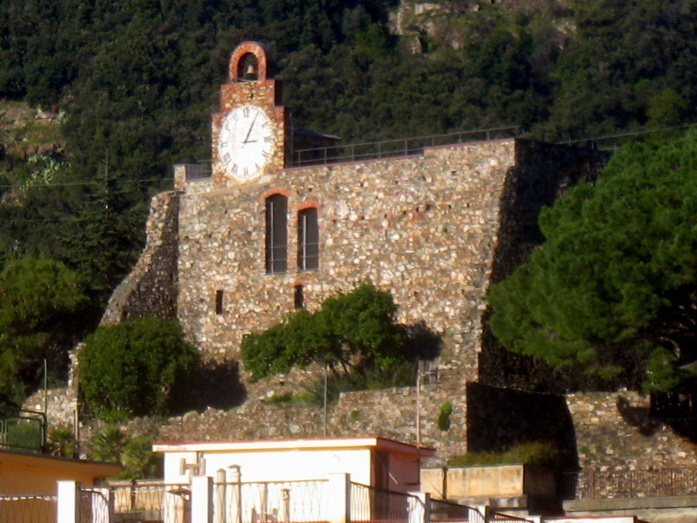
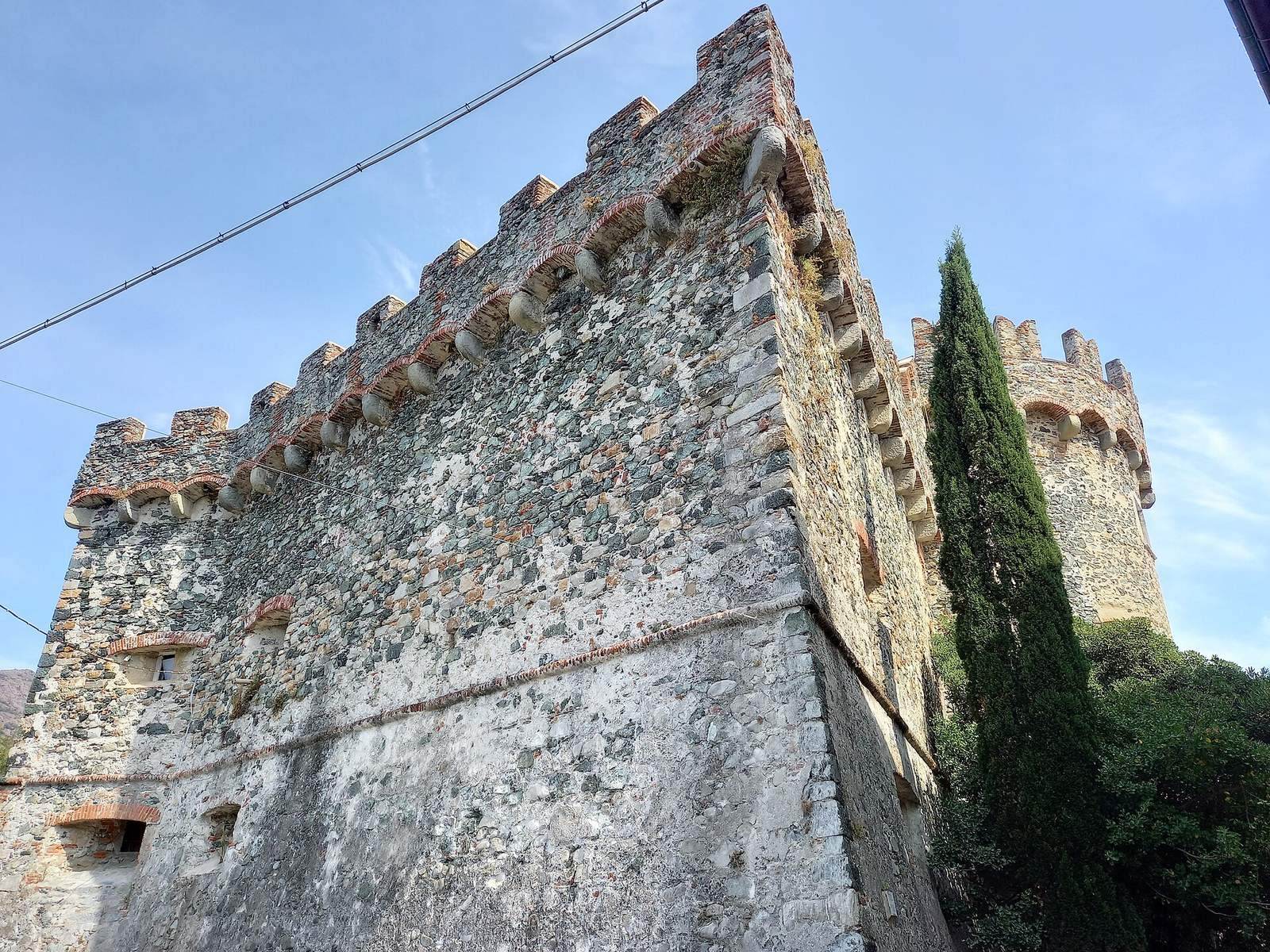
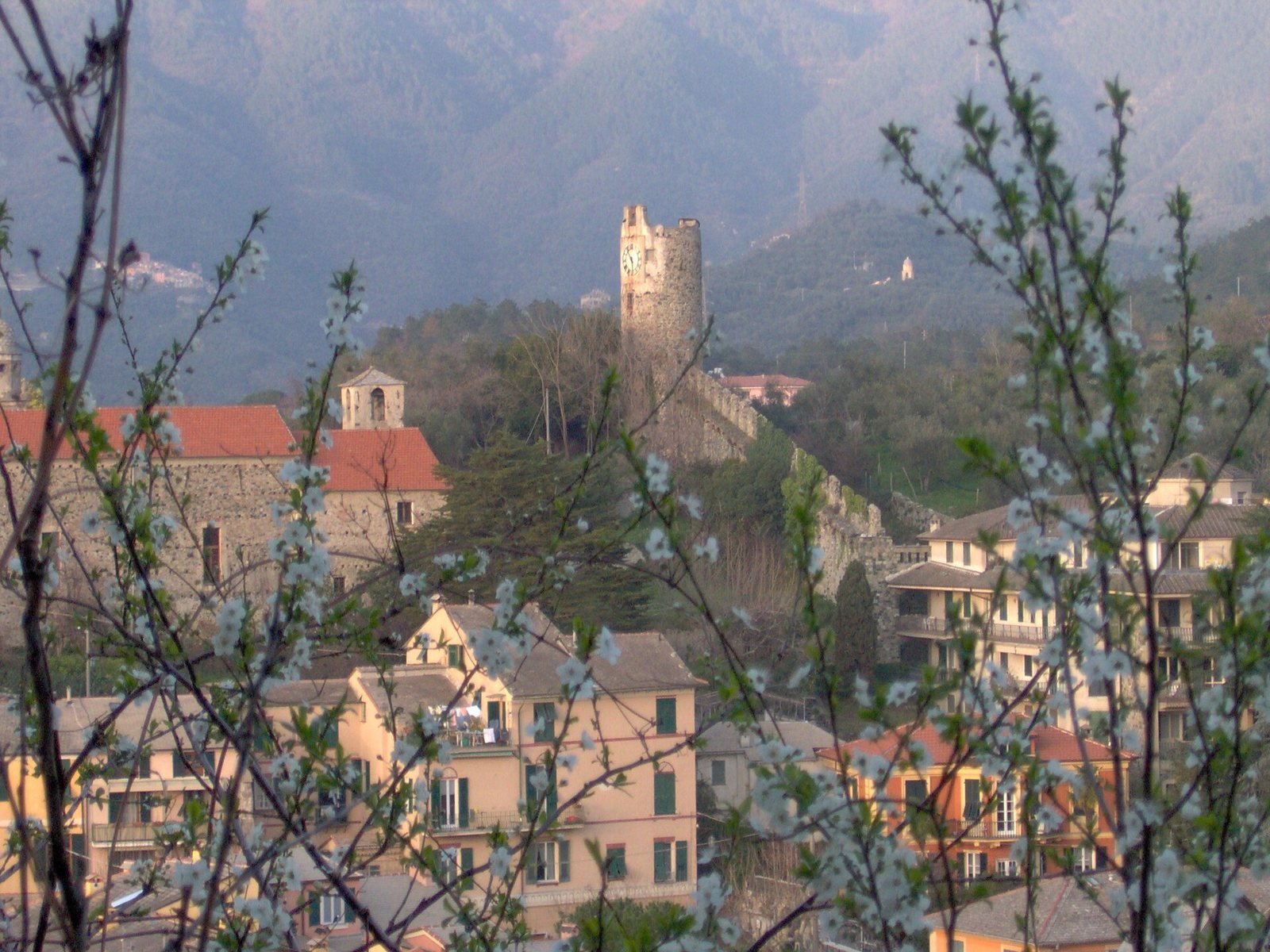
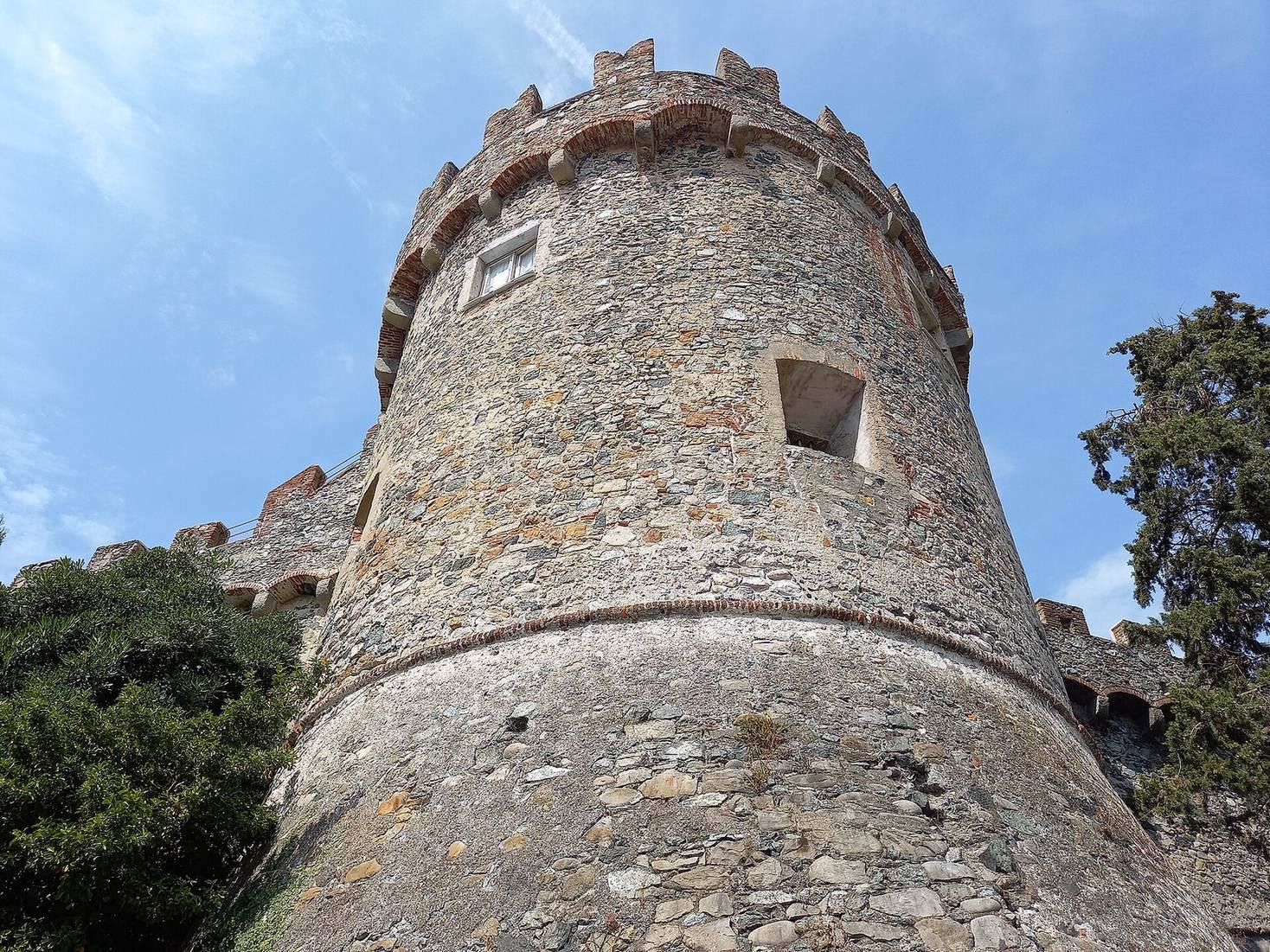
The castle forms part of Levanto’s ancient town walls and stands in the southern part of the historic center, between Salita San Giorgio and Salita al Castello. In good condition, it has four curtain walls arranged in a quadrilateral, with a round tower. A projecting wall-walk rests on brick arches and sandstone corbels. Its Ghibelline-style merlons, the raised sections between openings in a battlement, contrast with the Guelf-style merlons elsewhere on the structure. Guelf and Ghibelline were also names for rival political factions in medieval Italy. The tower has Ghibelline-style crenellation. Two levels of gunports on the south and east sides date to the sixteenth-century Genoese rebuilding; the tower’s three windows are later additions.
Sculptural reliefs
Two slate bas-reliefs attributed to the Genoese school depict religious subjects. The fifteenth-century relief shows the Annunciation, the angel Gabriel’s announcement to Mary that she will bear Jesus. The other, dating to the sixteenth century, portrays Saint George confronting a dragon.
Underground-passage tradition
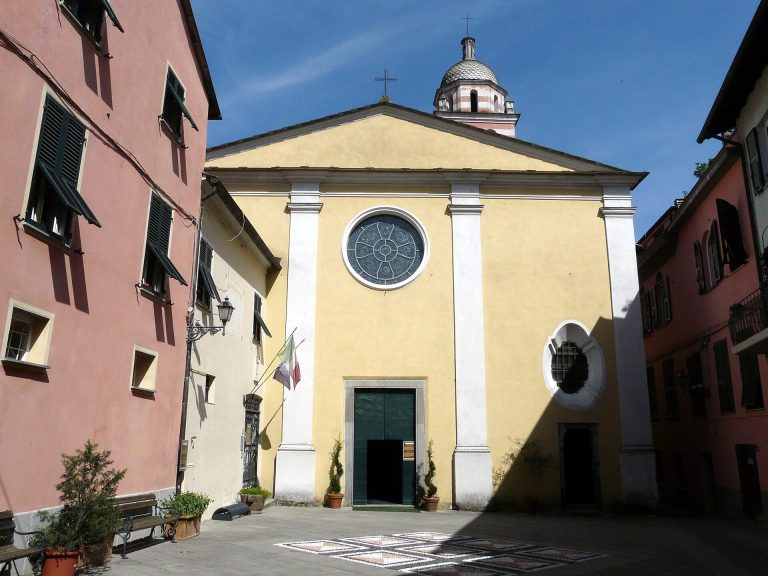
Popular tradition holds that underground passages beneath the castle extend toward the beach and toward the Church of the Santissima Annunziata and its convent complex.