Castle of Kisnána: A Medieval Fortress in Hungary
Visitor Information
Google Rating: 4.7
Popularity: Medium
Official Website: www.kisnana.hu
Country: Hungary
Civilization: Medieval European, Modern
Site type: Military
Remains: Castle
History
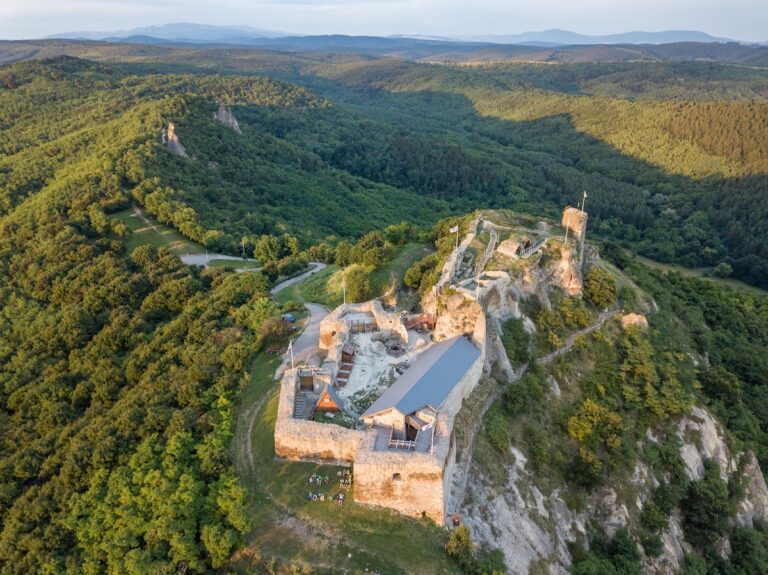
The Castle of Kisnána, situated near the village of Kisnána in Hungary, was built during the early medieval period by members of the Hungarian nobility. Its origins date back to the 11th or 12th century when the Aba clan, specifically the Csobánka family, established the fortress as a noble residence.
The earliest documented owner was Csobánka Pál. His allegiance shifted following the end of the Árpád dynasty in 1301, a period marked by political turmoil. After Pál opposed King Charles I, the property changed hands and was awarded to Kompolti Péter, a relative of the previous owner. Throughout the 14th and early 15th centuries, the castle remained in the possession of noble families, passing among the Kompolti and Domoszlay lineages. In 1415, King Sigismund confirmed the ownership of Kompolti László, solidifying the castle’s status as a noble estate.
By the middle of the 16th century, the castle came under the control of Móré László. During his tenure, the castle’s occupants launched aggressive raids and attacks against traveling merchants, provoking the expanding Ottoman forces in the region. Around 1543 to 1545, the Ottoman Turks seized the fortress, marking a significant shift in the castle’s fortunes. After this conquest, the castle was not repaired or reoccupied as a military stronghold.
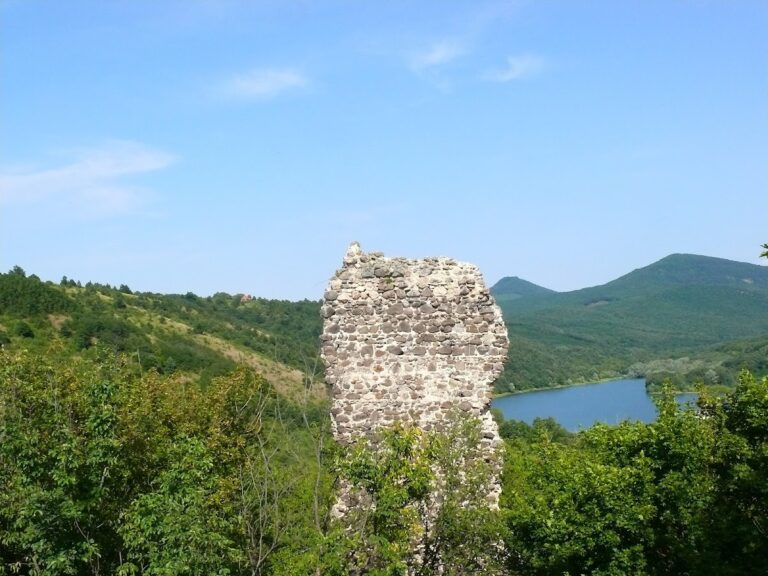
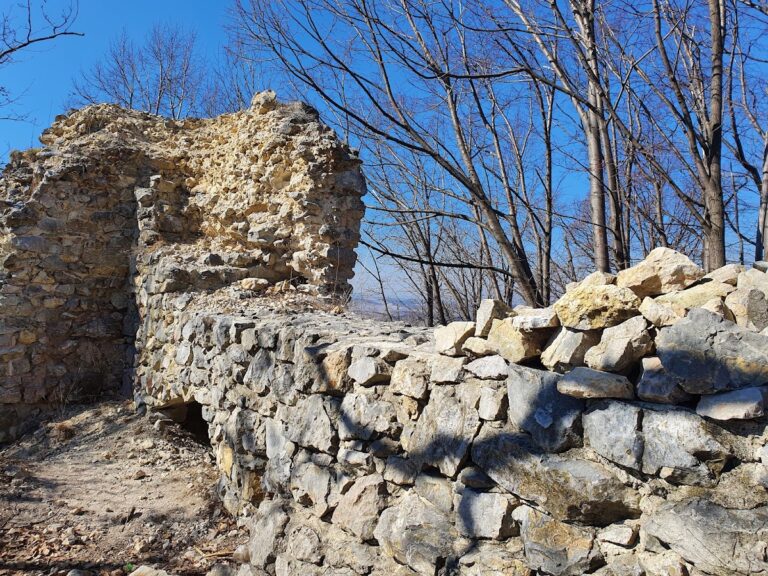
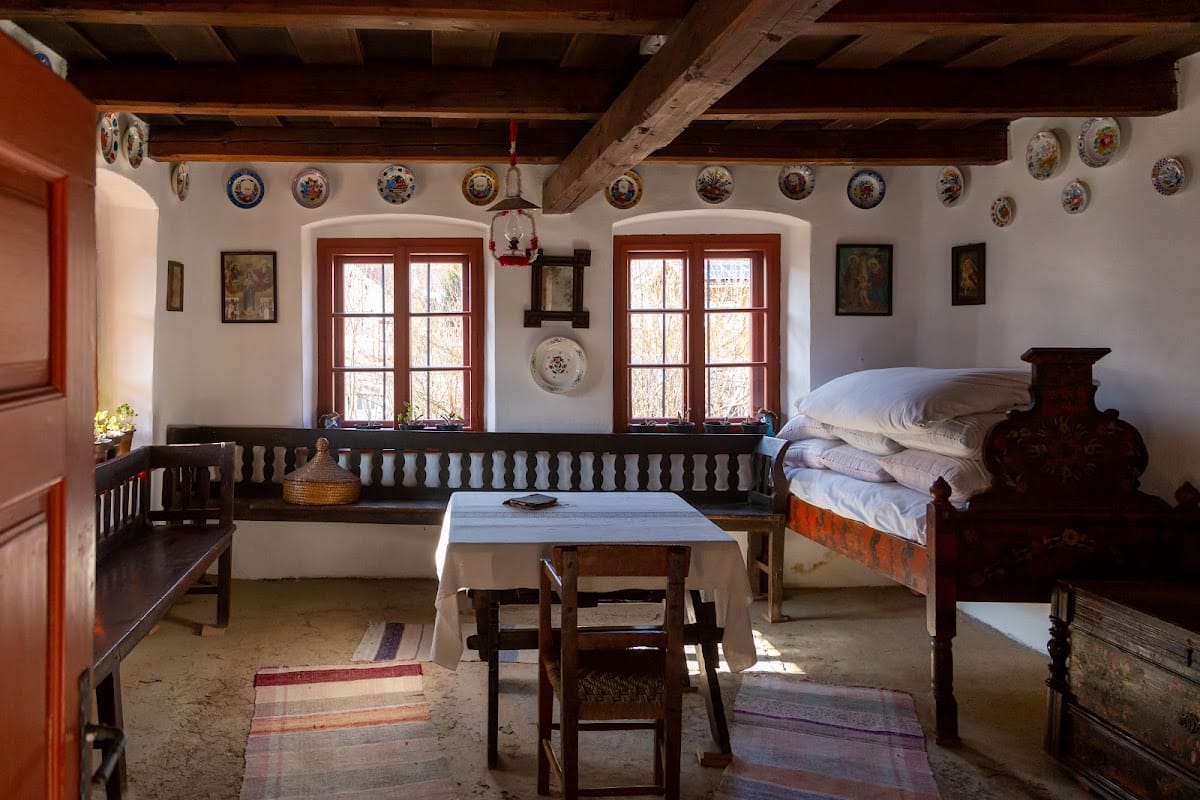
Following its abandonment after 1560, the fortress gradually fell into decay. Locals harvested stone from the ruins for construction materials over subsequent centuries. In the 20th century, renewed interest in the site led to archaeological efforts, particularly in the 1940s, when the interior of the castle’s Gothic chapel was excavated. The castle grounds also served a role in local youth training during that decade. A nearby traditional Slovak peasant house built in the late 19th century was restored in 1971 and converted into a small museum.
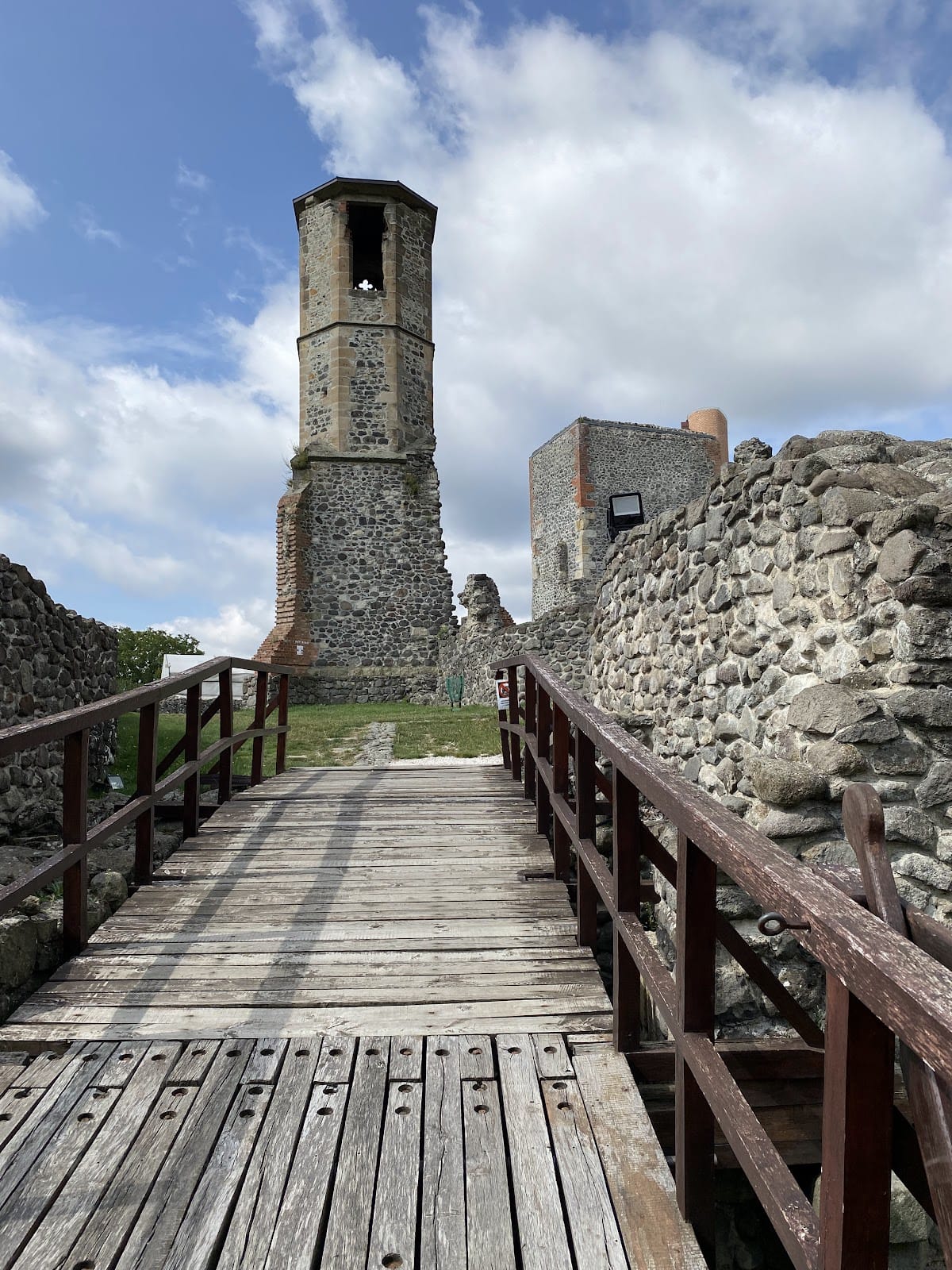
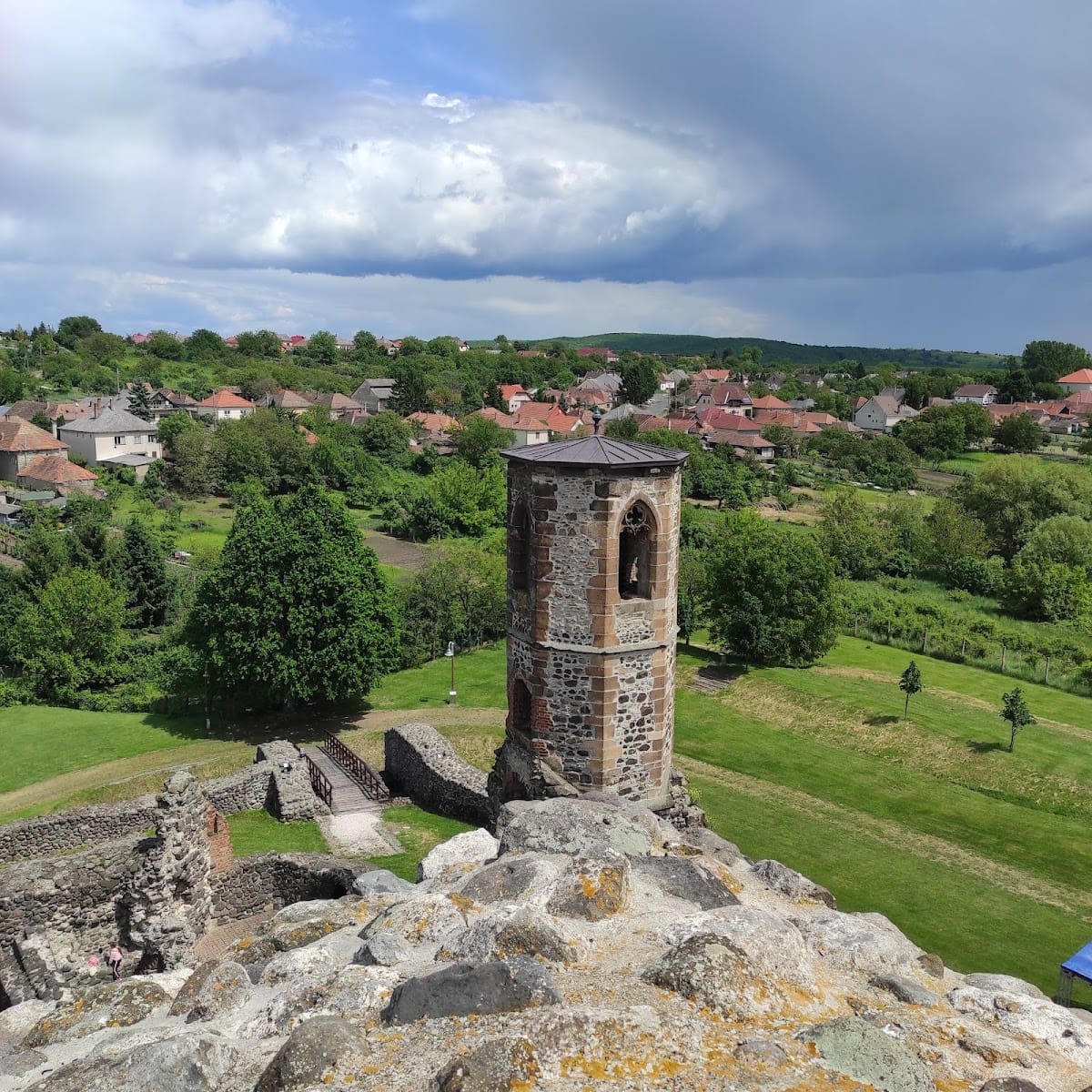
In the 2010s, a comprehensive restoration strengthened surviving walls and adapted parts of the structure for educational use. The Old Tower was transformed into exhibition spaces, and a viewing terrace was added atop it, emphasizing the castle’s enduring presence on the landscape.
Remains
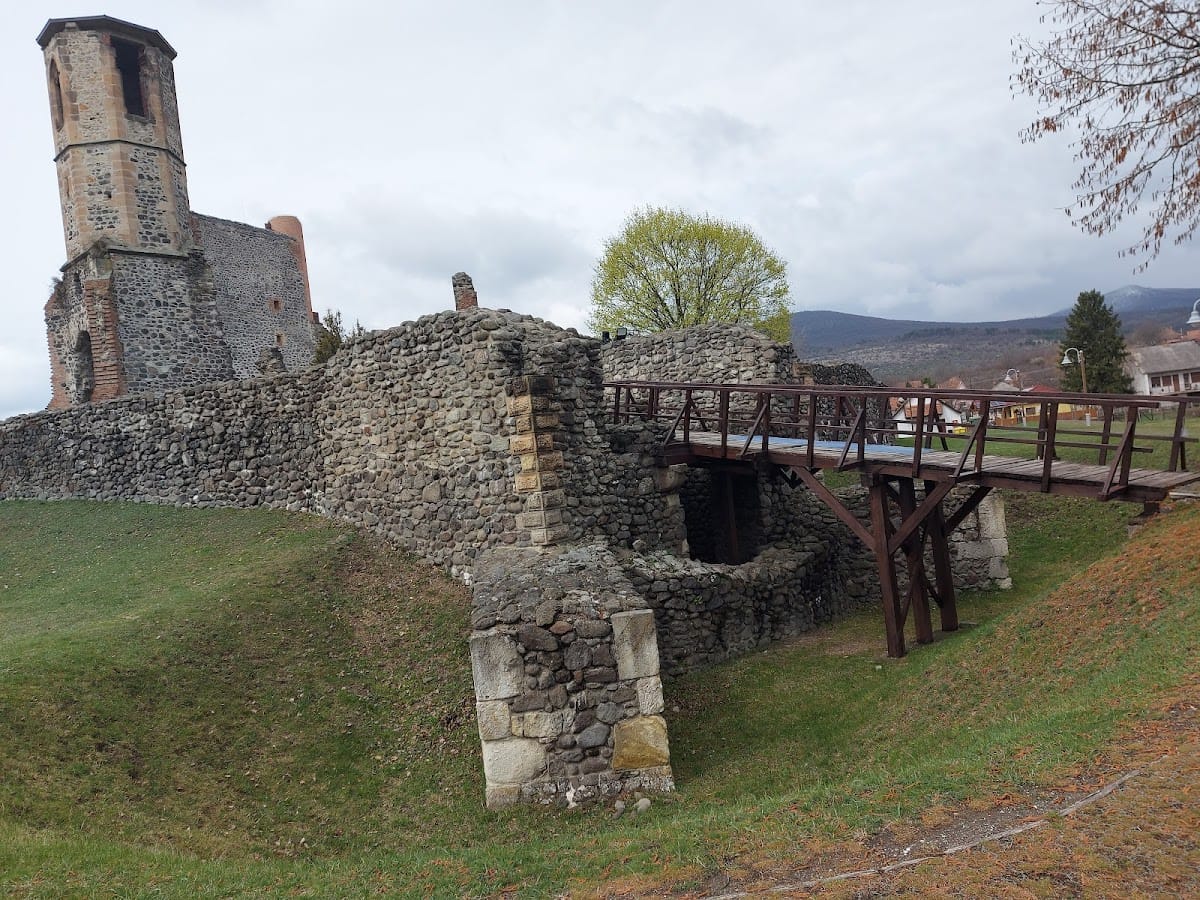
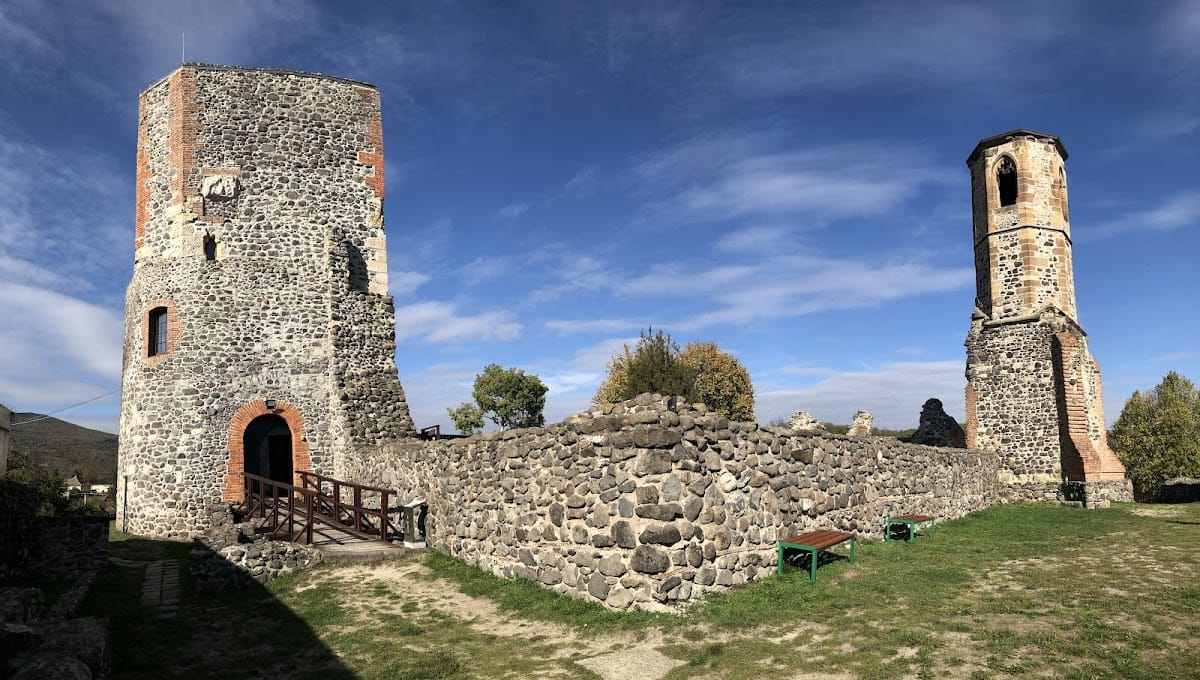
The Castle of Kisnána stands as a late medieval fortress constructed primarily during the 11th or 12th century. Its design reflects the era’s noble residences, incorporating defensive walls built shortly after the main fortress to reinforce its security. The outer wall enclosed the site, providing a protective barrier against potential attackers.
A notable feature within the castle complex is the Gothic chapel, whose interior was carefully excavated during the 1940s. This religious structure, typical of the late medieval period, adds insight into the spiritual life of the castle’s inhabitants. The chapel’s remains were preserved in situ, highlighting characteristic design elements of its Gothic style.
The main fortification’s surviving walls underwent substantial reinforcement in the early 21st century, ensuring structural stability. The Old Tower, a central component of the castle, was repurposed to house exhibition rooms, combining preservation with educational use. Above this tower, a terrace was constructed, offering views across the surrounding landscape, though this feature dates to recent restoration efforts.
Following the castle’s decline after Ottoman conquest and abandonment post-1560, local residents quarried portions of the ruins for building materials, contributing to the fragmentation of the site. Near the fortress’s base stands a restored traditional Slovak peasant house, built in the late 19th century and refurbished in the 1970s. This building serves as a museum space illustrating rural life typical of the region’s past.
Together, the castle remains and the adjacent peasant house offer tangible connections to the area’s medieval past and the cultural heritage of Kisnána’s inhabitants through the centuries.
Nearby sites