Castle of Hasznos: A Medieval Hungarian Fortress in the Mátra Mountains
Visitor Information
Google Rating: 4.4
Popularity: Low
Country: Hungary
Civilization: Medieval European
Site type: Military
Remains: Castle
History
The Castle of Hasznos, located in the municipality of Pásztó in present-day Hungary, was built by members of the medieval Hungarian nobility during the early 14th century. Its construction took place between 1300 and 1320 under Domokos of the Rátót family, a powerful noble clan whose member held the esteemed office of palatine (nádor), a high-ranking official in the kingdom.
First appearing in historical records in 1304, and later mentioned in 1329 with the title “Castellanus de Hasnos” (meaning the governor or custodian of Hasznos), the fortress served an important military role. It was one of three castles protecting the strategic Kövecses-patak valley, a key route through the Mátra Mountains. Alongside Ágasvár and Óvár castles, it helped guard this military passage, contributing to regional defense.
Originally, the fortress belonged to the Hasznosi family, who took their name from the site and also controlled the nearby settlements of Tarnak and Pásztó. This family line eventually became extinct by the time of the Battle of Mohács in 1526, after which their properties passed through female descendants and partly reverted to the royal treasury.
The castle’s history includes notable visits from influential figures such as Vencel and King Charles Robert, who actively sought alliances with the Rátót clan, reflecting the fortress’s political significance during the early 14th century. By the middle of the 15th century, ownership had shifted to the Pásztói family, who maintained the fortified stronghold and its adjacent village.
In the mid-16th century, the changing tide of regional power was marked by the Ottoman Empire’s advance. In 1552, as the Ottomans mounted a campaign toward nearby Eger Castle, Hasznos village paid tribute to Eger, indicating its submission. That same year, Ottoman forces under Ali Pasha occupied the fortress without opposition, reflecting a strategic withdrawal or lack of readiness by its defenders.
During the subsequent Turkish occupation, the castle’s walls were deliberately dismantled, weakening its defensive capabilities. However, following the eventual recapture by Christian forces, efforts were made to strengthen the fortifications once again. Despite these changes, the fortress managed to remain structurally sound through the 15th century, even as similar nearby castles fell into ruin earlier.
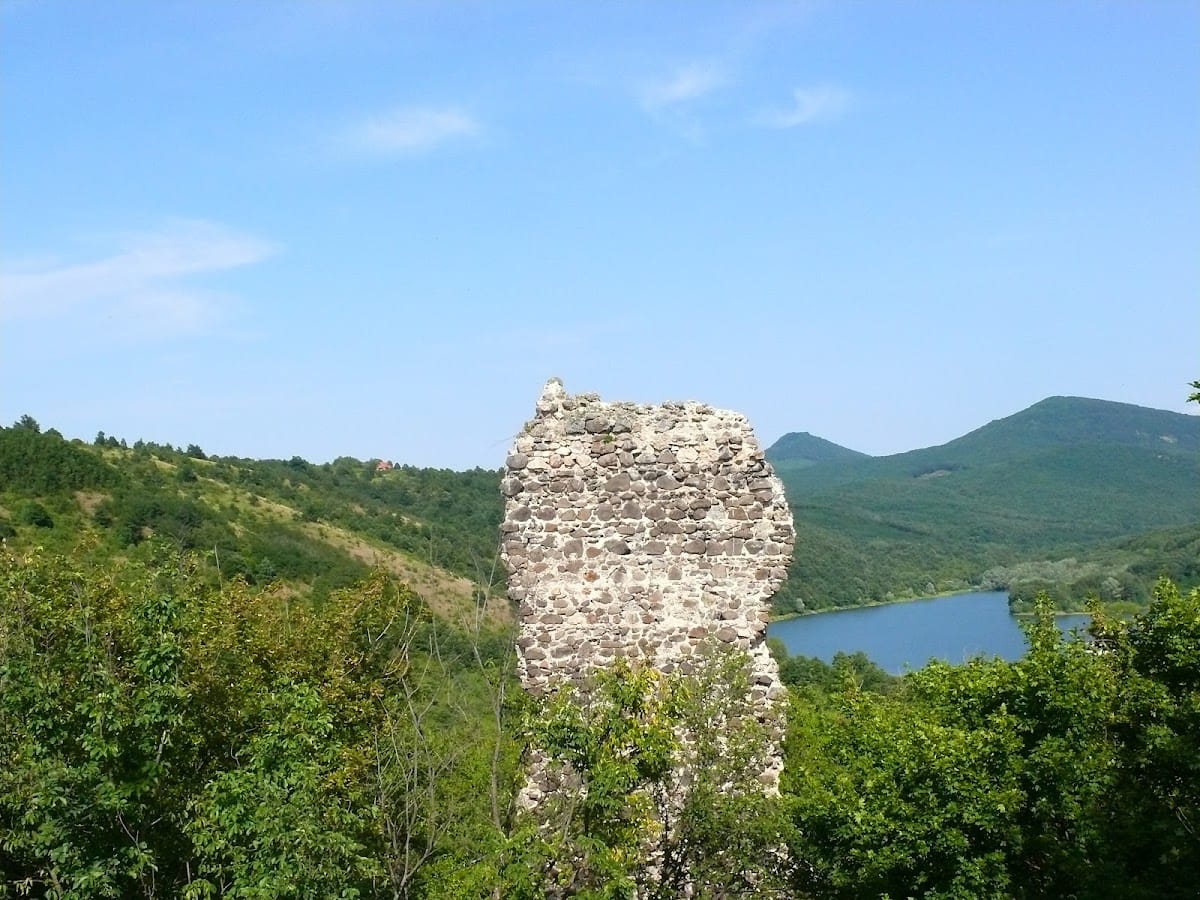
In the centuries that followed, the castle changed ownership multiple times. After 1720, the Koháry, Fáy, and Szalay families acquired the lands, and post-1848 it came under the possession of the Almássy, Platthy, Zay, Orczy, and Gosztonyi families. By the 18th century, the fortress had fallen into ruin, exacerbated by the local population repurposing its stones for building materials. Today, only two taller fragments of the original walls remain visible among the vegetation.
Remains
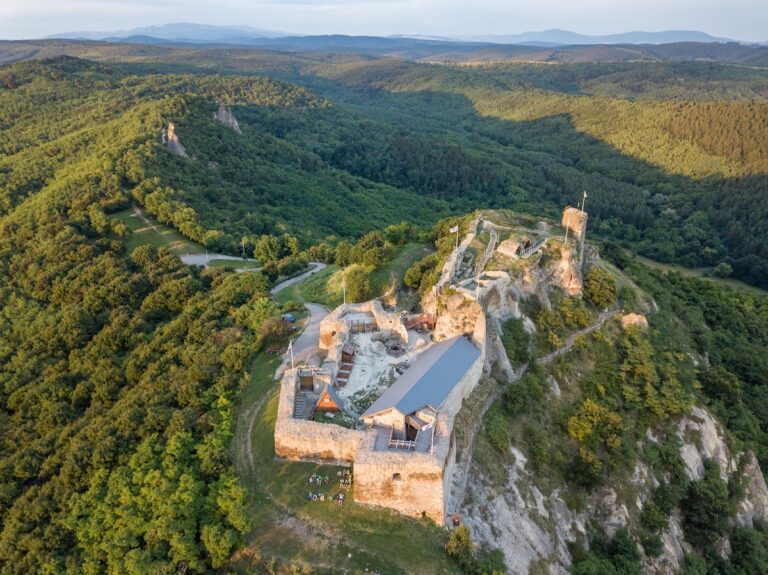
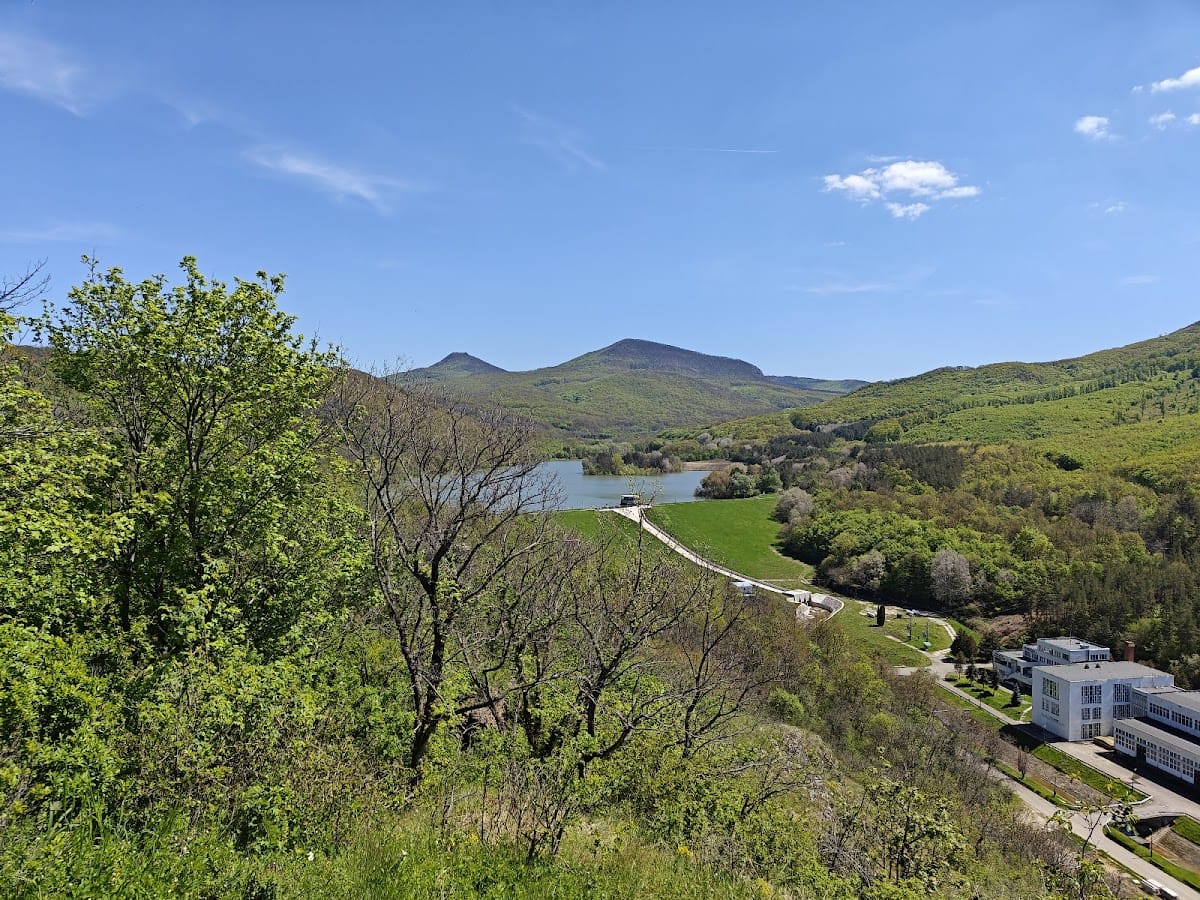
The ruins of the Castle of Hasznos occupy a rocky hill rising 383 meters above the nearby Hasznosi reservoir, nestled within the Mátra Mountains. The fortress was modest in size, covering an area of roughly three hectares, and divided into two distinct sections: a lower and an upper castle. These two parts were separated by a dry moat, a defensive trench without water, serving to increase the castle’s protection.
Architectural remains include portions of what once was the palace building, as well as the foundational elements of a square tower, which would have served as a lookout and stronghold within the complex. The construction primarily utilized local stone material, shaped and arranged to form the castle’s defensive walls and internal structures.
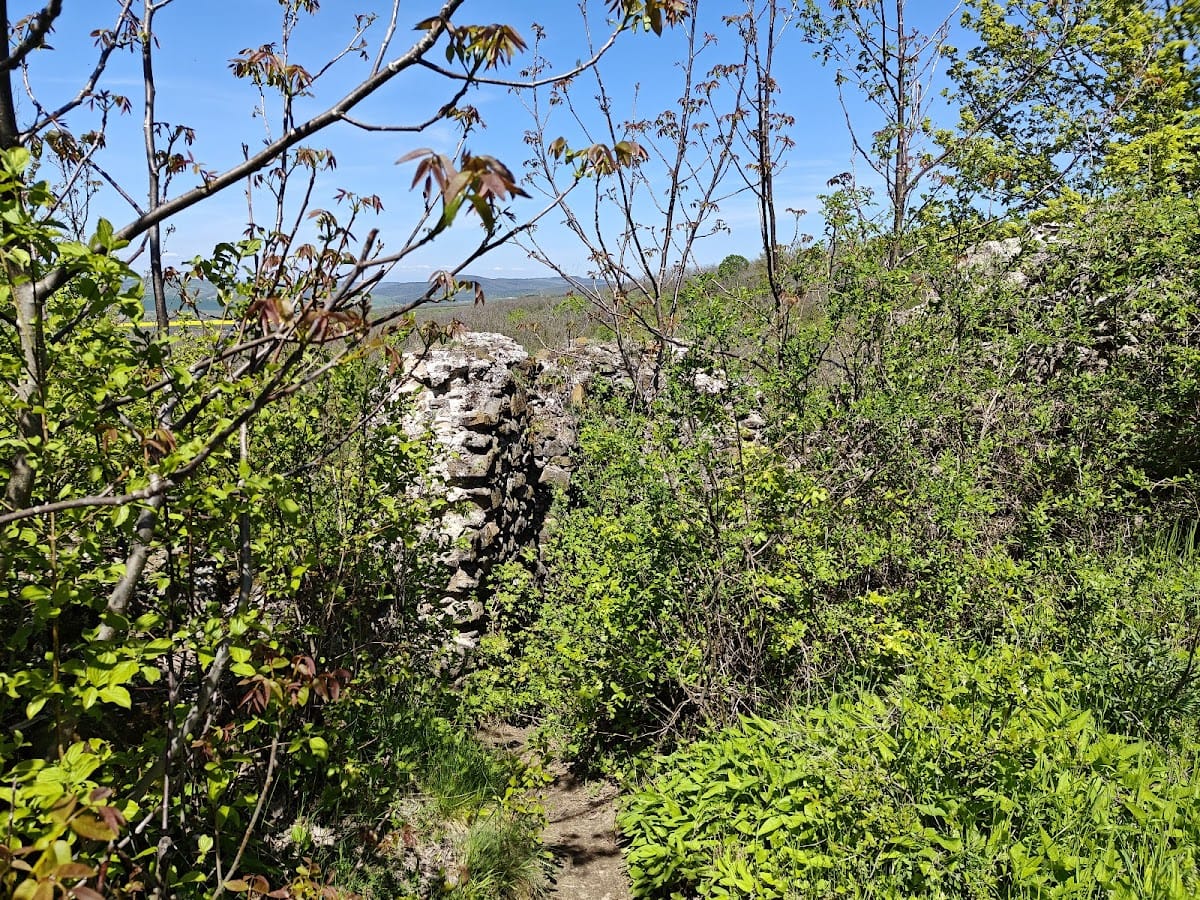
Over time, the site became enveloped by diverse vegetation due to its warm, sheltered slopes, and today much of the ruins are concealed by these natural overgrowths. Notably, only two taller fragments of the walls, rising above the tree line, clearly identify the location of the fortress.
The eastern side of the hill is distinguished by a light-colored layer of diatomaceous earth—a sediment composed largely of fossilized remains of microscopic algae. This natural deposit has preserved a variety of paleontological finds, including fossils of turtles, deer, and several small mammals such as shrews and dormice. Remarkably, a new prehistoric hamster species was identified here, given the scientific name Democricetodon hasznosensis, linking it directly to this location.
While the castle’s fortifications were at times dismantled or altered during periods of occupation and reconquest, much of the original footprint remains discernible. The site’s rocky terrain, combined with its isolated position, contributed to its long-lasting preservation relative to neighboring castles, whose ruins declined earlier. These remnants offer insight into the defensive architecture and regional military history of medieval Hungary.