Castle of Faro: A Portuguese Defensive Stronghold and Former Brewery
Site at a Glance
- Popularity
- Medium
- Country
- Portugal
- Primary era
- Medieval
- Eras represented
- Medieval, Early Modern, Modern
- Civilizations
- Habsburg, Portuguese, Umayyad
- Site type
- Military
- Remains
- Castle
On this page6 sections
History
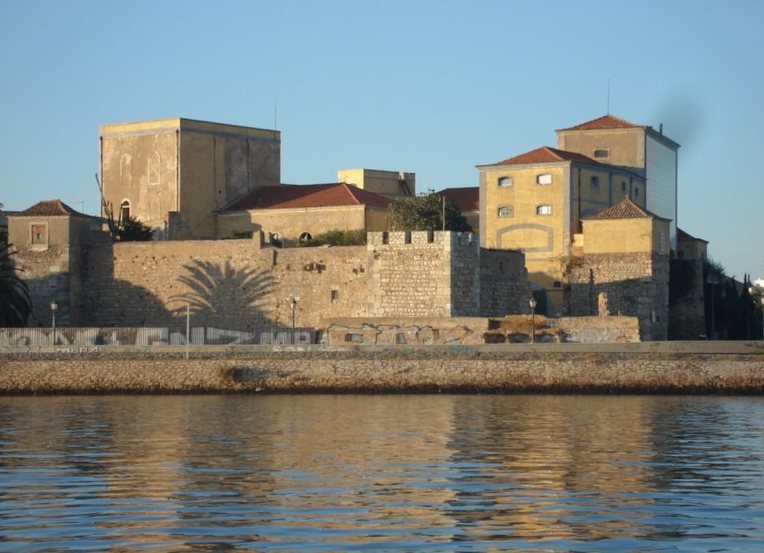
The Castle of Faro is a fortified stronghold in Faro, Portugal, probably built from 1249 onward over a Muslim citadel during the Reconquista, the long expansion of Christian kingdoms into parts of the Iberian Peninsula previously under Muslim rule. It served as the last defensive stronghold of Faro’s Old City, Vila-Adentro.
Walls and medieval stronghold
Faro’s defensive walls are thought to predate the Roman conquest of the Iberian Peninsula. They were rebuilt centuries later during the Muslim expansion into the peninsula. From 1249 onward, the castle was probably constructed over the Muslim fortified citadel.
Early modern defenses
In 1596, an invasion led by Robert Devereux, 2nd Earl of Essex, an English nobleman and military commander, badly damaged Faro’s defenses. Repairs were followed by substantial changes to adapt the castle for artillery. During Portugal’s Habsburg period, which began in 1580 under a European ruling dynasty, work started in 1621 on houses for the captain-major, a senior military officer, and the castle governor. In 1644, during the Portuguese Restoration War, the conflict that ended Habsburg rule and restored Portugal’s independence, the castle and city walls were remodeled for contemporary artillery.
Military and industrial reuse
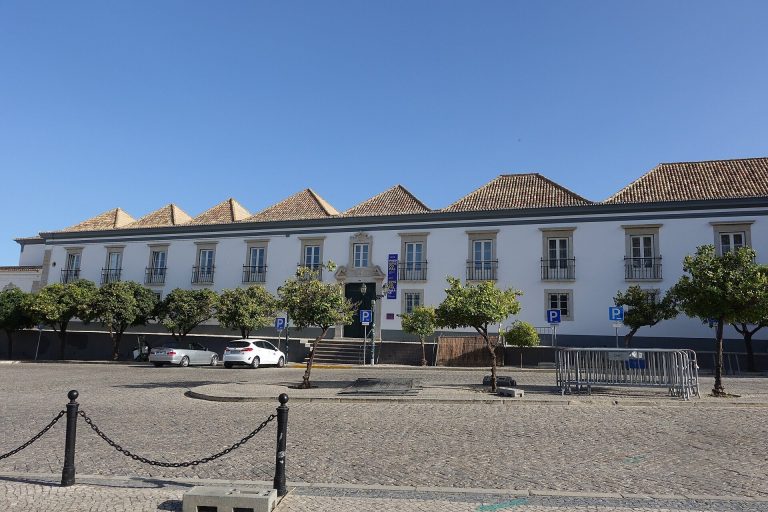
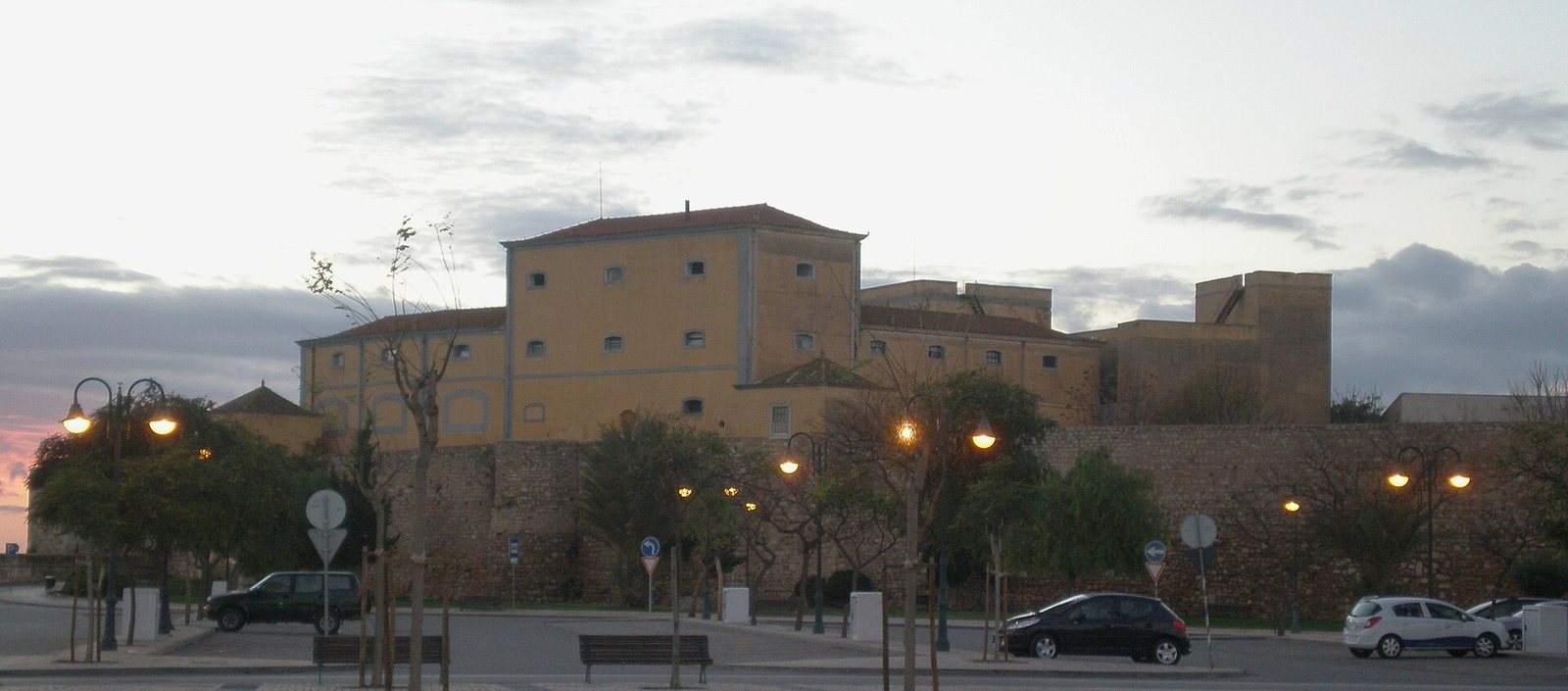
In the 18th century, the castle’s former service buildings became barracks for the Kingdom of Algarve’s artillery regiment, a military unit equipped with artillery. After its military use ended, the complex was rented to a private company in the late 19th century and converted into an alcohol factory. A malt and beer producer established a factory there in 1931, and alterations between 1935 and 1940 raised the building’s height. Faro City Council acquired the part adapted for factory use in 1999, while the Portuguese state is listed as the owner. The castle is designated a National Monument, Portugal’s high-level heritage category.
Remains
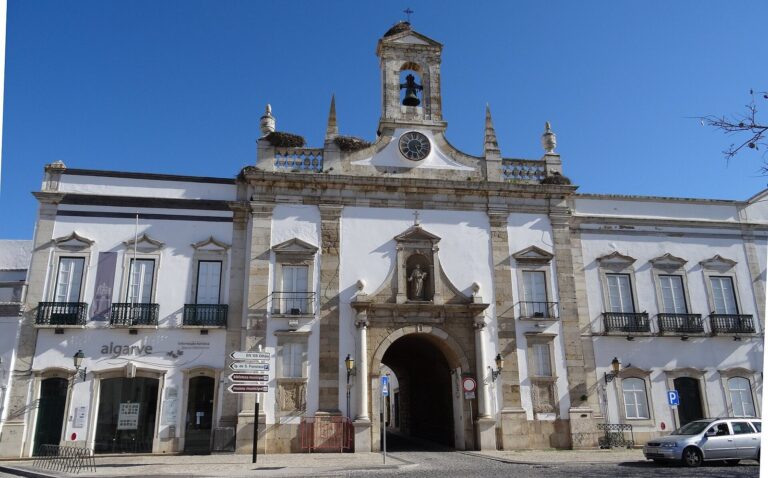
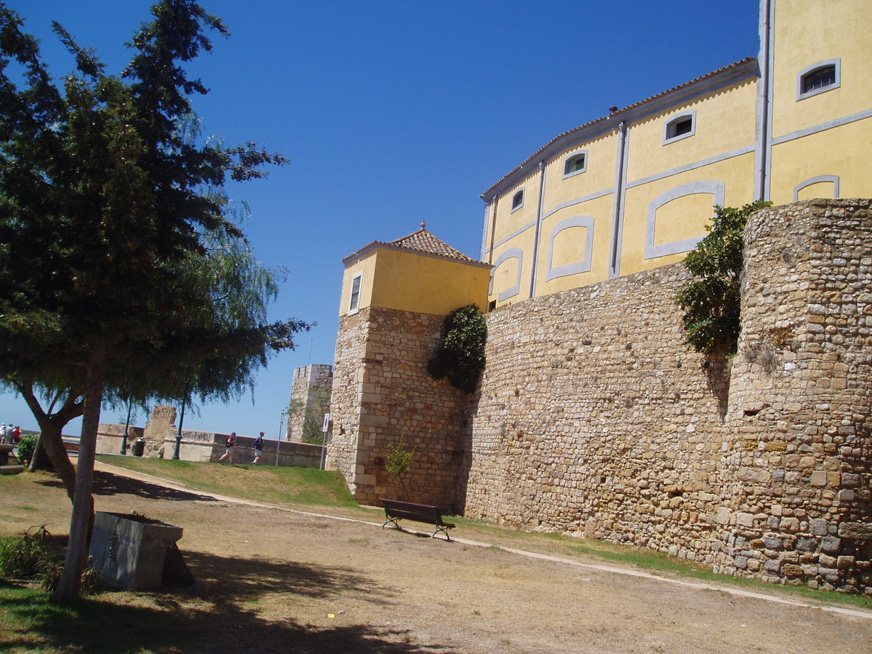
The castle remains are incorporated into Faro’s city walls, opposite São Francisco Square. Three gates formed part of its defenses: the Sea Gate (Porta do Mar) and the Relief Gate (Porta do Socorro), both connected to the sea, and a third opening toward Vila-Adentro. A triangular outer fortification protected a section of wall between defensive structures.
Buildings and factory alterations
The complex included houses for the captain-major and castle governor, along with an inner barracks for troops. Factory adaptations raised the building’s height between 1935 and 1940, altering its form for industrial use.