Castle of Badon: A Medieval Fortress for Monitoring Ebro River Traffic

Site at a Glance
- Rating
- 4.9
- Popularity
- Very Low
- Country
- Spain
- Primary era
- Medieval
- Eras represented
- Medieval, Modern
- Civilizations
- Crown of Aragon
- Site type
- Military
- Remains
- Castle
History
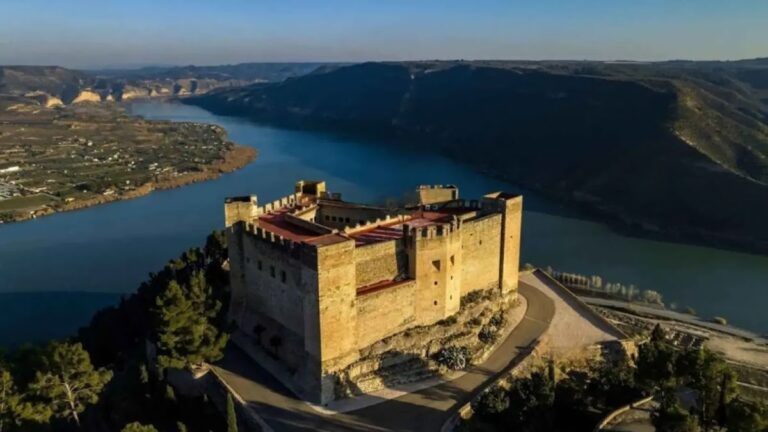
Castle of Badon is a fourteenth-century fortress in Fayón, Spain, built in the medieval period. Positioned above the Ebro, it formed part of the defenses used to monitor river traffic, particularly grain shipments traveling toward Catalonia.
Fayón had previously been reconquered by Alfonso I the Battler, a medieval king of Aragon and Navarre whose reign included territorial expansion during the Christian reconquest of the Iberian Peninsula. He granted the area as a royal honor, a medieval grant of land or jurisdiction made by a monarch, to Pedro de Biota, a nobleman of the period.
The castle later appears to have belonged to the Moncada family. Between the twelfth and fourteenth centuries, the family rebuilt the fortress to watch movement along the Ebro, with particular attention to grain transported toward Catalonia. The rebuilding forms the main medieval phase associated with the surviving castle.
In the seventeenth century, Castle of Badon belonged to the Marquis of Aytona, the holder of a Spanish hereditary noble title. The fortress was modified during the Carlist Wars, nineteenth-century Spanish civil wars fought largely over the succession to the Spanish throne and competing political visions for the country. Rifle loopholes were opened in the castle during that century. On 17 April 2006, the site received protection as an Archaeological Zone within Aragon’s category of Assets of Cultural Interest, with the designation published on 22 May 2006.
Remains
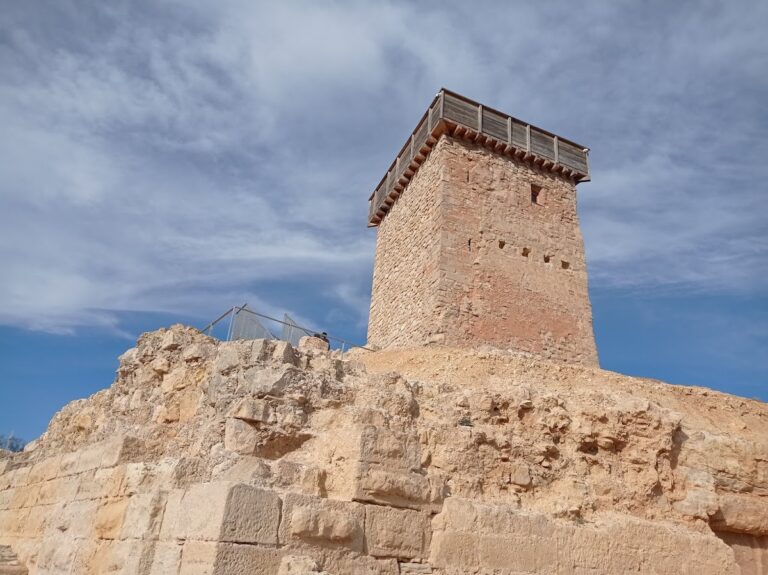
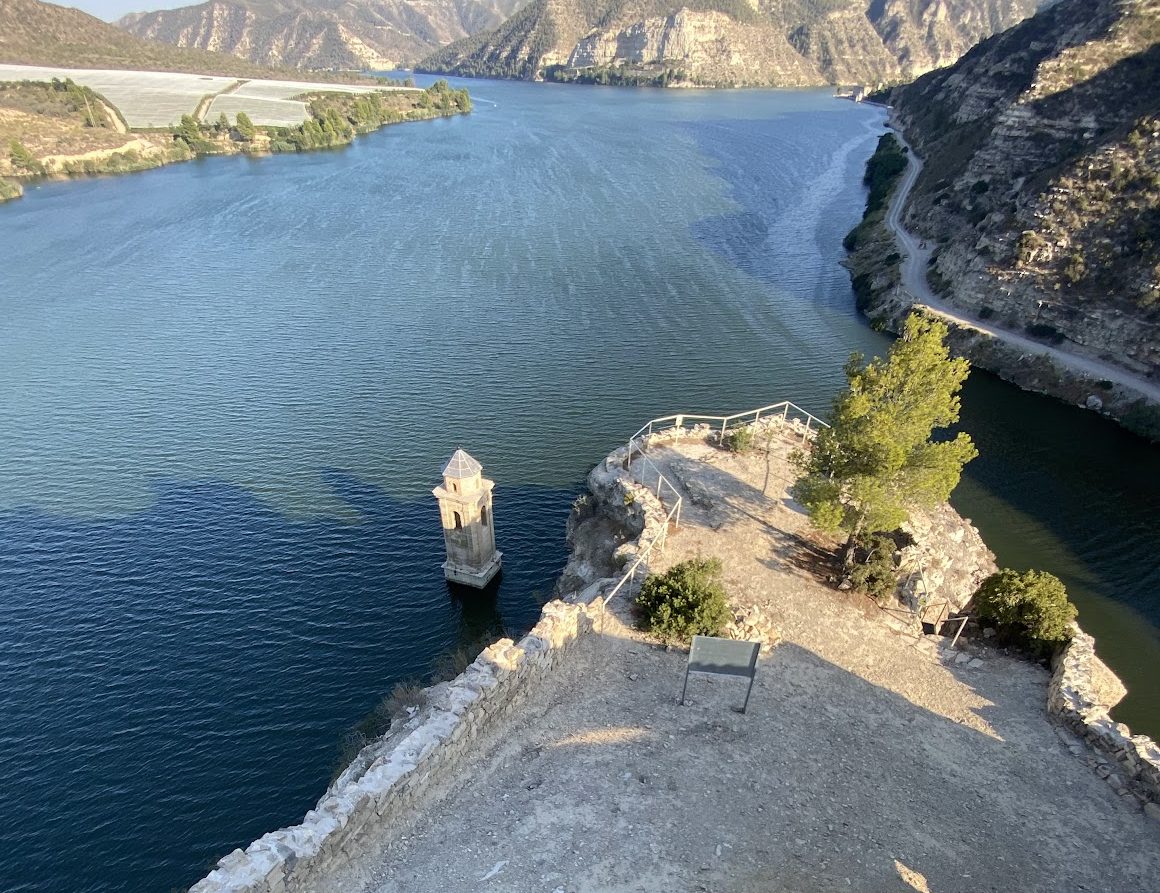
The small castle occupies a rocky outcrop on a hill within the Riba-roja Reservoir, in the municipality of Fayón in Zaragoza Province, Aragon. Its surviving layout consists of a rectangular-plan tower and a walled enclosure around it. The structures are built from notably irregular rubble masonry, giving the remains a rough and uneven construction character.
The tower survives principally at its base, while the enclosing wall preserves the outline of the fortified compound around it. Numerous nineteenth-century rifle loopholes remain in the structures, reflecting the castle’s adaptation during the Carlist Wars and its continued defensive use in that period.
Nearby sites