Castle of Alarcón: A Medieval Fortress in Spain
Site at a Glance
- Rating
- 4.5
- Popularity
- Very Low
- Country
- Spain
- Primary era
- Medieval
- External website
- Open
- Eras represented
- Medieval
- Civilizations
- Crown of Castile, Taifa Kingdoms, Taifa of Toledo, Umayyad
- Site type
- Military
- Remains
- Castle
On this page10 sections
History
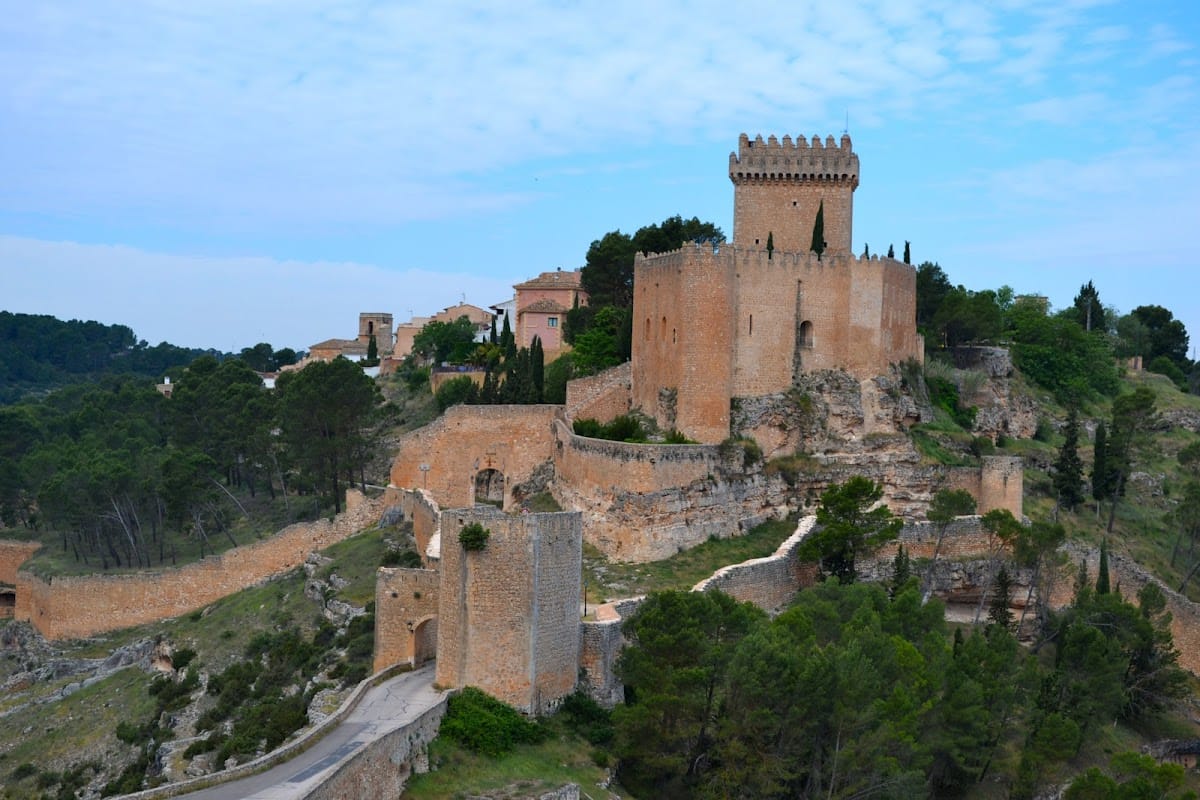
The Castle of Alarcón is an Arab-origin fortress in Spain, forming part of the fortified town of Alarcón in Cuenca. It first belonged to the Emirate of Córdoba and later passed under the authority of the Taifa of Toledo, one of the Muslim-ruled successor states that emerged after the Caliphate of Córdoba fragmented. During Muslim rule, the castle served as a defensive stronghold amid internal conflicts.
Castilian conquest and expansion
In 1184, Fernán Martínez de Ceballos, a military captain serving Alfonso VIII of Castile, besieged the fortress for nine months before capturing it for the king. In recognition of the victory, he received the privilege of adopting the town’s name as his surname. He consequently became known as Martínez de Alarcón, establishing a new lineage.
Successive Castilian kings expanded and strengthened the castle. In 1186, Alarcón received its own fuero, a charter defining the town’s privileges, rights, and legal arrangements. The lordship was also assigned authority over an extensive surrounding territory described as containing 63 villages, among them Albacete, La Roda, Villarrobledo, Castillo de Garcimuñoz, and Belmonte.
In 1194, Alfonso VIII granted the castle and associated territorial and toll rights to the Military Order of Santiago, a Christian religious-military order involved in warfare and government during the Iberian Reconquista. The arrangement included Alarcón Castle, parts of the toll revenues of Alarcón and Alconchel, Villasila and Villamelendro, the hamlet of Las Gascas, and other properties. A further agreement issued in Toledo on November 24 of the same year exchanged the castle and other rights for specified toll revenues, villages, and a share of Alarcón’s revenues.
Alarcón’s council sent its own troops to support the king’s army at the Battle of Las Navas de Tolosa in 1212. The battle was a major Christian victory in the Iberian Peninsula and formed part of the long conflict known as the Reconquista.
Noble lordships and contested possession
Ferdinand IV of Castile granted the lordship of Alarcón, including the castle, to Juan Manuel, Prince of Villena, provisionally in 1297 and definitively on March 23, 1305. Juan Manuel wrote some of his literary works at Alarcón. After his death, the lordship passed to his son Fernando Manuel de Villena and then to his granddaughter Blanca.
Peter I of Castile later recovered Alarcón and returned it to the royal patrimony. Henry II subsequently granted it to Alfonso I of Aragon, whom he made Marquis of Villena in 1372. Henry III revoked that grant in 1395 and restored Alarcón to the Crown.
On May 23, 1446, Alarcón was granted to Juan Pacheco, Marquis of Villena. Juan Pacheco and his son Diego López Pacheco supported Joanna of Castile, known as Joanna la Beltraneja, against Queen Isabella and Ferdinand II. During the conflict, they retained Alarcón, Belmonte, Castillo de Garcimuñoz, and the Marquisate of Villena.
Decline, preservation, and reuse
After the Middle Ages, the castle was abandoned and deteriorated. In 1712, when it belonged to the Marquis of Aguilar, master builders warned that urgent repairs were needed to prevent its collapse.
In 1720, Alejandro de Alarcón and Duchess Julia de Alarcón governed the castle and sheltered many refugees during conflicts in the country. They later came to be regarded as regional heroes.
On June 5, 1863, José María Fernández de Velasco, 15th Duke of Frías, sold the castle and “four or five little towers more” to Rafael Lázaro Álvarez de Torrijos for 20,000 reales. In 1963, Manuel Fraga Iribarne, Spain’s Minister of Information and Tourism, expropriated the property from the Álvarez Torrijos Torres family. Following rehabilitation, the castle became the Parador Nacional Marqués de Villena, a parador hotel within Spain’s state tourism network, and opened to the public in March 1966.
The castle was designated a Spanish property of cultural interest under the official name Parador de Alarcón on February 28, 1992, with reference number RI-51-0007184.
Remains
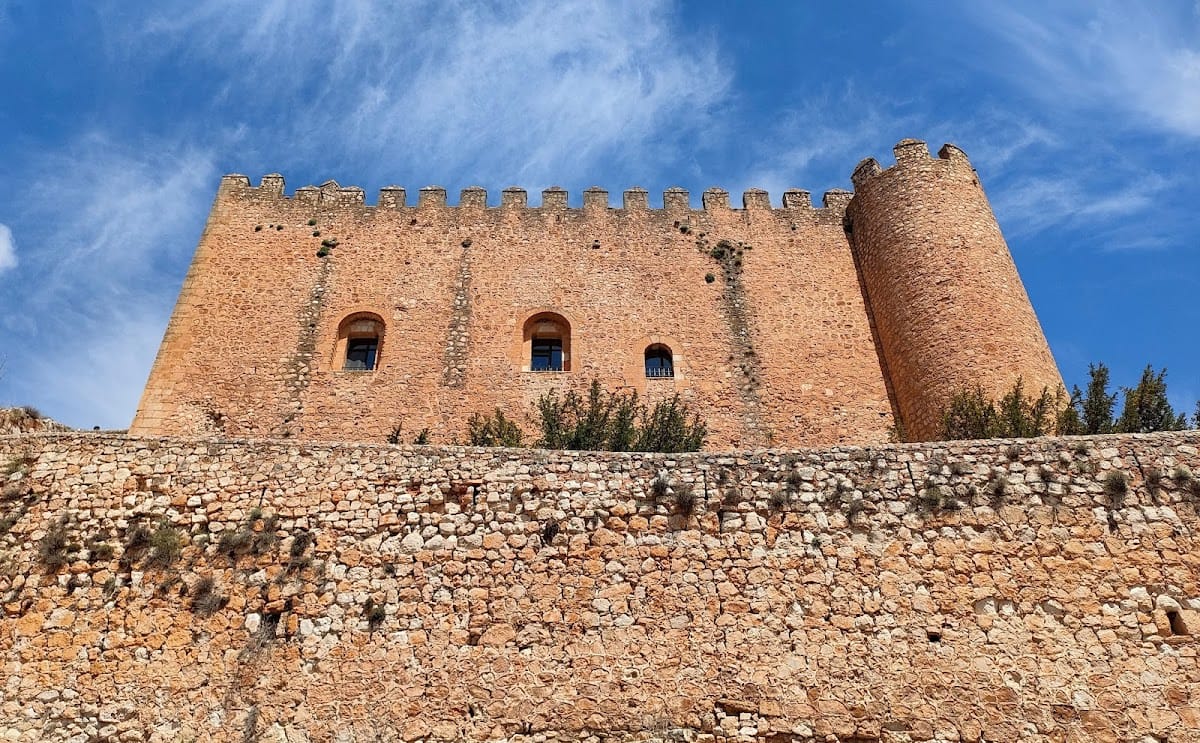
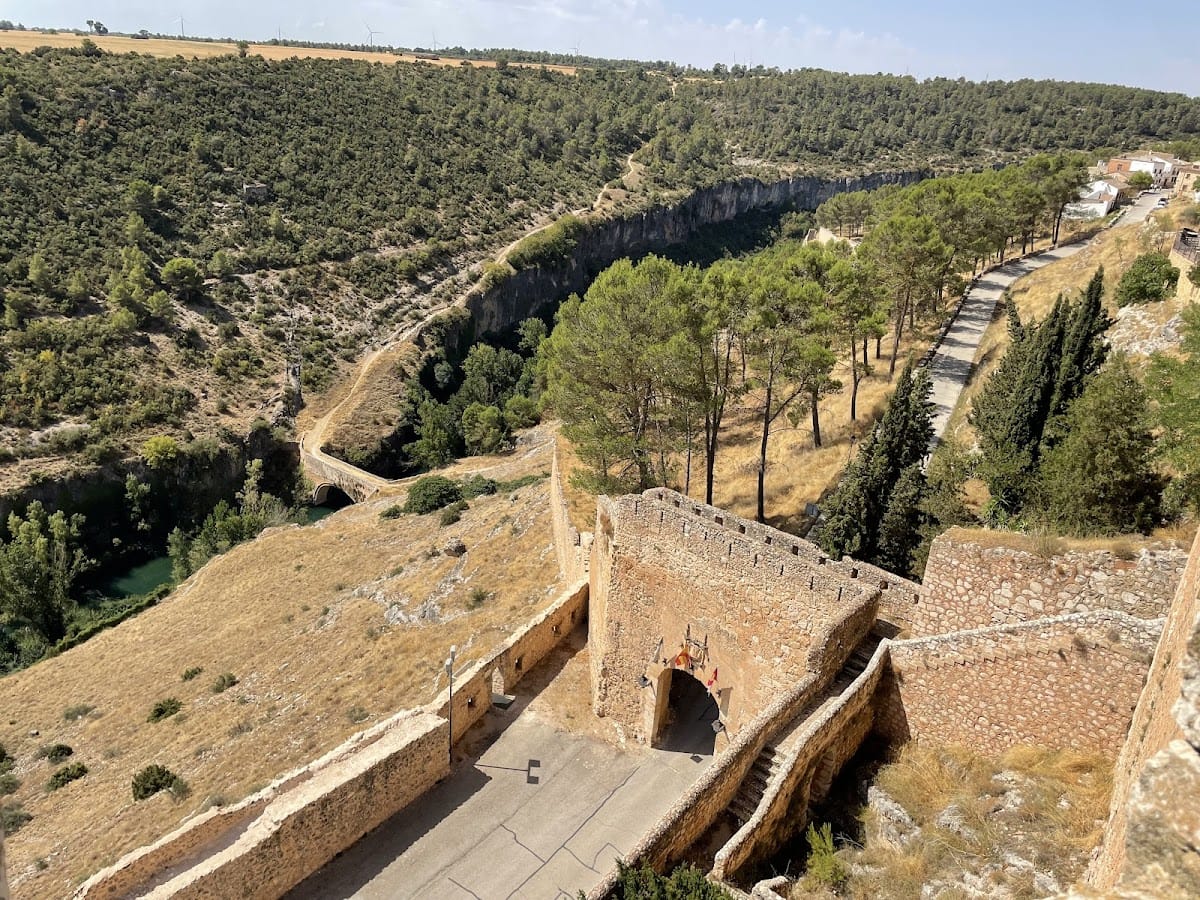
The Castle of Alarcón forms part of the wider fortifications surrounding the town. The fortress consists of a walled enclosure containing the population center and the castle proper, together with five separate exterior towers positioned at strategic points. Stone blocks joined with mortar form the surrounding wall.
Castle towers
Torre de Homenaje
The Torre de Homenaje, or keep, is one of the identified components of the castle complex. It belongs to the fortified group that includes the castle proper and the surrounding defensive structures.
Torre Alarconcillo
The Torre Alarconcillo is another named tower within the Castle of Alarcón. It forms part of the complex’s system of towers placed around the fortified enclosure.
Torre del Campo
The Torre del Campo is also identified as a component of the castle complex. Together with the keep and Torre Alarconcillo, it represents the named tower elements of the surviving fortress.
Surrounding wall
The enclosing wall is built from stone blocks set with mortar. A local legend connects dark red and black spots visible in the mortar to the killing of an unwanted suitor who allegedly tried to murder the castle’s lord and abduct his sister. According to the tradition, servants killed the stranger, and his body was mixed into the mortar while construction was underway. The legend interprets the colored spots as traces of blood.