Castle Kynžvart: A Neoclassical Metternich Residence in Czechia


Site at a Glance
- Rating
- 4.6
- Popularity
- Medium
- Country
- Czechia
- Primary era
- Modern
- External website
- Open
- Eras represented
- Early Modern, Modern
- Civilizations
- Habsburg, Holy Roman Empire, Kingdom of Bohemia
- Site type
- Domestic
- Remains
- Castle
On this page8 sections
History
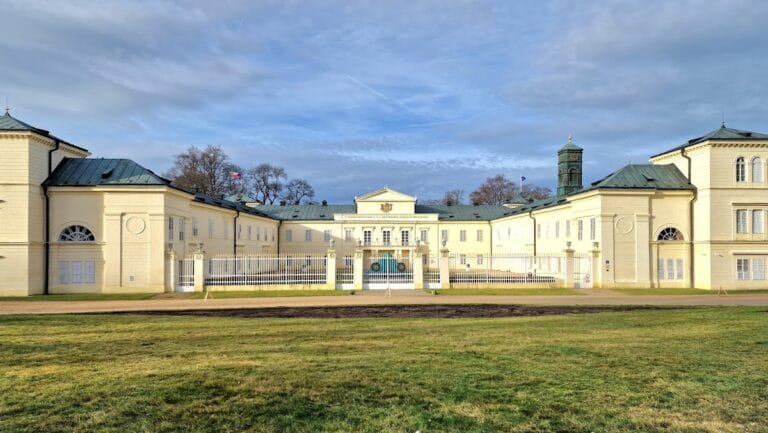
Castle Kynžvart is a historic château near Lázně Kynžvart in Czechia, remodelled in the Neoclassical style with Empire-style elements during the nineteenth century. Its history reaches back to a fortified site mentioned in 972, and the residence later became closely associated with Klemens Wenzel Lothar von Metternich, the Austrian statesman and chancellor who shaped European diplomacy in the early nineteenth century.
Medieval Fortification and Lordship
The first written reference to a fortification at Kynžvart dates to 972, when Emperor Otto I transferred it and an extensive surrounding territory to Wolfgang, Bishop of Regensburg. In the thirteenth century, King Přemysl Ottokar II rebuilt a castle known as Kunigeswart. The lordship changed hands repeatedly in the following centuries. Heinrich IX of Plauen bought it from the Landgraves Johann and Albrecht of Leuchtenberg in 1387. By 1392, it had been pledged to Boresch of Riesenburg and was later re-pledged to the Hückler brothers of Cheb. From about 1400, it returned to Heinrich IX of Plauen and remained with his descendants.
The Hussite Wars, fifteenth-century religious and political conflicts connected with the reform movement of Jan Hus, brought repeated devastation to the lordship. Hussite forces destroyed Plauen in 1430. Around 1440, a dispute over Kynžvart developed between Margarethe of Plauen and her brother Heinrich II. Margarethe had received the lordship as her dowry when she married Hynek Kruschina of Schwanberg. Kynžvart received market rights in 1448, and after Margarethe’s death the lordship appears to have returned to the Plauen family.
Renaissance Fort and Metternich Ownership
In 1506, Heinrich III was forcibly expelled by the brothers of Gutenstein, who were followed by the Pflugk family of Rabenstein. After the Rabenstein family lost the lordship following the Protestant defeat in the Schmalkaldic War and the 1547 Prague Bloody Diet, ownership passed to the Zedtwitz and Liebenstein families. At the end of the sixteenth century, the Franconian-Bohemian Zedtwitz family built a Renaissance fort below the earlier castle. This structure later collapsed or became ruinous and was transformed into the residence that developed into the present castle.
The lordship was confiscated after the Battle of White Mountain in 1620, a decisive Habsburg-led Catholic victory over Protestant Bohemian forces during the opening phase of the Thirty Years’ War. The Metternich family acquired Kynžvart between 1623 and 1631 and retained it until 1945. Count Philipp Emmerich von Metternich converted the deteriorating Renaissance fort into a Baroque residence between 1681 and 1691.
Klemens Wenzel Lothar von Metternich later remodelled the residence during the 1820s and 1830s. The work, designed by Pietro Nobile, created the château associated with Metternich’s tenure as Austrian chancellor. In 1840, Kynžvart became the setting for a diplomatic proposal for a League of Peace, an initiative intended to seek a lasting balance of power in Europe.
Museum and Modern Heritage
A museum was established at the castle in 1828. Karl Huss, the last executioner of Cheb, served as its curator. The collections brought together natural-history specimens, coins, manuscripts, scientific and technological curiosities, ancient Egyptian monuments, marble sculptures, and Oriental art. The Czechoslovak government confiscated the castle from the Metternich family in 1945. Following extensive renovation, it reopened to the public in 2000. Castle Kynžvart has received European heritage recognition and is designated a national cultural monument of the Czech Republic, a Czech status reserved for sites considered to have exceptional heritage significance.
Remains
Castle Kynžvart survives as a three-winged château in the Neoclassical style, incorporating elements of the Empire style, an early nineteenth-century classical style associated particularly with the Napoleonic era. Its principal nineteenth-century remodelling is dated to 1821 to 1836, while the broader construction phase is placed between 1820 and 1839. The surviving estate combines the residence with its chapel, collections, landscaped grounds, and service buildings.
Residence and Chapel
The current museum route passes through 25 rooms, including the dining room, a living room, a salon, the chapel, and a room containing a statue by Antonio Canova. The chapel contains a marble altar presented to Prince Metternich by Pope Gregory XVI. These interiors belong to the later residential complex that replaced the earlier Renaissance fort and preserve the domestic and ceremonial character of the Metternich residence.
Library, Museum, and Egyptian Remains
The castle library contains more than 200 incunabula, books printed in Europe before 1501, together with medieval manuscripts, valuable prints, scientific books, and scientific encyclopaedias. It also preserves the literary estate of the French writer Alexandre Dumas. The museum includes natural-science collections, coins, historical and technological curiosities, manuscripts, ancient Egyptian monuments, marble sculptures, and works of Oriental art. Since 1830, the castle has housed the mummified remains of Qenamūn, probably an Egyptian man of the Eighteenth Dynasty, and Pentahutres, probably an Egyptian man of the Twenty-first Dynasty. These dynasties belong to periods of ancient Egyptian royal history, although the identities and dates of both individuals remain probable rather than certain.
Park and Estate Buildings
The estate includes an English landscape garden of approximately 100 hectares. An obelisk was erected in the park in 1835. A Caucasian giant hogweed given to Prince Metternich by a diplomat in 1862 was planted there and later naturalised, spreading beyond national borders. Opposite the castle stand service buildings for the estate farm and forestry administration. After renovation, these buildings were adapted for use as a hotel and restaurant.