Bratian Castle: A Teutonic Order Fortress in Poland
Site at a Glance
- Popularity
- Medium
- Country
- Poland
- Primary era
- Medieval
- Eras represented
- Medieval
- Civilizations
- Crusader, Teutonic Order
- Site type
- Military
- Remains
- Castle
On this page5 sections
History
A Teutonic administrative seat
Bratian Castle was a fortress in Poland built in the mid-14th century for the Teutonic Order, a Catholic military-religious order that ruled territories in Prussia. The seat of the officials who administered Nowe Miasto Lubawskie was transferred to the castle. These local officials, known as vogts, included Henryk Dusemer von Arfberg, who lived there after leaving the office of Grand Master, the Order’s supreme leader, until his death.
Before the Battle of Grunwald in 1410, fought between the Teutonic Order and Polish and Lithuanian forces, the castle hosted the Order’s final council of senior officials. During the campaign, Teutonic forces crossed the nearby Drwęca River to its left bank over 12 bridges as they headed to meet the Polish army. At the battle, the castle and Nowe Miasto Lubawskie fielded the 26th Teutonic banner, a military unit organized under a standard. It was led by Johann von Redere, also known as Jan de Redere, the Bratian vogt.
Polish rule and return to the Order
Polish forces captured the castle in 1410, and a garrison under the knight Jan z Kretkowa took up position there. The First Peace of Thorn, concluded in 1411 after the conflict, returned the fortress to Teutonic control. Following the Thirteen Years’ War, the Second Peace of Thorn ended the conflict in 1466 and brought the castle back under Polish rule. It then served as the seat of royal starosts, officers who administered territory for the Polish Crown.
Decline and regional memory
The fortress fell into ruin during the 18th century and was dismantled in the 19th. Preliminary archaeological investigations in 2009 overturned the claim that the mill building had been erected on the castle’s foundations.
Two legends remain associated with the castle. One tells of the Teutonic Knights gathering large stores of wine and food there before the Battle of Grunwald. Another describes an underground tunnel to the nearby castle at Kurzętnik, supposedly dug by two brothers who lived in the neighboring castles. Regional heraldry also recalls the fortress: the arms of Nowe Miasto Lubawskie commune refer to the former seal of the castle’s vogt, while Nowe Miasto County’s arms use a deer-antler motif taken from the castle’s Teutonic banner at Grunwald. The seal showed a mounted hunter blowing a horn.
Remains
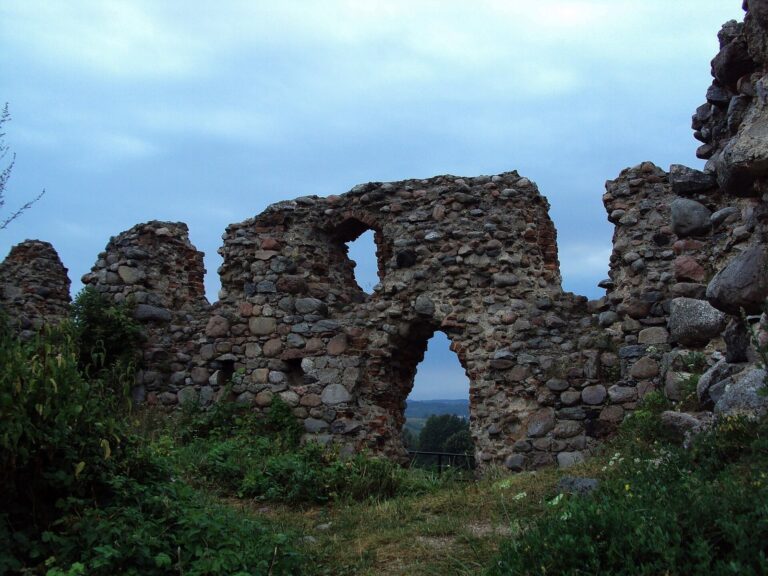
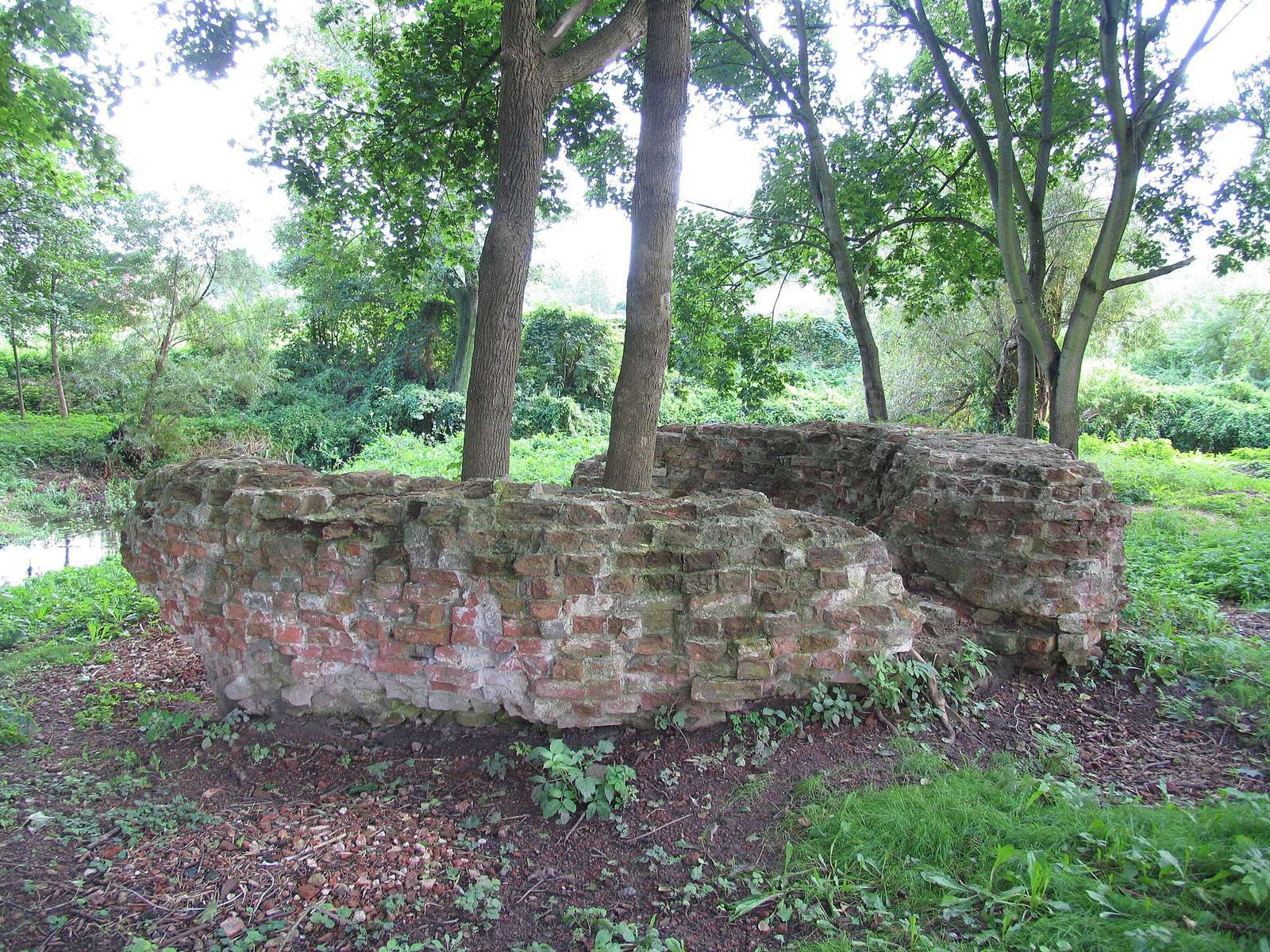
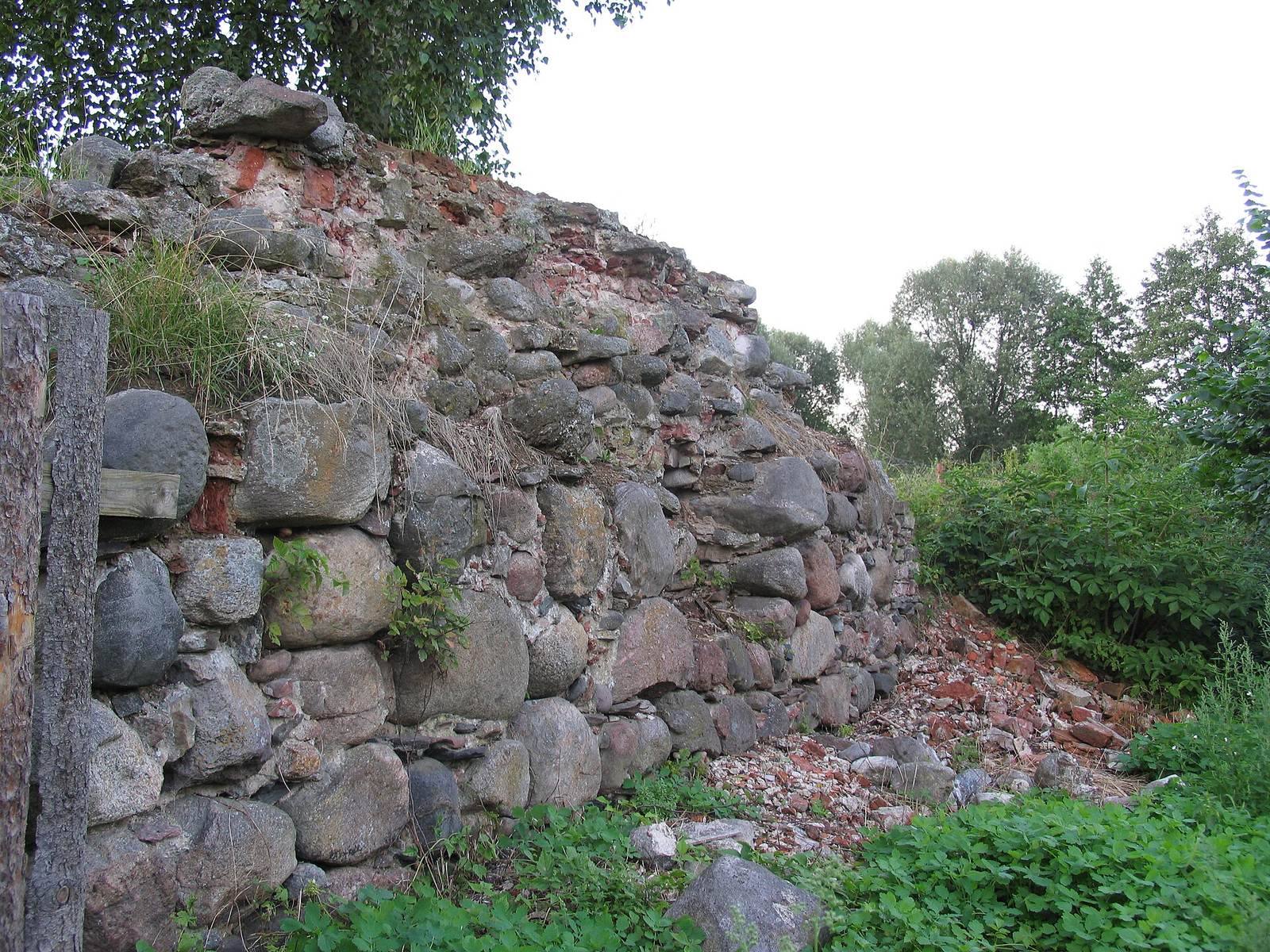
The castle stood on a small rise where the Drwęca and Wel rivers meet. Its principal area lay northwest of the mill. The main castle was built of brick on a quadrangular plan, with a tower at each corner. An adjoining lower castle, enclosed by a wall, contained farm buildings. Modest remnants of walls and foundations survive.