Castillo de Santueri: A Medieval Rock Fortress in Mallorca

Site at a Glance
- Rating
- 4.1
- Popularity
- Low
- Country
- Spain
- Primary era
- Medieval
- External website
- Open
- Eras represented
- Classical, Medieval
- Civilizations
- Byzantine, Crown of Aragon
- Site type
- Military
- Remains
- Castle
On this page8 sections
History
Castillo de Santueri is a medieval rock fortress in Spain, above Felanitx on the island of Mallorca. The present castle was substantially rebuilt in the fourteenth century over earlier Eastern Roman and Muslim fortifications, and its position gave it strategic control over nearby bays and coastal inlets. The name may derive from the Latin sanctuarium, meaning “sanctuary,” perhaps reflecting a religious association or the site’s medieval protective function.
Early occupation and fortification
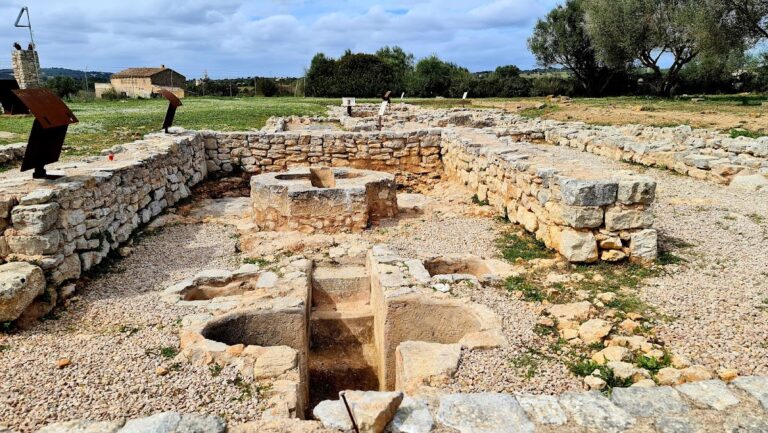
The site incorporates successive Roman, Muslim, and medieval phases. Earlier defenses probably existed during the Eastern Roman period, the continuation of the Roman Empire centered in the eastern Mediterranean, before being incorporated into a Muslim fortification. Excavations carried out between 1997 and 2001 recovered more than 1,000 coins, seals, and weights from the Roman and Muslim periods. These finds indicate occupation from the Eastern Roman period through the medieval era and help establish the site’s long strategic use.
Occupation also extended into the surrounding cliffs during prehistoric periods. Excavations in caves during the first decade of the twentieth century produced ceramics and bronze objects associated with the Epicampaniform, Naviform, and Talaiotic periods. The Talaiotic period was the prehistoric phase of Mallorca associated with monumental stone towers and related structures. The evidence also indicates a substantial interruption in occupation around the first millennium BC.
The Christian conquest
James I, the thirteenth-century king of Aragon whose campaigns brought Mallorca under Christian rule, reached Santueri in 1231. Muslim defenders used the castle as a refuge, and Christian forces besieged it. A traditional account says that the attackers distracted the defenders with a feast of music and dancing before attacking the fortress from the opposite side.
After the conquest, Count Nunó Sanç I of Roussillon and Cerdanya became the castle’s owner. It returned to the Crown in 1241. Major restoration and alteration followed in the fourteenth century, when the walls were rebuilt in 1348 over the earlier fortifications.
Later use and preservation
From 1521 to 1523, during the Revolt of the Brotherhoods, a social and political uprising in the Crown of Aragon that included Mallorca, Santueri sheltered the mascarats, Mallorcan groups opposed to the revolt. The state sold the castle to a private owner in 1811, after which it deteriorated while retaining its symbolic association with medieval Mallorcan history. Castillo de Santueri was designated an Asset of Cultural Interest on 30 November 1993 and is registered as RI-51-0008421.
Remains
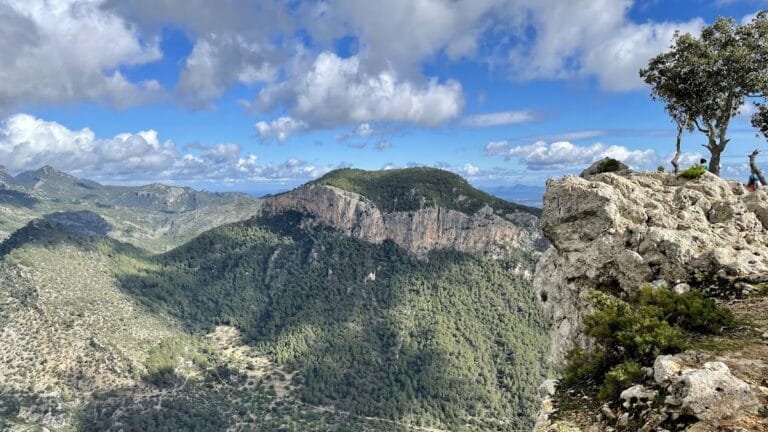
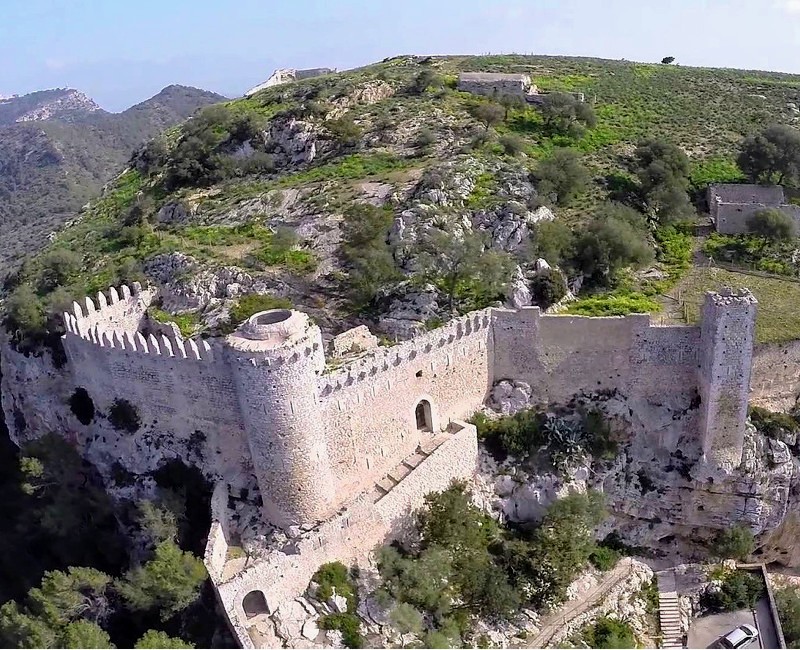
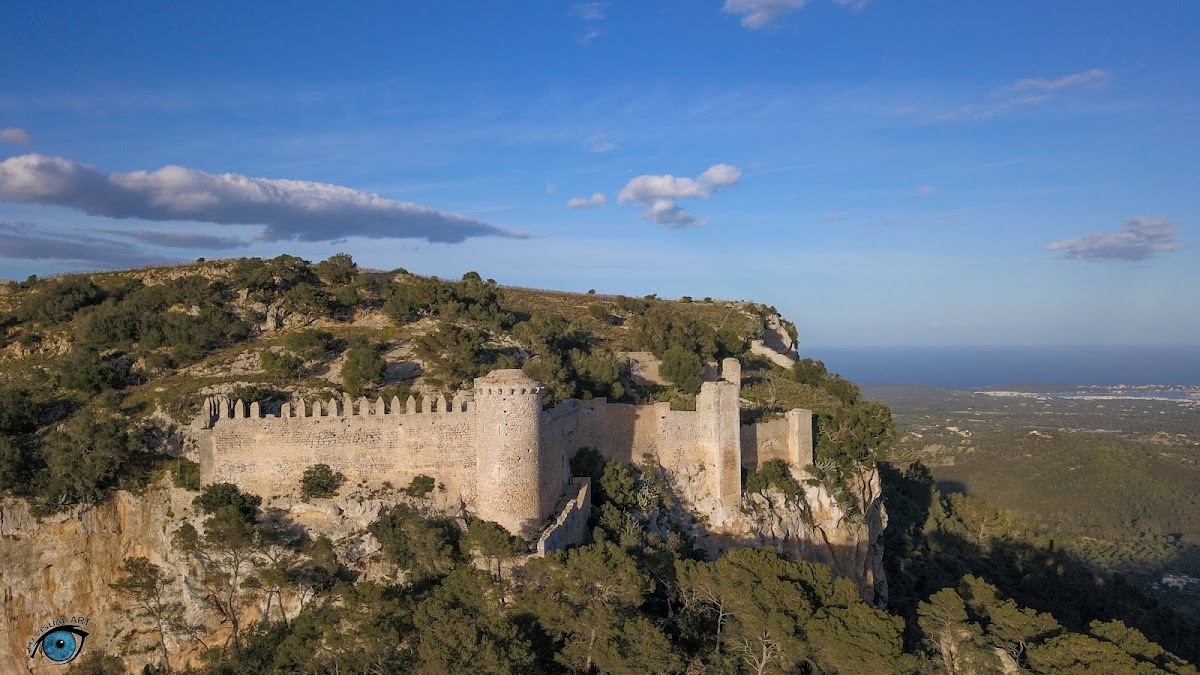
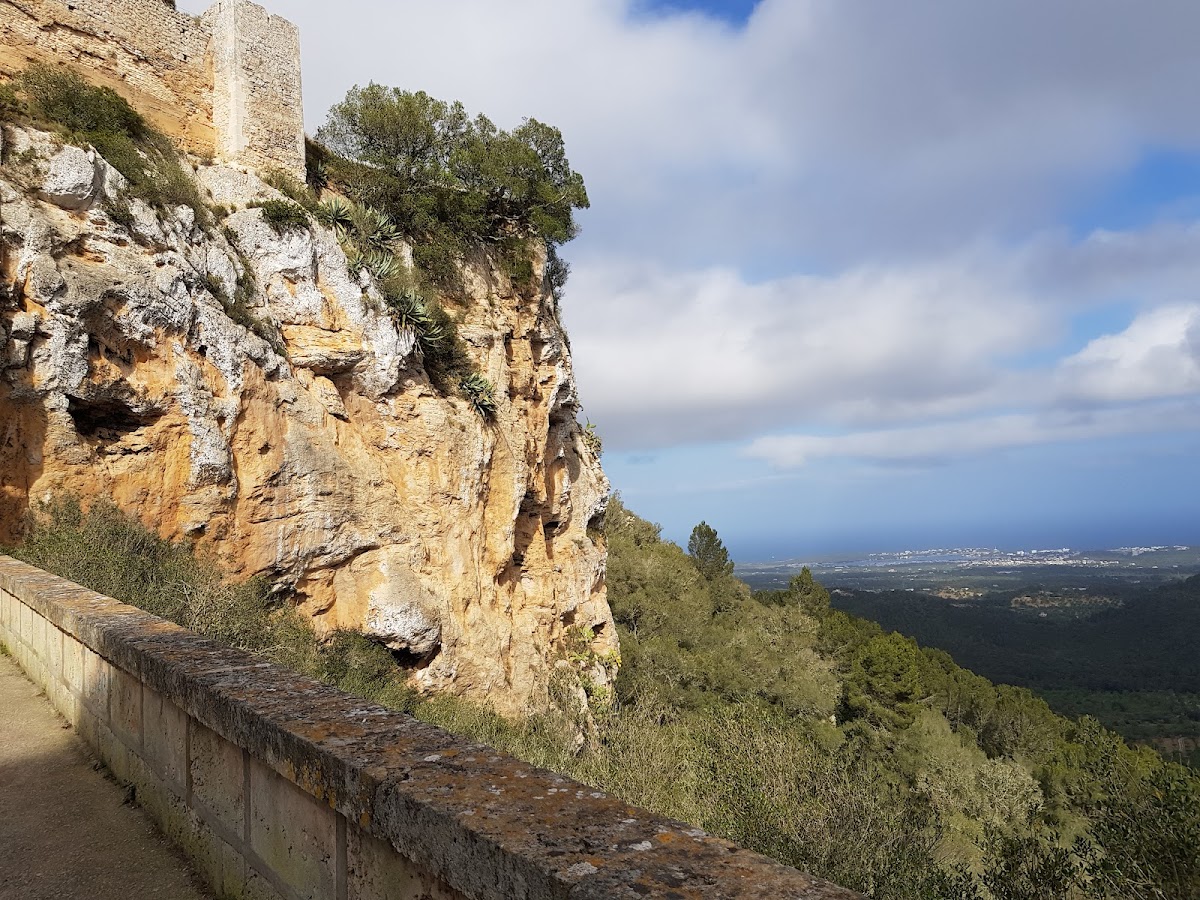
Castillo de Santueri occupies a rocky site at approximately 400 metres above sea level in the Serres de Llevant of southeastern Mallorca. Its enclosure covers about 426 ares, or roughly six local quarterades. Natural cliffs form part of its defenses, while walls and towers complete the fortified perimeter. The surrounding landscape includes cultivated and flatter land to the south and more mountainous terrain to the north.
Walls and towers
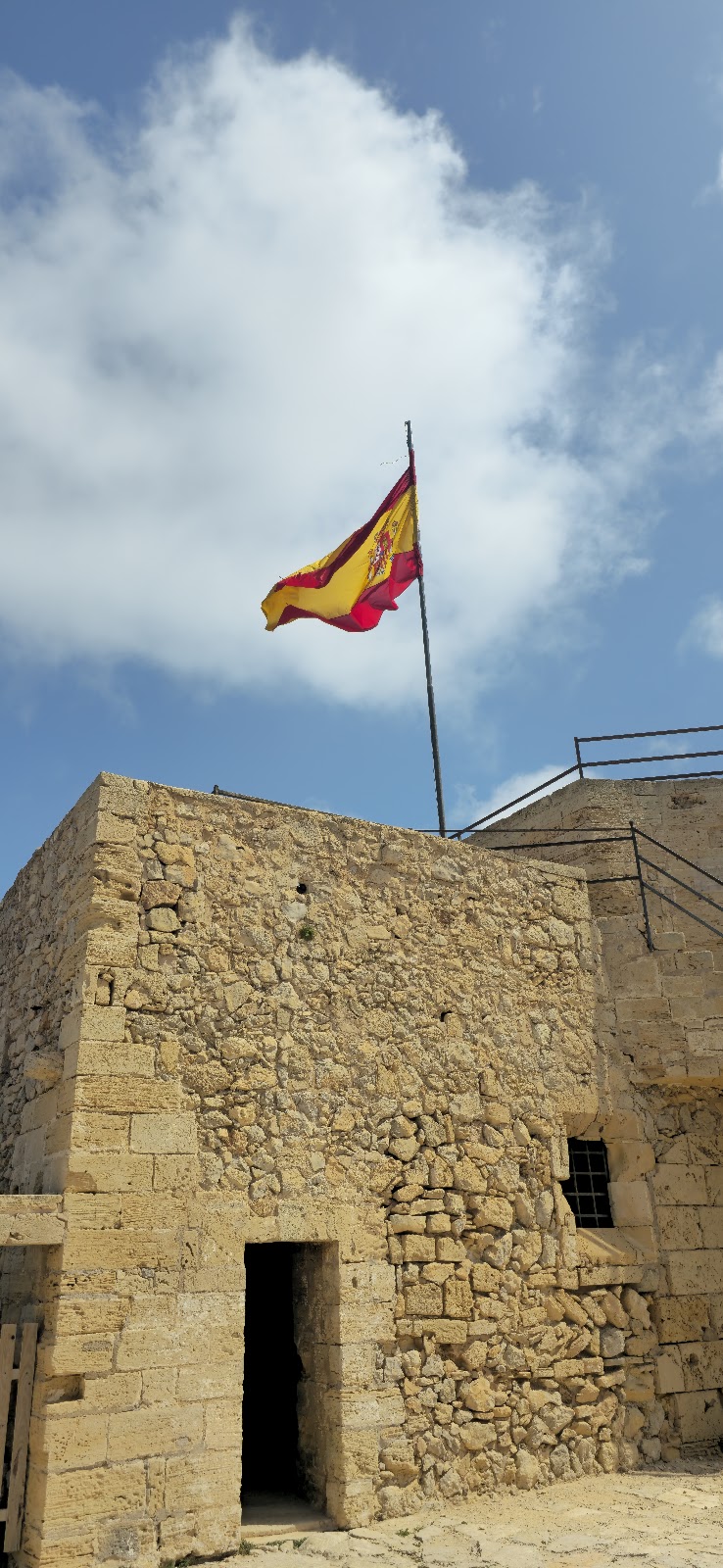
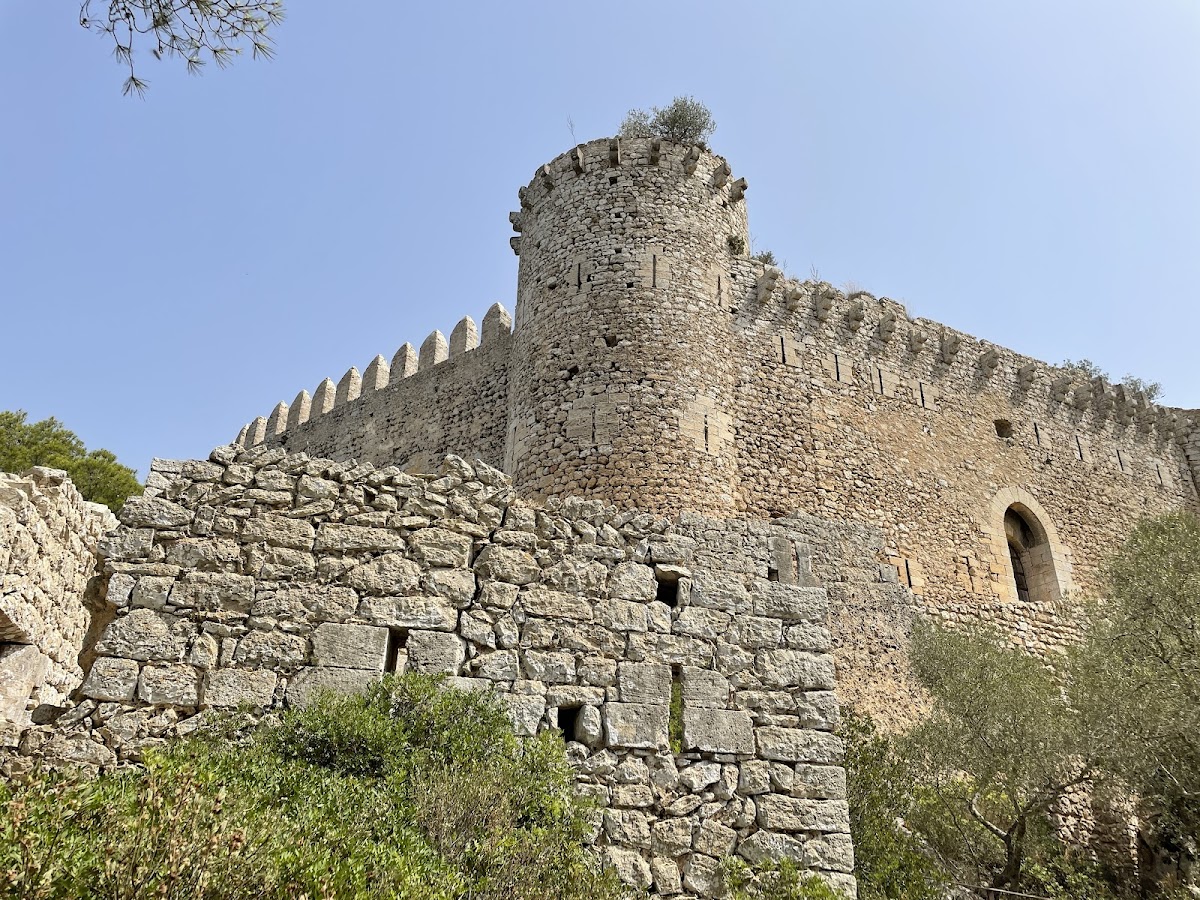
The surviving defenses include three quadrangular towers distributed around the enclosure and one circular Tower of Homage, the principal or symbolically dominant tower of a medieval castle. The walls reconstructed in 1348 contained 370 loopholes. These narrow openings allowed defenders to observe or fire at attackers. The fabric of the fortifications preserves elements from Eastern Roman, Muslim, and medieval construction phases.
Structures within the enclosure
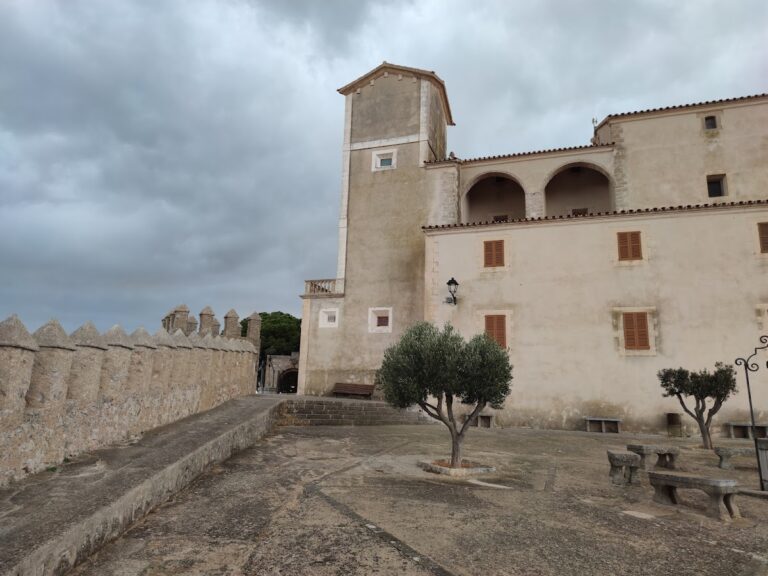
Inside the fortified area are a chapel, a mill, and garden areas intended for growing vegetables and fruit. Together, these features formed part of the castle’s internal facilities and supported activity within the enclosed stronghold.
Cliff caves and archaeological finds
The Cova des Bous and Cova des Confessionari dels Moros are caves in the cliffs associated with the castle area. Excavations there recovered ceramics and bronze objects from the Epicampaniform, Naviform, and Talaiotic periods. Excavations within the castle itself between 1997 and 2001 produced more than 1,000 Roman and Muslim coins, seals, and weights, linking the surviving fortress landscape with its earlier periods of occupation.
Nearby sites