Castillo de San Felipe: A Coastal Defensive Fort in Tenerife



Site at a Glance
- Rating
- 4.3
- Popularity
- Low
- Country
- Spain
- Primary era
- Early Modern
- Eras represented
- Early Modern, Modern
- Civilizations
- Crown of Castile, Spanish
- Site type
- Military
- Remains
- Castle
On this page8 sections
History
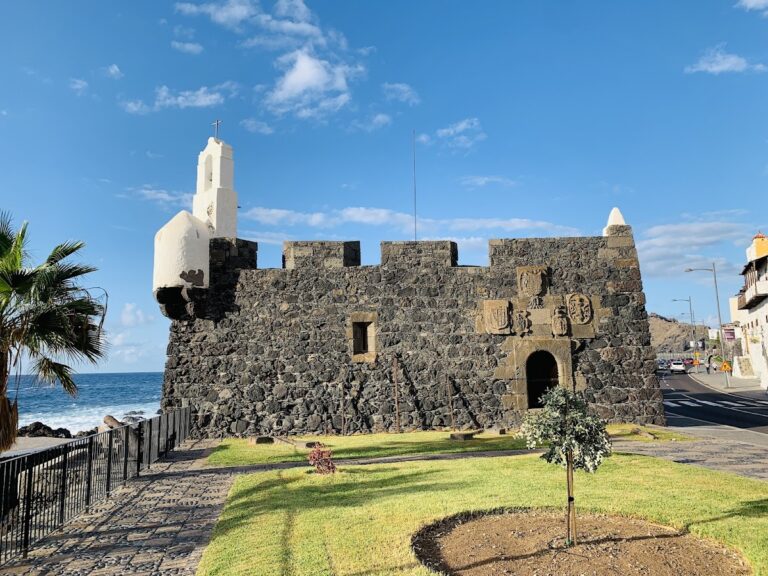
Castillo de San Felipe is a coastal defensive fortification in Spain, located in Puerto de la Cruz on northern Tenerife. Built by the Spanish in 1599 and completed in 1604, it reflects a refined colonial style and was one of four forts that formerly defended the city. Its position at the mouth of the San Felipe ravine protected the port from corsairs, privately authorized maritime raiders operating under a state commission.
Construction and military use
Construction began on ground occupied by two platforms armed with small cannon. These platforms had helped repel an attack by five pirate ships before the present fort was built. Alonso Dávila Guzmán commissioned the construction, creating a defensive base intended to counter corsairs seeking shelter in the port.
The fort was also associated with a period of use as a tower from 1655 to 1878. Its early alcaides, or military commanders responsible for a fortified place, included Captain Juan Antonio de Franchy, appointed in 1644, followed by Diego Benítez de Lugo, Lorenzo Perera de Ponte, Alonso Calderón, Benito Viña, Juan Francisco de Ponte, and Carlos Franchy. José Agustín Machado Espínola’s appointment in 1725 concluded a recorded succession of fifty alcaides.
Reform and changing functions
By the nineteenth century, age had caused the fort to deteriorate, and it was reformed. In 1878 it was disarmed and transferred to the municipal government. The former military stronghold was then used as an infirmary and lazaretto, an establishment for isolating people suspected of carrying contagious diseases, especially in connection with maritime travel.
Later uses included a citadel, depot, shooting club, and restaurant. In 1924 the army declared the building unsuitable for its needs and closed it. A major municipal renovation at the end of the twentieth century converted the enclosure into a cultural center for musical concerts and art exhibitions. The Municipality of Puerto de la Cruz owns the castle, which continues to function as a cultural space.
Heritage protection
The castle received protection under Spain’s 1949 castle-protection decree and the 1985 Spanish Historical Heritage Law. In 1993 it was declared an Asset of Cultural Interest in the monument category, a legal designation for protected heritage that applies here to a historically important built structure. Its registration code is RI-51-0008254.
Remains
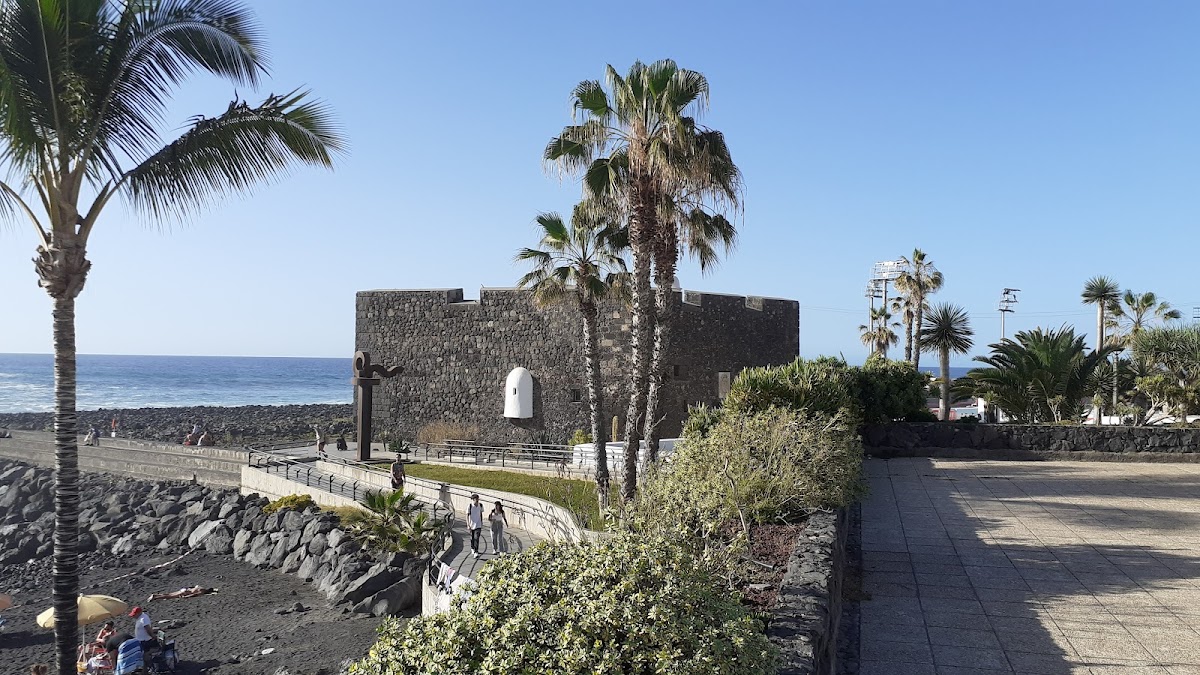
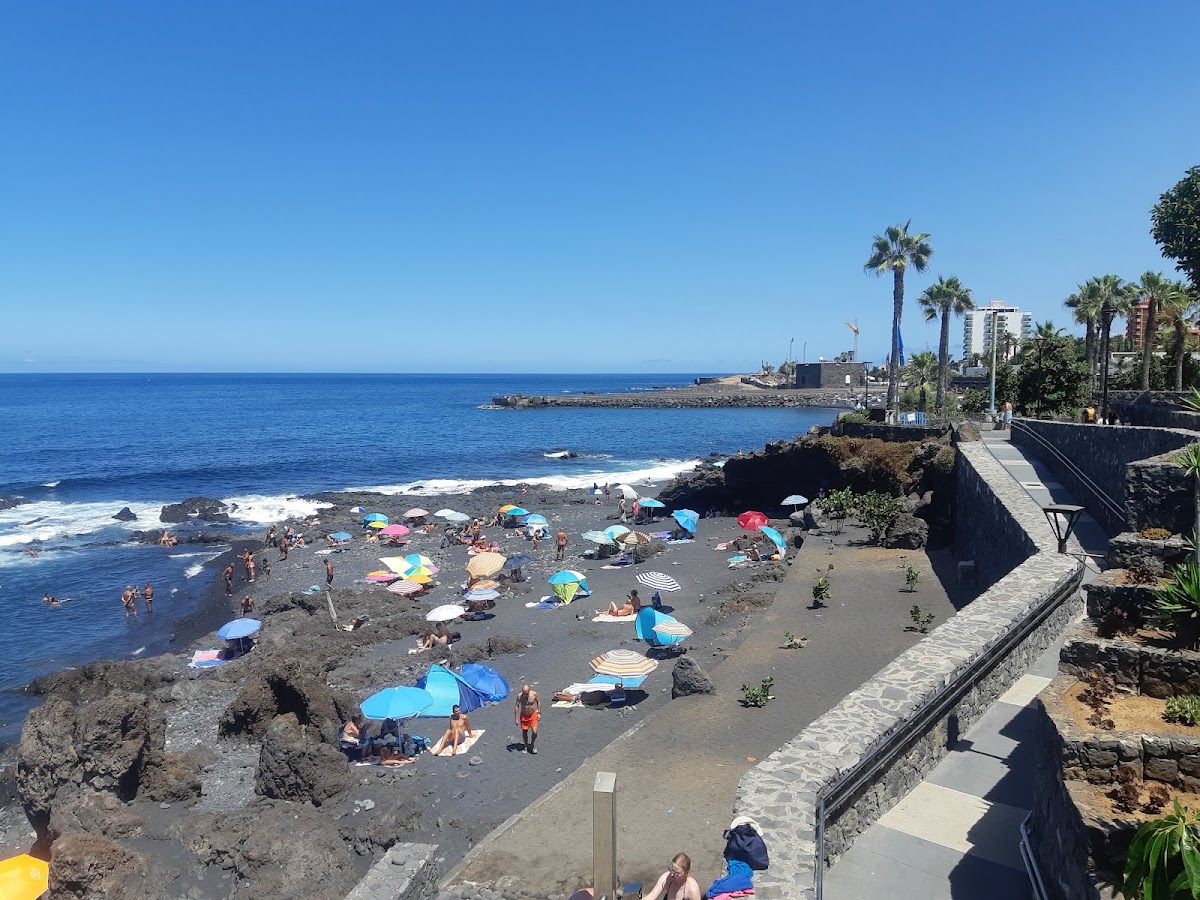
Castillo de San Felipe stands on the coast of Puerto de la Cruz, about 900 meters from the urban center, at the mouth of the ravine that gives it its name. Playa Jardín lies in the surrounding area. The surviving fort is a masonry defensive tower with a pentagonal perimeter, and its present appearance reflects the nineteenth-century renovation.
Fortifications and associated structures
Pentagonal defensive tower
The tower was originally arranged over two floors. Its upper floor could accommodate approximately 35 soldiers, while its armament consisted of three iron cannon in the 24-pounder class, specifically two 24-pounders and one 16-pounder. The fort originally had a moat and drawbridge, although the drawbridge was later replaced by a fixed walkway. The building is presently in good condition.
Polvorín powder magazine
An old powder magazine, known as the Polvorín, survives approximately 50 meters from the castle. It forms a separate surviving element of the former defensive complex and preserves the association between the fort and the storage of military supplies.