Castillet: Perpignan’s Fortress, Prison, and Museum
Site at a Glance
- Country
- France
- Primary era
- Medieval
- Eras represented
- Medieval, Modern
- Civilizations
- Crown of Aragon, French
- Site type
- Military
- Remains
- Gate
On this page11 sections
History
The Castillet is a medieval fortress in Perpignan, France, built around 1368 by master builder Guillem Guitard for John I of Aragon, then a prince who was not heir apparent. It replaced the Vernet gate, which linked the walled town to its suburb, and was intended to protect the northern approaches.
From fortress to prison
After French king Louis XI briefly occupied Roussillon, the historical region around Perpignan, the Castillet became a state prison. With conflict with France over, the fortress was considered unnecessary for defence. In 1478, the Petit Castillet was added with a new gate to preserve an exit toward Vernet.
In 1542, Charles V, a Habsburg ruler and Holy Roman Emperor also known in Spain as Charles I, ordered a polygonal bastion, a projecting defensive work, built to the north. Stone and other materials for it came from the strategically demolished Chapel of Our Lady of the Bridge and houses in the suburb. After the chapel’s destruction, the Castillet was placed under the protection of Our Lady of the Bridge, a devotional title for the Virgin Mary. In 1642, the French military engineer Vauban strengthened the bastion and restored the fortress’s defensive role. A guardhouse was built on the south side during the seventeenth century and demolished in 1843.
The prison held common-law offenders and detained soldiers. Its first-floor governor’s chamber later housed municipal archives in the 1960s. The Castillet remained a prison for several years after it was designated a protected French historic monument in 1889. In 1892, six prisoners escaped.
Demolition, collections, and later use
In 1904, much of Perpignan’s fortified enclosure was demolished, but the Castillet was spared. Its connections to the surrounding walls were removed, while the northern bastion and its watch turret were blown up.
A museum of Roussillon antiquities was proposed in 1914 by the Society of Archaeology and History of Roussillon. From 1927, the local cultural association Colla del Rossello gathered historical objects, including Catalan headdresses, shawls, and clothing. The collection’s first exhibition opened on 18 May 1941 as the Museum of Roussillon, with Horace Chauvet and Charles Daliès assembling its contents. After the association dissolved, the collection was bequeathed in 1945 to the departmental Agricultural, Scientific and Literary Society. It also drew the attention of Georges Henri Rivière, director of the Paris Museum of Popular Arts and Traditions.
In 1948, clearing a blocked opening in the Petit Castillet revealed a child’s skeleton and other remains in a small chamber. A speculative claim identified the child as Louis XVII, the son of Louis XVI, whom royalists regarded as king after his father’s execution, although he never ruled. The child appears to have been confined in the chamber only in the late nineteenth century; the child’s identity and circumstances remain unknown.
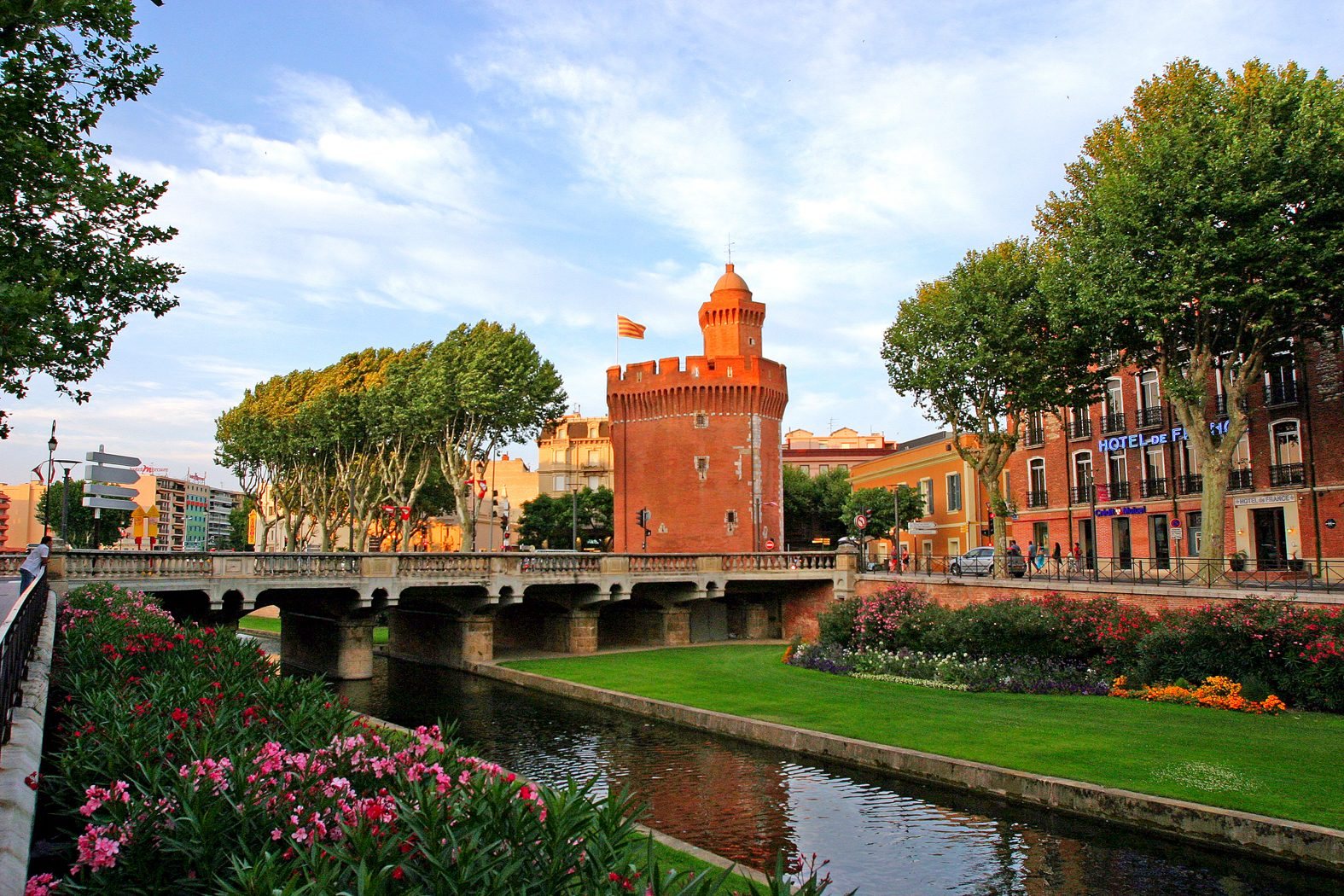
The Castillet now houses the Catalan Museum of Popular Arts and Traditions, also known as Casa Pairal, or “ancestral house.” Its silhouette serves as a symbol of Perpignan and its municipality. The building also keeps the Canigó flame alight throughout the year, as part of a Catalan tradition in which a flame from Mount Canigó is carried to communities across Catalonia.
Remains
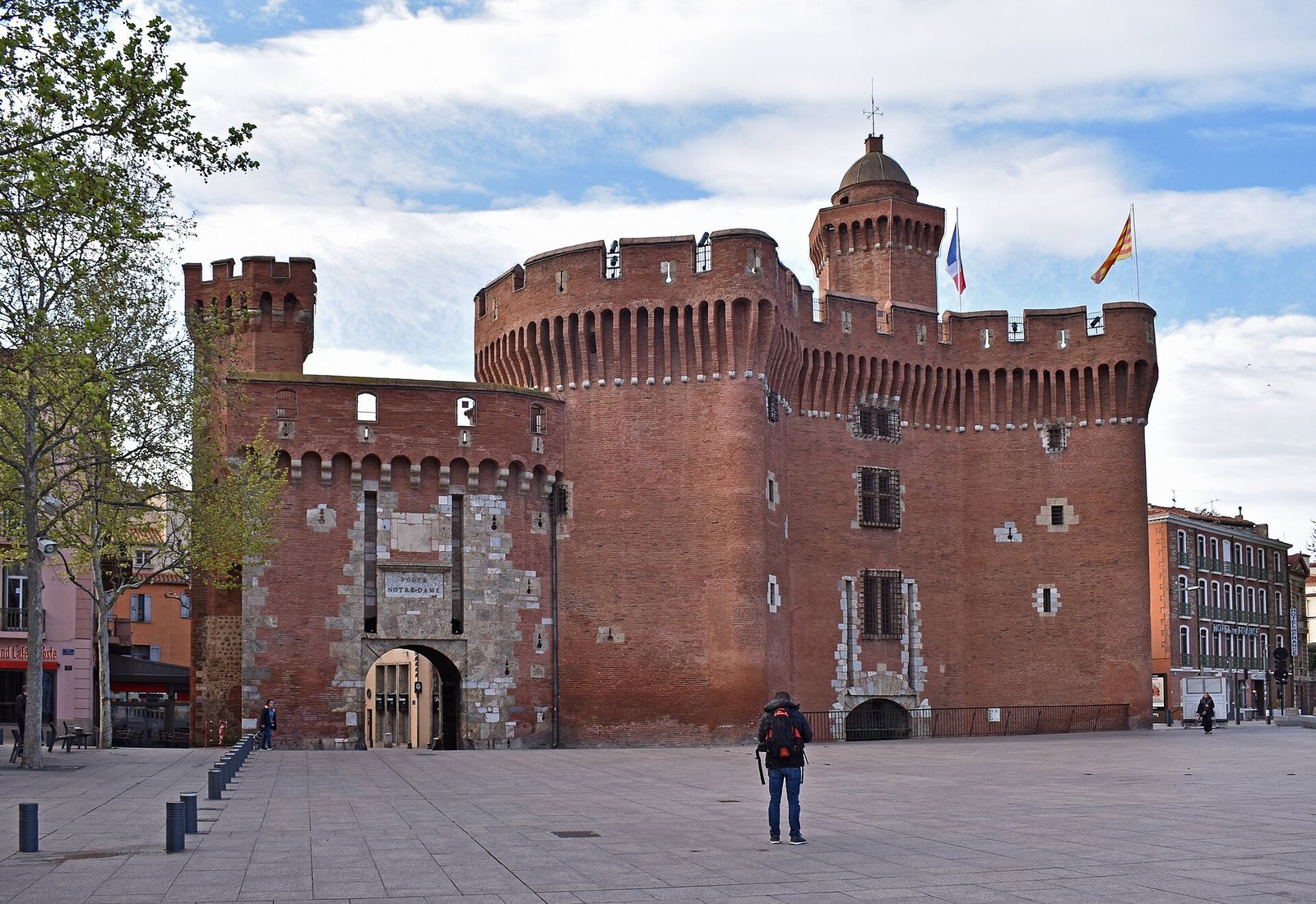
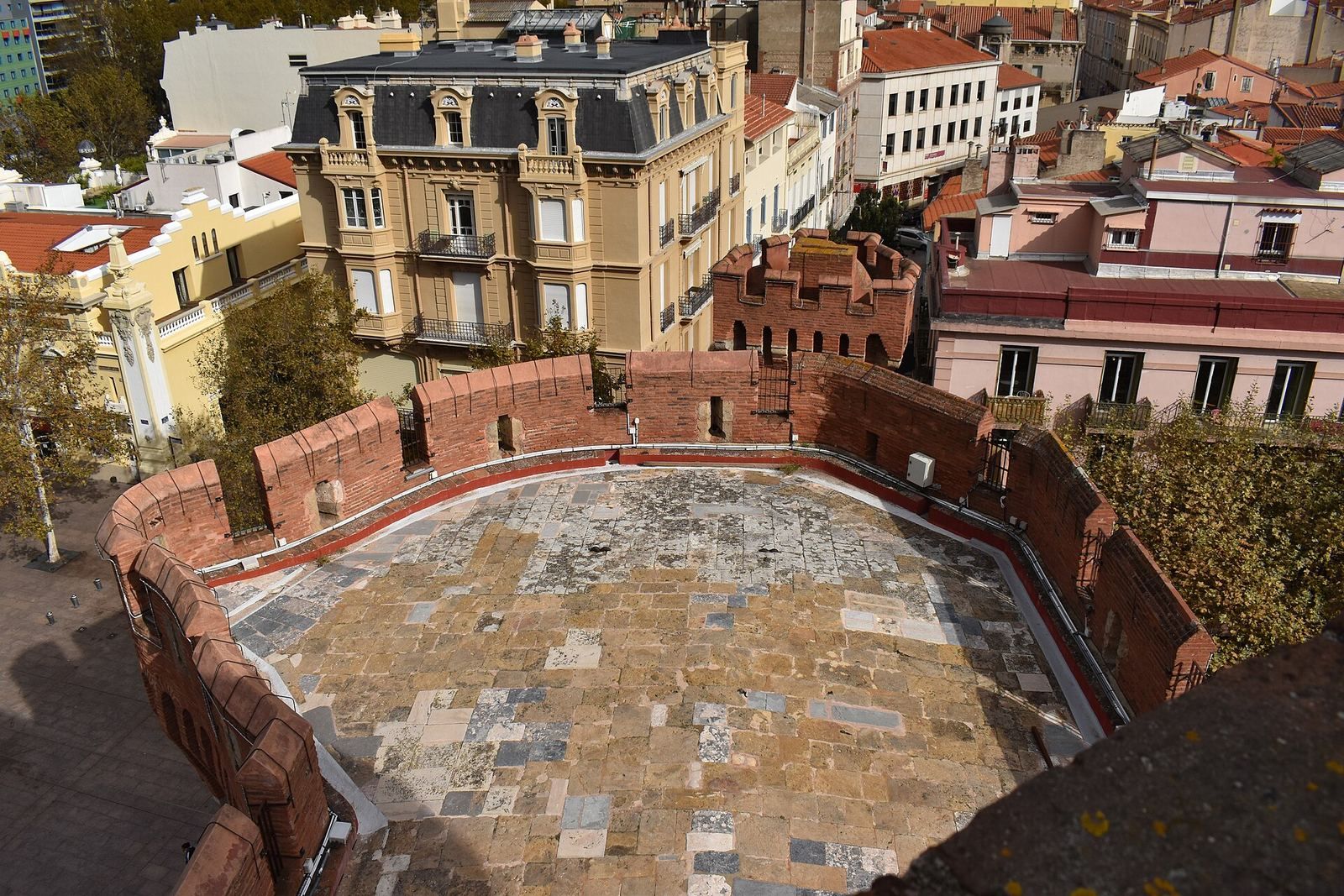
The surviving complex consists of the Grand Castillet and the Petit Castillet, a fortress built entirely of brick. The Petit Castillet is attached to the eastern side of the Grand Castillet, and the two structures are linked by stairways that reach the terrace.
Fortress structure and facade
Grand and Petit Castillets
The Grand Castillet measures 31 metres in length, while the attached Petit Castillet measures 8 metres. The complex is approximately 31 by 31 metres and 29.2 metres high. Its crenellated parapets, formed by alternating raised sections and gaps, rise 20 metres above ground; the highest turret reaches 29.2 metres. The walls are 3.5 metres thick at the base, 2.8 metres at the second floor, and 1.6 metres at the third. A spiral staircase 2.77 metres in diameter serves the Grand Castillet, while a second staircase runs inside the wall between the two buildings. Both lead to the terrace.
Unlike ordinary buildings in Perpignan, which used brick and river pebbles, military structures such as the Castillet were made entirely of brick. The bricks were joined with a durable mortar of lime and crushed brick. Crenellations, projecting supports called corbels, and small turrets crown the fortress in forms associated with Muslim-ruled Iberia and North Africa.
Gate and facade
The Petit Castillet contains the Our Lady of the Bridge gate, whose projecting machicolations, openings that allowed defenders to attack below, formed part of its defences. The original passage through the Grand Castillet was designed for a drawbridge and was later closed when the building became a prison. A concave niche with a Gothic frame, dated to 1864, is set into the facade. The statue associated with the demolished Chapel of Our Lady of the Bridge was later placed in a facade niche.
Prison spaces and chamber
Rooms in the Grand Castillet
The Grand Castillet’s prison rooms included a basement cell known as the “white dungeon.” On the second floor were a chamber for prisoners classed as “fanatics” and a torture chamber containing instruments of torture.
Rooms in the Petit Castillet
The Petit Castillet had a basement “black dungeon,” a first-floor chamber for galley convicts, prisoners sentenced to forced labour rowing galleys, and a second-floor chamber for soldiers alongside a chapel. Women were held on the third floor. Prisoners exercised on the stone-paved terrace.
Walled chamber
The small chamber where the child’s remains were found is set within the Petit Castillet’s wall, to the left of the Virgin’s statue. It measures 3 metres long, 0.8 metres wide, and 2 metres high. Its wooden door was reinforced with iron strips, and the opening has a white-stone frame that appears to have once held bars. Finds associated with the chamber include leather shoes, fabric fragments, a shoe tip, animal bones thought to be food remains, half a jug, and a plate believed to date from the reign of Louis XVI.