Aqueduc des Arcades: A Medieval Bridge-Aqueduct in Perpignan
Site at a Glance
- Rating
- 3.4
- Popularity
- Very Low
- Country
- France
- Primary era
- Medieval
- Eras represented
- Medieval
- Civilizations
- Kingdom of Majorca
- Site type
- Infrastructure
- Remains
- Aqueduct
On this page6 sections
History
Aqueduc des Arcades is a medieval bridge-aqueduct in Perpignan, France, developed under the Kings of Majorca between the twelfth and fourteenth centuries. It formed part of a canal system that brought water from the Têt, a river in the Roussillon region, through Ille-sur-Têt and into the expanding city.
Development under the Kings of Majorca
The first diversions for the canal were constructed in the twelfth century, and the system continued to develop into the fourteenth century. Perpignan’s expanding population, new southern districts, building work, roads, and craft production increased the need for a dependable water supply. Water was also especially needed by the Palace of the Kings of Majorca, the medieval rulers whose territories included Roussillon and Perpignan.
The aqueduct carried the incoming canal across the depression between the Puig Joan and Serrat d’en Vaquer hills. It maintained the flow between two tunnels and enabled the water to enter Perpignan for redistribution to the city’s outskirts. Its crossing also allowed people to travel with their herds, while a spillway upstream helped relieve flood conditions and reduced the risk of serious inundation.
Masonry reconstruction and continued use
A wooden structure is recorded in 1338, but its need for extensive repairs led to its replacement in masonry during a series of improvements carried out between 1368 and 1378. The canal and aqueduct remain in operation. The City of Perpignan owns the structure, which has been protected as a classified French historic monument since 1984.
Remains
Bridge-aqueduct structure
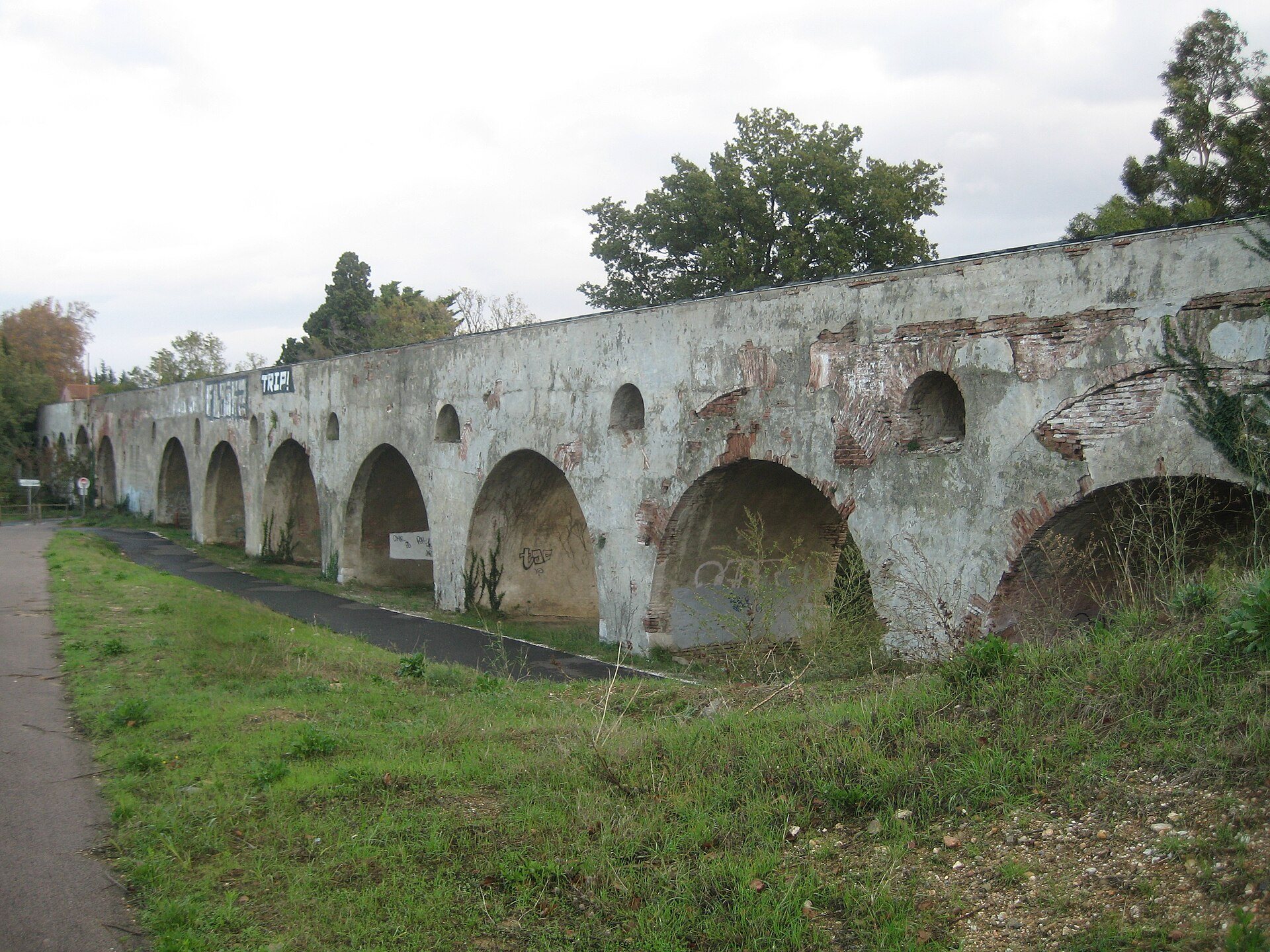
The bridge-aqueduct extends for approximately 300 metres along a northeast-southwest axis. It is about 4.60 metres wide and 13 metres high, with 21 arcades supporting the raised water channel across the depression.
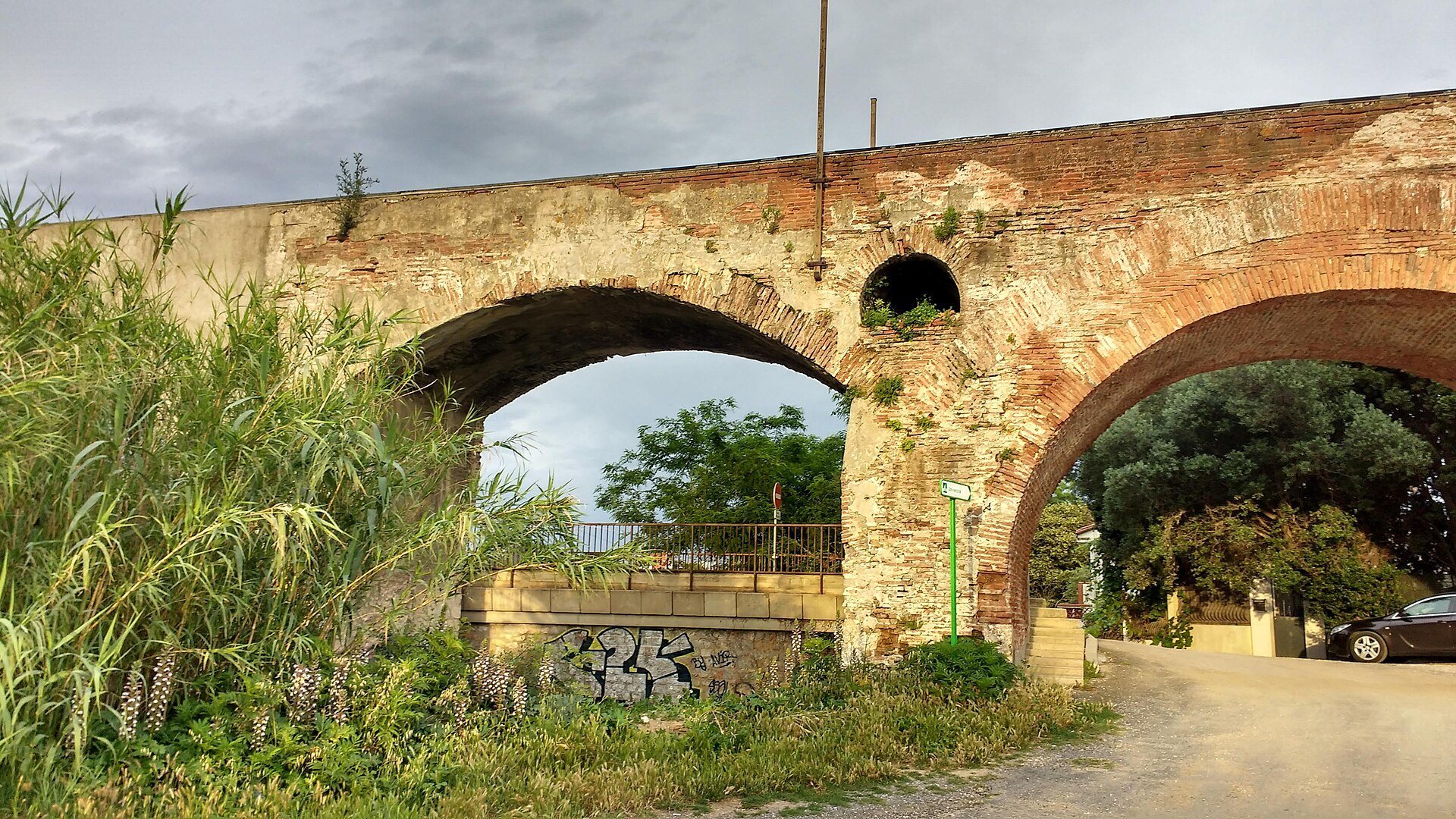
Each arcade has a semicircular arch built from cayrou, a large solid brick used in Catalan masonry, bonded with lime mortar. The masonry reconstruction used sand, cayrou, and lime. A niche passes through each pier, adding openings within the supporting structure.
Crossing and water-control features
The tenth arch is wider than the others and has a segmental, or flattened, shape. It was designed to span an eighteenth-century road, whose route has since been replaced by a railway line. Together with the upstream spillway and the linked tunnels, the aqueduct formed part of a system that carried and managed water as it approached Perpignan.